How Did Africa Get Its Name

BSC Insights Admin
September 30, 2026
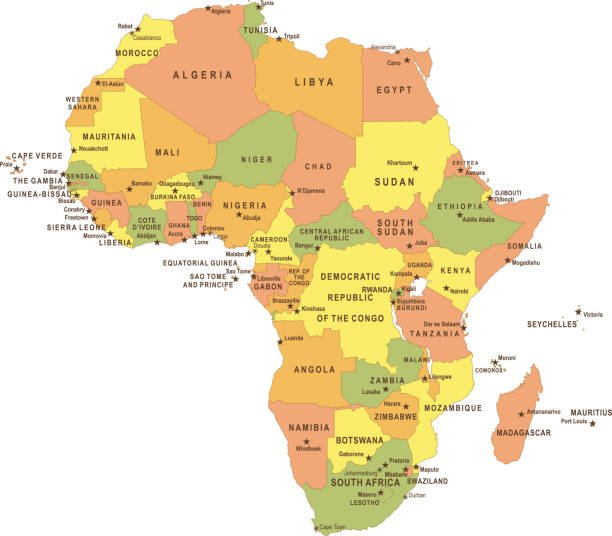
The name Africa, identifying the world's second-largest continent, most likely originated from the Roman Empire's influence in North Africa, specifically referring to the region around ancient Carthage. While its precise etymology is debated among historians and linguists, the most widely accepted theories point to the Romans' interactions with local tribes and geographical features, eventually generalizing a regional name to encompass the vast landmass we know today.
Understanding how Africa got its name requires a journey back through antiquity, examining early civilizations, linguistic roots, and the gradual expansion of geographical knowledge. This article delves into the dominant theories and provides context for the name's enduring legacy.
The Roman Connection: A Dominant Theory
One of the most compelling and widely accepted theories traces the origin of the name Africa back to the Romans. After defeating Carthage in the Third Punic War (146 BCE), the Romans established a province in modern-day Tunisia, which they called Africa Proconsularis.
The "Afri" People
The name for this Roman province is believed to have been derived from a local Berber tribe known as the Afri or Ifri. These people inhabited the region around Carthage, and the Romans likely used their tribal name to designate the territory they conquered. It was common for Roman provinces to be named after the indigenous peoples they encountered or subdued.
- Location: The Afri tribe resided primarily in what is now Tunisia.
- Roman Usage: The term "Africa" initially denoted the fertile coastal region of North Africa, a crucial agricultural area for the Roman Empire.
- Linguistic Link: The word "Afri" itself might have roots in a Phoenician term like "afar" (dust) or a Berber word "ifri" (cave, or cave-dwellers), signifying people living in such environments.
The Romans referred to this land as "Terra Africa" (Land of the Afri) or simply "Africa." Over centuries, as Roman influence and geographical understanding expanded, this regional designation slowly began to apply to the larger landmass south of the Mediterranean.
From Region to Continent
The generalization of the name Africa from a specific Roman province to an entire continent was a gradual process. Early Greek geographers like Herodotus and later Roman scholars initially used "Libya" to refer to the northern parts of the continent west of Egypt, and often lacked a comprehensive understanding of the continent's southern reaches.
- Expansion of Knowledge: As European exploration progressed, particularly during the Age of Discovery, the known extent of the landmass grew.
- Convenience and Adoption: The Roman term "Africa," already established in scholarly and cartographic circles, became the convenient and eventually standardized name for the entire continent.
- Ptolemy's Influence: The geographer Claudius Ptolemy (2nd century CE) used "Africa" in his influential work Geographia, which significantly shaped European geographical perceptions for over a thousand years. While he still used "Libya" for parts, the concept of a larger "Africa" was taking root.
This expansion of the name is a classic example of synecdoche, where a part comes to represent the whole. The province of Africa, being the most familiar and extensively documented part of the continent for Europeans, eventually lent its name to the entire landmass.
Exploring Other Potential Origins
While the Roman connection is dominant, several other theories about the etymology of Africa have been proposed. These theories often draw on various ancient languages and cultures that had significant interactions with the continent.
Phoenician Influence: "Afar" or "Afri"
Given the strong Phoenician presence in North Africa, particularly with the powerful city of Carthage, some scholars suggest a Phoenician origin for the name. The Phoenicians were master seafarers and traders who established numerous colonies along the North African coast long before the Romans.
- "Afar": This Phoenician word is thought to mean "dust," referring to the arid, dusty landscape characteristic of parts of North Africa.
- "Afri": Alternatively, it could relate to a word signifying "a separate land" or "a distant land," referencing its position across the sea from Phoenicia.
If the Afri tribe's name itself has Phoenician roots, then this theory converges with the Roman theory, suggesting an even older linguistic layer that the Romans simply adopted.
Berber Roots: "Ifri" or "Ifren"
The indigenous Berber people of North Africa have their own linguistic heritage. The term "ifri" or "ifren" in some Berber dialects means "cave" or "cave dwellers." This could refer to the inhabitants of the mountainous regions or to a specific group known for living in caves.
- Cultural Significance: Cave dwelling was a common practice in ancient times, offering shelter and defense.
- Local Naming: It's plausible that a local Berber term for a people or a place was adopted and adapted by invaders like the Phoenicians or Romans.
This theory emphasizes the deep historical ties to the continent's earliest inhabitants and offers a possible explanation for the root meaning of the name Africa within its own cultural context.
Greek Speculations
Ancient Greek scholars also offered their own theories, though these are generally less accepted than the Roman or Semitic/Berber derivations.
- "Aphrike": Some Greeks hypothesized that the name came from the word "aphrike," which means "without cold" or "sunny." This would be a descriptive name reflecting the continent's warm climate.
- "Aphros": Another Greek theory linked it to "aphros," meaning "foam." This might refer to the sea foam breaking on its shores or to the region being fertile and producing much.
While intriguing, these Greek linguistic connections often seem more like folk etymologies devised by later scholars rather than direct historical records of the name's adoption.
Egyptian Connection: "Af-rui-ka"
A less commonly cited, and more speculative, theory suggests an ancient Egyptian origin. This theory proposes that Africa's name comes from "Af-rui-ka," which is interpreted as "to turn to the opening of the Ka" or "birthplace." "Ka" in ancient Egyptian belief refers to the vital essence or soul.
- Symbolic Meaning: This interpretation imbues the name with a profound spiritual meaning, suggesting Africa as the origin of life or humanity.
- Historical Evidence: Direct historical or linguistic evidence linking this Egyptian phrase directly to the continent's name is scarce, making it more of a modern, romanticized theory rather than an academic consensus.
The Evolution of Geographical Naming
The process by which the name Africa came to represent the entire continent highlights broader patterns in geographical nomenclature. Names often begin with a local or regional designation and expand as knowledge of the world grows.
Ancient Maps and Early European Perceptions
Early cartography played a significant role in solidifying geographical names. Greek and Roman geographers were among the first to attempt systematic mapping of the known world. For instance, the aforementioned Ptolemy's Geographia, written in the 2nd century CE, described the continent's northern parts, though its full extent remained unknown for centuries.
- Limited Knowledge: For a long time, "Africa" in European consciousness primarily referred to North Africa. Sub-Saharan Africa was largely unknown or mythical, often depicted as a land of monsters and extremes.
- Gradual Expansion: With improved navigation and exploration, particularly from the 15th century onwards, the coastline of the entire continent was mapped, and the name "Africa" slowly but surely became universally applied.
The Role of Exploration and Colonialism
The Age of Exploration, spearheaded by European powers, was a critical period for the standardization of global geography. As Portuguese, Spanish, British, French, and other explorers circumnavigated the continent and established trade routes and colonies, the name Africa became firmly entrenched in global discourse and maps.
- Standardization: European cartographers adopted and popularized the name, ensuring its use across different languages and cultures worldwide.
- Political Expediency: The name also served as a convenient political and administrative term during the colonial era, consolidating diverse regions under a single, overarching identity imposed by external powers.
Why the Name Endured
Despite its complex and debated origins, the name Africa has endured for centuries, transcending its initial regional meaning to become the universally recognized designation for the continent. Several factors contributed to its lasting legacy.
Simplicity and Universality
The name is relatively short, pronounceable across many languages, and has a strong historical precedent. Once established in academic texts, maps, and official documents, it gained a momentum that made alternative names impractical to adopt.
Historical Momentum
Names, particularly for large geographical entities, tend to stick. The long history of Roman, and subsequently European, usage created a powerful inertia. Changing such a fundamental name would require a global consensus, which is virtually impossible given the diverse historical and cultural ties to the current name.
Cultural and Political Significance
In modern times, the name Africa has been embraced by its diverse peoples as a symbol of unity, identity, and pan-Africanism. It represents a shared history, challenges, and aspirations, making its historical origin less important than its contemporary meaning.
Common Misconceptions About Africa's Name
Several myths and misunderstandings surround the origin of Africa's name. Clarifying these can help in a more accurate understanding:
- Not Named After a Single Person: While famous figures like Scipio Africanus (a Roman general) bear the epithet "Africanus," this honorific was given because he conquered territories in Africa, not because he founded or named the continent. His name derived from the place, not the other way around. Similarly, Leo Africanus (a Moorish traveler and writer) adopted the name due to his extensive travels and knowledge of the continent, not as its originator.
- Not a Modern Invention: The name is ancient, rooted in Roman antiquity, rather than being a recent colonial imposition. Its application to the entire continent, however, did solidify during the colonial era.
- Not Universally Named by Africans Initially: While many regions within Africa had their own names for their lands, the continent-wide name "Africa" was primarily disseminated through Greco-Roman and later European geographical and political systems, rather than originating from a unified indigenous African naming convention.
The quest to uncover how did Africa get its name reveals a rich tapestry of linguistic influences, historical conquests, and the evolving understanding of geography over millennia. While absolute certainty remains elusive, the weight of evidence strongly points to a Roman origin, derived from their province named after the local Afri tribe near Carthage. This name, born from specific regional interactions, gradually expanded to encompass the entire, diverse, and vibrant continent we recognize today.
Understanding the historical context of Africa's name is not merely an academic exercise; it sheds light on the interplay of cultures, the impact of empires, and the long process through which our global geographical lexicon was forged. The name stands as a testament to a continent rich in history, depth, and resilience.
Enjoyed this read?
Share it with your friends and colleagues.