How Africa Got Its Name

BSC Insights Admin
September 30, 2026
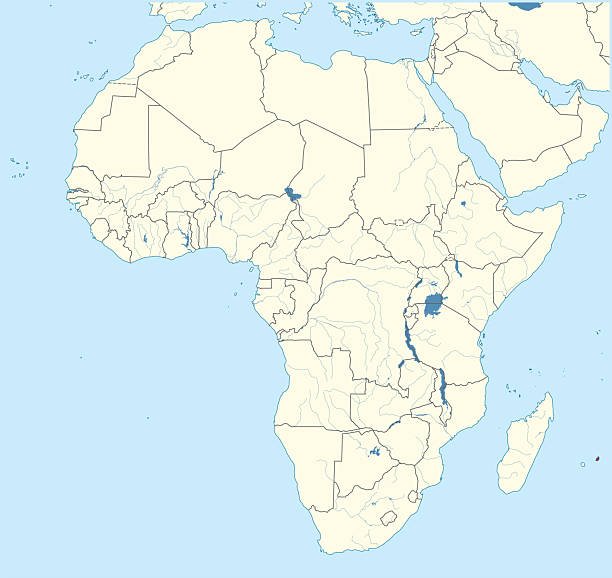
The name Africa, identifying the world's second-largest continent, holds a rich and complex etymological history, with various theories vying to explain its true origin. While no single definitive answer is universally accepted, the most widely supported hypothesis traces the name back to the Romans and their interactions with the indigenous peoples of North Africa, specifically a region known as Africa Proconsularis.
Unraveling the Mystery: Main Theories Behind How Africa Got Its Name
The journey to understand how Africa got its name takes us through ancient civilizations, linguistic roots, and pivotal historical accounts. Examining these prominent theories offers fascinating insights into the potential origins and meanings attributed to this vast, diverse landmass.
The Roman Hypothesis: Afri and the Province of Africa Proconsularis
The strongest and most widely accepted theory links the name Africa to the ancient Romans. Following their victory over Carthage in the Punic Wars, particularly in the 3rd and 2nd centuries BCE, the Romans established a province in what is now modern-day Tunisia. This province was designated Africa Proconsularis. The naming of this crucial Roman territory is believed to have derived from local tribal names or specific geographical descriptors, which then gradually extended to encompass the entire continent.
- The Afri Tribe: One prevalent and highly credible belief suggests the name comes directly from the Afri people (or Ifri), a prominent Berber tribe who resided in the region around Carthage. The Romans, in their typical fashion of naming territories after their inhabitants, referred to this region as the "land of the Afri," eventually shortening and Latinizing it to Africa. This collective name for the indigenous inhabitants became strongly associated with the territory itself.
- The Latin Term "Afer": A closely related idea posits that "Africa" stems from the Latin word Afer (plural Afri), which the Romans used generally to refer to the inhabitants of North Africa. The exact etymology of Afer itself is subject to scholarly debate, but several proposed meanings exist:
- "Sunny" or "South": Some scholars suggest Afer might be derived from a Phoenician word meaning "dust" or "land of dust," or possibly related to words signifying "south" or "southern land," reflecting the geographical orientation from Rome.
- "Without Cold" (Greek connection): A less direct, though historically mentioned, theory connects it to the Greek word Aphrike (ἀφρική), meaning "without cold" or "non-cold," descriptive of the continent's generally warm climate. However, modern etymologists largely consider this a secondary descriptive term rather than the primary root of the proper noun used by the Romans.
The Roman influence was profound and enduring. As their empire expanded and their geographical knowledge grew through trade and conquest, the term Africa, initially denoting a specific and vital province, gradually broadened in its application. Roman geographers and historians started using the name to designate the entire landmass stretching south of the Mediterranean. This historical evolution of a regional name into a continental identifier is a significant aspect of how Africa got its name.
Exploring Alternative Historical and Linguistic Theories for Africa's Name
While the Roman theory enjoys the broadest support, several other intriguing hypotheses contribute to the complex tapestry of Africa's name origin. These theories often draw from different ancient languages, cultural perspectives, and historical interactions.
Phoenician Roots: Afar and Afrika
The Phoenicians, renowned seafarers and traders, established the powerful city-state of Carthage centuries before the Roman era. Some scholars propose that the name Africa could be derived from a Phoenician word, reflecting their extensive presence in North Africa. Two primary Phoenician suggestions are:
- Afar: Meaning "dust" or "dusty," which would aptly describe the arid conditions prevalent across vast swathes of North Africa, particularly the Sahara Desert.
- Afrika: Potentially meaning "colony," referring to Carthage's status as a significant Phoenician settlement and economic hub.
The linguistic and cultural interconnectedness between Phoenician and Latin, particularly in the North African context, suggests that these theories are not necessarily mutually exclusive. Phoenician terms could have influenced or been adopted into Latin, contributing to the broader lexicon from which the Roman name emerged.
Greek Origins: Aphrike and its Descriptive Nature
As briefly touched upon, the Greek word Aphrike (ἀφρική), meaning "without cold" or "not cold," has been suggested as a source for the continent's name. This theory gained some traction due to the historian Leo Africanus in the 16th century, who was an influential chronicler of Africa. He suggested that the Greeks might have named the continent based on its characteristically warm climate, a stark contrast to the colder climes of Europe. However, most modern etymological studies suggest that while it's a fitting description, there is limited linguistic evidence to firmly establish Aphrike as the direct etymological root of the proper noun 'Africa'. It is more likely a retrospective descriptive observation than the original appellation.
Ancient Egyptian Connections: Af-rui-ka
An intriguing, though less substantiated and more speculative, theory suggests an ancient Egyptian origin for the name. According to this hypothesis, the name could come from the Egyptian phrase Af-rui-ka. In this interpretation:
- Af is said to mean "to turn towards."
- Rui translates to "the mouth" or "the opening."
- Ka refers to the "spirit" or "life force."
Combined, Af-rui-ka could metaphorically mean "turning to the opening of the Ka," potentially referring to a spiritual or ancestral homeland. While offering a poetic and deep cultural perspective, concrete archaeological and linguistic evidence to firmly link this specific phrase to the continent's widely adopted name remains notably sparse among mainstream scholars. It often falls into the realm of popular speculation rather than academic consensus for Africa's name meaning.
Berber Interpretations: Ifri or Ifren and Local Identity
Given that the Berber people are the indigenous inhabitants of North Africa, with a history predating significant Roman and Phoenician influence, their language and cultural heritage are vital considerations. Some scholars connect the name to the Berber word Ifri (plural Ifren), which refers to caves or caverns. Historically, the "Ifren" were a prominent Berber tribe known to have lived in caves. This theory aligns well with the idea of the Romans adopting a local tribal name or geographical descriptor for the region, strengthening the connection between the Roman "Afri" and the indigenous "Ifri." It suggests a deeply rooted local origin for the name that was later adopted and adapted by external powers.
The Spread and Enduring Evolution of the Name "Africa"
Regardless of its precise etymological root, the name Africa gained universal prominence primarily through Roman expansion, administrative standardization, and subsequent European cartography. Initially referring to the relatively small Roman province around Carthage (modern-day Tunisia), its geographical scope steadily broadened over centuries. As Roman geographers and historians expanded their understanding of the world, they began to use Africa to designate the entire continent south of the Mediterranean Sea. This generalization was solidified during the medieval period and crucially during the Age of Exploration, as European mapmakers and navigators adopted and standardized the name across their burgeoning maps and comprehensive literature.
The transformation from a regional descriptor to a continental one reflects several key historical and geographical processes:
- Roman Administrative Hegemony: The establishment of the highly organized Roman province of Africa Proconsularis created a powerful political and geographical identifier that became a primary reference point.
- Cartographic Dissemination: European cartographers, relying heavily on classical Roman texts and expanding their own explorations, extended the application of the name to the broader landmass as global geographical knowledge advanced. This played a critical role in standardizing the term internationally.
- Linguistic Entrenchment: The term became deeply entrenched in Latin, which served as the universal language of scholarship, administration, and science across Europe for over a millennium. This ensured its widespread adoption and persistence.
- Colonial Period Usage: During the colonial era, the name "Africa" was universally applied by European powers, solidifying its usage in global discourse and international relations, even as the continent was carved into various colonial territories.
Today, the name Africa is universally recognized and embraced, transcending its ancient origins to become a powerful and unifying symbol of identity, shared history, immense natural beauty, and profound cultural diversity for the continent and its billions of people. It represents a vast mosaic of nations, languages, and traditions.
Why the Roman Theory Remains the Most Credible for Africa's Name Origin
The Roman hypothesis regarding the origin of Africa's name is generally preferred and holds the most significant academic weight due to several compelling reasons that align historical, linguistic, and archaeological evidence:
- Extensive Historical Documentation: Ancient Roman texts, inscriptions, and maps explicitly and consistently use "Africa" to refer to their North African province and subsequently the broader landmass. We possess clear and abundant historical records of this usage over many centuries.
- Linguistic Plausibility and Continuity: The derivation from Afri (a well-documented local tribal group) or Afer (a common Latin descriptor for North Africans) fits seamlessly within the known linguistic patterns and naming conventions employed by the Romans for newly conquered or administered territories. This offers a direct, logical line of linguistic evolution.
- Mechanism for Geographical Dissemination: The enduring power and vast influence of the Roman Empire provided a robust and historically verifiable mechanism for the dissemination and standardization of the name across the Western world. Roman geographical concepts heavily influenced subsequent European intellectual traditions.
- Coherence with Other Naming Practices: The Roman practice of naming provinces after local inhabitants or characteristics is well-established (e.g., Germania after the Germani tribes). This consistency lends further credence to the "Afri" origin.
- Lack of Strong Contradictory Evidence: While other theories exist, they often lack the same robust level of consistent historical documentation or strong linguistic evidence required to firmly establish them as the primary origin of the continental name. They are often more speculative or represent secondary descriptive terms rather than the initial proper noun.
It is crucial to distinguish between a descriptive term that might have existed in various languages (like Greek Aphrike, describing the climate) and a proper noun that became institutionalized, standardized, and widely adopted through imperial and administrative power, which is precisely what the Roman term "Africa" achieved.
Beyond the Name: Africa's Rich Tapestry of History and Identity
While understanding how Africa got its name is a fascinating linguistic and historical exercise, it is vital to remember that the name itself represents only a fraction of the continent's profound and intricate history. Africa is the cradle of humanity, home to some of the world's oldest civilizations, an unparalleled diversity of ecosystems, and a breathtaking tapestry of cultures, languages, and traditions.
From the ancient kingdoms of Egypt, Kush, and Axum in the northeast to the powerful empires of Ghana, Mali, and Songhai in West Africa, and Great Zimbabwe in the south, African civilizations have made immense and indelible contributions to human history, advancements in science, mathematics, literature, and art. The continent boasts thousands of distinct ethnic groups, each with its unique heritage and narrative.
The modern identity of Africa is a dynamic and evolving blend of its deep ancient past, the complex legacy of colonialism, and a vibrant, forward-looking present. Discussions about its name, therefore, often serve as a gateway to exploring deeper themes of identity, representation, self-determination, and the continent's ongoing journey of growth and transformation on the global stage.
Key Takeaways on Africa's Name Origin and Its Evolution
To summarize the complex journey of Africa's name origin and its subsequent spread, here are the core points for quick reference:
| Theory | Proposed Origin / Meaning | Credibility / Key Points |
|---|---|---|
| Roman Theory | From the Afri tribe or Latin Afer (meaning "African" or possibly related to "south/dust"). | Most widely accepted and historically documented. Romans named their province Africa Proconsularis after local inhabitants/terms. This name gradually expanded its scope through Roman influence and subsequent European cartography. |
| Phoenician Theory | From Afar ("dust") or Afrika ("colony"). | Plausible given strong Phoenician presence in Carthage, potentially influencing early Roman terminology or serving as a parallel descriptor. |
| Greek Theory | From Aphrike ("without cold" / "not cold"). | Descriptive of the climate but widely considered a folk etymology or a descriptive term rather than the primary proper noun's root. Popularized by Leo Africanus. |
| Ancient Egyptian Theory | From Af-rui-ka ("turning to the opening of the Ka"). | Less substantiated and largely speculative. Lacks strong linguistic or historical backing to support it as the origin of the continental name. |
| Berber Theory | From Ifri (caves/caverns), potentially referring to a specific Berber tribe (Ifren). | Aligns with the idea of local tribal naming, suggesting the Roman "Afri" might have been an adaptation of this indigenous term. |
Each theory, whether widely accepted or more speculative, offers a unique lens through which to view the nomenclature of this immense continent, highlighting the diverse historical interactions, linguistic influences, and cultural interpretations that shaped its identity over millennia. The study of Africa's name origin underscores the rich, interconnected history of human civilization.
Conclusion: The Enduring Legacy and Significance of Africa's Name
The quest to understand how Africa got its name leads us through a captivating journey into ancient history, deep linguistics, and the complex dynamics of early cultural contact and imperial expansion. While an absolute, single definitive answer remains elusive, the strong consensus among scholars points predominantly to a Roman origin. This traces back to their interactions with indigenous North African tribes, such as the Afri, or derived from the Latin descriptor Afer, denoting the region's inhabitants.
Initially applied to a relatively small but strategically vital Roman province, this name gradually expanded its geographical scope over centuries, driven by imperial influence, the meticulous work of cartographers, and linguistic standardization across the Western world. It eventually encompassed the entire vast continent we recognize today. Understanding these origins not only enriches our appreciation for the complex interplay of history, language, and geography but also illuminates how names can evolve and persist, becoming powerful symbols of identity for one of the world's most historically significant and culturally vibrant landmasses.
Enjoyed this read?
Share it with your friends and colleagues.