Which Country In Africa Was Never Colonized By Europeans

BSC Insights Admin
October 07, 2026
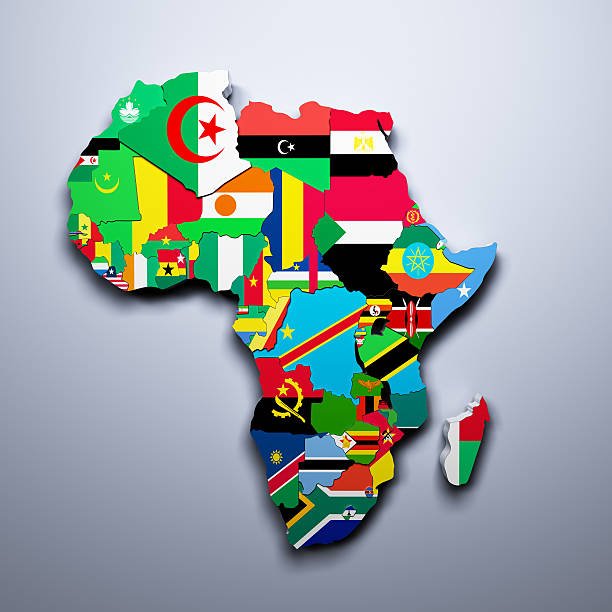
In the vast historical narrative of a continent profoundly shaped by external forces, the question of which country in Africa was never colonized by Europeans often arises. The primary answer, unequivocally, is Ethiopia. This ancient nation stands as a powerful symbol of African resilience and self-determination, having successfully defended its sovereignty against European imperial ambitions for centuries. While Liberia also maintained its independence, its unique founding by freed American slaves places its history on a distinct path compared to Ethiopia's indigenous resistance.
Understanding Ethiopia's singular status, alongside Liberia's unique journey, provides crucial insights into the complex history of the Scramble for Africa and the enduring spirit of African nations. This article delves into the historical contexts, pivotal events, and strategic factors that allowed these two nations to largely avoid the direct colonial rule that reshaped nearly every other part of the African continent.
Ethiopia: The Unconquered Land
Ethiopia, known for its rich cultural heritage and ancient civilization, holds a unique place in African history as the only nation that was never formally subjected to European colonial rule. Its uninterrupted independence dates back thousands of years, with a lineage of emperors and a distinct cultural identity.
A Long and Storied History
Ethiopia's history is characterized by a strong, centralized state that evolved from the ancient Kingdom of Aksum, a major trading power in the first millennium CE. The country's unique blend of ancient traditions, Coptic Christianity, and a well-established imperial system provided a strong foundation for national identity and cohesion. Unlike many other parts of Africa, Ethiopia possessed a long history of literacy, codified law, and state administration, which contributed significantly to its ability to resist external domination.
The rugged, mountainous terrain of Ethiopia also played a vital role in its defense. The challenging geography made it difficult for invading forces to penetrate deep into the country and maintain supply lines, offering natural fortifications that aided Ethiopian resistance movements over centuries.
The Scramble for Africa and Ethiopian Resilience
During the late 19th century, as European powers carved up the African continent in what became known as the Scramble for Africa, Ethiopia found itself surrounded by encroaching colonial territories. Italy, a newly unified nation eager to establish its own colonial empire, set its sights on Ethiopia. However, unlike many other African kingdoms, Ethiopia was not caught unprepared.
Under the astute leadership of Emperor Menelik II, Ethiopia embarked on a modernization program, acquiring modern weaponry from various European sources and forging a formidable national army. Menelik II was a strategic diplomat, skillfully playing European rivals against each other while simultaneously strengthening his nation's internal unity and military capabilities.
The Battle of Adwa (1896): A Defining Moment
The zenith of Ethiopia's resistance came with the Battle of Adwa in 1896. This decisive engagement pitted Menelik II's well-organized and numerous Ethiopian forces against a technologically superior Italian invasion army. The battle was not merely a skirmish; it was a full-scale confrontation that resulted in a stunning and overwhelming victory for Ethiopia.
On March 1, 1896, near the town of Adwa, Emperor Menelik II, along with Empress Taytu Betul and various regional leaders, led a united Ethiopian army that inflicted a crushing defeat on the Italians. Thousands of Italian soldiers were killed, wounded, or captured, marking one of the most significant military defeats for a European power at the hands of an African army during the colonial era. The Battle of Adwa had profound consequences:
- It secured Ethiopia's sovereignty and forced Italy to sign the Treaty of Addis Ababa, recognizing Ethiopia's independence.
- It boosted morale across the African continent and among people of African descent worldwide, serving as a powerful symbol of successful resistance against European imperialism.
- It established Ethiopia as a beacon of freedom and a source of inspiration for nascent Pan-Africanist movements.
The victory at Adwa demonstrated that African nations, with strong leadership, unity, and strategic planning, could successfully defend themselves against European aggression.
Italian Occupation (1936-1941) – A Temporary Setback, Not Colonization
While Ethiopia resisted formal colonization, it did face a brutal five-year occupation by Fascist Italy under Benito Mussolini from 1936 to 1941. This period, often confused with colonization, is distinct.
In 1935, Italy, seeking revenge for Adwa and eager to expand its empire, launched a second invasion with overwhelming military force, including aircraft, tanks, and chemical weapons, against Emperor Haile Selassie I's forces. Despite heroic resistance, the sheer technological disparity led to Italy's occupation of the capital, Addis Ababa, and the establishment of Italian East Africa.
However, this occupation was fiercely resisted by Ethiopian patriots who waged a continuous guerrilla war. Emperor Haile Selassie I famously appealed to the League of Nations, highlighting the failure of international bodies to protect smaller nations from aggression. With the onset of World War II, British and Commonwealth forces, alongside Ethiopian resistance fighters, liberated Ethiopia in 1941, restoring Emperor Haile Selassie to his throne. This period is regarded as a temporary occupation rather than full colonization, as Ethiopian state structures and national identity were never completely dismantled, and independence was ultimately restored.
The Legacy of Ethiopian Independence
Ethiopia's enduring independence has had a lasting impact. It became a powerful symbol of African pride and self-determination, serving as a spiritual home for Pan-Africanism. Addis Ababa, its capital, later became the headquarters of the Organization of African Unity (OAU), now the African Union (AU), underscoring its historical significance as a free African nation.
Liberia: A Different Path to Independence
Liberia is another African nation that maintained its independence throughout the colonial period, though its origins and challenges were fundamentally different from Ethiopia's.
Origins as a "Free" Colony
Liberia's unique status stems from its founding in 1822 by the American Colonization Society (ACS), an organization that aimed to resettle freed African Americans in Africa. The first settlers, known as Americo-Liberians, established colonies along the coast, gradually expanding their territory.
Unlike other European colonies, Liberia was not established for the economic exploitation of its indigenous resources by a foreign power, but rather as a haven for a diaspora community. In 1847, the Americo-Liberian settlers declared independence, forming the Republic of Liberia. This act was largely driven by a desire for self-governance and to avoid the imposition of foreign laws and regulations.
Maintaining Sovereignty Amidst Pressure
Despite its declared independence, Liberia faced immense pressure from neighboring European colonial powers, particularly Britain and France, who had established colonies in Sierra Leone and Côte d'Ivoire, respectively. These powers often contested Liberia's borders and encroached upon its territory.
Liberia managed to maintain its sovereignty primarily through a combination of diplomatic efforts and its unique relationship with the United States. Although the U.S. never formally established a protectorate over Liberia, it often offered diplomatic support and occasionally intervened to protect Liberian interests, deterring more aggressive European incursions. However, this American patronage was often limited and did not prevent significant territorial losses to European powers over time.
Internal Dynamics and External Influence
While Liberia avoided formal European colonization, its history is marked by complex internal dynamics. The Americo-Liberian elite, who constituted a minority, dominated the political and economic life of the country, often at the expense of the indigenous African populations. This created a social and political hierarchy that mimicked aspects of colonial structures.
Furthermore, Liberia's economic development was heavily influenced by foreign concessions and loans, often leading to substantial external debt and a degree of economic dependency. The Firestone Rubber Company, for example, gained vast land concessions that exerted considerable influence over the Liberian economy for decades. These factors lead to a nuanced debate: while never formally colonized, Liberia experienced significant external influence and internal disparities that raised questions about the true extent of its autonomy.
The Nuance of "Never Colonized"
The term "never colonized" requires careful definition, especially when discussing countries like Ethiopia and Liberia. It primarily refers to the absence of direct, sustained political and administrative control by a foreign European power that dismantled indigenous governance structures and imposed its own system.
Defining Colonization
Colonization typically involves the establishment of direct political control over a territory and its people by a foreign state, often involving economic exploitation, cultural imposition, and the settlement of foreign populations. This process often led to the complete subjugation of indigenous populations and their resources for the benefit of the colonizing power.
In contrast, while Ethiopia faced invasion and occupation, it never lost its foundational state structures or its ability to regain full sovereignty. Liberia, though founded by a foreign-backed initiative and facing external pressures, maintained its independent statehood and was never administered as a colony of a European power.
External Influence vs. Direct Rule
It is important to distinguish between external influence and direct colonial rule. Nearly every nation experiences some form of external influence, whether economic, political, or cultural. The key differentiator for colonization is the direct, formal, and systemic imposition of foreign governance and the extinguishing of indigenous sovereignty.
Both Ethiopia and Liberia dealt with significant external pressures and interventions. However, neither experienced the comprehensive administrative, economic, and political subjugation that characterized formal European colonization across the rest of the African continent.
Why These Countries Remained Independent
The reasons behind Ethiopia and Liberia's unique paths are distinct but offer valuable lessons.
Ethiopia's Advantages
- Strong Centralized Leadership: Emperors like Menelik II provided visionary leadership, capable of unifying disparate regions and modernizing the military.
- Military Strength: Ethiopia's ability to acquire modern weapons and field a disciplined, large army was crucial, as demonstrated at Adwa.
- Geographical Factors: The rugged terrain provided natural defenses and made sustained occupation challenging.
- Deep Historical Identity: A long history of independent statehood and a strong national identity fostered unity and resilience against foreign invaders.
- Diplomatic Acumen: Skillful diplomacy allowed Ethiopia to navigate European rivalries and gain some international recognition.
Liberia's Unique Position
- US Patronage: Though not a formal protectorate, the informal backing of the United States provided a degree of deterrence against European annexation.
- Strategic Buffer: Some European powers viewed Liberia as a convenient buffer state between their own colonial territories.
- Diplomatic Maneuvering: Liberia's leaders, despite limited resources, engaged in continuous diplomatic efforts to safeguard their independence.
The Broader Impact of European Colonization on Africa
The stories of Ethiopia and Liberia stand in stark contrast to the experiences of the vast majority of African nations. European colonization had profound and often devastating long-term impacts across the continent, shaping its political, economic, and social landscape to this day.
Economic Exploitation
Colonial powers systematically extracted raw materials and resources from Africa, such as minerals, timber, and agricultural products, for their own industrial and economic benefit. This created economies that were dependent on commodity exports, stifling local industrialization and creating uneven development.
Political Fragmentation and Artificial Borders
The arbitrary borders drawn by European powers, often without regard for existing ethnic, linguistic, or cultural lines, created states with inherent internal divisions. This legacy contributed to post-independence conflicts and political instability across the continent.
Cultural Disruption
Colonialism often led to the suppression of indigenous cultures, languages, and belief systems, replaced by European norms. This cultural imposition had lasting effects on identity and social structures.
Legacy of Underdevelopment
Many scholars and historians argue that the structures of colonialism left a legacy of underdevelopment, weak institutions, and economic dependency that continue to challenge African nations today. The focus on resource extraction rather than diversified economic growth, coupled with limited investment in local infrastructure and education for the majority, severely hindered long-term progress.
The unique histories of Ethiopia and Liberia, therefore, not only highlight their own exceptionalism but also serve as a poignant reminder of what could have been for other African nations had they been able to resist the full force of European imperial expansion.
In conclusion, when asking which country in Africa was never colonized by Europeans, Ethiopia stands out as the primary example, a testament to enduring strength, unity, and strategic leadership that successfully repelled direct European colonial rule. Liberia also maintained its independence, albeit through a distinct process involving its founding by freed American slaves and informal U.S. backing. These two nations, in their unique ways, represent powerful narratives of resistance and autonomy against the backdrop of a continent largely subjected to the profound and transformative impact of European colonization. Their stories remain pivotal in understanding the full spectrum of Africa's rich and complex history.
Enjoyed this read?
Share it with your friends and colleagues.