Did Africa Ever Rule The World

BSC Insights Admin
September 30, 2026
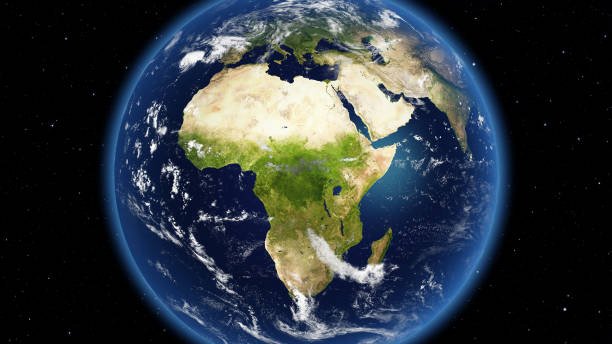
While no single African empire historically exerted direct political or military rule over every continent simultaneously in the way a modern 'world power' might be conceived, Africa has indeed been home to some of the most powerful, wealthy, and culturally influential civilizations in human history. These remarkable pre-colonial African empires and kingdoms significantly shaped global trade, knowledge, and culture, leaving an indelible mark on humanity's trajectory.
The question of whether Africa "ruled the world" prompts a deeper exploration into historical power dynamics, the definition of global influence, and the rich, often overlooked, history of a continent that is truly the cradle of humankind. From ancient Egypt's monumental achievements to the vast golden empires of West Africa, the strategic trade hubs of the East, and the sophisticated societies of Southern Africa, the continent's history is replete with examples of immense power, innovation, and far-reaching impact.
Africa's Ancient Roots of Power and Influence
For millennia, various regions across Africa fostered highly advanced societies. These early civilizations were pioneers in agriculture, metallurgy, governance, and the arts, establishing precedents that influenced civilizations far beyond their immediate borders.
Ancient Egypt: A Monumental Civilization
Perhaps the most globally recognized ancient African civilization, Ancient Egypt flourished along the Nile River for over 3,000 years. Its enduring legacy of pharaohs, pyramids, hieroglyphs, and advanced understanding of mathematics, astronomy, and medicine continues to captivate and educate. The Egyptians engaged in extensive trade with the Near East, the Mediterranean, and other parts of Africa, disseminating their cultural and technological innovations. The very foundations of Western civilization owe a debt to Egyptian advancements, demonstrating a profound, if not direct, form of global influence.
- Technological Prowess: Engineering feats like the Great Pyramids and complex irrigation systems.
- Cultural Impact: Religion, art, architecture, and writing systems that inspired subsequent cultures.
- Economic Power: Control over fertile Nile lands and strategic trade routes, particularly for gold.
The Kingdom of Kush (Nubia): Rivals and Successors to Egypt
South of Egypt, in what is now modern-day Sudan, lay the Kingdom of Kush, also known as Nubia. This powerful African kingdom was a significant cultural and economic force for over two millennia. Often interacting with Egypt, sometimes as allies, sometimes as conquerors, the Kushites eventually ruled Egypt as the 25th Dynasty of Pharaohs (c. 747–656 BCE), a period known as the Napatan phase. Their capital, Meroë, became a thriving center for iron production and trade, connecting Africa with the Red Sea and beyond. Kushite influence stretched across vast swathes of Northeastern Africa, showcasing remarkable indigenous African strength and resilience.
- Iron Production: Meroë was a major ancient center for iron smelting, demonstrating advanced metallurgical skills.
- Architectural Grandeur: Built hundreds of pyramids, often steeper and more numerous than their Egyptian counterparts.
- Cultural Identity: Developed their own script, art, and distinct religious practices.
The Golden Empires of West Africa: Wealth, Trade, and Learning
West Africa gave rise to a succession of incredibly wealthy and sophisticated empires, primarily built on the trans-Saharan trade of gold, salt, and other commodities. These empires commanded vast territories and established centers of learning that attracted scholars from across the globe.
The Ghana Empire: Masters of Gold and Salt
Emerging around the 6th century CE, the Ghana Empire (distinct from the modern nation of Ghana) was the first of the great West African trading empires. Located in parts of modern-day Mali and Mauritania, its rulers grew immensely rich by controlling the lucrative trans-Saharan trade routes, particularly the exchange of gold from the southern forests for salt from the northern deserts. Its capital, Kumbi Saleh, was a bustling metropolis with distinct Muslim and non-Muslim quarters, highlighting its cosmopolitan nature and economic prowess. The empire's sophisticated administration and powerful military ensured its dominance for centuries.
- Economic Control: Monopolized the gold-salt trade, accumulating vast wealth.
- Urban Development: Kumbi Saleh was a significant urban center, attracting traders and scholars.
- Military Strength: A powerful army maintained control over trade routes and tribute states.
The Mali Empire: Mansa Musa and Unrivaled Wealth
Succeeding Ghana, the Mali Empire rose to prominence in the 13th century, becoming one of the largest and wealthiest empires in the world. Its most famous ruler, Mansa Musa I, undertook a legendary pilgrimage (Hajj) to Mecca in 1324-1325, during which his caravan reportedly carried so much gold that its distribution temporarily depressed gold prices in Egypt. This single act dramatically showcased the immense wealth of the Mali Empire to the wider world. Mali was also a major intellectual and spiritual center, with Timbuktu flourishing as a hub of Islamic scholarship, libraries, and universities, attracting scholars from across the Islamic world and beyond. The empire's vast network of trade routes and its effective governance demonstrated a sophisticated political and economic system.
- Legendary Riches: Mansa Musa's wealth made Mali globally renowned.
- Intellectual Capital: Timbuktu became a renowned center for education and Islamic learning.
- Territorial Expanse: Controlled a vast territory, unifying diverse ethnic groups under a single rule.
The Songhai Empire: A Legacy of Power and Culture
Following the decline of Mali, the Songhai Empire emerged as the dominant power in West Africa from the 15th to the late 16th century. Under rulers like Sunni Ali Ber and Askia the Great, Songhai expanded its territory even further than Mali, becoming the largest empire in West African history. It continued Mali's tradition of promoting Islamic scholarship and trade, solidifying cities like Gao and Djenné as important centers. The Songhai managed a highly centralized administration and a powerful military, ensuring stability and prosperity across its vast domain. Its eventual downfall due to external invasion marked a significant turning point in pre-colonial African history, but its legacy of strong governance and vibrant culture endured.
- Largest West African Empire: Demonstrated remarkable organizational and military capacity.
- Continued Scholarship: Further cemented Timbuktu and other cities as intellectual hubs.
- Advanced Administration: Implemented a complex system of governors and departments to manage the vast empire.
East and Southern Africa: Strategic Trade Hubs and Powerful Kingdoms
While West Africa prospered from trans-Saharan routes, East and Southern Africa developed powerful states through different, yet equally impactful, trade networks and resource control.
The Aksumite Empire: A Bridge to the World
Located in modern-day Ethiopia and Eritrea, the Aksumite Empire (c. 1st to 7th centuries CE) was a major naval and trading power that controlled significant portions of the Red Sea trade routes. Aksum was one of the four great powers of the ancient world, alongside Persia, Rome, and China. Its port city of Adulis facilitated trade with the Roman Empire, India, and beyond. Aksum was also among the first states in the world to adopt Christianity as its official religion, significantly influencing the religious landscape of the region. The empire minted its own coins, a clear indicator of its economic sophistication and autonomy, and its geostrategic position made it a crucial intermediary in global commerce.
- Global Player: Recognized as one of the four great empires of its era.
- Strategic Trade: Dominated Red Sea and Indian Ocean trade, linking Africa to Asia and Europe.
- Early Christianity: One of the first Christian states, influencing regional religious identity.
Great Zimbabwe: Stone Cities and Regional Dominance
In Southern Africa, the remarkable civilization of Great Zimbabwe flourished between the 11th and 15th centuries. Characterized by its monumental stone architecture, including the Great Enclosure with its impressive conical tower, this kingdom was a powerful trading state. Its wealth was derived primarily from vast gold reserves and extensive cattle ranching, which it traded with the Swahili coast city-states, and ultimately with markets in India and China. Great Zimbabwe exerted significant regional dominance, managing complex social and political structures without the use of mortar in its sophisticated stone constructions.
- Architectural Marvel: Built impressive, unmortared stone structures signifying advanced engineering.
- Resource Wealth: Rich in gold and cattle, forming the basis of its economy.
- Regional Influence: Controlled a large area, influencing neighboring communities.
Swahili City-States: Maritime Trade Network
Along the East African coast, from Somalia to Mozambique, a network of independent Swahili city-states (e.g., Kilwa, Mombasa, Zanzibar) thrived from the 9th to 16th centuries. These maritime powers were crucial intermediaries in the Indian Ocean trade network, linking African goods (gold, ivory, timber, slaves) with markets in the Middle East, India, and Southeast Asia. The Swahili culture, a unique blend of African and Islamic influences, created a vibrant cosmopolitan society that profoundly shaped the region's identity and left an enduring legacy of linguistic and architectural heritage.
- Indian Ocean Trade: Pivotal in connecting African resources to Asian markets.
- Cultural Fusion: Developed a unique Swahili culture blending African and Islamic traditions.
- Urban Centers: Sophisticated port cities were hubs of international commerce.
Understanding "Global Rule": Influence Versus Direct Domination
When considering the question, "Did Africa ever rule the world?" it's crucial to define what "rule" entails in a historical context. If "rule" implies direct political and military subjugation of all other continents, then no single African empire achieved this, just as no single European or Asian empire did (with the partial exception of European colonial powers collectively in the modern era). However, if "rule" is understood as exerting profound and widespread influence – economically, culturally, and intellectually – then the answer becomes more nuanced.
African civilizations undeniably exerted immense influence:
- Economic Influence: African gold fueled global economies, shaping trade routes and contributing to the wealth of distant empires.
- Cultural Influence: Egyptian architecture inspired Greek and Roman forms; Islamic scholarship flourished in West African universities; African music, art, and storytelling have a global reach.
- Intellectual Contributions: African innovations in mathematics, astronomy, metallurgy, and medicine were significant, contributing to the global pool of knowledge.
These contributions were not merely regional; they were integral components of a developing global tapestry, demonstrating Africa's role not just as a participant, but often as a prime mover in shaping human history.
Challenges to a Unified "African World Rule"
Despite the immense power and influence of individual African empires, several factors prevented the emergence of a single, continent-wide "world-ruling" entity. These factors include:
- Vast Geographical Scale and Diversity: Africa is an enormous continent with diverse climates, topographies, and ethnic groups, making large-scale political unification incredibly challenging before modern transportation and communication.
- Internal Divisions and Regional Focus: While empires grew large, they often focused on consolidating regional power and trade networks rather than attempting continent-wide conquest. Numerous independent kingdoms and societies coexisted.
- External Pressures and Colonialism: From the transatlantic slave trade to the Scramble for Africa in the late 19th century, external forces severely disrupted and ultimately subjugated most of the continent, dismantling indigenous political structures and obscuring much of Africa's glorious past from mainstream historical narratives. This period drastically altered Africa's trajectory and global standing.
Africa's Enduring Legacy and Undeniable Global Contributions
Beyond the question of direct rule, Africa's contributions to humanity are foundational and undeniable. It is the cradle of humanity, where Homo sapiens originated and from where early migrations populated the globe. African innovations in agriculture, metallurgy, and early forms of governance laid groundwork for human civilization. The continent's rich tapestry of cultures, languages, and belief systems has continually enriched the world. Reclaiming historical narratives is crucial to fully appreciate Africa's role as a source of innovation, wealth, and profound human achievement.
In the modern era, Africa's influence continues to grow, economically, culturally, and politically. Its vibrant arts, music, literature, and intellectual thought contribute to global discourse, ensuring that the continent's powerful legacy is not just a matter of history but a dynamic and evolving force in the present and future.
Conclusion: Africa's Powerful Place in World History
In conclusion, while Africa did not ever rule the world in the sense of a single, unified political or military domination over all other continents, its history is unequivocally one of profound power, wealth, and global influence. From the ancient wonders of Egypt and Kush to the golden empires of Ghana, Mali, and Songhai, and the sophisticated trading networks of Aksum and the Swahili coast, African civilizations were central to the development of human knowledge, trade, and culture for millennia. These powerful African civilizations were not isolated entities but integral parts of the ancient and medieval world system, contributing significantly to global progress. Understanding Africa's true historical standing requires acknowledging its monumental contributions and its long-standing role as a continent of immense power and innovation, shaping the world in countless, enduring ways.
Enjoyed this read?
Share it with your friends and colleagues.