Did Africa Used To Be Connected To South America

BSC Insights Admin
October 01, 2026
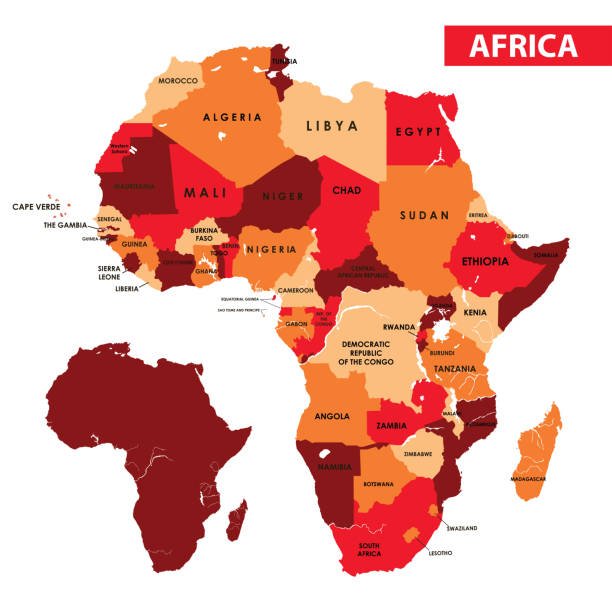
Yes, Africa and South America were indeed once connected, forming a seamless landmass as part of a much larger supercontinent known as Pangea. This profound geological connection, which began to break apart millions of years ago, is a cornerstone of the scientific theory of plate tectonics and continental drift. The evidence supporting this incredible past union is abundant and compelling, ranging from the visible similarities in their coastlines to matching fossil records and geological structures found across both continents.
Understanding how these two vast landmasses were joined and subsequently drifted apart offers deep insights into Earth's dynamic nature and the processes that continue to shape our world. This article will delve into the scientific basis for this ancient connection, exploring the evidence, the mechanisms of continental movement, and the lasting impacts of their separation.
The Ancient Supercontinent: Pangea and Gondwana
The concept of continents having once been joined together originated with observations made centuries ago, but it was the German meteorologist and geophysicist Alfred Wegener who, in 1912, proposed the comprehensive theory of continental drift. Wegener hypothesized that all Earth's landmasses were once consolidated into a single gigantic supercontinent, which he named Pangea (from ancient Greek meaning "all lands").
Pangea existed roughly between 335 and 175 million years ago, during the late Paleozoic and early Mesozoic eras. During its existence, Pangea was the dominant landmass on Earth, surrounded by a single global ocean called Panthalassa. The configuration of Pangea saw most of the continents we recognize today nestled together. Specifically, the southern portion of Pangea, known as Gondwana, comprised modern-day South America, Africa, Antarctica, Australia, the Indian subcontinent, and the Arabian Peninsula. Within Gondwana, Africa and South America were directly adjacent, sharing a long, continuous border.
The breakup of Pangea began around 175 million years ago during the Jurassic period. This immense geological event didn't happen overnight but was a slow, continuous process driven by powerful forces within Earth's interior. The separation of Africa and South America was one of the most significant initial splits in the breakup of Gondwana, leading to the formation of the South Atlantic Ocean.
Compelling Evidence for the Africa-South America Connection
The idea that continents move might seem counterintuitive given our daily experience of solid ground. However, the scientific evidence supporting the former connection between Africa and South America, and indeed the entire theory of continental drift and plate tectonics, is overwhelming. Here are the primary lines of evidence:
The Jigsaw Fit of Continents
Perhaps the most visually striking piece of evidence is the remarkable fit of the coastlines of South America and Africa. Looking at a world map, it's clear how the eastern bulge of South America seems to tuck perfectly into the western indentation of Africa. This observation was one of the first clues that sparked the idea of their past connection. While coastlines can erode, when scientists consider the continental shelves (the submerged edges of the continents), the fit becomes even more precise, like pieces of a puzzle.
Matching Fossil Records
One of the strongest arguments for Africa South America connection comes from paleontology. Identical fossil species of plants and animals have been discovered on both continents, despite the vast expanse of the Atlantic Ocean separating them today. These species were not capable of crossing wide oceans, suggesting that the landmasses must have been joined at the time they lived.
- Mesosaurus: This small freshwater reptile lived about 280 million years ago. Its fossils are found exclusively in Permian-age rocks in southern Africa and eastern South America. As a freshwater creature, it could not have swum across the saltwater Atlantic.
- Lystrosaurus: A land-dwelling reptile, fossils of Lystrosaurus have been found in Africa, India, and Antarctica. This distribution supports the idea of these landmasses being connected within Gondwana.
- Glossopteris: This ancient fern, with distinctive tongue-shaped leaves, is found across Africa, South America, Australia, India, and Antarctica. The distribution of this plant, whose seeds were too heavy to be dispersed by wind across oceans, strongly indicates a former land connection.
Synchronous Geological Formations and Rock Strata
Beyond the shape of the continents, geological evidence provides further proof. Matching rock types, mineral deposits, and mountain ranges are found on opposite sides of the Atlantic Ocean, suggesting they were once continuous formations that have since been pulled apart.
- Congo Craton and São Francisco Craton: These ancient geological blocks, found in West Africa and eastern Brazil respectively, share remarkably similar age and rock characteristics, indicating they were once part of the same ancient landmass.
- Mountain Ranges: The ancient mountain belts found along the eastern coast of South America align perfectly with mountain belts found along the western coast of Africa. For instance, remnants of the Hercynian orogeny (mountain building event) can be traced across both continents.
- Mineral Deposits: Gold fields in Ghana (West Africa) show geological similarities to gold fields in Brazil, suggesting they formed under similar conditions when the continents were joined.
Paleoclimate Evidence
Evidence from ancient climates (paleoclimates) also supports the continental drift theory. Glacial deposits and striations (scratches left by glaciers) dating back to the late Paleozoic Ice Age are found in regions that are now tropical or subtropical, including parts of Africa and South America. For these areas to have experienced glaciation, they must have been located closer to the South Pole in the past. When these continents are reassembled into Gondwana, these widespread glacial features align perfectly in a polar configuration, making geological sense.
The Mechanism: Understanding Plate Tectonics
While Wegener proposed the idea of continental drift, he couldn't fully explain the mechanism that caused continents to move. It wasn't until the mid-20th century, with advancements in oceanography and geophysics, that the theory of plate tectonics emerged, providing the scientific explanation for how and why continents shift.
Earth's outermost layer, the lithosphere, is broken into several large and small rigid plates, known as tectonic plates. These plates are not static; they are constantly moving, albeit very slowly, driven by convection currents in the semi-fluid mantle beneath them. Hot material from Earth's core rises, spreads horizontally, cools, and then sinks, creating a continuous cycle that drags the tectonic plates along.
Seafloor Spreading and the Mid-Atlantic Ridge
A key discovery supporting plate tectonics was the concept of seafloor spreading. Scientists found that new oceanic crust is continuously generated at mid-ocean ridges, such as the Mid-Atlantic Ridge. This underwater mountain range runs down the center of the Atlantic Ocean, acting as a colossal suture line where the African and South American plates are pulling apart.
Magma from the mantle rises to the surface at the Mid-Atlantic Ridge, solidifies, and forms new oceanic crust. This new crust then pushes the older crust away from the ridge on both sides, effectively widening the ocean basin and separating the continents. The rate of this separation varies but averages a few centimeters per year – roughly the rate at which human fingernails grow. Over millions of years, these small movements accumulate to create vast oceans.
The Separation Process: Birthing the South Atlantic
The splitting of Africa and South America was a monumental geological event that initiated the formation of the South Atlantic Ocean. This process unfolded over tens of millions of years, primarily during the Jurassic and Cretaceous periods.
The initial rifting began in the south, around 150 million years ago, gradually propagating northward. As the landmasses stretched and thinned, large rift valleys formed. Eventually, these valleys sank below sea level, allowing seawater to flood in, creating narrow seaways that gradually widened into the vast ocean we know today. The geological history of the South Atlantic Ocean basin shows evidence of this rifting, including characteristic sedimentary basins and volcanic activity along the margins of the separating continents.
The initial stages of separation were marked by significant volcanic activity as magma extruded through the thinning crust. This volcanism left behind extensive igneous rock formations along the continental margins of both Africa and South America, further cementing the evidence of their violent geological divorce.
Impacts of the Continental Separation
The separation of Africa and South America had profound and lasting impacts on geology, biology, and oceanography, shaping the planet in myriad ways.
Geological and Geographic Changes
The most obvious impact was the creation of a massive new ocean basin – the South Atlantic. This fundamentally changed global geography, isolating landmasses that were once connected. The rifting process also led to the formation of new coastlines, sedimentary basins (which often become sites for oil and gas deposits), and distinct geological features on the continental margins.
Evolution and Biogeography
From a biological perspective, the separation led to the isolation of species populations that were once contiguous. This isolation played a crucial role in speciation, where populations diverged and evolved independently over millions of years, adapting to their new environments. This explains why Africa and South America now host unique and distinct flora and fauna, despite their shared ancestry. The study of biogeography – the geographical distribution of plants and animals – relies heavily on understanding past continental configurations.
Oceanic Circulation and Climate
The formation of the South Atlantic Ocean also dramatically altered global ocean currents. Before the separation, oceanic circulation patterns were different, and the opening of this new ocean basin created new pathways for water and heat distribution. This, in turn, had significant implications for global climate patterns. For instance, the Antarctic Circumpolar Current, a powerful cold-water current, could only fully develop once South America and Antarctica had completely separated, significantly impacting global climate.
The Dynamic Earth: Continents Still on the Move
The story of Africa and South America is not a static one; the Earth's tectonic plates are still in motion. The Atlantic Ocean continues to widen by a few centimeters each year as new crust forms at the Mid-Atlantic Ridge. Conversely, the Pacific Ocean is slowly shrinking as oceanic crust is consumed at subduction zones around its margins.
Looking into the distant future, geological models predict that the continents will continue their relentless march, eventually converging again to form new supercontinents, perhaps in hundreds of millions of years. Concepts like "Pangea Ultima" or "Amasia" illustrate potential future configurations of Earth's landmasses, demonstrating that the planet's surface is in a state of perpetual, albeit slow, transformation.
Conclusion
To definitively answer the question, yes, Africa and South America were once connected as part of the supercontinent Pangea, specifically within its southern portion known as Gondwana. The compelling evidence, including the striking jigsaw fit of their coastlines, identical fossil evidence, matching geological formations, and corroborating paleoclimate data, leaves no doubt about their shared past. The groundbreaking theory of plate tectonics provides the robust mechanism – through processes like seafloor spreading at the Mid-Atlantic Ridge – that explains how these two continents drifted apart over millions of years, giving rise to the South Atlantic Ocean. This incredible geological journey highlights the dynamic nature of our planet and the profound influence of continental movement on Earth's geology, biology, and climate, offering a powerful testament to the ever-changing face of our world.
Enjoyed this read?
Share it with your friends and colleagues.