How Africa And South America Separated

BSC Insights Admin
September 30, 2026
How Africa And South America Separated: A Journey Through Geological Time
Africa and South America separated due to the powerful, relentless forces of plate tectonics, a process that involved the rifting of an ancient supercontinent and the subsequent formation of new oceanic crust. This grand geological divorce began approximately 180 million years ago during the Mesozoic Era, fundamentally reshaping Earth's geography and giving birth to the vast Atlantic Ocean.
The separation of these two massive landmasses is a compelling story of Earth's dynamic nature, driven by the movement of its outermost layer, the lithosphere. Understanding this process requires delving into concepts like continental drift, supercontinents, and the intricate mechanisms of seafloor spreading, which collectively explain how these continents, once joined, moved thousands of miles apart.
From Pangea to Gondwana: The Supercontinent Legacy
To grasp how Africa and South America separated, we must first look back at their shared past. For hundreds of millions of years, these continents were part of a colossal landmass known as Pangea, a Greek term meaning "all lands." This incredible supercontinent formed around 335 million years ago during the Paleozoic Era, bringing nearly all of Earth's landmasses together.
Pangea itself began to break apart during the Triassic Period, approximately 200 million years ago. Initially, it split into two major sub-supercontinents: Laurasia to the north (comprising what would become North America, Europe, and Asia) and Gondwana to the south. It is within Gondwana that Africa and South America were intimately connected, forming a singular, colossal landmass alongside Antarctica, Australia, and India. This close proximity explains many of the striking similarities in their geological features and ancient ecosystems.
The Engine of Change: Understanding Plate Tectonics
The ultimate explanation for the continental separation of Africa and South America lies in the theory of plate tectonics. This scientific model posits that Earth's outer rigid layer, the lithosphere, is broken into numerous large and small plates that are constantly in motion. These plates, which include both continental and oceanic crust, float atop a semi-fluid layer called the asthenosphere.
The driving force behind this motion is believed to be convection currents within Earth's mantle, where hot, less dense material rises, cools, and then sinks. This slow but powerful circulation drags the overlying tectonic plates along, leading to phenomena like earthquakes, volcanic activity, and, most notably for our discussion, the formation and breakup of continents and ocean basins.
Key Principles of Plate Tectonics:
- Lithospheric Plates: Earth's rigid outer shell is divided into about a dozen major plates and many smaller ones.
- Mantle Convection: Heat transfer within the mantle creates currents that move these plates.
- Plate Boundaries: Interactions between plates occur at their boundaries, which can be divergent (moving apart), convergent (moving together), or transform (sliding past each other).
The Rifting Process: The Initial Split
The first stage in how Africa and South America separated was a process known as continental rifting. This began during the early to middle Jurassic Period, roughly 180 to 150 million years ago. The immense forces of the mantle convection currents began to pull the Gondwana landmass apart, creating zones of tension in the continental crust.
Initially, this tension caused the crust to stretch and thin, leading to the formation of deep valleys known as rift valleys. These valleys are characterized by faulting and subsidence, as blocks of crust drop down. As the stretching continued, magma from the underlying mantle began to rise, attempting to fill the gaps created by the pulling apart of the crust. This period was marked by significant volcanic activity and frequent seismic activity (earthquakes) as the crust fractured and adjusted.
A modern analogue for this process can be observed today in the East African Rift Valley, where the African continent is slowly but surely pulling apart, a precursor to what might someday become a new ocean basin.
Seafloor Spreading and the Birth of the Atlantic Ocean
As the rifting progressed, the continental crust eventually thinned to the point of breaking completely. Once the continental crust separated, molten material (magma) from the mantle could more easily rise to the surface, solidifying to form new oceanic crust. This marks the onset of seafloor spreading, the primary mechanism by which new ocean basins are created and grow wider over millions of years.
The central point of this spreading became the Mid-Atlantic Ridge, an immense underwater mountain range that runs down the middle of the Atlantic Ocean. This ridge is a classic example of a divergent plate boundary, where the North American and Eurasian plates are moving away from each other in the north, and the South American and African plates are separating in the south.
At the Mid-Atlantic Ridge, magma continuously wells up, cools, and solidifies, adding new rock to the edges of the diverging plates. This process effectively pushes the continents further apart. The rate of spreading varies along the ridge, typically ranging from 2 to 5 centimeters (about 1 to 2 inches) per year, a seemingly slow pace that nevertheless accumulates into vast distances over geological timescales.
Stages of Ocean Basin Formation:
- Continental Rifting: Stretching and thinning of continental crust, forming rift valleys.
- Embryonic Ocean: Initial continental separation, formation of narrow, shallow seas (e.g., Red Sea).
- Mature Ocean: Extensive seafloor spreading, creation of a broad ocean basin with a prominent mid-ocean ridge (e.g., Atlantic Ocean).
Overwhelming Geological Evidence for Continental Separation
The theory that Africa and South America separated, along with other continents, was initially controversial. However, decades of scientific research have amassed compelling evidence that firmly supports plate tectonics and the mechanisms of rifting and seafloor spreading. This evidence comes from various disciplines, making the case for continental drift undeniable.
1. The "Jigsaw Puzzle" Fit of Continents:
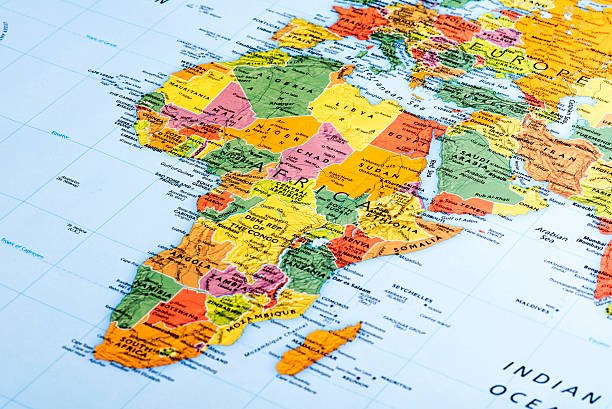
One of the earliest and most visually striking pieces of evidence, observed by Alfred Wegener in the early 20th century, is the remarkable fit of the coastlines of Africa and South America. When you mentally (or digitally) push them together, their western and eastern margins, respectively, align with astonishing precision, particularly when considering the continental shelf rather than just the visible coastline.
2. Identical Fossil Evidence:
Perhaps the most famous biological evidence comes from the distribution of ancient fossils. For instance, the freshwater reptile Mesosaurus, which could not have crossed the vast Atlantic Ocean, has been found exclusively in Permian-age rocks in both Brazil (South America) and South Africa. Similarly, fossils of the ancient fern Glossopteris and the reptile Lystrosaurus also appear on continents now separated by oceans, including Africa and South America. This indicates that these landmasses must have been connected at the time these organisms lived.
3. Matching Geological Structures and Rock Types:
Geologists have discovered striking similarities in the age and type of rocks, as well as mountain ranges, found on opposite sides of the Atlantic Ocean. For example, Precambrian and Paleozoic rock formations and mountain belts in West Africa perfectly align with similar formations in eastern South America. This geological correlation suggests a shared geological history before their separation.
4. Paleomagnetism and Seafloor Stripes:
The most conclusive evidence for seafloor spreading comes from the study of paleomagnetism. As new oceanic crust forms at the Mid-Atlantic Ridge, the iron-rich minerals within the cooling magma align themselves with Earth's magnetic field at that time. Periodically, Earth's magnetic field reverses its polarity. This process leaves a symmetrical pattern of magnetic stripes on either side of the Mid-Atlantic Ridge, acting like a giant magnetic tape recorder of Earth's past magnetic reversals. These symmetrical patterns conclusively demonstrate that new crust is continually generated at the ridge and then moves outward, pushing the continents apart.
5. Age of the Ocean Floor:
Geochronology confirms that the oceanic crust is progressively older the further it is from the Mid-Atlantic Ridge. The youngest rocks are found directly at the ridge axis, while the oldest rocks are found near the continental margins of Africa and South America, precisely what would be expected from a process of continuous seafloor spreading.
6. Seismic and Volcanic Activity:
The Mid-Atlantic Ridge is a zone of intense seismic activity and volcanic activity, marked by frequent shallow earthquakes and underwater volcanic eruptions. This activity is a direct consequence of the continuous rifting and generation of new crust at this divergent boundary.
The Profound Impact of Continental Separation
The separation of Africa and South America had profound and lasting impacts on Earth's systems, influencing everything from global climate to the evolution of life.
- Global Ocean Circulation and Climate: The formation of the Atlantic Ocean drastically altered global ocean currents. The new ocean basin allowed for the development of major current systems like the Gulf Stream, which plays a crucial role in redistributing heat around the globe, significantly impacting regional and global climates.
- Evolution of Species: The geographic isolation caused by the widening Atlantic Ocean led to the independent evolutionary paths for the flora and fauna of Africa and South America. Species that were once shared evolved into distinct forms, contributing to the incredible biodiversity observed today on both continents.
- Topography and Geomorphology: The rifting process and subsequent plate movements shaped the coastlines, influenced the formation of mountain ranges (such as the Andes in South America, a result of subduction on its western margin as it moved westward), and created unique geological landscapes on both continents.
The Continents Continue Their Journey
The story of how Africa and South America separated is not over. The dynamic forces of plate tectonics are still active. The Atlantic Ocean continues to widen by a few centimeters each year, meaning that Africa and South America are still slowly moving further apart. This ongoing process highlights that Earth's surface is not static but a constantly evolving tapestry of land and sea.
In the distant geological future, perhaps hundreds of millions of years from now, these continents may again be part of a new supercontinent, or they may continue their individual journeys, pushed and pulled by the inexorable currents within Earth's mantle. The history of their separation serves as a powerful testament to the planet's ever-changing geology and the deep time over which these magnificent transformations occur.
Summary: A Dynamic Earth Unveiled
In conclusion, the separation of Africa and South America is a classic example of continental rifting and seafloor spreading, driven by the profound forces of plate tectonics. Once conjoined within the supercontinent Gondwana, these landmasses began to pull apart around 180 million years ago. This process initiated with the stretching and faulting of the continental crust, followed by the upwelling of magma and the creation of new oceanic crust at the Mid-Atlantic Ridge. A wealth of evidence, including the continental fit, matching fossil and rock records, and indisputable paleomagnetic stripes on the ocean floor, corroborates this geological narrative. This grand separation not only birthed the Atlantic Ocean but also dramatically altered global climate and biodiversity, reminding us of the perpetually dynamic and transformative nature of our planet.
Enjoyed this read?
Share it with your friends and colleagues.