How Africa Is Splitting

BSC Insights Admin
October 07, 2026
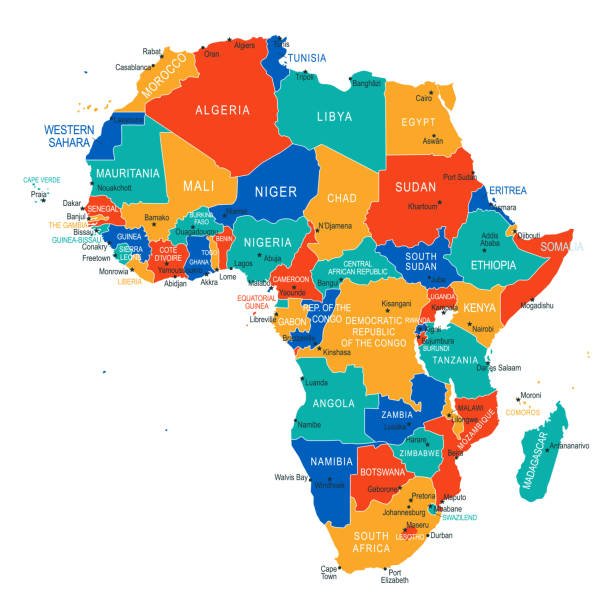
Africa is currently undergoing a slow but dramatic geological transformation, with the continent splitting apart along the East African Rift Valley. This colossal process, driven by the powerful forces of plate tectonics, is gradually tearing the African Plate into two distinct landmasses, eventually leading to the formation of a new ocean basin over millions of years. Understanding how Africa is splitting involves delving into the dynamic processes deep within Earth's crust and mantle, revealing a landscape constantly being reshaped by immense geological pressure.
The Science Behind the Split: Plate Tectonics Explained
The phenomenon of Africa splitting is fundamentally rooted in the theory of plate tectonics, which describes the large-scale motion of Earth's lithosphere. Our planet's outer shell is composed of several massive slabs, known as tectonic plates, that are constantly moving, interacting at their boundaries. These interactions can be convergent (colliding), transform (sliding past each other), or divergent (moving apart). The East African Rift Valley is a prime example of a divergent plate boundary, where the African continent is being pulled apart.
At divergent boundaries, magma from the Earth's mantle rises to the surface, pushing the plates apart. This upwelling of hot material creates a thinning and stretching of the continental crust, a process known as rifting. As the crust stretches, it becomes brittle, forming faults and cracks. Over vast spans of geological time, this stretching can lead to the formation of a deep valley, and eventually, if the rifting continues, a new ocean basin.
In the case of Africa, the immense African Plate is not a single, rigid entity. Geoscientists now understand that it is slowly breaking into several smaller plates or microplates. The primary ones involved in the current splitting are the Somali Plate to the east and the Nubian Plate (often referred to as the larger African Plate) to the west. These two plates are moving away from each other, causing the extensive rifting we observe today.
The East African Rift Valley: Africa's Great Divide
The East African Rift Valley (EARV) is the most prominent and active geological feature demonstrating how Africa is splitting. Spanning approximately 3,500 kilometers (2,175 miles) from the Afar region in Ethiopia down through Kenya, Tanzania, and into Mozambique, it is one of the largest and most active continental rifts on Earth. The EARV is not a single, continuous crack but rather a complex system of interconnected basins, faults, and volcanoes.
The rift system is characterized by several distinct features:
- Deep Valleys: The landscape is defined by dramatic escarpments and valleys, some dropping hundreds of meters.
- Volcanic Activity: Numerous volcanoes, both active and dormant, dot the rift, including iconic peaks like Mount Kilimanjaro, Mount Kenya, and the active Erta Ale volcano in Ethiopia. This volcanism is a direct result of magma rising as the crust thins.
- Earthquakes: The stretching and fracturing of the crust generate frequent shallow earthquakes along the rift zone.
- Hot Springs: Geothermal activity is common, with hot springs and geysers indicating the presence of heat from the Earth's interior.
The EARV itself is divided into two main branches:
- The Eastern Rift Valley: This branch runs through Ethiopia and Kenya, characterized by more extensive volcanic activity and narrower rift valleys.
- The Western Rift Valley: This branch arcs through Uganda, Rwanda, Burundi, Tanzania, and into Malawi, typically featuring deeper, sediment-filled basins and a chain of large, deep lakes.
Both branches collectively illustrate the dynamic process of continental rifting, providing a natural laboratory for scientists to study how continents break apart.
Evidence of a Continent Tearing Apart
The geological evidence for Africa splitting is abundant and compelling. Scientists use a variety of methods and observations to track this ongoing process:
Geological Formations and Activity
- Volcanic Chains: The presence of active volcanoes, such as those in the Afar Depression (Erta Ale) and along the Kenyan rift (Longonot, Suswa), provides direct evidence of magma reaching the surface as the crust thins and stretches.
- Frequent Earthquakes: The rift zone experiences regular seismic activity, primarily shallow-focus earthquakes, which are indicative of the crust fracturing and adjusting to the tensional stresses. Data from seismographs clearly shows the concentration of these seismic events along the rift.
- Fault Scarps: Visible cliffs and step-like formations (fault scarps) along the valley walls are direct manifestations of the Earth's crust being pulled apart and dropping down along fault lines.
Formation of Rift Lakes
One of the most striking pieces of evidence is the chain of deep, elongated lakes that fill parts of the rift valley. These are known as the African Great Lakes. Unlike most lakes, which form in depressions created by glaciers or rivers, these lakes are formed in the down-dropped blocks (grabens) created by the stretching and faulting of the Earth's crust.
- Lake Tanganyika: The second deepest freshwater lake in the world, located in the Western Rift.
- Lake Malawi (Nyasa): The third deepest, also in the Western Rift.
- Lake Turkana: A large, saline lake in the Eastern Rift of Kenya.
The unique biogeography of these lakes, including high levels of endemism in their fish species (e.g., cichlids), further supports their ancient and tectonically formed origins, as they have been isolated habitats for millions of years.
Marine Incursion and the Afar Depression
Perhaps the most dramatic glimpse into Africa's future lies in the Afar Depression, a geological hotspot where three tectonic plates (the Nubian, Somali, and Arabian plates) meet. This region, often referred to as a triple junction, is one of the lowest points on Earth and is characterized by extreme heat, active volcanism, and frequent earthquakes.
The Afar Depression is particularly significant because it is already experiencing marine incursions. The Gulf of Aden and the Red Sea, which are young oceans formed by similar rifting processes, are slowly extending inland. Episodes of seawater flooding into parts of the Afar region, such as the 2005 Dabbahu rift event, offer a direct preview of what will happen across the entire rift valley in the distant future. This area is effectively a nascent ocean basin.
Scientific Monitoring and Data
Modern technology provides irrefutable evidence. GPS (Global Positioning System) networks installed across the East African Rift measure the precise movements of landmasses. Data consistently shows that the Somali Plate is moving eastward away from the Nubian Plate at a rate of a few millimeters to a few centimeters per year. This seemingly small movement, accumulated over millions of years, accounts for the vast separation observed.
Additionally, seismic tomography, a technique similar to medical CT scans, uses earthquake waves to map the Earth's interior. These studies have revealed a superheated zone in the mantle beneath the East African Rift, often referred to as a mantle plume, which is believed to be driving the rifting process by pushing the crust upwards and outwards.
Key Regions and Their Significance
To fully grasp how Africa is splitting, it's crucial to examine specific regions within the rift system:
The Afar Triangle/Depression
Located at the intersection of the Arabian, Nubian, and Somali plates, the Afar Triangle is arguably the most geologically active and critical region in the rift system. It is here that continental rifting is transitioning into oceanic spreading. The Erta Ale volcano, with its persistent lava lake, provides a constant spectacle of Earth's internal heat. This region is not only significant for its geological dynamics but also for its paleoanthropological importance, often called the "cradle of humanity," yielding numerous hominin fossils.
The Danakil Depression
Part of the Afar region, the Danakil Depression is one of the hottest and lowest places on Earth. It is a stunning landscape of salt flats, colorful hydrothermal fields, and volcanic craters. Its extreme conditions and unique geological features make it a vital area for studying early-stage oceanic crust formation and extremophile life.
The Great Lakes Region
The western branch of the rift is home to the string of African Great Lakes, including Lake Albert, Lake Edward, Lake Kivu, Lake Tanganyika, and Lake Malawi. These lakes are deep, narrow, and incredibly ancient, acting as biodiversity hotspots. The geological activity in this region, though less volcanically active than the east, is still marked by significant faulting and seismic events, constantly reshaping the lake basins.
The Future of Africa: A New Ocean?
The ongoing geological processes confirm that the future of Africa involves the eventual creation of a new ocean basin. Over the next 5 to 10 million years, the rifting will continue, and the continental crust will thin further, eventually breaking completely. As this happens, seawater from the Red Sea and the Gulf of Aden will flood the entire length of the East African Rift Valley, forming a new sea. This new sea will gradually widen, ultimately evolving into a new ocean, akin to the Red Sea or even the Atlantic Ocean, albeit on a much longer timescale.
This will effectively split the African continent into two main landmasses: the larger Nubian Plate (comprising most of present-day Africa) and the smaller Somali Plate (consisting of parts of Ethiopia, Kenya, Somalia, and Tanzania, often referred to as the "Horn of Africa"). The formation of this new ocean will dramatically alter global geography, creating new coastlines and potentially new ecological zones.
Impacts and Implications
While the timescale of millions of years means immediate human impact is minimal, the long-term implications of Africa splitting are profound:
- Environmental Changes: The creation of new coastlines will lead to significant climate and ecological shifts. New marine ecosystems will emerge, and existing terrestrial ones will be transformed.
- Resource Potential: The rift zone is rich in geothermal energy, a renewable resource already being harnessed in countries like Kenya. It also holds potential for mineral deposits exposed by geological activity. The future ocean will offer new fishing grounds and potential hydrocarbon reserves, though these are extremely long-term prospects.
- Infrastructure Challenges: The continuous seismic activity and ground deformation pose ongoing challenges for infrastructure development (roads, railways, buildings) in the rift zone. Engineers must account for the dynamic nature of the landscape.
- Scientific Advancement: The East African Rift serves as an unparalleled natural laboratory for geologists, volcanologists, and seismologists to study continental breakup, mantle dynamics, and the processes that shape our planet.
In conclusion, the question of how Africa is splitting is answered by the relentless forces of plate tectonics, visibly manifesting through the East African Rift Valley. This monumental geological event is systematically tearing the continent apart, driven by deep mantle processes. While it unfolds over timescales incomprehensible to human perception, the evidence of its progression is undeniable – from volcanic eruptions and frequent earthquakes to the formation of vast rift lakes and the encroaching waters of the Afar Depression. Africa is not just a static landmass; it is a dynamic, living continent perpetually being reshaped, with the promise of a new ocean and entirely new geographies in its distant future.
Enjoyed this read?
Share it with your friends and colleagues.