Did Africa Start Civilization

BSC Insights Admin
September 30, 2026
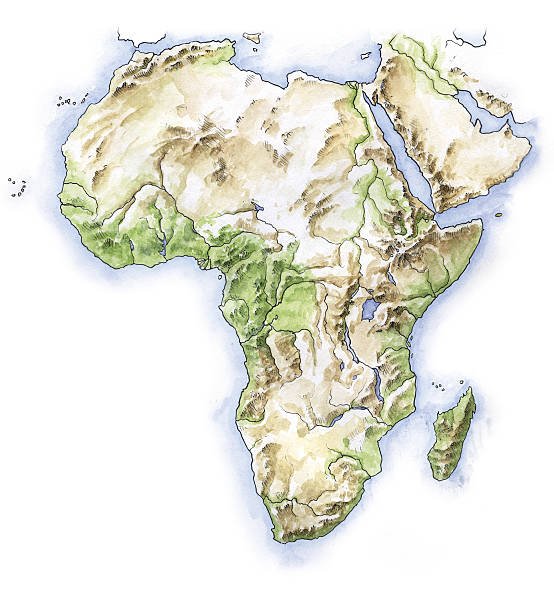
Yes, Africa is widely recognized by historians and archaeologists as the cradle of humanity and a fundamental birthplace of early civilizations. From the earliest human origins to the development of sophisticated societies along the Nile and beyond, the African continent laid many foundational stones for what we understand as civilization today. Archaeological evidence overwhelmingly points to Africa as the starting point for human evolution, culture, technology, and organized societies, predating developments in many other parts of the world.
The question, Did Africa start civilization, often stems from historical narratives that have, at times, overlooked or marginalized the continent's immense contributions. However, a deeper look into ancient history reveals a vibrant tapestry of innovation, complex social structures, advanced agriculture, and groundbreaking architectural and intellectual achievements that originated on African soil, profoundly influencing the course of global history.
Africa: The Cradle of Humanity and Early Innovation
Long before the emergence of what we typically define as 'civilizations' with cities and writing, Africa was the stage for the most crucial developments in human history. The concept of the cradle of humanity is directly linked to the continent, where the earliest hominids evolved millions of years ago. Sites like the Olduvai Gorge in Tanzania and Hadar in Ethiopia have yielded fossils such as "Lucy" (Australopithecus afarensis), providing irrefutable proof of humanity's African origins.
- Tool Making: The earliest stone tools, dating back 3.3 million years, were found in Kenya, demonstrating early African ingenuity.
- Control of Fire: Evidence from South Africa suggests early humans controlled fire over a million years ago, a critical step for cooking, warmth, and protection.
- Language and Art: Early forms of symbolic thought, including cave art and personal adornment, have been found in various African sites, indicating complex cognitive development.
These foundational advancements in tool-making, fire control, and symbolic thought were prerequisites for the eventual flourishing of organized societies. They represent the earliest forms of technological and cultural innovation that define our species, positioning Africa as the primary incubator of human development.
The Nile Valley: A Birthplace of Complex Societies
When discussing the origins of civilization, the Nile Valley inevitably takes center stage. The civilizations that emerged along the fertile banks of the Nile River in what is now Egypt and Sudan represent some of the earliest, most enduring, and influential complex societies in human history.
Ancient Egypt: A Monumental Achievement
Ancient Egypt, one of the most famous and well-studied ancient civilizations, provides undeniable evidence of Africa's pioneering role. Its origins can be traced back to pre-dynastic periods (c. 6000–3100 BCE) where settled agricultural communities gradually developed into sophisticated state-level societies.
- Unification: The unification of Upper and Lower Egypt around 3100 BCE by King Narmer (or Menes) marked the beginning of the Dynastic period, establishing a centralized state with a sophisticated administrative system.
- Writing System: Hieroglyphic writing, developed around 3200 BCE, was one of the world's earliest complete writing systems, crucial for record-keeping, administration, and religious texts.
- Architecture and Engineering: The Pyramids of Giza, the Sphinx, and monumental temples stand as testaments to unparalleled engineering and architectural prowess, built thousands of years ago.
- Mathematics and Astronomy: Egyptians developed advanced mathematics, including geometry, and made significant astronomical observations, creating one of the earliest accurate solar calendars.
- Medicine: Ancient Egyptian medical texts, such as the Ebers Papyrus, show advanced understanding of anatomy, surgery, and pharmacology.
The Nile's predictable annual flooding provided fertile soil for agriculture, allowing for surplus food production, which in turn supported a specialized labor force, urban centers, and a complex social hierarchy – all hallmarks of civilization. The Nile Valley civilization, particularly ancient Egypt, demonstrated a level of societal organization, technological advancement, and cultural richness that profoundly influenced subsequent civilizations in the Near East and the Mediterranean.
The Kingdoms of Nubia (Kush): Enduring African Powerhouses
South of Egypt, along the same life-giving Nile, flourished the ancient kingdoms of Nubia, particularly the Kingdom of Kush. Often overshadowed by their northern neighbors, the Nubians developed a distinct and equally powerful civilization that interacted with and often rivaled Egypt for millennia.
- Early Urban Centers: Cities like Kerma emerged as significant centers of trade and political power as early as 2500 BCE.
- Iron Production: The Kushites at Meroë became a major center for iron production in Africa from around 800 BCE, indicating advanced metallurgical skills.
- Writing System: They developed their own Meroitic script, distinct from Egyptian hieroglyphs.
- Independent Rulers: For a period, Nubian pharaohs of the 25th Dynasty even ruled Egypt, demonstrating their power and influence.
Nubia's strategic location made it a crucial intermediary for trade between sub-Saharan Africa and the Mediterranean world, facilitating the exchange of goods, ideas, and technologies. The Nubian civilization stands as another powerful example of early African state formation and cultural distinctiveness.
Diverse African Civilizations Beyond the Nile
While the Nile Valley offers compelling evidence, other regions of Africa also saw the independent emergence of complex societies, further reinforcing Africa's diverse contributions to civilization.
The Aksumite Empire: A Hub in the Horn of Africa
In the Horn of Africa, modern-day Ethiopia and Eritrea, the Aksumite Empire rose to prominence from around the 1st century CE. Aksum became one of the four great powers of the ancient world, alongside Persia, Rome, and China.
- International Trade: Aksum controlled vital trade routes linking Africa, Arabia, and the Indian subcontinent, thriving on the trade of ivory, gold, and spices.
- Monumental Architecture: The empire is renowned for its towering stelae (obelisks) and elaborate rock-hewn churches.
- Indigenous Script: The Ge'ez script, still used today, was developed during this period.
- Early Christianity: Aksum was one of the first states in the world to adopt Christianity as its official religion in the 4th century CE.
The Aksumite civilization showcased remarkable urban planning, advanced agricultural techniques (including terracing), and a sophisticated monetary system, printing its own coins.
Great Zimbabwe: A Southern African Marvel
Further south, in what is now Zimbabwe, the civilization associated with Great Zimbabwe flourished between the 11th and 15th centuries CE. This remarkable stone city, built without mortar, served as the capital of a powerful and wealthy kingdom.
- Architectural Ingenuity: The ruins include massive dry-stone walls, towers, and enclosures that stand as a testament to advanced architectural and engineering skills.
- Vast Trade Network: Great Zimbabwe was at the center of an extensive trade network, exchanging gold, ivory, and copper with Swahili coastal cities and ultimately with traders as far afield as China and India.
- Complex Society: The scale of the city and its intricate design suggest a highly organized society with a centralized authority and specialized labor.
Great Zimbabwe dispels the myth that sophisticated, large-scale civilizations were confined to specific regions of Africa, highlighting the continent's widespread capacity for complex societal development.
Pioneering Contributions of African Civilizations
The impact of early African civilizations extends far beyond their geographical boundaries. Their innovations laid groundwork for global progress in numerous fields:
| Field of Contribution | African Innovation / Impact |
|---|---|
| Agriculture | Domestication of unique crops (millet, sorghum, African rice), early irrigation systems along the Nile. |
| Metallurgy | Pioneering of iron smelting in areas like Nubia (Meroë) and West Africa, predating its widespread use in parts of Europe. |
| Writing Systems | Development of Hieroglyphics (Egypt), Meroitic script (Nubia), and Ge'ez (Aksum), enabling record-keeping and literary traditions. |
| Architecture | Pyramids, temples, stelae, and the dry-stone constructions of Great Zimbabwe showcase unparalleled engineering feats. |
| Governance | Formation of centralized states, complex bureaucracies, and legal systems. |
| Science & Medicine | Advanced understanding of mathematics, astronomy, and medical practices (e.g., surgery, pharmacology). |
These contributions demonstrate that Africa was not merely a passive recipient of external influences but an active, dynamic source of knowledge, technology, and societal organization that shaped the ancient world.
Reframing the Narrative: Reclaiming African History
The question, Did Africa start civilization, is often posed due to historical biases and Eurocentric perspectives that have, for centuries, minimized or outright denied the sophisticated histories of African societies. Colonial narratives frequently portrayed Africa as a continent without history or significant contributions, justifying exploitation and subjugation.
However, sustained archaeological research, historical scholarship, and linguistic studies continue to unearth and highlight the immense depth and richness of Africa's past. Recognizing Africa's foundational role is not about diminishing the achievements of other civilizations but about correcting historical inaccuracies and appreciating the full, interconnected story of human development.
Conclusion: Africa's Undeniable Legacy
In conclusion, the answer to Did Africa start civilization is a resounding yes, in multiple profound ways. Africa is the undisputed birthplace of humanity itself, where our species evolved and developed the initial tools, language, and social structures that are the bedrock of civilization. Furthermore, the continent nurtured some of the earliest and most influential complex societies, particularly along the Nile River with ancient Egypt and Nubia, whose innovations in governance, writing, architecture, science, and art left an indelible mark on global history. Beyond the Nile, other powerful and sophisticated civilizations like Aksum and Great Zimbabwe further exemplify Africa's continuous and diverse contributions. Recognizing these facts is crucial for a complete and accurate understanding of world history, celebrating Africa's pivotal and pioneering role in the grand narrative of human civilization.
Enjoyed this read?
Share it with your friends and colleagues.