Did Africa Have Trains In 1923

BSC Insights Admin
September 30, 2026
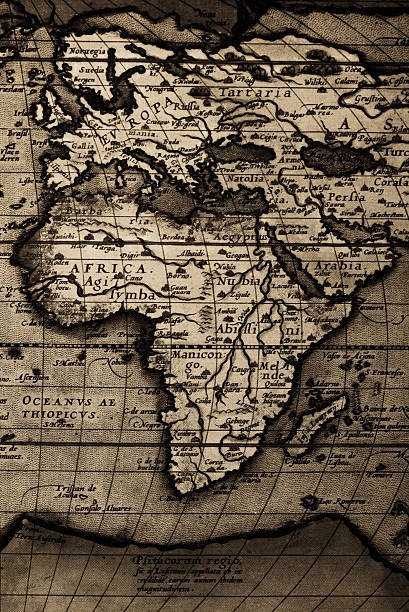
Yes, Africa had an extensive network of trains and railways in 1923, primarily developed by various colonial powers to facilitate resource extraction, military movement, and administrative control. By this time, significant railway infrastructure spanned across numerous regions, including South Africa, East Africa, West Africa, and North Africa, playing a crucial role in shaping the continent's economic and political landscape.
The Dawn of Rail: Early Railway Development in Africa
The introduction of railways to Africa predates 1923 by several decades, with the first lines appearing as early as the mid-19th century. These early ventures were largely driven by specific commercial interests or military objectives. For instance, Egypt boasted one of the continent's oldest railway systems, with the line between Alexandria and Cairo opening in 1856. As European powers intensified their scramble for Africa in the late 19th century, the construction of railways became an indispensable tool for consolidating their territorial claims and exploiting the continent's vast natural resources.
Each colonial power—British, French, German, Belgian, Portuguese, and Italian—embarked on ambitious railway projects, often linking inland resource-rich areas to coastal ports. These ambitious undertakings faced immense challenges, including difficult terrain, harsh climates, tropical diseases, and a lack of skilled labor, yet they dramatically transformed the continent's transportation infrastructure. By 1923, many of these initial fragmented lines had grown into substantial networks, facilitating trade, migration, and the movement of goods and people across vast distances.
African Railway Networks in 1923: A Regional Overview
By 1923, the railway map of Africa was a complex tapestry of lines, each with its unique history and purpose. Here's a look at some of the prominent railway developments across different regions:
Southern Africa: A Hub of Rail Activity
Southern Africa was arguably the most extensively developed region in terms of railway infrastructure by 1923. The Union of South Africa, in particular, had a vast network, primarily driven by the discovery of diamonds in Kimberley and gold on the Witwatersrand. The South African Railways and Harbours (SAR&H) operated thousands of miles of track, connecting major cities, mining centers, and ports like Cape Town, Durban, Port Elizabeth, and East London.
- South Africa: The network was crucial for transporting minerals (gold, diamonds, coal) and agricultural produce (wool, maize) to ports for export. It also served as a backbone for internal commerce and passenger travel.
- Rhodesia (modern-day Zimbabwe and Zambia): Cecil Rhodes' vision of a 'Cape to Cairo' railway, though never fully realized, spurred significant development. By 1923, lines connected the region's mineral wealth (copper, chrome) to South African ports and further north.
- Mozambique: The Portuguese colony had railways linking its ports, such as Lourenço Marques (Maputo) and Beira, to the hinterlands of South Africa and Rhodesia, serving as vital transit routes for goods.
East Africa: The 'Lunatic Express' and Beyond
The construction of railways in East Africa was marked by some of the most challenging engineering feats and memorable stories. These lines were pivotal in opening up the interior for administration and economic exploitation.
- Kenya and Uganda: The infamous Uganda Railway, often dubbed the 'Lunatic Express,' reached Kisumu on Lake Victoria by 1901. By 1923, it was a fully operational line, crucial for transporting raw materials like cotton and coffee from Uganda and agricultural produce from Kenya's fertile highlands to the port of Mombasa.
- Tanganyika (modern-day Tanzania): The German-built Central Line connected Dar es Salaam on the coast to Kigoma on Lake Tanganyika, completed in 1914. After World War I, under British mandate, this line continued to be a critical artery for the region.
- Ethiopia: The Franco-Ethiopian Railway, connecting Djibouti to Addis Ababa, was completed in 1917. Though not under colonial rule in the same way, Ethiopia utilized this railway for its international trade and modernization efforts.
North Africa: Bridging Ancient Routes with Modern Transport
North Africa's railways were among the earliest and most integrated with European systems, reflecting its geographical proximity and long history of trade.
- Egypt: As mentioned, Egypt had the oldest network, connecting key cities like Cairo, Alexandria, and Port Said. By 1923, its railways were well-established, facilitating both domestic movement and international trade through the Suez Canal.
- Algeria, Tunisia, and Morocco: Under French colonial rule, these countries developed extensive rail networks that connected major cities, agricultural regions, and mining areas to Mediterranean ports. These systems often adopted standard European gauges, reflecting their close ties to France.
West Africa: Connecting the Coast to the Interior
In West Africa, railways were primarily built to move agricultural produce (palm oil, cocoa, groundnuts) and minerals from the interior to the coast for export. Each colonial power developed its own distinct network.
- Nigeria: The British constructed a substantial network, including lines from Lagos and Port Harcourt into the rich agricultural and mineral-producing regions of the north.
- Ghana (Gold Coast): Railways linked cocoa-producing areas and mining towns to the ports of Accra and Sekondi-Takoradi.
- Senegal: The French-built Dakar-Niger Railway was a major project, aiming to connect the port of Dakar with the Niger River, facilitating trade and administrative control over French West Africa.
- Sierra Leone and Côte d'Ivoire: These colonies also had smaller, but strategically important, railway lines serving similar economic and administrative purposes.
Central Africa: Resource-Driven Railways
In Central Africa, railway development was intensely focused on accessing and exporting vast mineral wealth, particularly copper and other base metals.
- Belgian Congo (modern-day Democratic Republic of Congo): The Matadi-Kinshasa Railway (completed 1898) bypassed the unnavigable lower Congo River, linking the Atlantic port of Matadi with Kinshasa (then Léopoldville). Further lines were built to access the rich copper belts of Katanga, connecting to networks in Rhodesia and Angola.
- Angola: The Benguela Railway, under Portuguese control, was strategically important for accessing the mineral-rich interior of Angola and linking up with the Congolese and Rhodesian networks, providing an alternative route to the Atlantic for Central African mining products.
The Purpose and Impact of African Railways in 1923
The existence of trains in Africa in 1923 was not merely a technological marvel; it represented a fundamental shift in the continent's development and its integration into the global economy.
Economic Transformation
The primary driver for railway construction was economic exploitation. Trains dramatically reduced the cost and time of transporting bulk goods, making the extraction of resources like gold, diamonds, copper, tin, iron ore, coal, cocoa, coffee, cotton, groundnuts, and palm oil commercially viable on a massive scale. This stimulated the growth of export-oriented economies, though often at the expense of diversified local development.
- Resource Extraction: Railways were direct conduits from mines and plantations to ports.
- Agricultural Markets: Enabled cash crops to reach coastal markets efficiently.
- Trade Facilitation: Connected interior regions to international trade routes.
- Urbanization: Railway junctions often grew into significant towns and cities.
Political and Strategic Control
Beyond economics, railways were instruments of colonial power. They enabled rapid deployment of troops, facilitated administrative control over vast territories, and helped suppress resistance movements. They symbolized the technological superiority and organizational capacity of the colonial states.
- Military Logistics: Efficient movement of personnel and supplies.
- Administrative Reach: Allowed colonial governments to extend their authority deeper into the interior.
- Consolidation of Power: Cemented control over newly acquired territories.
Social and Cultural Shifts
The railways also had profound social implications, both positive and negative.
- Labor Migration: Drew vast numbers of laborers, often under harsh conditions, to construction sites and subsequently to mines and plantations.
- New Settlements: Created new towns and communities along railway lines.
- Limited Passenger Travel: While primarily for freight, passenger services did exist, allowing some Africans and colonialists to travel more widely.
- Cultural Exchange: Facilitated some exchange of ideas and goods, though often within the colonial framework.
Engineering Challenges and Solutions
Building railways across Africa in 1923 presented formidable engineering challenges. These included:
- Topography: Navigating mountains, deserts, dense forests, and vast plains required innovative bridge and tunnel construction.
- Climate: Extreme heat, heavy rains, and tropical diseases posed significant threats to workers and infrastructure.
- Logistics: Transporting materials, equipment, and skilled labor to remote locations was a monumental task.
- Gauge Diversity: Different colonial powers often adopted different track gauges (e.g., British Cape Gauge of 3 ft 6 in, French Metre Gauge, Standard Gauge of 4 ft 8.5 in), leading to interoperability issues that persist in some areas even today.
Despite these hurdles, the engineers and laborers of the era achieved remarkable feats, laying thousands of miles of track that formed the backbone of modern African transportation.
The Legacy Beyond 1923
The railway networks that crisscrossed Africa in 1923 laid a fundamental foundation for modern transportation infrastructure. Although their initial purpose was largely to serve colonial interests, these lines became vital assets for independent African nations after decolonization. Many of these historical lines continue to operate today, though they often face challenges such as aging infrastructure, lack of investment, and competition from road transport.
Understanding the state of African railways in 1923 provides critical insight into the enduring patterns of economic development, trade, and regional connectivity on the continent. These networks, born out of colonial ambition, became integral to the identity and growth of the nations they traversed.
Conclusion
In conclusion, Africa had a significant and strategically vital railway system by 1923, primarily constructed by European colonial powers. These trains and the accompanying infrastructure were instrumental in facilitating the extraction of vast natural resources, extending political control, and fostering economic integration within the global colonial system. From the extensive networks of South Africa to the resource-linking lines of Central Africa, and the trade arteries of East, West, and North Africa, railways were a dominant mode of transportation, leaving an indelible mark on the continent's history and shaping its future development for decades to come.
Enjoyed this read?
Share it with your friends and colleagues.