How Africa Is Big

BSC Insights Admin
September 30, 2026
How Africa Is Big: Unveiling the Continent's True Scale
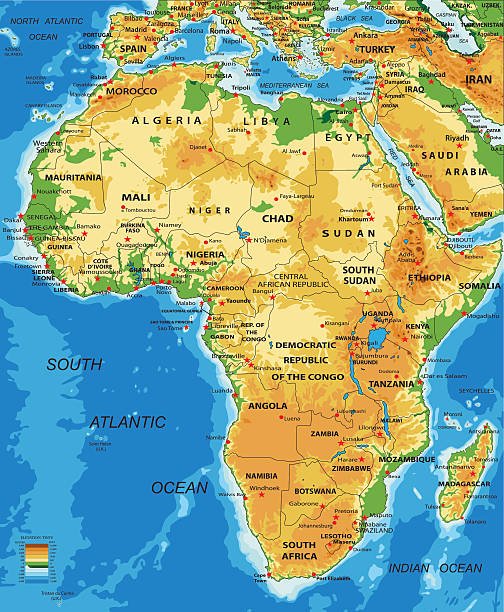
Africa is vast, encompassing a land area of over 30 million square kilometers (approximately 11.7 million square miles), making it the second-largest continent on Earth, surpassed only by Asia. Its immense size is often underestimated due to the distortions of common world maps, which can misleadingly depict it as smaller than it truly is, obscuring its profound geographical, ecological, and cultural diversity.
Understanding how Africa is big goes beyond mere statistics; it involves grasping the sheer magnitude of its landmass, its capacity to hold multiple major nations within its borders, and the incredible variety of environments and peoples it hosts. This continent is a powerhouse of natural resources, a cradle of humanity, and a vibrant tapestry of 54 distinct countries, each with its unique heritage and contribution to the global stage.
The Astonishing Dimensions of Africa
To truly appreciate Africa's size, it's essential to look at the numbers. With its colossal footprint, Africa accounts for approximately 20% of the Earth's total land area. This makes it significantly larger than many people realize, especially when comparing it to other continents or major countries.
- Land Area: Roughly 30.3 million square kilometers (11.7 million square miles).
- North-South Extent: Approximately 8,000 kilometers (5,000 miles) from its northernmost point in Tunisia to its southernmost tip in South Africa.
- East-West Extent: Roughly 7,500 kilometers (4,600 miles) from Somalia in the east to Senegal in the west.
These dimensions mean that traveling across Africa is equivalent to crossing multiple time zones and encountering vastly different climates and topographies, a testament to how big Africa is.
Unmasking Map Distortions: Why Africa Looks Smaller
One of the primary reasons for the widespread misunderstanding of Africa's true size lies in the ubiquitous Mercator projection, a standard map used for navigation for centuries. While excellent for sailors due to its accurate depiction of shapes and directions, the Mercator projection severely distorts landmasses as they move away from the equator.
- The Mercator Problem: Areas closer to the poles (like Greenland, Canada, and Russia) appear disproportionately larger than they are, while regions near the equator (like Africa and South America) appear relatively smaller. For instance, Greenland, which is often shown as similar in size to Africa, is actually about 14 times smaller.
- Accurate Representations: Projections like the Gall-Peters projection or the equivalent-area maps offer a more accurate depiction of landmass sizes, revealing Africa's massive scale in its proper context. These maps help correct the visual bias ingrained by Mercator, allowing us to fully comprehend the scale of Africa.
Putting Africa's Size Into Perspective
The best way to grasp how Africa is big is through comparisons. Imagine fitting entire countries, even continents, within its borders. The reality is truly mind-boggling.
| Country/Region | Approximate Area (sq km) | Comparison to Africa |
|---|---|---|
| United States | 9.8 million | Fits in Africa almost 3 times |
| China | 9.6 million | Fits in Africa almost 3 times |
| India | 3.3 million | Fits in Africa about 9 times |
| Western Europe (e.g., UK, France, Germany, Spain, Italy) | ~5 million | Fits in Africa over 6 times |
| Argentina | 2.8 million | Fits in Africa over 10 times |
| Greenland | 2.1 million | Fits in Africa over 14 times |
Collectively, the United States, China, India, and much of Europe can comfortably fit within Africa's boundaries, with room to spare. This vivid comparison underscores the misconception held by many and highlights Africa's true scale.
Vastness and Diversity: Geographical and Ecological Riches
The immense size of Africa naturally leads to an unparalleled level of geographical and ecological diversity. From sprawling deserts to dense rainforests, towering mountains to vast savannas, Africa is a continent of extremes.
- The Sahara Desert: The world's largest hot desert, almost the size of the United States, stretches across much of Northern Africa. This single feature emphasizes how Africa is big.
- The Nile River: The longest river in the world, flowing over 6,650 kilometers (4,132 miles) through multiple countries, showcasing the continent's extensive water systems.
- The Congo Basin: Home to the second-largest rainforest on Earth, after the Amazon, it's a critical global biodiversity hotspot.
- Mount Kilimanjaro: Africa's highest peak, an iconic snow-capped volcano, stands as a testament to the continent's varied topography.
- Diverse Climates: Due to its position straddling the equator and its sheer size, Africa experiences every major climate zone, from equatorial rainforests and tropical savannas to arid deserts and Mediterranean coastal areas.
This geographical variety supports an incredible array of wildlife, making Africa a global hotspot for biodiversity, home to iconic species found nowhere else on earth. The significant distances between these ecological zones further illustrate how big Africa is and the internal complexity of the continent.
Human Scale and Population
Beyond its physical dimensions, Africa's large size is also reflected in its human population and diversity. With over 1.4 billion people, Africa is the second-most populous continent, characterized by an extraordinary range of ethnic groups, languages, and cultures.
- Cultural Mosaic: The continent is home to thousands of distinct ethnic groups and over 2,000 languages, making it the most linguistically diverse continent.
- Growing Population: Africa has the youngest population globally and is projected to account for a significant portion of the world's population growth in the coming decades. This growing human presence further emphasizes the dynamism and potential within such a vast landmass.
Understanding the scale of its population alongside its land area helps paint a complete picture of how Africa is big – not just geographically, but demographically and culturally.
Natural Resources and Economic Potential
The vastness of Africa also correlates directly with its immense natural wealth. Its extensive landmass holds a significant portion of the world's most critical natural resources, underpinning its global economic importance.
- Mineral Riches: Africa is abundant in diamonds, gold, platinum, cobalt, uranium, bauxite, and iron ore. For example, the Democratic Republic of Congo alone holds vast reserves of cobalt, essential for modern electronics.
- Energy Resources: Significant reserves of oil and natural gas are found across the continent, particularly in West and North Africa.
- Agricultural Land: Africa possesses a substantial amount of the world's uncultivated arable land, offering immense potential for agricultural development and food security.
- Renewable Energy Potential: The continent's vast deserts offer unparalleled solar energy potential, while its extensive river systems provide hydroelectric opportunities.
These resources, distributed across its diverse landscapes, highlight the profound economic implications of how Africa is big, making it a critical player in global supply chains and future development.
Debunking Common Misconceptions
The misunderstanding of Africa's true size often leads to other oversimplifications. It's crucial to remember that Africa is not a single country, nor is it a monolithic entity.
- 54 Nations: Africa comprises 54 sovereign countries, each with its own unique political system, economy, culture, and history. The idea of Africa as a homogeneous entity ignores this fundamental diversity.
- Vast Distances Between Regions: The cultural, linguistic, and environmental differences between, say, Egypt in the north and South Africa in the south are as profound as those between European or Asian nations. This is a direct consequence of how big Africa is.
Recognizing the continent's scale is the first step toward appreciating its complexity and moving beyond outdated stereotypes.
Conclusion: Embracing the True Scale of Africa
In conclusion, the question of how Africa is big reveals a continent of truly colossal proportions, far exceeding common perceptions. With a land area that can comfortably contain the United States, China, India, and much of Europe combined, Africa stands as the second-largest continent, boasting an unmatched diversity of geography, climate, ecosystems, and human cultures. The distortions of conventional maps have long obscured this reality, but a deeper look unveils a continent of immense strategic, economic, and cultural significance.
Understanding Africa's size is fundamental to appreciating its natural wonders, its vast resources, its dynamic populations, and its crucial role in global history and future. It challenges us to re-evaluate our mental maps and embrace the true, majestic scale of this extraordinary continent, recognizing it as a vibrant mosaic of nations, not a single, undifferentiated landmass.
Enjoyed this read?
Share it with your friends and colleagues.