Did Africa Used To Be Green

BSC Insights Admin
September 30, 2026
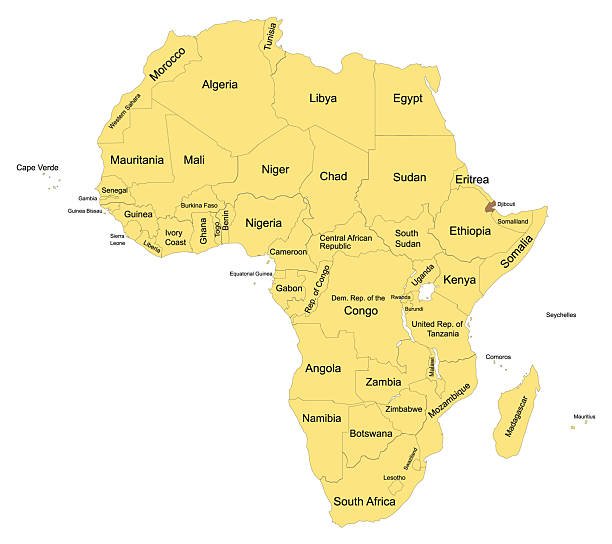
Yes, much of Africa was indeed significantly greener in the past, a period famously known as the "Green Sahara". Far from being the arid desert it is today, large swathes of what is now the Sahara Desert and surrounding regions were once fertile grasslands, dotted with lakes, rivers, and diverse flora and fauna. This dramatic transformation occurred due to natural climate cycles that altered global weather patterns, bringing abundant rainfall to North Africa thousands of years ago.
The concept that Africa was once a verdant land isn't a modern myth; it's a scientifically supported fact backed by a wealth of geological, archaeological, and paleoclimatic evidence. Understanding this ancient African climate history provides crucial insights into Earth's dynamic systems and the profound impact of natural climate variability on ecosystems and human civilizations across the continent.
Unveiling the Green Sahara: A Lush Past
The most prominent example of Africa's greener past is the Green Sahara, also referred to as the African Humid Period (AHP). This extensive period, primarily occurring between approximately 14,500 and 5,500 years ago, saw the Sahara Desert transform into a vast landscape of savannas, shrublands, and even woodlands. It was a stark contrast to the hyper-arid conditions we observe today, supporting an astonishing array of life, including large mammals like elephants, giraffes, and hippopotamuses, which are now confined to areas much further south.
This period wasn't just a brief anomaly; it lasted for several millennia, profoundly shaping the environmental and human history of North Africa. The evidence for this dramatic environmental shift is compelling and comes from multiple scientific disciplines, painting a vivid picture of a once-thriving ecosystem.
Evidence of a Verdant Land
Scientists have pieced together the story of the Green Sahara using a variety of sophisticated techniques and discoveries:
- Fossilized Pollen and Plant Remains: Sediment cores extracted from ancient lakebeds and marine deposits off the coast of West Africa reveal high concentrations of pollen from grasses, trees, and shrubs that are typical of savanna and woodland environments, not deserts. These ancient African vegetation indicators confirm the presence of extensive plant life.
- Ancient River Systems and Lakebeds: Satellite imagery and geological surveys have identified numerous fossilized river channels and vast lake basins beneath the sand. Lake Mega-Chad, for instance, was once significantly larger than the Caspian Sea, covering an area over 400,000 square kilometers, and was just one of many large bodies of water. These indicate substantial rainfall and extensive surface water.
- Saharan Rock Art: Thousands of rock carvings and paintings scattered across the Sahara, particularly in regions like the Tassili n'Ajjer in Algeria and Tibesti Mountains in Chad, depict scenes of hunting, herding cattle, and abundant wildlife such as crocodiles, hippos, and even swimmers. This prehistoric Sahara art serves as a powerful visual testament to a much wetter environment capable of sustaining such animals and human activities.
- Archaeological Discoveries: Excavations have uncovered ancient settlements, fishing tools, and ceramic fragments in areas that are now extremely arid, indicating that human populations thrived in these regions, exploiting plentiful water resources and wildlife during the Holocene African Humid Period.
- Deep-Sea Sediment Cores: Cores taken from the Atlantic Ocean basin off the coast of North Africa show varying layers of dust and organic matter. During the Green Sahara period, there was significantly less dust blown from the Sahara into the ocean, and more organic matter, reflecting less desert and more vegetation cover on land.
The Climate Drivers: Milankovitch Cycles and African Monsoons
The primary driver behind the Green Sahara and other shifts in Africa's climate history lies in cyclical changes in Earth's orbit around the sun, known as Milankovitch cycles. These cycles influence how much solar radiation (insolation) different parts of the Earth receive at various times of the year, directly impacting global climate patterns.
Understanding Milankovitch Cycles
There are three main components to Milankovitch cycles, each operating on different timescales:
- Eccentricity: The shape of Earth's orbit around the sun, which varies from nearly circular to more elliptical over a cycle of about 100,000 years. This affects the total amount of solar radiation Earth receives.
- Obliquity (Axial Tilt): The tilt of Earth's axis relative to its orbit, which changes between 22.1 and 24.5 degrees over a cycle of about 41,000 years. A greater tilt leads to more extreme seasons.
- Precession (Wobble): The wobble of Earth's axis, similar to a spinning top, over a cycle of about 23,000 years. This determines when the Earth is closest to the sun during a particular season.
During the African Humid Period, the precession cycle was critical. Approximately 9,000 to 6,000 years ago, Earth's axis was tilted such that the Northern Hemisphere received more intense summer insolation. This enhanced solar radiation intensified the African monsoon system. A stronger monsoon meant that the Intertropical Convergence Zone (ITCZ), a band of low pressure and intense rainfall, shifted significantly further north into the Sahara, bringing widespread precipitation.
This increased rainfall fostered a positive feedback loop: more vegetation meant less albedo (reflectivity of the surface), leading to greater absorption of solar energy. This warmed the land, strengthening convection and pulling even more moisture-laden air from the Atlantic Ocean into the continent, further intensifying rainfall. This orbital forcing was the key mechanism for transforming the ancient Africa vegetation.
Beyond the Sahara: Greener Across the Continent
While the Green Sahara is the most dramatic and widely studied example, evidence suggests that other parts of Africa also experienced significant environmental shifts during different periods of climate variability. The expansion of forests and savannas wasn't limited to North Africa.
For instance, paleoclimatic studies indicate changes in rainfall patterns across East and Central Africa, affecting the size and distribution of lakes and rivers. Periods of increased moisture could lead to the expansion of forested areas and richer biodiversity, influencing the migration and evolution of species. Conversely, drier periods could lead to the contraction of these green zones, pushing populations towards remaining water sources.
These continental-scale changes highlight the sensitivity of African ecosystems to global climate fluctuations and emphasize the dynamic nature of the continent's environmental past, extending beyond just the prehistoric Sahara.
Human Life in a Green Africa
The lush conditions of the Green Sahara had a profound impact on ancient human civilizations. For early humans, the verdant landscape offered an unprecedented opportunity for expansion and development.
- Population Expansion and Migration: The availability of water and abundant game allowed human populations to spread across regions that are now uninhabitable. This period facilitated the movement of people and cultures across what would later become a formidable barrier.
- New Lifestyles: Instead of focusing solely on hunting and gathering in scattered oases, people in the Green Sahara developed sophisticated fishing techniques for the numerous lakes and rivers. They also began herding cattle, as evidenced by the rock art, suggesting early forms of pastoralism long before agriculture became widespread in other parts of the world.
- Cultural Development: The stability and resource abundance contributed to the development of unique cultural expressions, as seen in the rich artistic legacy of the Saharan rock art, which chronicles daily life, beliefs, and the natural world around them.
The flourishing of life in the Green Sahara stands as a testament to humanity's adaptability and resourcefulness in harnessing environmental bounty.
The Return of the Desert: Desertification of Africa
The Green Sahara did not last forever. Around 5,500 years ago, the orbital forcing that caused the stronger monsoons began to weaken. As Earth's tilt and precession changed, the Northern Hemisphere summer insolation decreased, leading to a gradual southward shift of the ITCZ and a corresponding decrease in rainfall over North Africa. This marked the onset of the desertification of Africa.
This was not a sudden event but a process that unfolded over several centuries, leading to the gradual drying of lakes, the shrinking of rivers, and the retreat of vegetation. As the vegetation disappeared, the land became more reflective (higher albedo), reducing local warming and further weakening the monsoon circulation—a negative feedback loop that accelerated the desertification.
While natural climate cycles were the primary cause, some researchers also propose that early human activities, such as intensive pastoralism leading to overgrazing, might have contributed to the final stages of desertification by degrading fragile ecosystems, especially at the margins of the drying region. However, the overwhelming evidence points to orbital changes as the fundamental driver.
The shift from a green landscape to an arid desert forced human populations to migrate. Many moved south towards the Sahel region and the Nile Valley, contributing to the development of early complex societies there, including the origins of ancient Egypt, which relied heavily on the predictability of the Nile's annual floods.
Modern Insights from Ancient Climates
Studying the paleoclimate Africa of the past, particularly the cycles of wetting and drying, offers invaluable lessons for understanding contemporary climate change and predicting future environmental shifts.
The transitions experienced in ancient Africa highlight the sensitivity of ecosystems to even subtle changes in global climate drivers. Today, while Milankovitch cycles operate on timescales of thousands of years, anthropogenic (human-caused) climate change is driving rapid warming and altered precipitation patterns at an unprecedented rate.
Understanding how past changes led to desertification can help scientists model the impacts of current climate trends on vulnerable regions like the Sahel, which is already experiencing significant climate change Africa past and present. The Sahel region, a transitional zone between the Sahara and the Sudanian savannas, is particularly susceptible to desertification, droughts, and changes in agricultural productivity, impacting millions of lives.
The study of ancient African climate history underscores the importance of:
- Long-term Climate Perspective: Recognizing that Earth's climate has always been dynamic, but also acknowledging the unique nature and speed of current changes.
- Ecosystem Resilience: Understanding how ecosystems adapt (or fail to adapt) to changing conditions.
- Human Vulnerability: Learning from how past populations responded to environmental challenges can inform strategies for climate adaptation today.
Key Takeaways on Africa's Green Past
In conclusion, the question, "Did Africa used to be green?" is unequivocally answered with a resounding yes. Scientific evidence from various fields confirms that large parts of the African continent, most notably the Sahara Desert, were once lush, fertile landscapes supporting diverse ecosystems and thriving human populations. This transformation was primarily driven by natural Milankovitch cycles, which intensified the African monsoon system, bringing abundant rainfall to what is now one of the world's most arid regions.
The cyclical nature of Earth's climate means that periods of increased humidity and aridity have shaped the continent's geology, biodiversity, and human history over millennia. From the ancient Nile rivers that once flowed through vast savannas to the vibrant rock art depicting life in a verdant Sahara, the past offers a fascinating glimpse into a profoundly different Africa. Studying these dramatic shifts provides critical context for understanding ongoing climate change and the resilience, or vulnerability, of both natural systems and human societies today.
Enjoyed this read?
Share it with your friends and colleagues.