Did Africa Used To Be Rich

BSC Insights Admin
October 26, 2026
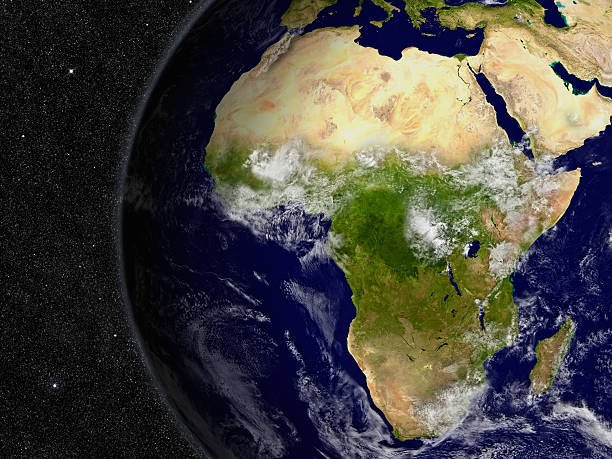
Yes, historically, Africa was home to numerous incredibly rich and powerful empires and kingdoms that flourished through extensive trade, abundant natural resources, and advanced civilizations. While modern perceptions often focus on contemporary challenges, the continent has a deep and complex history of immense wealth, intellectual prowess, and cultural sophistication that predates colonial exploitation.
The Dawn of African Prosperity: Ancient Civilizations and Resources
Africa, the cradle of humanity, has been a continent of significant wealth for millennia, long before the arrival of European colonial powers. Its diverse landscapes harbored vast natural resources, fostering the rise of highly organized and prosperous societies. These early African civilizations demonstrate a rich heritage of economic power and cultural achievement.
Ancient Egypt: A Cradle of Wealth and Innovation
Perhaps the most globally recognized ancient African civilization, Ancient Egypt, stands as a testament to the continent's early prosperity. Flourishing along the fertile banks of the Nile River for over 3,000 years, Egypt's wealth was built upon a sophisticated agricultural system, producing abundant grain that fed its populace and supported its monumental architectural feats, such as the pyramids and temples. Their control over gold mines in Nubia (modern-day Sudan) and extensive trade networks across the Mediterranean and Red Sea further solidified their economic power. Egypt traded gold, papyrus, linen, and grain for timber, copper, and precious stones, establishing itself as a dominant economic force in the ancient world.
The Kingdom of Kush: Gold, Iron, and Rivalry
South of Egypt, in what is now Sudan, lay the Kingdom of Kush, a powerful rival and, at times, conqueror of Egypt. Kush was immensely rich in natural resources, particularly gold and iron. Its capital, Meroë, became a significant iron-producing center, utilizing advanced smelting techniques. The Kushites controlled crucial trade routes, linking central Africa with Egypt and the Red Sea. Their wealth was evident in their elaborate pyramids and temples, distinct from but influenced by Egyptian styles, signifying a robust and independent economic base.
The Horn of Africa: Aksum's Maritime Might
On the eastern coast, the Kingdom of Aksum (modern-day Ethiopia and Eritrea) rose to prominence as a major naval and trading power from the 1st to the 7th centuries CE. Strategically located along the Red Sea, Aksum controlled vital trade routes connecting the Roman Empire, India, and various parts of Africa. Its merchants traded ivory, gold, emeralds, spices, and exotic animals for textiles, spices, and manufactured goods. Aksum even minted its own gold, silver, and bronze coins, a clear indicator of its economic sophistication and wealth. It was considered one of the four great powers of the world by a 3rd-century Persian prophet, alongside Rome, Persia, and China.
West African Empires: Gold, Salt, and Knowledge
West Africa, in particular, was home to a succession of incredibly wealthy empires that dominated the Trans-Saharan trade routes for centuries. Their prosperity was largely fueled by abundant gold mines and control over the lucrative salt trade.
The Ghana Empire: Land of Gold
The Ghana Empire, flourishing from the 6th to the 13th centuries CE, was renowned as the "Land of Gold." Situated between the Niger and Senegal rivers, it controlled the vital Trans-Saharan trade routes, taxing all gold and salt passing through its territory. The empire did not possess gold mines itself but acted as a crucial intermediary, exchanging salt from the Sahara for gold from the southern goldfields. This strategic control generated immense wealth, allowing its rulers to build a powerful army and a well-structured administrative system. Accounts from Arab geographers describe the Ghanaian king's opulence, adorned with gold and surrounded by wealthy courtiers.
The Mali Empire: Mansa Musa's Unfathomable Wealth
Following the decline of Ghana, the Mali Empire rose to unprecedented prominence, becoming arguably the richest and largest empire in West African history. From the 13th to the 17th centuries, Mali expanded its control over even more extensive goldfields and trade routes. Its most famous ruler, Mansa Musa I (reigned c. 1312–1337), is widely considered one of the wealthiest individuals in history. His legendary pilgrimage to Mecca in 1324–1325 showcased his immense wealth, as he reportedly traveled with thousands of soldiers, servants, and hundreds of camels laden with vast quantities of gold. So much gold was given away or spent that it reportedly caused inflation in Cairo for years. Mali also became an intellectual and cultural hub, with cities like Timbuktu and Djenné housing renowned universities and libraries, attracting scholars from across the Islamic world.
The Songhai Empire: Successor to Mali's Grandeur
As the Mali Empire weakened, the Songhai Empire emerged as its successor, reaching its zenith in the 15th and 16th centuries. Under powerful rulers like Sonni Ali and Askia the Great, Songhai extended its control over even larger territories and consolidated the Trans-Saharan trade. Gold, salt, kola nuts, and slaves were central to its economy. Gao, the capital, and Timbuktu continued to be bustling centers of commerce and Islamic scholarship. The empire maintained a sophisticated administrative structure and a professional army, demonstrating its sustained economic power and political stability.
Central and Southern Africa: Kingdoms of Resources and Trade
The wealth of Africa was not confined to the north or west. Significant kingdoms and trading networks also thrived in the central and southern regions.
Great Zimbabwe: Stone City of Trade
In Southern Africa, the majestic ruins of Great Zimbabwe stand as evidence of a powerful and wealthy kingdom that flourished between the 11th and 15th centuries. This stone city was the capital of a prosperous Shona state that controlled vast goldfields and cattle herds. It was a key player in the Indian Ocean trade network, exchanging gold and ivory for ceramics, glass beads, and textiles from as far away as China, India, and Persia. The impressive architectural achievements, built without mortar, reflect the sophisticated organization and economic surplus of this pre-colonial African power.
The Kongo Kingdom: Copper, Ivory, and Early European Contact
The Kongo Kingdom, established around the 14th century in what is now northern Angola and the Democratic Republic of Congo, was a highly organized state rich in copper, ivory, and agricultural produce. It had a robust internal economy and engaged in trade with neighboring states. When the Portuguese arrived in the late 15th century, they encountered a well-developed political and economic system, initially establishing diplomatic relations rather than immediate conquest. The Kongo traded raw materials like copper, ivory, and later, unfortunately, enslaved people, with the Europeans for manufactured goods.
Sources of Africa's Historical Wealth
The enduring prosperity of these African empires and kingdoms stemmed from several key factors:
- Abundant Natural Resources: Africa is endowed with vast deposits of gold, diamonds, salt, iron, copper, and fertile agricultural land. These resources were not merely present but actively mined, processed, and traded by African peoples.
- Strategic Geographic Location: The continent's position facilitated extensive trade routes. The Trans-Saharan routes connected West Africa with North Africa and the Mediterranean world, while the Red Sea and Indian Ocean routes linked East Africa to the Middle East, India, and Asia.
- Advanced Agricultural Practices: African societies developed sophisticated farming techniques tailored to diverse climates, allowing for surplus food production that sustained large populations and specialized labor.
- Skilled Craftsmanship and Innovation: African artisans were renowned for their metalwork (especially gold and iron), textiles, pottery, and architectural achievements, creating valuable goods for internal consumption and trade.
- Sophisticated Political and Economic Systems: Many African empires had complex administrative structures, taxation systems, and legal codes that ensured stability, protected trade, and managed resources effectively.
The Turning Point: External Influences and Decline
Despite its rich past, Africa's economic trajectory underwent a dramatic and devastating shift due primarily to external forces. The perception of Africa as a "poor" continent is largely a consequence of these historical disruptions, rather than an inherent lack of resources or capability.
The Transatlantic Slave Trade: A Devastating Drain
Beginning in the 16th century, the Transatlantic Slave Trade represented an unparalleled human and economic catastrophe for Africa. Millions of its youngest and most productive people were forcibly removed, crippling societies, disrupting agricultural systems, and fostering internal conflict. The economic potential of generations was lost, and the demographic impact profoundly stunted the continent's development. This horrific trade severely destabilized existing political and economic structures, creating a void that would later be exploited.
Colonialism and Resource Exploitation: The Scramble for Africa
The late 19th and early 20th centuries saw the "Scramble for Africa," where European powers arbitrarily carved up the continent, imposing colonial rule. This period was characterized by systematic resource exploitation, where Africa's vast mineral, agricultural, and human resources were extracted solely for the benefit of colonial powers. Indigenous economies were dismantled, local industries suppressed, and infrastructure (like railways) was built primarily to facilitate the export of raw materials, not to foster internal African development.
- Imposition of Artificial Borders: Colonial powers drew arbitrary borders, often disregarding existing ethnic, linguistic, and cultural boundaries, leading to future conflicts and political instability.
- Suppression of Local Industries: Traditional manufacturing and trade networks were disrupted or destroyed to create markets for European goods.
- Forced Labor and Taxation: Africans were often forced into labor schemes or taxed heavily, compelling them into a cash economy to serve colonial interests.
Legacy of Disruption: Post-Colonial Challenges
When African nations gained independence in the mid-20th century, they inherited economies structured for external dependency, weak institutions, and often simmering ethnic tensions exacerbated by colonial policies. The lack of indigenous industrialization, underdeveloped infrastructure for internal trade, and continued reliance on raw material exports made these nations vulnerable to global market fluctuations and perpetuated a cycle of poverty and underdevelopment.
Africa Today: Reclaiming its Economic Narrative
Despite the immense historical setbacks, Africa is currently experiencing a period of renewed economic dynamism and is actively working to reclaim its prosperous narrative.
Challenges and Opportunities
While challenges such as governance issues, poverty, and climate change persist, Africa also presents significant opportunities. It has the world's youngest population, a rapidly growing middle class, and abundant untapped resources. Technological leapfrogging, especially in mobile technology and renewable energy, is transforming various sectors.
Emerging Economies and Sectors
Many African countries are now among the world's fastest-growing economies. There is a strong focus on diversifying economies beyond raw material exports into sectors like manufacturing, services, technology, and renewable energy. Tech hubs are emerging in cities like Nairobi, Lagos, and Cape Town, fostering innovation and entrepreneurship. Initiatives like the African Continental Free Trade Area (AfCFTA) aim to boost intra-African trade and build a more integrated and resilient continental economy.
Focus on Sustainable Development
There is a growing emphasis on sustainable development, adding value to raw materials locally, investing in education and healthcare, and building robust, inclusive institutions. International partnerships are shifting from aid to trade and investment, recognizing Africa's potential as a global economic player.
Conclusion
To answer the question, yes, Africa used to be incredibly rich, home to sophisticated empires, advanced civilizations, and vast wealth derived from its abundant resources and strategic trade routes. The perception of Africa as a "poor" continent is largely a modern construct, a direct consequence of the devastating impacts of the transatlantic slave trade and European colonialism, which systematically exploited its resources and disrupted its indigenous development. Today, Africa is actively working to overcome this legacy, leveraging its youthful population, entrepreneurial spirit, and immense natural wealth to forge a new path towards sustainable prosperity and reclaim its rightful place as a global economic and cultural powerhouse. Understanding this rich history is crucial for appreciating the continent's enduring resilience and immense future potential.
Enjoyed this read?
Share it with your friends and colleagues.