Is Africa Wider Than The Moon

BSC Insights Admin
September 30, 2026
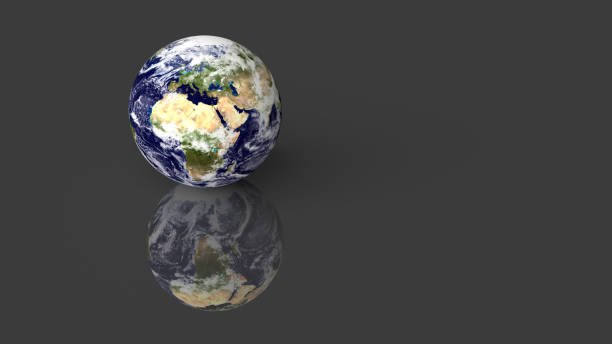
The question, Is Africa wider than the Moon?, sparks curiosity and highlights common misconceptions about global geography and astronomical scales. The definitive answer is yes, Africa is indeed significantly wider than the Moon's diameter. This surprising fact underscores the immense size of the African continent and the often-misleading nature of two-dimensional map projections.
Understanding Africa's True Scale
Africa is the second-largest continent on Earth, both in land area and population. Its vastness is frequently underestimated due to the distortions inherent in many common world maps, particularly the Mercator projection. This projection exaggerates the size of landmasses closer to the poles, making regions like Greenland and Canada appear disproportionately large, while equatorial regions, including Africa, seem smaller than they truly are.
When considering Africa's true size, it's crucial to look beyond these visual biases. The continent stretches for thousands of kilometers from east to west and north to south, encompassing a diverse array of climates, ecosystems, and cultures. Its sheer scale is often compared to the combined landmasses of several other major countries or regions to provide a more intuitive understanding.
At its widest point, from Senegal in the west to Somalia in the east, Africa measures approximately 7,500 kilometers (about 4,700 miles). This immense span represents the continent's horizontal extent and is the key measurement when comparing it to the diameter of a celestial body like the Moon.
The Moon's Celestial Dimensions
Our Moon, Earth's only natural satellite, is a substantial celestial body, but it is considerably smaller than our home planet. Its size is a fundamental aspect of understanding its gravitational influence, its role in tides, and its appearance in our night sky. Unlike a continent, which has an irregular shape and is measured across its widest points, the Moon is largely spherical, and its size is universally defined by its diameter.
The Moon's diameter is approximately 3,474 kilometers (about 2,159 miles). This measurement is consistent regardless of the angle from which it is viewed, as it represents the distance across its widest point through its center. While this is a considerable size for a moon in our solar system, it is relatively modest when placed in comparison with Earth's continental landmasses.
Key Dimensions for Comparison
- Africa's Widest Point (East-West): ~7,500 km (4,700 miles)
- The Moon's Diameter: ~3,474 km (2,159 miles)
Direct Comparison: Africa's Width vs. The Moon's Diameter
When we place these figures side-by-side, the answer to Is Africa wider than the Moon? becomes unequivocally clear. Africa, at its broadest, is more than twice the width of the Moon's diameter. This fact can be quite astonishing for many, as the Moon often appears large and prominent in the night sky, leading to an intuitive overestimation of its absolute size compared to terrestrial features.
Let's visualize this difference:
Imagine laying the Moon across the widest part of Africa. The Moon would only cover a little less than half of the continent's east-west expanse. This powerful visualization helps to correct common geographical and astronomical misconceptions, emphasizing just how enormous Africa truly is. The vastness of the continent often goes unrecognized, while the perceived scale of celestial bodies can be distorted by their visual impact.
The Scale Discrepancy
| Entity | Measurement Type | Approximate Measurement (km) | Approximate Measurement (miles) |
|---|---|---|---|
| Africa | Widest Point (East-West) | 7,500 km | 4,700 miles |
| The Moon | Diameter | 3,474 km | 2,159 miles |
As the table illustrates, the continental width of Africa significantly surpasses the moon's diameter. This comparison is a striking example of Earth vs Moon size comparison, particularly when focusing on specific geographical features rather than just the overall planetary or celestial body diameter.
Why the Misconception About Africa's Size?
The primary reason for the widespread underestimation of Africa's size, and thus the doubt regarding its width compared to the Moon, lies in cartographic distortions. The Mercator projection, developed in 1569, was revolutionary for navigation because it preserves angles and shapes, making sailing routes straight lines. However, this comes at the cost of distorting area, particularly as one moves away from the equator.
- Mercator Projection: This map projection exaggerates landmasses at higher latitudes. For instance, Greenland appears roughly the size of Africa on a Mercator map, but in reality, Africa is about 14 times larger than Greenland. This distortion has deeply ingrained an inaccurate sense of scale in global geography.
- Lack of Direct Experience: Few people have the opportunity to traverse the full width of Africa or mentally compare it to astronomical distances. Our perception is often shaped by what we see on maps or in media.
- Visual Prominence of the Moon: The Moon, being a distinct celestial object in our sky, can appear quite large due to its proximity. This visual impact can lead to an intuitive but incorrect assumption about its actual physical scale when compared to vast landmasses on Earth.
Understanding these factors is crucial for developing an accurate geographical scale of Africa and appreciating its true dimensions.
Africa's Vastness Beyond Its Width
While its width comparison with the Moon is compelling, Africa's vastness extends far beyond a single measurement. It encompasses an incredible diversity of landforms, ecosystems, and human societies.
- Area: Africa covers approximately 30.3 million square kilometers (11.7 million square miles). To put this into perspective, Africa is large enough to contain the United States, China, India, Japan, and most of Europe all within its borders.
- Biodiversity: From the Sahara Desert to the Congo Rainforest, the savannas of East Africa to the unique flora of Madagascar, the continent boasts unparalleled biodiversity.
- Cultural Richness: Home to over 1.3 billion people and thousands of distinct ethnic groups, Africa is a cradle of human civilization with a rich tapestry of languages, traditions, and histories.
- Economic Potential: With abundant natural resources and a rapidly growing young population, Africa holds significant economic potential on the global stage.
These aspects contribute to the overall grandeur and importance of understanding Africa's vast landmass accurately, moving beyond mere numbers to appreciate its profound global significance.
The Importance of Accurate Geographical Understanding
Correcting misconceptions like Is Africa wider than the Moon? is more than just an exercise in trivia; it has significant implications for how we perceive the world and its inhabitants.
Educating on true scale helps to:
- Challenge Eurocentric Bias: Many maps prioritize certain regions, implicitly influencing our understanding of global importance. Recognizing Africa's true size helps balance this perspective.
- Foster Global Awareness: A better understanding of geographical scale leads to more informed discussions about global issues, resource distribution, climate change, and international relations.
- Promote Spatial Literacy: Developing an accurate mental map of the world improves critical thinking skills and the ability to interpret data and information effectively.
- Appreciate Diverse Regions: Acknowledging the immense scale of continents like Africa helps to appreciate the internal diversity within them, rather than viewing them as monolithic entities.
By learning about the accurate continental dimensions, we gain a more nuanced and respectful view of our planet and its diverse regions. This extends to understanding astronomical object sizes in relation to terrestrial features, providing a broader cosmic perspective as well.
Comparing Earth's Continents to Celestial Bodies
The comparison of Africa to the Moon is just one example of how terrestrial and celestial scales can intersect in surprising ways. Our own planet, Earth, with a diameter of approximately 12,742 kilometers (7,918 miles), is significantly larger than the Moon. Other planets and moons in our solar system also offer fascinating scale comparisons.
- Mercury: The smallest planet, Mercury, has a diameter of about 4,879 km. This means Africa's widest point is still considerably larger than the entire planet Mercury.
- Mars: The 'Red Planet', Mars, has a diameter of about 6,779 km. Africa's width is comparable to, and slightly larger than, Mars.
These comparisons help us grasp the truly immense dimensions of Earth's continents and the varied sizes of bodies within our solar system. It highlights that while continents are part of a planet, their individual extents can rival or even exceed the diameters of smaller planets and moons.
Conclusion
In summary, the answer to Is Africa wider than the Moon? is a resounding yes. With an east-west measurement of approximately 7,500 kilometers, Africa significantly exceeds the Moon's diameter of roughly 3,474 kilometers. This striking fact is a powerful reminder of both the vastness of Earth's continents and the profound impact of map projections like the Mercator on our perception of global geography. Understanding Africa's true size and challenging these common misconceptions is vital for accurate global awareness, fostering a more informed and respectful appreciation of our planet's diverse landmasses and their place in the cosmos.
Enjoyed this read?
Share it with your friends and colleagues.