Did Africa Have Written Language

BSC Insights Admin
October 01, 2026
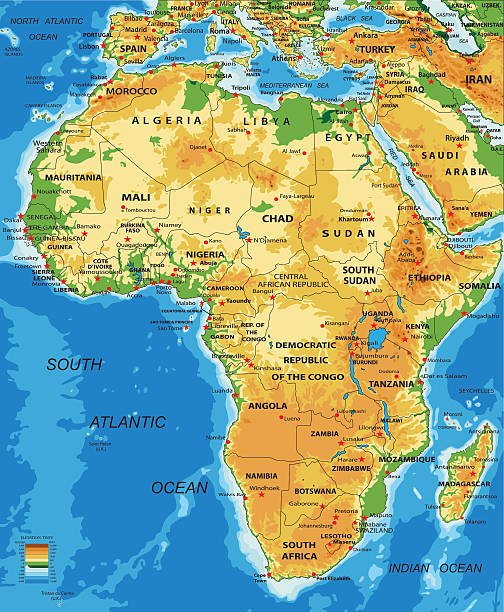
Yes, Africa did have written language, and indeed, it boasted a remarkable diversity of sophisticated writing systems long before European colonization. The continent is home to some of the world's earliest forms of writing, with ancient Egyptian hieroglyphs being a prime and widely recognized example. Beyond the Nile Valley, numerous indigenous scripts evolved across various regions, reflecting the continent's rich intellectual and cultural heritage.
The Dawn of Writing: Ancient Egypt's Legacy
When considering the question, "Did Africa have written language?", ancient Egypt stands as an undeniable testament. The civilization along the Nile developed one of the earliest and most iconic writing systems known to humanity.
Egyptian Hieroglyphs: A System of Sacred Carvings
- Origin and Development: Egyptian hieroglyphs emerged around 3200 BCE, initially as pictograms and ideograms, gradually evolving into a complex system combining logographic, syllabic, and alphabetic elements. The term "hieroglyph" itself comes from the Greek words "hieros" (sacred) and "glypho" (writing), reflecting their early use in religious and monumental contexts.
- Purpose and Use: Primarily used for monumental inscriptions on temples, tombs, and statues, hieroglyphs preserved religious texts, historical records, and royal decrees. Scribes, a revered class, meticulously documented every aspect of Egyptian life, from administration to mythology.
- Evolution of Scripts: As the need for faster writing developed, two cursive forms emerged:
- Hieratic: A simplified, cursive version of hieroglyphs, used for administrative documents, literary texts, and religious manuscripts on papyrus and ostraca.
- Demotic: An even more simplified and abstract script that evolved from hieratic around 650 BCE. It became the common script for everyday documents, letters, and business transactions, persisting well into the Roman period.
- The Rosetta Stone: The discovery of the Rosetta Stone in 1799 proved pivotal in deciphering ancient Egyptian scripts. This artifact featured the same decree inscribed in three scripts: hieroglyphic, Demotic, and ancient Greek, providing the key to understanding this crucial part of African written language history.
Beyond the Nile: Diverse Indigenous African Writing Systems
While Egyptian scripts are widely known, the assertion that Africa had written language is further substantiated by a wealth of other distinct indigenous writing systems that developed independently across various regions of the continent.
Meroitic Script: The Voice of Ancient Nubia
South of Egypt, in what is now Sudan, flourished the ancient Kingdom of Kush. The Kushites, particularly during the Meroitic period (c. 300 BCE – 350 CE), developed their own unique script called Meroitic. This alphasyllabary, derived from Egyptian demotic, was used to write the Meroitic language. It consisted of 23 signs and was written horizontally, either from right to left or top to bottom. Despite the script being deciphered phonetically, the Meroitic language itself remains largely undeciphered, posing an intriguing challenge to historians and linguists studying ancient African scripts.
Ge'ez Script: Ethiopia's Enduring Legacy
In the Horn of Africa, particularly in modern-day Ethiopia and Eritrea, the Ge'ez script emerged as one of the oldest and most continuously used writing systems in Africa. Developed from the South Arabian script around the 5th-4th centuries BCE, Ge'ez is an abugida (or alphasyllabary), where each character represents a consonant-vowel syllable. Initially used for the ancient Ge'ez language, it became the script for sacred texts of the Ethiopian Orthodox Tewahedo Church and is still used for liturgical purposes today. Furthermore, it was adapted to write several modern Ethiopian and Eritrean languages, including Amharic, Tigrinya, and Oromo, showcasing its adaptability and enduring significance in African literacy.
Tifinagh: The Ancient Script of the Berbers
Across North Africa and parts of the Sahel, the indigenous Berber people (also known as Amazigh) have a history stretching back millennia. Their unique script, Tifinagh, is an ancient abjad (consonant-only alphabet) that predates the arrival of Arabic. Inscriptions dating back to the 3rd century BCE have been found in various locations, including Libya, Algeria, and Morocco. While it experienced periods of decline, Tifinagh has seen a significant revitalization in modern times. It is now officially recognized and taught in schools in Morocco and Algeria, symbolizing a strong affirmation of Berber identity and a vibrant example of a living indigenous African writing system.
Nsibidi: A Symbolic System of Southeastern Nigeria
In southeastern Nigeria, among ethnic groups like the Ejagham, Efik, Ibibio, and Igbo, an ancient ideographic script known as Nsibidi has been in use for centuries, possibly even millennia. Nsibidi is a system of graphic signs that represent concepts, words, or sounds, rather than specific letters or syllables. Historically, it was a secret form of communication, primarily used by powerful secret societies like the Ekpe and Egbo, found on wall designs, calabashes, textiles, and body art. While not a phonetic script in the Western sense, its complex visual language conveyed profound meanings and served administrative and ritualistic purposes, challenging narrow definitions of "written language" in Africa.
Vai Script: A 19th-Century Innovation from Liberia
In a powerful demonstration of independent innovation, the Vai script was developed in the early 19th century (around 1833) by Momolu Duwalu Bukele and his companions for the Vai language in what is now Liberia. This syllabary is a remarkable achievement, consisting of over 200 distinct characters, each representing a syllable. It was developed without any apparent knowledge of European or Arabic writing systems, making it a truly indigenous creation. The Vai script quickly spread and was used for personal correspondence, administrative records, and even publishing a newspaper, underscoring the capacity for African societies to develop their own literacy tools.
Bamum Script: King Njoya's Vision in Cameroon
Another extraordinary example from the 19th century is the Bamum script, invented by King Njoya of the Bamum kingdom in Cameroon. Beginning around 1895, King Njoya personally oversaw the development and refinement of this script, which evolved through several stages, from a complex pictographic system to a more streamlined syllabary of about 70 characters. He established schools to teach the script and used it for administrative purposes, to record the history of his people, and to write a vast body of literature. The Bamum script represents a monumental effort by an African monarch to preserve and promote his people's culture through their own unique form of African written language.
Adinkra Symbols: Ghana's Communicative Cloth
While not a phonetic script in the same vein as an alphabet or syllabary, the Adinkra symbols of the Akan people in Ghana and Côte d'Ivoire are a sophisticated system of visual communication. Each symbol represents a proverb, concept, or historical event, conveying complex philosophical and spiritual meanings. Primarily used in textiles (especially funeral cloths), pottery, and architecture, Adinkra symbols are a profound example of how African cultures used graphic forms to record and transmit knowledge, values, and cultural heritage across generations.
The Influence of External Scripts: Adaptation and Integration
While Africa's written language history is rich with indigenous systems, the continent also experienced the integration and adaptation of external scripts, particularly Arabic and later Latin, which played significant roles in shaping its linguistic landscape.
Arabic Script and Ajami
With the spread of Islam from the 7th century onwards, the Arabic script became widely adopted across North Africa, the Sahel, and East Africa. Crucially, it was not merely used for Arabic itself but was adapted to write many indigenous African languages. This phenomenon, known as Ajami, allowed languages like Swahili, Hausa, Fulfulde, Wolof, and Somali to be documented and to develop their own rich literary traditions. Ajami texts served purposes ranging from religious scholarship and poetry to historical chronicles and administrative records, profoundly influencing African literacy and intellectual traditions.
Latin Script and Colonialism
The arrival of European colonial powers in the 19th and 20th centuries led to the widespread introduction of the Latin alphabet. Missionaries and colonial administrators often transcribed local languages into Latin script for administrative purposes, education, and evangelization. While this facilitated literacy in many areas and allowed for the standardization of many African languages, it also sometimes led to the suppression or marginalization of existing indigenous writing systems, creating a complex legacy for African written language development.
Modern Efforts and the Future of African Scripts
Today, the legacy of African written language continues to evolve. While Latin script is dominant for many official languages, there is a growing movement to revitalize and promote indigenous scripts.
- Preservation and Promotion: Academics, cultural institutions, and local communities are actively working to document, teach, and use traditional scripts. This includes developing teaching materials, digital fonts, and educational programs to ensure these valuable parts of African heritage are not lost.
- Digital Integration: Efforts are underway to integrate African scripts into digital platforms, making them accessible in the modern age and fostering their use in contemporary communication. This includes creating Unicode standards for scripts like Tifinagh and Vai.
- Pan-African Systems: Some linguists and scholars have explored the possibility of developing unified pan-African writing systems, such as the N'Ko script (developed in Guinea in 1949 for Manding languages), which aim to represent a broader range of African sounds and promote continental linguistic unity.
Conclusion: A Rich Tapestry of African Written Language
In conclusion, the answer to "Did Africa have written language?" is an unequivocal and emphatic yes. Far from being a continent devoid of writing, Africa is a cradle of literacy, having developed some of the world's oldest and most diverse writing systems. From the majestic hieroglyphs of ancient Egypt and the enigmatic Meroitic script to the enduring Ge'ez, the resilient Tifinagh, and innovative 19th-century creations like Vai and Bamum, the continent has a profound and multifaceted history of African written language. These scripts, alongside the widespread adoption and adaptation of Arabic and Latin scripts, collectively illustrate a rich tapestry of intellectual tradition, cultural expression, and continuous innovation that has shaped and continues to define the vast and vibrant continent.
Enjoyed this read?
Share it with your friends and colleagues.