Did Africans Colonize Anything

BSC Insights Admin
October 07, 2026
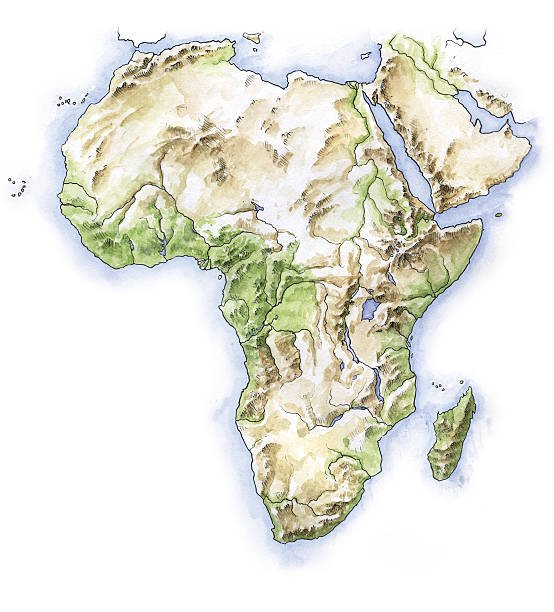
Did Africans colonize anything? While the term colonization is most commonly associated with European expansion and conquest from the 15th century onwards, African civilizations historically engaged in significant forms of expansion, settlement, and the establishment of influence across vast territories, which share characteristics with colonial processes but are often viewed through a different historical lens. The most prominent example is the Bantu Expansion, a millennia-long migration that profoundly reshaped the demographic, linguistic, and cultural landscape of a significant portion of the continent. Understanding pre-colonial Africa reveals a complex tapestry of large-scale movements, trade networks, and powerful empires that exerted considerable influence over neighboring regions, often resulting in cultural assimilation, political integration, and the establishment of new settlements.
To adequately answer the question of whether Africans colonized anything, it's essential to first contextualize the definition of 'colonization.' While modern interpretations often emphasize exploitation, political subjugation, and resource extraction by a foreign power, historical patterns of expansion across continents, including Africa, frequently involved migration, settlement, cultural diffusion, and the establishment of dominance over other groups. African history abounds with instances where advanced societies and powerful empires extended their reach, established new communities, and integrated diverse peoples under their political and economic systems.
The Bantu Expansion: Africa's Monumental Migration and Settlement
One of the most significant and enduring examples of large-scale African expansion is the Bantu Expansion. This was not a military conquest in the typical sense but rather a series of migrations by Bantu-speaking peoples from their ancestral homelands in West-Central Africa, starting around 3000 BCE and continuing for millennia. This demographic movement had a transformative impact across sub-Saharan Africa.
Origins and Spread of Bantu-Speaking Peoples
Originating near modern-day Cameroon and Nigeria, the Bantu-speaking communities gradually spread across Central, Eastern, and Southern Africa. Their migrations were driven by a combination of factors, including population growth due to agricultural innovations like ironworking and new crop cultivation, as well as a search for new lands. As they moved, they often encountered and absorbed, or sometimes displaced, existing hunter-gatherer populations.
Cultural and Technological Impact
The Bantu Expansion was instrumental in spreading both agriculture and iron technology across the continent. These innovations allowed for more settled lifestyles, higher population densities, and the development of more complex social and political structures. The linguistic legacy is profound, with Bantu languages now spoken by hundreds of millions of people, making it one of the largest language families in Africa. This cultural and technological diffusion, coupled with widespread settlement, dramatically reshaped the continent's demography and future civilizations.
Distinguishing from European Colonialism
While the Bantu Expansion involved the movement into new territories and the significant alteration of existing societies, it generally differed from European colonialism in its motivations and mechanisms. It was primarily a gradual process of migration, settlement, and cultural interaction, rather than an organized imperial project focused on resource extraction for a distant metropolitan power. However, it undeniably involved the expansion of one group's way of life and influence over vast new regions, demonstrating an ancient pattern of territorial expansion and cultural spread within Africa.
Ancient African Empires and Their Spheres of Influence
Long before the advent of the modern nation-state, various powerful African empires established significant spheres of influence, extending their control and culture over wide areas. These ancient powers exemplify forms of territorial expansion and regional hegemony.
Ancient Egypt: Imperial Ambitions in Nubia and the Levant
Ancient Egypt, one of the world's earliest and most enduring civilizations, frequently extended its control beyond its immediate borders. For millennia, Egypt exerted significant influence and direct rule over Nubia (modern-day Sudan), particularly during the New Kingdom period. They established garrisons, administered provinces, extracted gold and other resources, and imposed Egyptian culture and religion on the Nubian elite. This relationship, while complex and often reciprocal, clearly demonstrates a form of imperial control and resource exploitation. Egyptian influence also reached into the Levant, establishing outposts and trade relationships that extended its cultural and political reach.
The Kingdom of Kush: Expanding Northward and Southward
The Kingdom of Kush, centered in Nubia, emerged as a powerful rival and successor to Egypt's southern dominance. At its peak, the Kushite empire not only controlled a vast territory south of Egypt but famously conquered Egypt itself, ruling as the 25th Dynasty (c. 744–656 BCE). This period saw Kushite pharaohs govern Egypt, asserting political and cultural dominance over their former colonizers. Kush continued to be a significant regional power for centuries, maintaining extensive trade networks and exerting influence over neighboring communities, demonstrating its own capacity for regional leadership and political expansion.
Carthage: A North African Maritime Power
Though Phoenician in origin, Carthage grew to become a distinctly North African power, headquartered in modern-day Tunisia. From the 7th to the 3rd centuries BCE, Carthage established an extensive maritime empire across the Mediterranean. They founded numerous trading posts and settlements (colonies) along the coasts of North Africa, Sicily, Sardinia, Corsica, and the Iberian Peninsula. These outposts served as vital nodes in their vast trade network, securing access to resources like silver, tin, and agricultural products. Carthaginian control involved economic dominance, military garrisons, and the imposition of their trading rules, a classic example of a powerful state extending its reach through settlement and trade-based imperial ambitions.
West African Empires: Trade, Hegemony, and Cultural Diffusion
West Africa saw the rise of incredibly wealthy and powerful empires that controlled vast territories, immense trade routes, and wielded considerable regional hegemony. These empires fostered cultural diffusion and political integration across diverse populations.
The Mali Empire: Economic and Cultural Reach
Flourishing from the 13th to the 16th centuries, the Mali Empire was one of the largest and wealthiest states in pre-colonial Africa. It controlled critical trans-Saharan trade routes, especially those dealing in gold and salt. Under rulers like Mansa Musa, Mali expanded its territory significantly, incorporating numerous smaller kingdoms and ethnic groups under its suzerainty. While often allowing local rulers to maintain some autonomy, Mali's central authority ensured loyalty, tribute, and adherence to its legal and administrative systems. The empire also became a renowned center of Islamic learning and culture, spreading its influence far beyond its direct political borders through scholarship and trade.
The Songhai Empire: Military and Political Expansion
As the Mali Empire declined, the Songhai Empire rose to prominence, conquering much of Mali's former territory and expanding even further, reaching its zenith in the 15th and 16th centuries. Under leaders such as Sonni Ali and Askia the Great, Songhai established a powerful centralized state with a formidable military. It managed to control vital trade routes and agricultural lands, extending its direct rule and influence across a massive geographical area in West Africa. Its administrative system and military prowess allowed it to govern a diverse array of peoples, asserting political dominance and integrating various regions into its imperial structure.
Kanem-Bornu: A Saharan Powerhouse
East of Songhai, the Empire of Kanem-Bornu (existing from the 9th to the 19th centuries) exerted long-lasting control over the central Sahara and Lake Chad basin. Its strategic location allowed it to dominate key trans-Saharan trade routes linking North Africa with the Sudanic regions. Kanem-Bornu engaged in military expansion, establishing a vast multi-ethnic empire and influencing numerous smaller states through its political and economic power. It maintained a sophisticated court and administrative system, demonstrating sustained regional hegemony over a millennium.
East and Southern African Networks: Trade, Migration, and Settlement
Beyond West Africa, other regions of the continent also saw the development of powerful states and extensive networks that fostered trade, migration, and the establishment of new settlements, reflecting advanced forms of organization and influence.
The Swahili Coast: City-States and Maritime Trade
Along the East African coast, the Swahili city-states (e.g., Kilwa, Mombasa, Zanzibar) emerged as powerful independent entities from the 8th century onwards. While not a unified empire, these city-states established an extensive network of maritime trade across the Indian Ocean, reaching as far as India, China, and Southeast Asia. They founded trading posts and settlements along the coast and on islands, creating a distinctive Swahili culture that was a blend of African, Arab, and Indian influences. This network of settlements facilitated the spread of their language, religion (Islam), and architectural styles, showcasing a form of commercial and cultural expansion through strategic coastal outposts.
Great Zimbabwe and Southern African Kingdoms
In Southern Africa, the rise of powerful kingdoms such as the one centered at Great Zimbabwe (c. 11th–15th centuries) provides evidence of complex, organized societies that commanded significant regional influence. Great Zimbabwe was a sophisticated city that controlled extensive trade routes for gold, ivory, and cattle. Its power and wealth allowed it to project influence over a wide area, leading to the establishment of numerous smaller satellite settlements and administrative centers throughout the Zimbabwe plateau. This indicates a system of centralized authority and regional control, demonstrating a capacity for building and maintaining a structured sphere of influence, driven by economic prosperity and political organization.
Distinguishing African Expansion from European Colonialism
While African societies undeniably engaged in various forms of expansion, settlement, and influence that bear resemblances to aspects of 'colonization,' it's crucial to acknowledge key distinctions from the more recent European colonial period.
Motives and Methods
- African Expansion: Often driven by factors such as population growth, agricultural needs, trade opportunities, strategic alliances, and the gradual spread of cultural practices. Methods typically involved migration, cultural exchange, intermarriage, and the establishment of tribute relationships. While conflict occurred, the primary goal was often integration and the creation of sustainable systems of trade and resource sharing.
- European Colonialism: Primarily driven by the desire for raw materials, new markets, strategic global power, and often underpinned by ideologies of racial superiority. Methods involved direct military conquest, political subjugation, imposition of foreign administrative systems, and the systematic extraction of resources for the benefit of the colonizing power, often with devastating consequences for indigenous populations.
Long-Term Legacies
The legacies of African expansion often involved cultural synthesis, linguistic diversity, and the organic development of complex socio-political systems adapted to local contexts. While power dynamics certainly existed, the outcomes generally led to new forms of integrated societies. In contrast, European colonialism left a legacy of arbitrary borders, economic dependency, social fragmentation, and enduring political instability in many post-colonial African states.
Conclusion
In conclusion, the question of whether Africans colonized anything requires a nuanced understanding of history and terminology. While the term 'colonization' is heavily weighted by its association with European imperial expansion, pre-colonial African civilizations undeniably engaged in extensive movements, settlements, and established vast spheres of influence across the continent. From the millennia-long Bantu Expansion that reshaped demographic and linguistic landscapes, to the imperial reach of Ancient Egypt and the Kingdom of Kush, the maritime influence of Carthage, and the powerful West African empires like Mali and Songhai, African peoples demonstrated sophisticated capacities for territorial expansion, governance, and cultural diffusion. These historical processes, driven by trade, migration, and the establishment of political hegemony, profoundly shaped the continent's rich and diverse heritage, showcasing a dynamic and complex history that challenges overly simplistic narratives of global power and influence.
Enjoyed this read?
Share it with your friends and colleagues.