Did Africans Invent Math

BSC Insights Admin
October 07, 2026
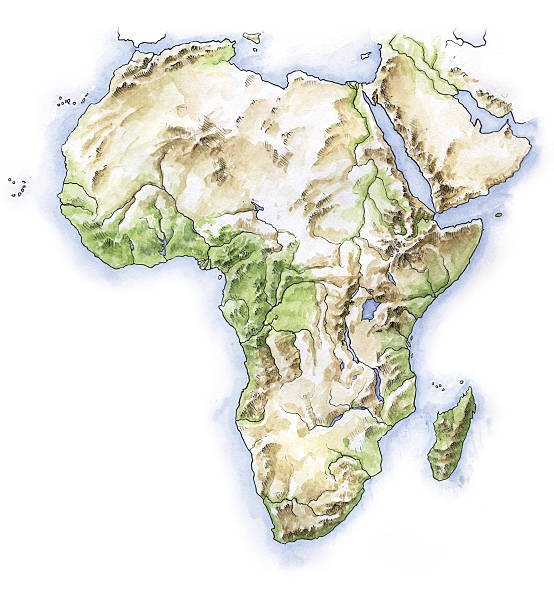
The question, Did Africans invent math, is complex, as mathematics emerged independently across various cultures globally. However, it is unequivocally true that ancient African civilizations made profound and foundational contributions to mathematics, many of which predate commonly recognized Western advancements and were crucial to its global development.
Mathematics is not the invention of a single group but rather a universal human endeavor. From basic counting to complex geometry and algebra, the African continent, particularly its ancient civilizations, played a pivotal and often overlooked role in shaping the mathematical landscape we understand today. Exploring this history reveals sophisticated systems, practical applications, and intellectual achievements that underscore Africa’s significant place in the narrative of mathematical origins.
The Earliest Evidence: Prehistoric Africa's Mathematical Roots
Long before the civilizations of Greece or Rome flourished, the African continent was home to some of the earliest known mathematical artifacts, demonstrating a deep understanding of numbers and counting systems.
The Ishango Bone: A Glimpse into Early African Mathematics
Discovered in the Congo (now the Democratic Republic of Congo) in 1950, the Ishango Bone is arguably one of the most compelling pieces of evidence for ancient African mathematical prowess. Dating back approximately 20,000 to 25,000 years, this baboon fibula features a series of notches arranged in distinct patterns. Scholars have proposed various interpretations for these markings, including:
- Tally System: The most basic interpretation suggests it is an advanced tally stick, used for counting.
- Lunar Calendar: Some researchers believe the groupings of notches represent a six-month lunar calendar, tracking moon phases.
- Arithmetic Table: More sophisticated analyses suggest the bone contains evidence of arithmetic operations, possibly involving prime numbers, multiplication, and division. For instance, one column shows groups of 11, 13, 17, and 19 – all prime numbers. Another column appears to demonstrate multiplication by two.
The Ishango Bone significance lies in its indication of not just simple counting, but potentially a conceptual grasp of number theory, far earlier than previously assumed.
The Lebombo Bone: Even Older Mathematical Artifacts
Predating the Ishango Bone, the Lebombo Bone, found in the Lebombo Mountains of Swaziland (now Eswatini), dates back approximately 35,000 to 37,000 years. This notched baboon fibula features 29 distinct incisions, strongly suggesting its use as a tally stick or, as some propose, a menstruation calendar. While simpler than the Ishango Bone, it stands as the oldest mathematical artifact discovered to date, firmly placing the genesis of numerical recording in Africa.
Ancient Egypt: A Cradle of Advanced Mathematics
Perhaps the most widely recognized center of ancient African mathematics is Egypt. The highly sophisticated civilization of ancient Egypt, spanning millennia, developed advanced mathematical concepts for practical applications that supported its monumental architecture, intricate administration, and religious practices.
Geometry and Architecture
The construction of the pyramids, temples, and obelisks required an exceptional understanding of geometry, trigonometry, and engineering. Egyptian builders were proficient in:
- Calculating volumes and areas of various shapes, including pyramids, cylinders, and rectangles.
- Using precise angles and alignments, often with astronomical precision.
- Applying the Pythagorean triple (though Pythagoras lived much later), understood through practical measurement.
The concept of Egyptian geometry was not abstract theory for its own sake, but deeply integrated into their daily life and grand projects.
Numerical Systems and Fractions
Ancient Egyptians developed a decimal system, though it was not positional like ours. They used hieroglyphs for numbers up to a million and were masters of fractions, particularly unit fractions (e.g., 1/2, 1/3, 1/4). Their ability to manipulate fractions was crucial for tasks like distributing bread rations or calculating land areas.
Key Mathematical Texts: The Rhind and Moscow Papyri
Our understanding of ancient Egyptian mathematical texts is largely derived from two primary sources:
- The Rhind Mathematical Papyrus: Dating to around 1650 BCE, this papyrus contains 84 problems and solutions covering arithmetic, geometry, and algebra. It includes methods for calculating areas of triangles and circles, solving linear equations, and understanding unit fractions. It even provides an early approximation of pi (π) at 3.16.
- The Moscow Mathematical Papyrus: Dating to approximately 1850 BCE, this papyrus presents 25 problems. Most famously, it contains a formula for calculating the volume of a frustum (a truncated pyramid) and the surface area of a hemisphere, demonstrating sophisticated geometrical understanding.
These documents provide undeniable proof of advanced mathematical thought and practice in ancient Egypt, showcasing their methods for problem-solving in areas like construction, agriculture, and resource management.
Nubian Mathematics: Bridging Cultures and Knowledge
South of Egypt, the ancient kingdoms of Nubia (Kush) also exhibited significant mathematical knowledge. While often influenced by Egyptian practices due to close contact, Nubian civilizations developed their own distinctive systems. Evidence suggests Nubians had advanced astronomical observatories, like the megalithic alignment at Nabta Playa (pre-dating Stonehenge), demonstrating an understanding of celestial mechanics and geometry necessary for calendar development.
Furthermore, Nubian pyramids, though different in style from Egyptian ones, also required considerable mathematical and engineering skill in their construction, showcasing the continuity and independent development of mathematical principles within the Nile Valley region.
Mathematics Across Sub-Saharan Africa: Diverse Systems
Beyond the Nile Valley, diverse communities across sub-Saharan Africa developed unique and equally sophisticated mathematical systems, often rooted in practical needs, cultural practices, and philosophical beliefs. This field of study is often called ethnomathematics from Africa.
Counting Systems and Numeration
Many African societies developed complex counting systems that went beyond simple base-10. For example:
- Vigesimal Systems: Several West African groups, such as the Yoruba of Nigeria, developed vigesimal (base-20) counting systems. Their numbers often involve complex arithmetic operations, like subtraction and multiplication, to form larger numbers (e.g., 30 might be expressed as “20 plus 10” or “two times 20 minus 10”).
- Tally Systems and Notched Sticks: The use of tally sticks, similar to the Ishango and Lebombo Bones, persisted in various forms for millennia across different African cultures for record-keeping, trade, and even board games.
Geometric Patterns and Art
Mathematics is vividly expressed in the intricate patterns, designs, and structures found in African art and architecture. From textiles to sculptures, and from village layouts to house decorations, geometric principles are omnipresent:
- Fractal Geometry: Many traditional African villages, particularly in West and Central Africa, exhibit self-similar patterns and fractal arrangements, where smaller elements mirror the structure of larger ones. This suggests an intuitive understanding of fractal concepts.
- Symmetry and Tessellations: Designs on Kente cloth (Ghana), Kuba textiles (DRC), and Ndebele house paintings (Southern Africa) frequently employ complex symmetries, rotations, and tessellations, showcasing a deep grasp of geometric transformations.
- Adinkra Symbols: From Ghana, these symbols not only convey proverbs and philosophical concepts but also demonstrate inherent geometric precision and aesthetic principles.
Divination Systems and Mathematical Logic
Complex mathematical logic underpins many African divination systems, such as Ifa (Yoruba, West Africa) or similar geomancy practices across the continent. These systems involve generating patterns from seemingly random processes (e.g., throwing cowrie shells or palm nuts) and then interpreting them based on a sophisticated combinatorial or binary logic, revealing a deep understanding of probability and algorithmic thought.
The Global Impact and Legacy of African Mathematical Thought
The history of mathematics in Africa is not isolated; it is deeply interwoven with global mathematical development. Ancient Egyptian mathematics, for instance, is known to have influenced early Greek mathematicians, who traveled to Egypt to study. Figures like Thales and Pythagoras are believed to have drawn upon Egyptian knowledge, particularly in geometry and astronomy.
The transmission of knowledge from Africa to other parts of the world highlights the continent's foundational role. By acknowledging these contributions, we are not just correcting a historical oversight but enriching our understanding of the universal nature of human ingenuity and intellectual exchange. The narrative of African influence on mathematics is a story of shared discovery and cumulative knowledge.
Addressing Misconceptions and Gaps in Historical Narratives
For too long, the contributions of African civilizations to mathematics have been marginalized or overlooked in conventional historical accounts. This omission can be attributed to several factors:
- Eurocentric Bias: A historical tendency to focus on European developments while downplaying or ignoring contributions from other continents.
- Lack of Written Records: Many sub-Saharan African mathematical traditions were oral or embedded in cultural practices, making them harder for Western scholars to recognize and document compared to written papyri.
- Colonialism and Slavery: The disruption caused by colonialism and the transatlantic slave trade severed cultural continuity and destroyed valuable historical records and intellectual traditions.
Reclaiming and promoting the full scope of African contributions to math is crucial for a more accurate and inclusive understanding of global intellectual history. It involves interdisciplinary research, archaeological studies, and the critical examination of existing historical narratives.
Conclusion
So, did Africans invent math? While no single group can claim the sole invention of mathematics, the evidence overwhelmingly demonstrates that ancient Africans were pivotal innovators, developing sophisticated mathematical concepts, systems, and applications from the earliest tally bones to the advanced geometry of the Nile Valley civilizations and the complex ethnomathematics of sub-Saharan Africa. From prehistoric counting to advanced geometry, algebra, and intricate logical systems, African societies laid crucial groundwork that shaped not only their own impressive civilizations but also contributed significantly to the global tapestry of mathematical thought. Recognizing these profound and diverse contributions is essential for a complete and accurate understanding of humanity's shared mathematical heritage.
Enjoyed this read?
Share it with your friends and colleagues.