Did Africans Come To America Before Slavery

BSC Insights Admin
September 30, 2026
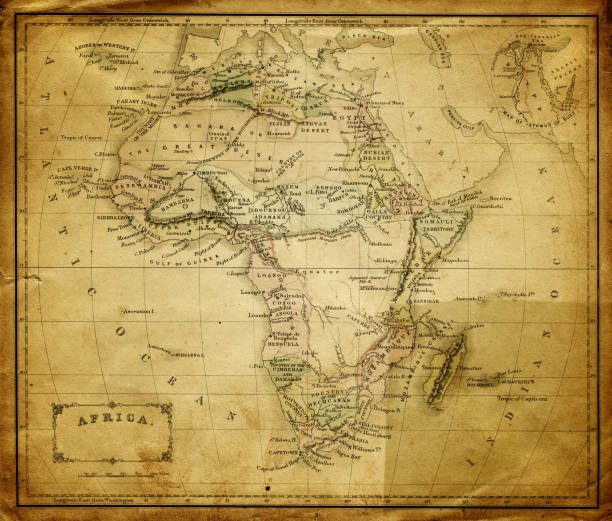
The question, "Did Africans come to America before slavery?" sparks a fascinating and often debated historical inquiry. While traditional narratives frequently credit Christopher Columbus with the discovery of the Americas, a growing body of evidence and theories suggests that Africans may have journeyed to the Americas centuries before Columbus’s arrival in 1492, potentially establishing contact and influencing indigenous cultures long before the transatlantic slave trade began. This article delves into the intriguing arguments, archaeological findings, and historical accounts that support the possibility of pre-Columbian African presence, exploring the evidence for ancient African voyages to the Americas and challenging conventional historical timelines.
The Historical Debate: A Question of Pre-Columbian Contact
For centuries, the widely accepted historical narrative maintained that the Americas remained isolated from the rest of the world until Christopher Columbus’s voyage in 1492. However, this Eurocentric view has been increasingly challenged by researchers who point to compelling evidence of various cultures, including those from Africa, possibly making transatlantic journeys long before. The debate over **pre-Columbian African presence in the Americas** is not merely academic; it has profound implications for understanding global history, the origins of civilizations, and the complex tapestry of human interaction across continents.
Exploring this topic means looking beyond established texts and considering alternative interpretations of archaeological discoveries, oral traditions, and even the natural world. It invites us to consider the advanced navigational capabilities of ancient civilizations and the potential for cultural exchange that predates documented European exploration.
Navigational Feats and Ancient African Seafaring
Early African Maritime Capabilities
To understand the plausibility of **ancient African voyages to the Americas**, one must first acknowledge the advanced maritime capabilities possessed by various African civilizations. For instance, ancient Egyptians were skilled sailors, navigating the Nile and venturing into the Red Sea and Mediterranean. West African coastal communities, particularly those involved in fishing and trade, developed sophisticated boat-building techniques suitable for oceanic travel.
Records and archaeological finds suggest the use of large canoes and even larger vessels capable of extended journeys. These ships, often constructed from durable local timbers, could have been engineered to withstand the rigors of ocean travel. Furthermore, knowledge of celestial navigation, current patterns, and wind directions was likely part of the accumulated wisdom of experienced African mariners.
West African Kingdoms and Their Ambitions
The powerful empires of West Africa, such as the Mali Empire, were renowned for their wealth, knowledge, and ambition. These empires were not isolated entities; they engaged in extensive trade across the Sahara and beyond, fostering intellectual and technological advancements. The resources and organizational capacity to undertake ambitious exploratory expeditions certainly existed within these prosperous kingdoms.
The Atlantic Ocean’s currents, particularly the North Equatorial Current, flow directly from West Africa towards the Caribbean and South America. Knowledge of these currents, coupled with favorable winds, could have significantly aided transatlantic crossings. This natural "highway" makes the idea of accidental or deliberate African journeys across the Atlantic more plausible than often assumed.
Documentary and Oral Evidence
Accounts of Mansa Abu Bakr II’s Expeditions
Perhaps the most compelling historical account of **transatlantic travel before Columbus** from an African perspective comes from the Mali Empire. According to the 14th-century Arab historian Al-Umari, Mansa Kankan Musa – the famous Malian emperor – recounted that his predecessor, **Mansa Abu Bakr II**, abdicated his throne to launch two massive expeditions across the Atlantic Ocean. The first expedition involved 200 boats, with only one returning to report on a powerful current. Undeterred, Mansa Abu Bakr II reportedly organized a second, even larger fleet of 2,000 ships, taking command himself and sailing west, never to return.
While definitive archaeological proof directly linking these expeditions to specific American sites remains elusive, Al-Umari’s account, preserved in Cairo, offers strong documentary evidence of African attempts, and possibly successful voyages, to explore the "other side of the ocean." This narrative highlights the ambition and maritime capabilities of **African exploration of the Americas** centuries before European arrival.
Archaeological and Anthropological Clues
The Olmec Civilization and African Influences
One of the most debated pieces of evidence suggesting **pre-Columbian African presence** revolves around the ancient Olmec civilization of Mesoamerica (circa 1500-400 BCE). The Olmecs are famous for their colossal stone heads, massive basalt sculptures that can weigh up to 40 tons. These heads depict individuals with distinct facial features, including broad noses, thick lips, and helmet-like headgear.
Some scholars, notably Ivan Van Sertima in his influential book "They Came Before Columbus," argue that these features are strikingly "Negroid" and point to an **Olmec African connection**. They suggest that these heads are portraits of African visitors or rulers who influenced the early development of the Olmec culture. While mainstream archaeology typically attributes these features to artistic stylization of indigenous Mesoamerican populations, the visual similarities continue to fuel the debate.
Botanical Evidence: Shared Plant Species
Another intriguing line of inquiry concerns the presence of certain plant species found on both continents before 1492. The **bottle gourd** (Lagenaria siceraria), for example, is found in the Americas in pre-Columbian contexts and is believed to have originated in Africa. Its seeds are not salt-tolerant, making natural transatlantic dispersal by ocean currents unlikely. This suggests human transport across the Atlantic.
Similarly, certain varieties of cotton (Gossypium barbadense) found in the Americas appear to be hybrids that include an Old World species (Gossypium herbaceum), which is native to Africa and Asia. The presence of these species in the Americas well before the arrival of Europeans provides strong botanical evidence for **pre-Columbian contact** between the Old and New Worlds, though not exclusively pointing to Africa.
Linguistic Similarities and Cultural Parallels
While more contentious, some researchers have pointed to potential linguistic similarities between certain West African languages and indigenous American languages. These proposed connections are often highly debated by linguists, who typically require robust and extensive evidence to establish genetic relationships between language families.
Cultural parallels, such as specific artistic motifs, religious symbols, or even certain mummification techniques (as practiced by some South American cultures), have also been cited as possible indicators of early contact. These parallels, while not definitive proof on their own, contribute to the broader tapestry of arguments for **African artifacts in America** or cultural exchanges.
Artifacts and Skeletal Remains
The discovery of alleged **African artifacts in America** before the Columbus era is a highly sought-after piece of evidence. While no undisputed, clearly identifiable African artifacts have been definitively found in pre-Columbian American archaeological sites, the search continues. Some speculative claims have involved discoveries of specific types of pottery, metalwork, or even a few skeletal remains with perceived African characteristics, but these have often lacked definitive dating or widely accepted provenance.
The challenge lies in conclusively linking such finds to pre-Columbian African origins, differentiating them from later introductions, or ruling out independent invention and stylistic convergence.
Counterarguments and Challenges to the Theory
Lack of Definitive Archaeological Proof
Despite the intriguing theories and circumstantial evidence, the primary challenge to the **pre-Columbian African presence** theory is the lack of irrefutable, widespread archaeological proof. Unlike the clear evidence of Viking settlements in North America (L’Anse aux Meadows), there is no broadly accepted archaeological site in the Americas that definitively shows permanent African settlements, large-scale trade, or culturally undeniable African artifacts that predate Columbus.
Critics argue that if substantial contact occurred, there should be more widespread and unambiguous material culture, such as distinctive tools, pottery, burial practices, or genetic markers, which have yet to be discovered or widely accepted by the archaeological community.
The Issue of Interpretation
Many of the "clues," such as the Olmec heads, are open to multiple interpretations. Mainstream scholars argue that the features of the Olmec colossal heads represent indigenous Mesoamerican populations, perhaps chiefs or rulers, and that attributing them to African visitors is an oversimplification or a misinterpretation of artistic stylization. They suggest that facial features like broad noses and thick lips can be found across various human populations and do not exclusively indicate African ancestry.
Similarly, botanical evidence, while strong, can sometimes be explained by natural dispersal mechanisms over much longer timeframes, or by indirect contact through intermediate populations. Establishing direct, continuous contact from Africa to the Americas based solely on these elements remains a complex scientific endeavor.
The Broader Implications of Pre-Columbian African Contact
Reshaping Historical Narratives
Should definitive proof of **Africans in America pre-slavery** emerge, it would fundamentally reshape our understanding of world history. It would challenge the Eurocentric narrative of exploration and discovery, acknowledging the global interconnectedness of ancient civilizations. It would highlight the ingenuity and daring of African navigators and empower a more inclusive view of humanity’s past.
This paradigm shift would force a re-evaluation of how cultures developed in the Americas, prompting questions about potential African contributions to early American societies and technologies.
Cultural Exchange and Legacy
The possibility of **pre-Columbian African presence** opens up fascinating avenues for discussing cultural exchange. What knowledge, technologies, or artistic expressions might have been shared? If such contact was significant, it implies a more complex web of human interaction and cultural diffusion than previously imagined. It would underscore that "discovery" is rarely a singular event by one culture, but rather a continuous process of human movement and interaction across the globe.
Conclusion
The question of **Did Africans come to America before slavery?** is not easily answered with a simple yes or no, but the evidence, while circumstantial and debated, certainly warrants serious consideration. From the compelling accounts of Mansa Abu Bakr II’s ambitious expeditions to the intriguing features of the Olmec colossal heads and the perplexing distribution of certain plant species, there are numerous threads suggesting a **pre-Columbian African presence**. While mainstream archaeology awaits more definitive and widely accepted material evidence, the ongoing debate challenges us to think more broadly about ancient maritime capabilities, global interactions, and the rich, complex tapestry of human history. Further interdisciplinary research, combining archaeology, anthropology, linguistics, and oceanography, will continue to shed light on this fascinating chapter of potential human exploration and interconnectedness.
Enjoyed this read?
Share it with your friends and colleagues.