Did Africans Believe In God Before Christianity

BSC Insights Admin
October 01, 2026
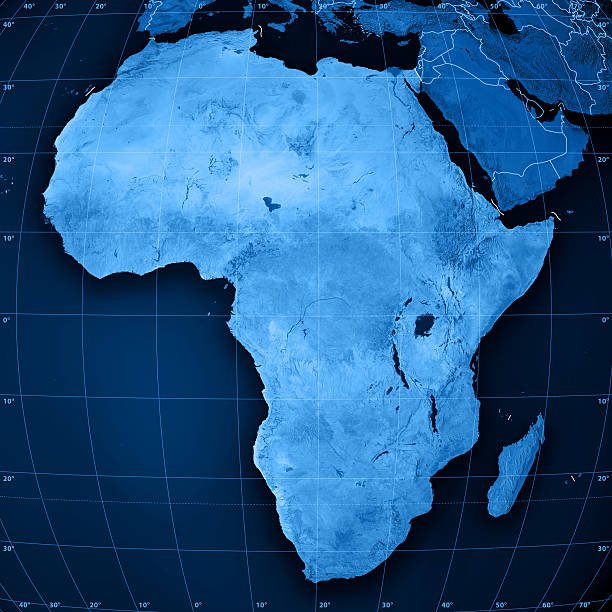
Did Africans believe in God before Christianity? The unequivocal answer is a resounding yes. Long before the arrival of Christianity, and indeed Islam, African societies across the vast continent possessed intricate, profound, and highly diverse spiritual and religious systems. These indigenous beliefs often included the concept of a Supreme Being, creator gods, lesser deities, ancestor veneration, and a strong connection to the natural world. Far from being a spiritual void, pre-colonial Africa was a tapestry of rich spiritual traditions, each with its unique cosmology, ethics, and practices that profoundly shaped its cultures and peoples.
Understanding the Concept of God in Traditional African Religions
To fully grasp whether Africans believed in God before Christianity, it's crucial to understand that the concept of "God" itself might be nuanced compared to Abrahamic traditions. While the term "God" in Western contexts often implies a singular, anthropomorphic, and often interventionist deity, traditional African spiritual beliefs typically featured a transcendent Supreme Being or Creator God. This Supreme Being was often seen as the ultimate source of all existence, the creator of the universe and humanity, but might not always be directly involved in daily human affairs. Instead, interaction with the divine often occurred through a pantheon of lesser deities, spirits, and revered ancestors.
This does not diminish the belief in a higher power; rather, it highlights the sophisticated structuring of the spiritual world. The Supreme Being was typically regarded as too vast and powerful to be directly approached by mere mortals, hence the role of intermediaries. These intermediaries could be nature spirits, specific deities associated with natural phenomena or human endeavors, or the spirits of deceased ancestors who maintained a close connection to the living.
The Ubiquity of a Supreme Being Across Africa
Across the length and breadth of the African continent, numerous ethnic groups, despite their geographical separation and distinct cultures, shared a common thread: the belief in a primary, all-powerful Creator. This belief in a Supreme Being in Africa predates any external religious influences.
Names and Attributes of the Divine
The names for this Supreme Being varied widely, reflecting the linguistic and cultural diversity of the continent, yet their core attributes were remarkably similar:
- Olodumare (Yoruba, West Africa): Often regarded as the owner of the heavens, the creator of the universe and all living things. Olodumare is a distant yet ultimate authority, with daily life governed by the Orishas (deities).
- Nyame (Akan, Ghana): The omnipresent, omniscient, and omnipotent Creator God. Nyame is associated with the sky and rain, and considered the source of all knowledge and wisdom.
- Ngai (Maasai, Kikuyu, East Africa): The creator and giver of all life, associated with the sky, rain, and mountains. Ngai is often depicted as dwelling on sacred mountains like Mount Kenya.
- Unkulunkulu (Zulu, Southern Africa): The "Greatest of the Great" or the "Ancient One," who emerged from the reeds and created all things.
- Nzambi (Kongo, Central Africa): The ultimate Creator, responsible for the universe and human life.
- Amma (Dogon, Mali): The Supreme Creator and master of the universe, who formed the world from clay.
These examples illustrate that the concept of a Supreme Being was not an isolated phenomenon but a fundamental aspect of traditional African spiritual beliefs, deeply embedded in the various cosmologies.
Core Elements of Traditional African Spiritual Beliefs
Beyond the Supreme Being, pre-colonial African religions were characterized by several interconnected components that formed a holistic worldview. These elements highlight the richness and complexity of African indigenous religions.
Ancestor Veneration: The Living-Dead
A cornerstone of virtually all traditional African spiritual beliefs is the profound respect and veneration of ancestors. The belief in a continuity of life after death is paramount. Ancestors are not merely remembered; they are believed to exist in a spiritual realm, maintaining an active interest in the affairs of their living descendants. They are seen as guardians, intermediaries between the living and the spirit world, and upholders of moral order.
- Guidance and Protection: Ancestors are invoked for wisdom, protection, and blessings.
- Moral Authority: They serve as ethical models, and their displeasures are believed to cause misfortune.
- Ritual Offerings: Libations, prayers, and offerings are made to maintain good relations with the ancestors, ensuring harmony and prosperity for the community.
This practice of ancestor veneration in Africa underscores the cyclical nature of life and death, and the unbreakable bond within the family and community, extending beyond the physical realm.
Lesser Deities and Spirits: The Intermediaries
In many African cosmologies, the Supreme Being operates at a higher, more abstract level, while a pantheon of lesser deities and spirits manage the day-to-day workings of the world. These entities are often associated with natural forces, specific human activities, or aspects of life.
- Orishas (Yoruba): Deities like Ogun (iron, war), Sango (thunder), Yemoja (mother of waters), and Oshun (love, fertility) are powerful forces, each with specific domains and characteristics, interacting directly with humans.
- Abosom (Akan): Similar to Orishas, these are divine spirits that serve Nyame and can be approached for specific needs or interventions.
- Nature Spirits: Spirits dwelling in rivers, mountains, forests, and trees are common, often requiring appeasement or respect to avoid misfortune.
These intermediaries provide a means for humans to engage with the spiritual realm, seeking assistance, healing, or guidance through rituals, prayers, and offerings. This system often leads to discussions about polytheism in African traditions, though it is usually framed within a broader understanding of a monistic, all-encompassing spiritual reality under a singular Supreme Being.
Animism and the Interconnected Cosmos
Animism in African cultures posits that spirits inhabit not only living beings but also inanimate objects and natural phenomena. The world is seen as a vibrant, interconnected web of spiritual energy. Rocks, rivers, trees, animals, and even the weather can possess a spiritual essence and influence human lives.
This worldview fosters a deep respect for nature and the environment. Human beings are not seen as separate from nature but as an integral part of this intricate spiritual cosmos. The balance and harmony within this system are paramount, and rituals are often performed to maintain or restore this equilibrium. This holistic perspective is a defining characteristic of African cosmology.
Diverse Expressions Across African Regions
While sharing common elements, the expressions of traditional African spiritual beliefs were incredibly diverse, reflecting the continent's rich cultural tapestry.
West African Traditions: Yoruba and Akan
West Africa is renowned for its complex and highly structured spiritual systems. The Yoruba religion, with its elaborate pantheon of Orishas and the overarching Olodumare, is perhaps one of the most well-documented and globally influential. Its emphasis on destiny, character, and spiritual balance has permeated cultures far beyond Nigeria, including the Americas.
Similarly, the Akan people of Ghana and Ivory Coast practice a rich spiritual tradition centered on Nyame, the Supreme Being, and a hierarchy of Abosom and ancestors. Rituals, proverbs, and oral histories are vital for transmitting these beliefs, emphasizing community, moral conduct, and respect for elders and the spirit world.
East African Perspectives: Maasai and Kikuyu
In East Africa, groups like the Maasai and Kikuyu hold strong beliefs in a single, overarching God, Ngai, who is responsible for creation and sustenance. For the Maasai, Ngai is often associated with the sky, and sacred sites like mountains are seen as places of connection. Their reverence for cattle is also spiritually intertwined, as cattle are considered a blessing from Ngai.
The Kikuyu likewise worship Ngai, believing he resides on Mount Kenya (Kirinyaga). Their spiritual practices focus on maintaining harmony with Ngai and the environment, often involving prayers and sacrifices. Their detailed creation myths explain the origins of their people and their land, reinforcing their deep spiritual connection to their territory.
Southern African Spiritualities: Zulu and San
Southern African groups also possess unique spiritual traditions. The Zulu people believe in Unkulunkulu, the first ancestor and creator, from whom all things emerged. They also acknowledge various spirits, including ancestral spirits (amadlozi) who play a protective and communicative role. Traditional healers (izangoma) are central to spiritual life, mediating between the living and the spirit world.
The San people, one of the oldest inhabitants of Southern Africa, have a deep connection to the land and its creatures. Their spiritual beliefs are often animistic, with a strong emphasis on the spiritual power found in nature and animals. Their trance dances and rock art provide insights into their spiritual experiences, often featuring therianthropes and spiritual journeys.
Central African Beliefs: Bantu and Kongo
Across Central Africa, various Bantu-speaking groups share similar threads in their spiritual beliefs. The Kongo people, for instance, believe in Nzambi Mpungu, the ultimate creator. Their cosmology emphasizes the cyclical nature of life, death, and rebirth, and the importance of ancestors in guiding the living. The concept of ntu, or vital force, is central, where everything possesses a unique spiritual energy that connects it to the larger cosmos.
Rituals, masks, and statuettes are often used as conduits for spiritual power and communication, reflecting a vibrant engagement with the spirit world. These traditions highlight the deep historical roots and continuity of belief in the region.
The Role of Ritual, Mythology, and Oral Tradition
The transmission and reinforcement of pre-colonial African religions primarily occurred through oral traditions. Myths, legends, proverbs, songs, and storytelling were vital for passing down knowledge, ethics, and spiritual understanding from generation to generation. These narratives often explained creation, the origins of humanity, moral lessons, and the relationship between humans and the divine.
Rituals were, and continue to be, central to African spiritual life. They provide a structured way for individuals and communities to interact with the spirit world, mark life transitions, seek healing, or ensure communal well-being. These include:
- Rites of Passage: Birth, initiation into adulthood, marriage, and death ceremonies, all imbued with spiritual significance.
- Healing Rituals: Involving traditional healers, diviners, and spiritualists to diagnose and treat illnesses, often attributed to spiritual causes or imbalances.
- Agricultural Rituals: Prayers and offerings for fertile lands, abundant harvests, and protection from natural disasters.
- Communal Festivals: Celebrating cultural identity, reinforcing social bonds, and honoring deities and ancestors.
Challenging Misconceptions
For centuries, colonial narratives and ethnocentric perspectives often misrepresented traditional African spiritual beliefs. They were frequently dismissed as "primitive," "pagan," or even "godless," solely because they did not conform to Western monotheistic frameworks. This perspective ignored the profound complexity, ethical depth, and sophisticated theological concepts inherent in these systems.
The evidence overwhelmingly demonstrates that Africans did not need external religions to introduce them to the concept of a Supreme Being or a moral code. Their indigenous spiritualities were complete, robust, and provided comprehensive frameworks for understanding the universe, human purpose, and societal organization. To suggest otherwise is to perpetuate a harmful and historically inaccurate narrative.
The Enduring Legacy and Syncretism
Even with the widespread adoption of Christianity and Islam in Africa, the influence of traditional African spiritual beliefs remains profound. Many African Christians and Muslims integrate aspects of their indigenous heritage into their faith, leading to various forms of syncretism. Elements like ancestor reverence, the belief in spirits, and specific cultural practices continue to shape religious expression across the continent.
This enduring legacy is a testament to the strength, resilience, and deeply rooted nature of Africa's original spiritual heritage. It highlights that the question "Did Africans believe in God before Christianity?" is answered not just by historical accounts but by the living, evolving spiritual landscapes of contemporary Africa.
Conclusion
In conclusion, the notion that Africans were devoid of a belief in God or a higher power before the arrival of Christianity is a profound misconception. Across diverse cultures and regions, Africans unequivocally believed in a Supreme Being, often the creator of the universe, alongside intricate systems of lesser deities, spirits, and ancestors. These pre-colonial African religions offered comprehensive cosmologies, ethical frameworks, and profound spiritual engagement with the world. This rich spiritual heritage, characterized by its diversity, depth, and holism, formed the bedrock of African societies and continues to influence spiritual life on the continent today. The spiritual landscape of Africa was, and remains, vibrant and deeply rooted in its indigenous understanding of the divine.
Enjoyed this read?
Share it with your friends and colleagues.