How Did Africans Benefit From Colonial Rule

BSC Insights Admin
October 09, 2026
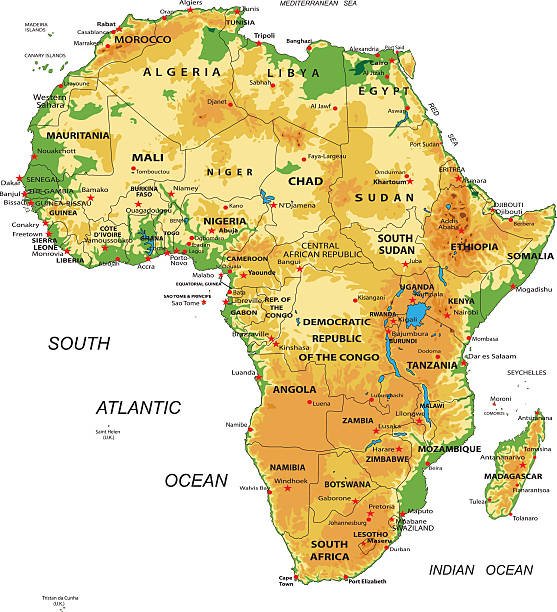
While the colonial era in Africa is predominantly characterized by exploitation, oppression, and immense suffering, it is also a historical period that introduced certain structural and systemic changes, some of which inadvertently contributed to aspects of African development. These include the establishment of modern infrastructure, Western educational and healthcare systems, and the integration into global economies, albeit often under terms deeply unfavorable to Africans. Examining these facets requires a nuanced understanding, acknowledging that any perceived benefits were largely secondary outcomes of systems designed for colonial administration and resource extraction, rather than for the betterment of African societies.
Infrastructure Development and Urbanization
One of the most visible and lasting legacies of colonial rule was the significant development of infrastructure across the continent. European powers invested in extensive networks primarily to facilitate the extraction and transportation of raw materials to their home countries and to enable military and administrative control. This led to the construction of thousands of kilometers of railways, connecting mines and agricultural centers to ports. Major ports were expanded and new ones built along the coasts to handle increased trade volumes. Additionally, road networks were developed, linking administrative centers and resource-rich areas.
- Railways: Examples include the Uganda Railway, the Benguela Railway, and various lines in West Africa, which, while built for export, later formed the backbone of national transportation systems.
- Ports: Cities like Mombasa, Dakar, Lagos, and Cape Town saw significant port development, transforming them into major urban centers crucial for international trade and maritime activities.
- Roads: Initial roads were often rudimentary but gradually improved and expanded, laying the groundwork for modern road networks essential for internal commerce and connectivity.
Alongside infrastructure, colonial rule significantly accelerated urbanization. Administrative centers, trading posts, and mining towns grew rapidly as Africans migrated for work, leading to the emergence of modern cities. These urban centers often had improved sanitation facilities, rudimentary electricity grids, and planned layouts, which, despite often being segregated, introduced new standards of urban living that persisted and evolved after independence. This development of urban hubs was a key aspect of African urbanization during the colonial period.
Introduction of Western Education Systems
Colonial powers, often through missionary efforts, introduced Western education systems to Africa. Initially, these schools primarily aimed to produce clerks, interpreters, and low-level administrators for the colonial apparatus, or to convert Africans to Christianity. However, they also provided access to literacy, new languages (such as English, French, and Portuguese), and modern scientific knowledge that was previously unavailable in formal, structured institutional formats. This marked a significant shift in the educational landscape, laying the foundation for modern educational structures in many African nations.
While the curriculum was frequently Eurocentric and designed to indoctrinate, it nonetheless equipped a generation of Africans with skills that would later be crucial for nation-building and for challenging colonial rule itself. Many early nationalist leaders and intellectuals were products of these very institutions. Mission schools, in particular, played a vital role in expanding access to education beyond administrative centers, reaching rural communities and contributing to the formation of an educated elite. This aspect of Western education in Africa represents a complex legacy.
- Literacy Rates: While still low by global standards, literacy rates generally increased in areas with the presence of missionary and colonial schools, offering a pathway to modern communication and knowledge.
- Skill Development: These institutions taught fundamental skills such as reading, writing, and arithmetic, alongside vocational training in areas like carpentry, masonry, and basic mechanics, which were valuable for the evolving economies.
- Elite Formation: The education system, despite its limitations, contributed to the creation of a small but influential educated elite who would eventually lead independence movements and staff post-colonial governments, showcasing the dual impact of colonial administration impact on education.
Healthcare and Public Health Initiatives
To protect their own personnel and maintain a healthy labor force for resource extraction, colonial administrations introduced elements of Western medicine and public health initiatives. They established hospitals, clinics, and research institutes, particularly in urban areas and near mining and plantation operations. Campaigns were launched to combat endemic diseases such as malaria, sleeping sickness, smallpox, and yellow fever, which posed threats to both colonizers and the local populace, as well as hindering labor productivity. These efforts contributed to the early development of public health colonial Africa.
These efforts, though limited in scope and often discriminatory in practice, led to the development of rudimentary healthcare infrastructures and the introduction of modern medical practices. Vaccination programs, improved sanitation in some urban areas (though often segregated), and medical training for a small number of African healthcare workers represented foundational steps in the development of modern public health systems that were largely absent before colonialism. This period saw some healthcare improvements colonial era, particularly in controlling infectious diseases.
Table: Examples of Public Health Interventions
| Disease | Colonial Intervention | Impact |
|---|---|---|
| Malaria | Drainage of swamps, quinine distribution, mosquito control programs | Reduced incidence in some controlled urban and industrial areas, protecting colonial staff and workers. |
| Smallpox | Organized vaccination campaigns across wider regions | Contributed significantly to efforts towards the global eradication of the disease, saving countless lives. |
| Sleeping Sickness | Mass screening, establishment of treatment centers, tsetse fly control measures | Helped to control outbreaks and reduce mortality rates in severely affected regions, albeit with often harsh methods. |
New Administrative and Legal Systems
Colonial rule imposed new administrative structures and legal systems that either replaced or coexisted with indigenous ones. While often authoritarian and primarily designed to serve colonial interests, these systems introduced concepts of centralized governance, defined territorial borders (albeit often arbitrarily drawn without regard for pre-existing ethnic or linguistic divisions), and written legal codes based on European jurisprudence. These formed the basis for modern administrative systems Africa.
The establishment of a bureaucracy, police forces, and formal courts of law, even if biased and serving colonial masters, laid some groundwork for modern state apparatuses. Post-independence African nations largely inherited and adapted these administrative and legal frameworks, using them to govern diverse populations within the artificially created borders. The introduction of standardized taxation systems and regular census mechanisms also created mechanisms for state revenue generation and population management, providing templates for modern legal frameworks Africa. These systems, for all their flaws, offered a degree of formal predictability and structure.
- Defined Borders: The demarcation of colonial territories led to the creation of distinct territorial entities that would eventually become independent nations, establishing the modern political map of Africa.
- Centralized Governance: Replaced often fragmented traditional authorities with a more unified, albeit externally imposed, administrative system, creating a template for national governments.
- Written Laws: Introduced European legal principles and a more formal judicial process, laying foundations for contemporary legal codes and judicial systems in many African states.
Economic Integration and Modernization
Colonial rule fundamentally restructured African economies, shifting them from subsistence and regional trade to integration into the global capitalist system. This involved the introduction of a cash crop economy, where Africans were encouraged or coerced to grow crops like cocoa, coffee, groundnuts, and cotton for export to European markets. While this made African economies dependent on global commodity prices and often neglected local food security, it also introduced new agricultural techniques, tools, and access to international trade networks. These were significant economic changes colonialism brought.
The introduction of modern currency, banking systems, and wage labor replaced traditional bartering systems in many areas, fostering a more monetized economy. Mining operations, though heavily exploitative of both labor and resources, introduced industrial practices and technology, leading to the development of infrastructure around mining hubs. These economic shifts, despite their inherently exploitative nature, brought African societies into the modern global economy, albeit at a severe disadvantage and often leading to underdevelopment. This forced integration was a key aspect of the modernization of Africa in an economic sense.
Economic Shifts:
- Cash Crop Focus: Diversified agricultural production beyond subsistence for some communities, connecting them to global markets.
- Monetization: A shift from barter to monetary systems facilitated broader commerce and integrated local economies into global financial structures.
- Resource Extraction: Developed large-scale mining operations for minerals like gold, diamonds, copper, and tin, creating industrial centers and contributing to technological advancements in these sectors, despite the environmental and social costs.
Technological Transfer and Skills
Beyond infrastructure and specific industries, colonial rule facilitated a degree of technological transfer. This included new farming techniques and crop varieties, advanced construction methods, engineering skills for railway and bridge building, and communication technologies like telegraphy and later rudimentary telephony. While these innovations were initially introduced to serve colonial interests and maximize resource extraction, the knowledge and skills associated with them were absorbed by some Africans, contributing to a nascent pool of technical expertise across the continent. This represented a form of technological transfer Africa experienced.
The introduction of new tools, machinery, and industrial processes, even on a limited scale, represented a significant shift from pre-industrial methods. Vocational training schools, though few and often focused on basic trades, provided skills in carpentry, masonry, mechanics, and other trades, which were valuable for the developing economies and eventually for independent African nations. This practical skill acquisition contributed to a slow but discernible African development under colonial rule in terms of technical capacity.
The Double-Edged Sword: A Critical Perspective on "Benefits"
It is crucial to emphasize that any discussion of "benefits" from colonial rule must be framed within a broader understanding of its devastating impact. These developments were rarely, if ever, initiated for the welfare of African populations but rather as instrumental means to maximize colonial exploitation, secure resources, and maintain control. The human cost was immense, encompassing:
- Loss of Sovereignty: Africans universally lost their fundamental right to self-determination and self-governance, replaced by external imposition.
- Economic Exploitation: African resources and labor were systematically exploited, preventing indigenous economic growth and fostering economic dependence on colonial powers.
- Social Disruption: Traditional social structures, political systems, and cultural practices were systematically undermined, fragmented, or destroyed, leading to profound societal disarray.
- Violence and Repression: Colonial rule was enforced through widespread brutality, forced labor, massacres, and armed suppression of resistance, causing immeasurable suffering.
- Artificial Borders: The arbitrary drawing of borders, often dividing ethnic groups and combining disparate ones, led to ethnic conflicts and instability that persist in many regions today.
- Psychological Trauma: The imposition of racial hierarchies, systemic discrimination, and subjugation caused deep-seated psychological and cultural damage, with long-lasting implications.
The infrastructure built, for example, primarily served to extract resources from the interior to the coast for export, not to facilitate internal African trade or genuine regional integration. Education was often limited and designed to create subservient labor, not to foster critical thinking, advanced scientific research, or independent innovation for African needs. Healthcare, while saving some lives, was frequently segregated and prioritized the health of colonial settlers and workers over the vast majority of the African population. Therefore, the supposed positive impacts of colonialism must always be critically evaluated.
Therefore, while some modern elements were introduced, they came at a profound and often incalculable cost. The "benefits" were by-products of a fundamentally exploitative system, and their long-term value is often debated against the backdrop of suppressed indigenous development paths and persistent legacies of underdevelopment, economic vulnerability, and conflict. This complex and contradictory reality forms the true legacy of colonialism.
Post-Colonial Adaptation and Legacy
After achieving independence, African nations largely inherited the frameworks established during colonial rule. The railways, roads, ports, educational institutions, administrative structures, and legal systems became the foundational elements upon which new nations were built. African leaders and populations then embarked on the challenging task of adapting these inherited systems to serve national development goals, promote pan-African unity, and address the vast inequalities created by the colonial era. The process of repurposing these elements defines much of post-colonial history and development on the continent.
The ability to repurpose and expand upon these foundational elements varied significantly across different countries, often depending on available resources, political stability, and post-independence development strategies. For instance, universities that began as colonial colleges evolved into crucial centers of higher learning and research for national development. Infrastructure initially designed for extraction was adapted for broader economic and social connectivity, showcasing the resilience and adaptive capacity of African nations in building on a challenging past. This adaptation highlights the enduring, albeit complex, colonial infrastructure development legacy.
Summary
In summary, while the primary objective and overriding characteristic of colonial rule in Africa were exploitation and control, it concurrently introduced elements that would inadvertently or indirectly contribute to certain aspects of modern African development. These included the establishment of rudimentary modern infrastructure, the introduction of Western education and healthcare systems, and the integration, albeit unfavorable, into the global economy. However, it is paramount to understand that these changes were largely by-products of a system built on oppression, forced labor, and the systematic extraction of resources, leading to immense suffering and hindering genuine indigenous development. The "benefits" must always be viewed through the lens of profound human cost and the long-term challenges they bequeathed to independent African nations, shaping a complex and often contradictory legacy that continues to influence the continent today. A comprehensive understanding requires acknowledging both the tangible introductions and the devastating prices paid, leading to a deeply mixed legacy of colonialism.
Enjoyed this read?
Share it with your friends and colleagues.