Did Africans Ever Colonize

BSC Insights Admin
October 07, 2026
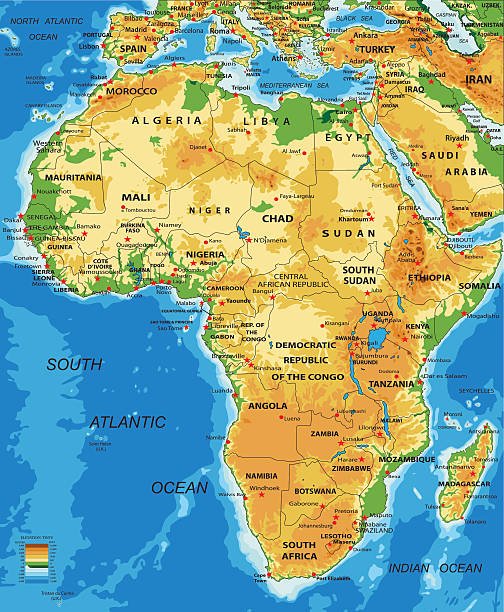
Did Africans Ever Colonize? Unpacking Africa's Rich History of Power and Influence
The question, Did Africans ever colonize? is complex, often provoking thoughts of European expansion into Africa, but the answer is a nuanced yes, depending on how one defines “colonization.” While the term “colonization” typically refers to the transatlantic European model of settler dominance and resource extraction, many powerful African civilizations throughout history also expanded their influence, territories, and control over other regions and peoples, exhibiting forms of imperial power projection akin to what we recognize as empire-building and territorial expansion in other parts of the world.
Pre-colonial African empires established vast dominions, military control, and economic hegemony over neighboring territories, often integrating diverse populations into their political and cultural spheres. Understanding these historical realities requires moving beyond Eurocentric definitions and acknowledging the rich and multifaceted history of African agency and power.
Defining Colonization: A Spectrum of Influence
To properly address the question, it’s crucial to consider the different interpretations of “colonization.” Western historical narratives often reserve the term for the European expansion starting in the 15th century, characterized by:
- Large-scale settlement: Sending significant populations to live in new territories.
- Resource extraction: Exploiting natural resources for the benefit of the colonizing power.
- Political and economic subjugation: Imposing alien governance systems and economic structures.
- Cultural imposition: Suppressing indigenous cultures and languages in favor of the colonizer’s.
- Racial hierarchy: Often underpinned by ideologies of racial superiority.
While African empires rarely engaged in colonization identical to the European settler model, they certainly practiced forms of territorial expansion, military conquest, economic dominance, and cultural diffusion that involved one state exerting power and control over another. These actions, within their historical contexts, represent significant exercises of imperial power and influence that often resulted in the subjugation or integration of neighboring groups.
Ancient African Empires and Their Reach
The African continent has been home to some of the world’s most powerful and enduring civilizations, many of which expanded their borders and exerted substantial authority over foreign lands.
Ancient Egypt: A Prolific Colonizer in Antiquity
Perhaps the most prominent example of an African civilization engaging in sustained external control is Ancient Egypt. For millennia, Egyptian pharaohs expanded their reach south into Nubia (modern-day Sudan) and northeast into the Levant (parts of modern-day Israel, Palestine, Syria, Lebanon). Egyptian colonization of Nubia was particularly extensive:
- Military Conquest: Repeated campaigns secured control over key trade routes and resources.
- Resource Extraction: Gold, precious stones, and other raw materials flowed from Nubia to Egypt.
- Administrative Control: Egyptians established forts, temples, and administrative centers, installing governors and officials to oversee the region.
- Cultural Imposition: Egyptian language, religion, and architecture heavily influenced Nubian societies, though Nubians often adapted these influences into their own distinct culture.
This long-term occupation and exploitation undeniably fit many definitions of colonization, demonstrating Ancient Egypt’s reach and power projection.
The Kingdom of Kush (Nubia): Turning the Tables
Interestingly, the Nubians themselves, after centuries under Egyptian influence, rose to power. The Kingdom of Kush conquered Egypt in the 8th century BCE, establishing the 25th Dynasty of Egypt (the “Black Pharaohs”). For nearly a century, Nubian rulers controlled one of the ancient world’s most powerful empires, ruling from the Mediterranean to modern-day Sudan, demonstrating their own capacity for imperial conquest and governance.
Carthage: A North African Powerhouse
Originating as a Phoenician settlement, Carthage in modern-day Tunisia grew into a formidable maritime empire that dominated the western Mediterranean from the 7th to the 3rd centuries BCE. Although its founders were from the Near East, Carthage became an integral part of the North African landscape and built an empire that:
- Established colonies and trading posts: Across coastal North Africa, Sicily, Sardinia, Corsica, and parts of the Iberian Peninsula (modern-day Spain and Portugal).
- Exerted economic and political control: Over these territories and their resources.
- Fought major wars of expansion: Most famously against Rome in the Punic Wars, defending and expanding its sphere of influence.
This significant North African empire certainly fits the description of a colonizing power in the classical sense.
The Axumite Empire (Ethiopia): Red Sea Dominance
Flourishing from the 1st to the 7th centuries CE, the Axumite Empire in what is now Ethiopia and Eritrea was a major naval and trading power. Axum expanded its influence across the Red Sea and into the Arabian Peninsula, notably:
- Conquest of the Himyarite Kingdom: Axumite armies crossed the Red Sea to conquer and rule parts of Yemen in the 6th century CE, imposing their authority and protecting Christian populations there.
- Control of Trade Routes: Dominated vital trade networks connecting Africa, the Mediterranean, and Asia.
This demonstrates a clear instance of an Axumite expansion beyond the continent’s shores.
West African Empires and Their Spheres of Influence
In West Africa, powerful states like the Ghana, Mali, and Songhai Empires built vast and intricate systems of governance that extended their control far beyond their original ethnic or geographic cores.
The Ghana Empire: Tribute and Trade
From the 7th to the 13th centuries, the Ghana Empire (not related to the modern nation-state) controlled the lucrative trans-Saharan gold and salt trade. While not always direct military occupation of distant lands, Ghana exerted significant economic and political influence over numerous vassal states and tribute-paying groups in the wider West African region. Their power derived from their ability to tax trade and control key resources, effectively creating a powerful sphere of influence that compelled obedience from surrounding entities.
The Mali Empire: Direct Rule and Cultural Hegemony
Succeeding Ghana, the Mali Empire (13th-17th centuries) became one of the largest and wealthiest empires in the world under rulers like Mansa Musa. Its expansion involved:
- Military Conquest: Subjugating numerous smaller kingdoms and chiefdoms across West Africa.
- Administrative Integration: Establishing a sophisticated system of governance with regional administrators loyal to the Mansa.
- Economic Control: Dominating the gold, salt, and slave trade, generating immense wealth.
- Cultural and Religious Spread: Facilitating the spread of Islam and Malian cultural norms throughout its vast territories.
The Mali Empire’s dominion was extensive, encompassing parts of modern-day Mali, Senegal, Gambia, Guinea, Burkina Faso, Niger, and Mauritania, representing a clear form of imperial rule.
The Songhai Empire: A Legacy of Expansion
The Songhai Empire (15th-16th centuries) rose from the ashes of Mali, expanding even further under dynamic leaders like Sonni Ali and Askia the Great. Its Songhai control stretched across much of the Sahel, maintaining a powerful military and centralized administration that governed diverse populations and territories. Like Mali, Songhai exerted considerable power over subjugated peoples, extracting resources and controlling trade, undeniably acting as an expansive imperial power.
Other Notable Instances of African Power Projection
Great Zimbabwe: Economic Influence and Regional Dominance
In Southern Africa, the city of Great Zimbabwe (11th-15th centuries) was the capital of a powerful kingdom that controlled a vast interior region, thriving on gold mining and cattle. While there may not have been extensive military conquest in the same vein as Mali, Great Zimbabwe’s economic and cultural influence spanned a significant area, with numerous smaller settlements paying tribute and adopting its architectural and cultural styles. This represents a form of regional hegemony, if not direct colonization.
The Zulu Kingdom: 19th-Century Expansion
In the early 19th century, the rise of the Zulu Kingdom under Shaka Zulu in Southern Africa led to a period known as the Mfecane (“the crushing”). The Zulus created a highly centralized, militaristic state that expanded rapidly through conquest and assimilation of surrounding groups. This was a clear example of one African group militarily subjugating and incorporating others into its expanding domain, altering the political landscape of the region profoundly. The Zulu conquest was a brutal but effective form of state expansion.
Swahili City-States: Maritime Networks and Cultural Spread
Along the East African coast, the Swahili city-states (e.g., Kilwa, Mombasa, Lamu) flourished as vital hubs in the Indian Ocean trade network from the 10th to the 16th centuries. While not forming a single, unified empire, individual city-states exerted considerable influence over their immediate hinterlands and established trade networks and sometimes small settlements along the coast, facilitating cultural exchange and economic dominance through their maritime prowess. They projected economic and cultural power, often leading to the “Swahilization” of coastal communities.
The Semantic Divide: Why the Term “Colonization” is Often Unapplied
Despite these historical examples of African territorial expansion and power projection, the term “colonization” is rarely applied to African historical acts in popular discourse. Several factors contribute to this:
- Eurocentric Historical Narratives: Western education has historically focused on European expansion, often overlooking or downplaying complex African histories.
- Modern European Colonization of Africa: The traumatic and relatively recent experience of European colonization of Africa (the Scramble for Africa) overshadows prior African imperial ventures.
- Difference in Scale and Intent: While African empires engaged in conquest and resource control, they often did not involve the same scale of settler populations, the industrial-era exploitation, or the racialized ideologies that characterized European overseas empires.
- Nature of Sources: Much of African history relies on oral traditions and archaeology, which can be harder to integrate into mainstream historical narratives compared to extensive written records from European sources.
Recognizing the history of African power and the complex ways in which African states interacted with and controlled their neighbors is vital for a comprehensive understanding of world history. It highlights African agency and the diverse forms of political and economic organization that existed on the continent long before European arrival.
Conclusion: A Nuanced Perspective on African Empires
In conclusion, while the term “colonization” carries specific connotations tied to European expansion, African civilizations throughout history did indeed build powerful empires that expanded their territories, exerted political and economic control over diverse peoples, and projected their cultural influence over vast regions. From Ancient Egypt’s reach into Nubia and the Levant, to the Mali Empire’s dominion over West Africa, and the Axumite expansion across the Red Sea, African states engaged in activities that, by many historical definitions, constitute forms of imperialism and territorial subjugation.
By understanding these historical realities, we move beyond simplistic narratives and embrace a more accurate, complex, and respectful view of Africa’s rich and dynamic past. The question “Did Africans ever colonize?” challenges us to broaden our understanding of history and recognize the multifaceted forms of power, expansion, and influence that have shaped continents and civilizations worldwide.
Enjoyed this read?
Share it with your friends and colleagues.