Do Africans Not Have Neanderthal Dna

BSC Insights Admin
October 07, 2026
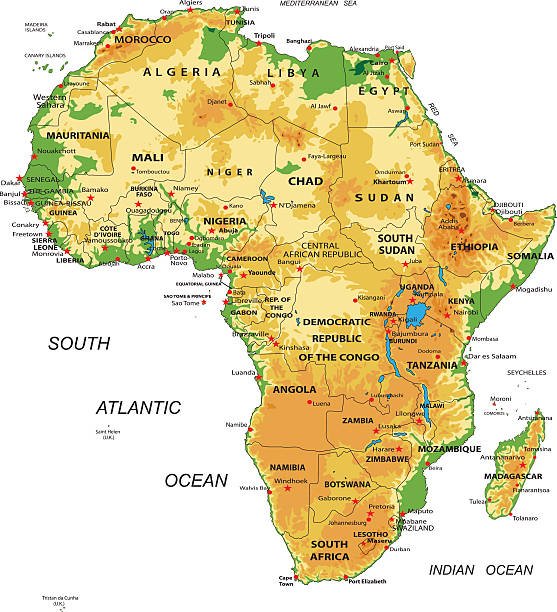
The question, "Do Africans not have Neanderthal DNA?" is a nuanced one with a complex answer rooted in human evolutionary history and genetic research. While the prevailing scientific consensus has long held that modern humans interbred with Neanderthals primarily after migrating out of Africa, recent studies suggest that small traces of Neanderthal ancestry can indeed be found in various African populations, primarily due to subsequent back-migrations of people with Neanderthal DNA returning to the continent. This finding challenges the overly simplistic view of human genetic isolation and highlights the dynamic nature of human gene flow across continents over millennia.
The "Out of Africa" Model and Initial Understandings of Neanderthal Admixture
The widely accepted "Out of Africa" model posits that all modern humans (Homo sapiens) originated in Africa approximately 200,000 to 300,000 years ago. A relatively small group of these early modern humans migrated out of Africa roughly 60,000 to 70,000 years ago, eventually populating the rest of the world. As these pioneers spread across Eurasia, they encountered and interbred with archaic hominins, most notably Neanderthals in Europe and Asia, and Denisovans in Asia.
Early genomic studies, which first identified Neanderthal admixture in modern human populations, revealed that non-African individuals typically carry about 1% to 4% Neanderthal DNA in their genomes. Crucially, these initial studies found little to no Neanderthal genetic material in the genomes of people whose ancestors remained exclusively in Sub-Saharan Africa. This led to the widely held belief that because the interbreeding events occurred *after* the initial exodus from Africa, populations still residing within Africa would therefore lack Neanderthal DNA. This understanding formed a cornerstone of human evolutionary genetics for many years.
Where Did Neanderthal Interbreeding Occur?
Genetic evidence suggests that the primary interbreeding events between modern humans and Neanderthals took place in the Middle East, around 50,000 to 60,000 years ago, shortly after modern humans left Africa. Subsequent encounters likely occurred as modern humans expanded into Europe and East Asia. This geographical and temporal separation from the African continent was the main reason for the initial conclusion that indigenous African populations were largely devoid of Neanderthal ancestry in Africans.
The presence of Neanderthal Dna in non-African populations explains various traits, from immunity to hair and skin characteristics. However, for a long time, this genetic legacy was considered unique to those outside the African continent.
Revisiting the African Narrative: The Impact of Back-Migration
While direct interbreeding with Neanderthals within Africa is not supported by current evidence, human history is not a simple linear progression. It is marked by continuous migrations, gene flow, and population movements across continents. Over thousands of years, after modern humans had spread throughout Eurasia and acquired Neanderthal DNA, some of these populations migrated back into Africa. These back-migrations to Africa introduced a small, but detectable, amount of Neanderthal genetic material into African populations.
- North African Influence: Regions like North Africa have historically experienced significant gene flow with populations from the Middle East and Europe, areas known to have high levels of Neanderthal admixture.
- Sub-Saharan Admixture: Subsequent migrations from North Africa or directly from Eurasia into Sub-Saharan Africa have further dispersed these genetic traces.
- Historical Context: Events like the spread of agriculture, trans-Saharan trade routes, and more recent historical movements have all contributed to genetic exchange.
Therefore, when modern studies analyze African genetic lineages, they are not only looking at ancient African diversity but also at layers of admixture from external populations over time. The concept of human migration out of Africa is complemented by the understanding of subsequent migrations *into* Africa, creating a rich tapestry of genetic diversity.
Groundbreaking Research: Uncovering Neanderthal DNA in Africa
The understanding of Neanderthal DNA in Africans began to shift significantly with more sophisticated genomic analyses. A pivotal study published in 2020 by Chen et al. in the journal Cell utilized a novel statistical method called IBDmix to analyze DNA from over 2,500 individuals from diverse populations, including those from Africa. This research provided compelling evidence for the presence of Neanderthal ancestry in African populations.
Key Findings from Recent Studies:
- Detection of Neanderthal Sequences: The study identified a small but widespread signal of Neanderthal DNA in Sub-Saharan African populations. On average, individuals of African descent were found to carry approximately 0.1% to 0.5% Neanderthal DNA.
- Source of Admixture: The researchers concluded that the vast majority of this Neanderthal ancestry in Africans is not due to direct interbreeding within Africa. Instead, it is a consequence of ancient back-migrations into Africa by non-African populations (who already carried Neanderthal DNA).
- Refined Understanding: These findings demonstrate that human genetic history is far more interconnected than previously assumed, with continuous gene flow between continents throughout prehistory. The amount of Neanderthal ancestry in Africans is considerably lower than in non-African populations (which typically range from 1% to 4%), reflecting its indirect origin.
This breakthrough in ancient human DNA research underscores the importance of advanced computational methods in revealing the subtler aspects of human genetic history. It reshapes our understanding of human evolutionary history and the intricate paths of ancient human populations.
Understanding Genetic Diversity Within Africa
Africa is renowned for having the greatest genetic diversity in Africa among human populations, reflecting its role as the cradle of humanity. The continent is home to thousands of distinct ethnic groups and languages, each with a unique genetic profile influenced by millennia of independent evolution, local adaptations, and interactions with neighboring groups.
The amount and distribution of Neanderthal genetic traces in African populations are not uniform. They vary significantly depending on geographic region and historical patterns of migration and gene flow:
| Region | Likely Source of Neanderthal DNA | Relative Amount (Estimated) |
|---|---|---|
| North Africa | Strong historical ties and migrations with Middle East & Europe | Higher (compared to Sub-Saharan) |
| East Africa | Ancient migrations from the Arabian Peninsula, potential early back-migrations | Moderate |
| West Africa | Complex patterns, potentially via trans-Saharan routes and later migrations | Lower to Moderate |
| Central & Southern Africa | More isolated, but still influenced by broader African gene flow | Lower, but detectable |
The study of Sub-Saharan African genetics is crucial for understanding not only the origins of humanity but also the complex genetic interactions that have shaped our species. The varying levels of Neanderthal ancestry across African groups further emphasize that African genetic lineages are not monolithic but incredibly diverse.
Implications for Human Evolutionary History and Modern Human Origins
The discovery of Neanderthal DNA in African populations has several important implications:
- More Complex Migration Models: It necessitates a more intricate model of human migration, one that includes multiple waves of expansion and contraction, as well as significant gene flow in both directions between Africa and Eurasia. It moves beyond a simple 'one-way' out-of-Africa narrative.
- Universal Human Interconnectedness: It reinforces the idea that all human populations are deeply interconnected through a shared, albeit complex, genetic heritage. There are no truly 'pure' populations; genetic admixture is a fundamental part of the human story.
- Refining Disease Studies: Understanding the full spectrum of human genetic variation, including archaic introgression in African populations, is vital for accurate genetic research on disease susceptibility and drug response across global populations. Many medical genetic studies have historically been biased towards European populations, making a comprehensive understanding of African genetics even more critical.
- Challenging Misconceptions: It helps to dismantle outdated notions of genetic isolation or 'purity' in any human group, particularly regarding African populations, which are often mistakenly viewed as entirely separate from archaic admixture events.
The field of human genome research continues to evolve, providing ever-finer details about our past. The presence of Neanderthal sequences, even in minute quantities, across the globe, is a testament to the extensive mingling of different human groups over vast stretches of time.
Addressing Common Misconceptions About Neanderthal DNA and African Populations
It is important to clarify common misunderstandings when discussing Do Africans not have Neanderthal Dna:
- Misconception: Neanderthal DNA means direct interbreeding within Africa.
Correction: Current evidence strongly suggests that the Neanderthal DNA found in African populations is primarily a result of back-migrations from non-African populations who had already interbred with Neanderthals outside of Africa.
- Misconception: African populations are genetically 'pure' Homo sapiens, untouched by archaic admixture.
Correction: All human populations have experienced various forms of genetic admixture throughout their history. While the nature and extent of admixture differ, the concept of a 'pure' population is largely a myth. African populations are incredibly diverse and have their own unique history of ancient admixture with other archaic hominins, though not Neanderthals in the same direct way as Eurasians.
- Misconception: The amount of Neanderthal DNA in Africans is comparable to non-Africans.
Correction: The amount of Neanderthal DNA in most African populations is significantly lower (typically less than 1%) compared to non-African populations (1-4%). This difference is key to understanding the indirect nature of its presence in Africa.
This nuanced understanding of archaic hominin admixture highlights the complexity and richness of our shared human story. It shows that the narrative of human evolution is far from settled and continues to be refined with new scientific discoveries.
Conclusion
To summarize, the answer to "Do Africans not have Neanderthal DNA?" is that while direct interbreeding between modern humans and Neanderthals did not occur significantly within Africa, subsequent back-migrations to Africa by populations carrying Neanderthal ancestry have introduced small, yet detectable, amounts of Neanderthal genetic material into various African populations. These groundbreaking findings have reshaped our understanding of human evolutionary history, emphasizing the interconnectedness of global populations and the dynamic nature of human migration and gene flow. The presence of Neanderthal Dna in Africans, primarily through indirect means, serves as a powerful reminder that our shared genetic tapestry is far more complex and fascinating than once imagined, underscoring the continuous journey of human genetic discovery.
Enjoyed this read?
Share it with your friends and colleagues.