Did Africans Rule Europe

BSC Insights Admin
September 30, 2026
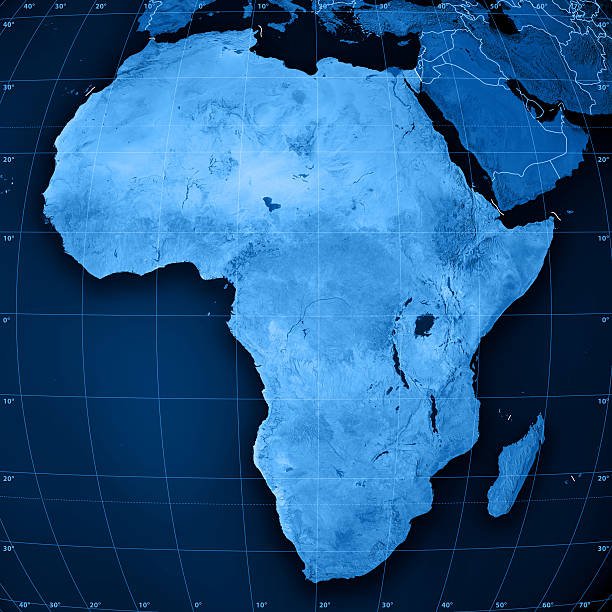
The direct question, "Did Africans rule Europe," requires a nuanced historical answer: no, Africans as a unified continental entity never ruled the entirety of Europe. However, specific groups from the African continent, particularly those from North Africa, exerted significant political, military, and cultural influence and established lasting rule over substantial parts of the Iberian Peninsula (modern-day Spain and Portugal) for centuries. Beyond this prominent example, African individuals and communities played various roles and had a discernible presence in different European regions throughout history, from the Roman Empire to medieval trade networks.
Defining "African" and "Rule" in a Historical Context
To accurately address the question, it is crucial to clarify what "African" and "rule" signify in this historical context. The continent of Africa is incredibly diverse, encompassing a multitude of ethnic groups, cultures, and empires. When discussing historical interactions with Europe, it often refers specifically to North African populations, such as the Berbers and Arabs (who also settled in North Africa), or to individuals from regions further south who traveled or were brought to Europe.
Similarly, "rule" implies direct political and military control, establishing governance, laws, and administrative structures. This differs significantly from cultural influence, trade relations, or the mere presence of people from another continent. While African cultures profoundly influenced various aspects of European life at different times, direct political dominion by a broad "African" power over "Europe" did not occur.
The Moorish Influence and Rule in Al-Andalus (Iberian Peninsula)
The most compelling historical example of significant African rule in parts of Europe comes from the Moorish conquest of the Iberian Peninsula. Beginning in 711 CE, an army predominantly composed of Berbers from North Africa, alongside Arabs, crossed the Strait of Gibraltar and rapidly conquered most of Visigothic Hispania. This marked the establishment of Al-Andalus, an Islamic state that would endure in various forms for nearly 800 years.
Who Were the Moors?
The term "Moor" is a broad historical designation often used by Europeans to refer to the Muslim inhabitants of the Iberian Peninsula, North Africa, and Sicily during the Middle Ages. While the leadership of the initial invasion was Arab, the vast majority of the fighting forces and subsequent settlers were indigenous North African Berbers. Over centuries, Al-Andalus became a diverse society that also included ethnic Arabs, Goths, Hispano-Romans, and people of Sub-Saharan African descent who arrived through trade or military service.
The Golden Age of Al-Andalus
For several centuries, especially during the Umayyad Caliphate of Cordoba (10th-11th centuries), Al-Andalus flourished as a center of culture, science, and learning unmatched in much of contemporary Western Europe. Cities like Cordoba, Seville, and Granada became beacons of intellectual advancement. Key contributions include:
- Advancements in Science and Mathematics: Preservation and translation of ancient Greek texts, development of algebra, astronomy, medicine, and cartography.
- Agricultural Innovations: Introduction of new crops (e.g., rice, citrus fruits, sugarcane) and advanced irrigation techniques.
- Architecture and Art: Distinctive architectural styles, evident in structures like the Alhambra in Granada and the Great Mosque of Cordoba, which integrated Islamic, Roman, and Visigothic elements.
- Philosophy and Literature: Significant works in philosophy (e.g., Averroes) and poetry that influenced European thought.
- Tolerance and Coexistence: While not without tensions, Al-Andalus often exhibited a degree of religious tolerance (convivencia) among Muslims, Christians, and Jews, allowing for intellectual exchange and a relatively peaceful society compared to some other parts of Europe.
This period represents a powerful instance of sustained political and cultural hegemony by groups primarily originating from North Africa over a significant portion of Europe. The Moorish presence in Europe fundamentally reshaped the landscape of medieval Iberia.
The Reconquista and Decline
The rule of the Moors in Iberia gradually receded over centuries due to the Christian Reconquista. Starting in the northern kingdoms, Christian forces slowly pushed southward, culminating in the fall of Granada, the last Moorish stronghold, in 1492. Despite their eventual expulsion or forced conversion, the legacy of African influence in Europe, particularly Moorish culture, remains deeply embedded in Spanish and Portuguese language, architecture, music, and cuisine.
African Presence in the Roman Empire
Long before the Moors, African individuals and populations were integral to the vast Roman Empire, which encompassed large parts of North Africa. Roman Africa, particularly provinces like Egypt, Mauretania, Numidia, and Africa Proconsularis (modern-day Tunisia), were crucial breadbaskets and economic centers of the empire. As Roman citizens, soldiers, merchants, and scholars, North Africans played significant roles within the imperial structure.
A notable example is Septimius Severus, who became Roman Emperor from 193 to 211 CE. Born in Leptis Magna (modern-day Libya), he was of Punic and Berber ancestry. His reign illustrates that individuals of African descent could rise to the highest echelons of Roman power, administering an empire that stretched across Europe, Asia, and Africa. Many other soldiers, governors, and intellectuals from North Africa contributed to the military, administration, and intellectual life of Rome.
Early Christianity also saw prominent figures from North Africa, such as Saint Augustine of Hippo, one of the most influential theologians in Western Christianity. These examples highlight a complex interplay where North Africans were not external rulers but rather active participants and leaders within a pan-continental empire that included much of Europe.
Beyond Political Rule: Other African-European Connections
While direct large-scale political rule by Africans over Europe was limited to the Moorish period in Iberia and the integration of North Africans into the Roman Empire, various other forms of interaction and influence existed throughout history.
Ancient Civilizations and Cultural Exchange
For millennia, connections between North Africa and parts of Europe were common. Ancient Egypt, though primarily focused on its own region, had extensive interactions with Mediterranean cultures, including early Greek and Roman societies. The Phoenicians, originating from modern-day Lebanon, established colonies across the Mediterranean, including North Africa (Carthage) and parts of Europe (e.g., Sicily, Spain), facilitating trade and cultural diffusion. The Vandals, a Germanic tribe, established a kingdom in North Africa in the 5th century CE, from which they launched raids on Rome, demonstrating a complex back-and-forth movement across the Mediterranean.
Trade Routes and Migration
Throughout the medieval period and beyond, trans-Saharan trade routes brought gold, salt, enslaved people, and other goods from West Africa into North Africa, which then entered European markets. This economic exchange fostered indirect connections. Similarly, smaller-scale migrations and the movement of individuals, whether as merchants, scholars, envoys, or in involuntary servitude, meant that people of various African origins were present in different European societies. For instance, Black individuals served in European royal courts or were depicted in medieval art, reflecting their presence, albeit not in positions of widespread rule.
These interactions demonstrate that the relationship between Africa and Europe was rarely static or one-sided. Instead, it was a dynamic tapestry of trade, conquest, cultural exchange, and human movement, contributing to the rich and complex history of both continents. The idea of historical ties between Africa and Europe is a field of ongoing study, revealing how interconnected these regions have always been.
Debunking Misconceptions and Understanding Nuance
The question "Did Africans rule Europe" often arises from a desire to explore overlooked historical narratives or to challenge Eurocentric views of history. While it's crucial to acknowledge and celebrate the significant contributions and influences of African peoples in European history, it's equally important to maintain historical accuracy.
Confusing "presence" or "influence" with "rule" can lead to misinterpretations. For instance:
- Moorish Rule vs. Pan-African Rule: The rule of the Moors was specific to certain regions of Iberia and did not constitute a unified "African" conquest or administration of the entire European continent. The Moors themselves were a multi-ethnic group with roots in North Africa and the Middle East.
- Individual Influence vs. Collective Dominion: The rise of figures like Septimius Severus to Emperor or the presence of African scholars and artists in Europe signifies individual achievement and cultural exchange, not the political subjugation of Europe by African powers.
Understanding these distinctions helps to appreciate the actual historical interactions without distorting facts. The historical record indicates a rich history of cross-continental engagement rather than a simple narrative of one continent ruling the other. The concept of Black people in medieval Europe, for example, is increasingly being explored, showing diverse roles within European societies.
The Lasting Legacy of African Contributions to Europe
Despite the lack of a unified "African" rule over Europe, the contributions and influence from African peoples have left an indelible mark on the continent. The Moorish legacy in Iberia is perhaps the most visible, manifest in:
- Language: Hundreds of Spanish and Portuguese words have Arabic origins.
- Architecture: The unique blend of styles in southern Spain.
- Music and Arts: Influences on flamenco and other cultural forms.
- Science and Technology: Transfer of knowledge in mathematics, astronomy, and agriculture that helped pull Europe out of the Dark Ages.
Beyond Iberia, the presence of North Africans within the Roman Empire contributed to its strength and diversity. The ongoing trade relationships, intellectual exchanges, and human migrations throughout history have ensured a continuous, albeit often complex, dialogue between the two continents. Studying these interactions helps us understand the interconnectedness of world history and challenges simplistic notions of isolated civilizations.
| Period | Region of Europe Affected | Nature of African Presence/Influence | Key Figures/Examples |
|---|---|---|---|
| Roman Empire (1st-5th Century CE) | Italy, Gaul, Britannia, Hispania, etc. (through Roman administration) | Integration as citizens, soldiers, emperors; intellectual and religious contributions. | Septimius Severus (Emperor), Saint Augustine of Hippo (Theologian) |
| Al-Andalus (8th-15th Century CE) | Iberian Peninsula (Spain, Portugal) | Direct political, military, and cultural rule by North African (Berber & Arab) Moors. | Abd al-Rahman I (Founder of Umayyad Emirate), Averroes (Philosopher) |
| Medieval Trade (9th-16th Century CE) | Mediterranean Coast, Italian city-states, parts of Central Europe | Economic exchange of goods, indirect cultural diffusion, presence of merchants/envoys. | Trans-Saharan trade routes connecting to European markets. |
| Renaissance & Early Modern Europe | Various courts, port cities, artistic centers | Presence of diplomats, artists, servants; evolving perceptions and representations. | Figures in European art (e.g., depictions of Gaspar in Adoration of the Magi). |
Conclusion
In summary, while there was no overarching "African" rule of the entire European continent, the history of Europe is undeniably intertwined with that of Africa. The most significant instance of direct African rule in Europe was the nearly eight-century long presence of the North African (Moorish) Islamic states in the Iberian Peninsula, which profoundly shaped its culture, science, and society. Additionally, individuals from Africa held influential positions within the Roman Empire, and various forms of trade, migration, and cultural exchange have consistently connected the two continents. Understanding this complex history requires acknowledging specific regional and temporal influences rather than broad generalizations, revealing a richer and more interconnected past. The question "Did Africans rule Europe" ultimately leads to a deeper appreciation of the multifaceted historical interactions that have shaped our world.
Enjoyed this read?
Share it with your friends and colleagues.