Did Africans Go Through Slavery

BSC Insights Admin
October 08, 2026
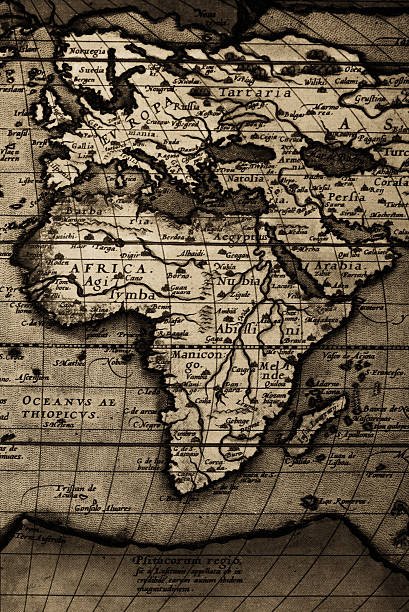
The question, Did Africans go through slavery?, elicits a resounding yes, though the forms and scale of servitude varied significantly across time and regions. Africa has a long and complex history with various forms of human bondage, ranging from indigenous systems that existed before European contact to the devastating transatlantic slave trade and the extensive Arab slave trade, both of which profoundly reshaped the continent and its people for centuries. Understanding this multifaceted history requires distinguishing between different types of servitude and recognizing the immense human cost and enduring legacy of these practices.
Understanding Slavery: A Complex History
To fully grasp the historical reality of slavery in Africa, it is crucial to understand that "slavery" itself is not a monolithic concept. Different societies around the world, including those in Africa, practiced varying forms of human servitude, each with distinct characteristics regarding the rights of the enslaved, the conditions of their bondage, and the possibilities for freedom. This historical complexity often leads to misunderstandings about the continent's relationship with slavery.
Defining Slavery: A Global Phenomenon
Slavery, broadly defined as the ownership of one person by another, has been a feature of human societies across continents for millennia. From ancient Rome and Greece to indigenous American civilizations, and various Asian empires, different forms of forced labor and human bondage existed. These systems often arose from war, debt, crime, or social stratification. However, the nature of these institutions differed significantly from the brutal, racialized chattel slavery that became central to the transatlantic trade.
Pre-Colonial Forms of Slavery in Africa
Before the widespread arrival of Europeans, many African societies had established systems of servitude. These indigenous forms of pre-colonial slavery in Africa often differed fundamentally from the brutal, racialized chattel slavery that would later dominate the transatlantic system. Key distinctions include:
- Debt Bondage: Individuals could be enslaved to pay off debts, often with the possibility of working off their obligation and regaining freedom for themselves or their families.
- War Captives: Prisoners of war were frequently enslaved. In many cases, these individuals were integrated into the captor's society with limited rights, or used as laborers, but their status was not always permanent or hereditary.
- Criminal Punishment: Enslavement could be a consequence for certain crimes, serving as a form of justice or rehabilitation within the community.
- Pawnship: Individuals (often children) were offered as collateral for loans, with their labor serving as interest. This was typically a temporary arrangement and often familial, intended to secure resources during times of hardship.
- Social Integration: In many traditional African societies, enslaved individuals could, over generations, become integrated into the master's family or clan, sometimes even rising to positions of power or influence. Their children might not automatically inherit their enslaved status, or their status could improve over time. This contrasted sharply with the permanent, hereditary, and dehumanizing nature of chattel slavery.
While these systems involved forced labor and a loss of freedom, they rarely involved the complete dehumanization, racial targeting, or hereditary permanence characteristic of the subsequent transatlantic trade. They were generally not driven by industrial-scale economic exploitation of vast tracts of land for cash crops, which demanded a constant, perpetual, and easily identifiable labor force.
The Transatlantic Slave Trade: A Catastrophic Era
The transatlantic slave trade represents the most devastating and impactful period of forced migration and human bondage in history, specifically targeting people from Africa. This system, which lasted from the early 16th to the mid-19th century, was unparalleled in its scale, systematic brutality, and long-term consequences, fundamentally altering the course of African, European, and American history.
The Origins and Mechanics of the Trade
Driven primarily by European colonial powers' insatiable demand for cheap, forced labor to cultivate lucrative cash crops like sugar, tobacco, cotton, and coffee in the newly colonized Americas, the transatlantic slave trade became a massive, highly organized, and immensely profitable enterprise. European traders established fortified coastal outposts and relied on African middlemen and rulers to supply enslaved individuals. These captives were often acquired through warfare, raids, or kidnapping in the interior, often fueled by the desire for European manufactured goods and weapons. The cycle of conflict and demand for slaves intensified over centuries, devastating communities.
The journey across the Atlantic, notoriously known as the Middle Passage, was a testament to unimaginable human cruelty. Enslaved Africans were packed into purpose-built ships under horrific, unsanitary, and inhumane conditions, leading to widespread disease, starvation, torture, and death. It is estimated that millions perished during this brutal crossing, with mortality rates sometimes exceeding 20% on a single voyage. Those who survived faced a life of unimaginable suffering, exploitation, and dehumanization in the Americas.
The Scale and Impact on African Societies
The demographic impact of the transatlantic slave trade on Africa was catastrophic and long-lasting. Historians estimate that between 10 to 12 million Africans were forcibly transported across the Atlantic, with millions more dying during the process of capture, forced marches to the coast, or the Middle Passage itself. The vast majority of these individuals came from West and Central Africa, regions that were dramatically depopulated and destabilized.
The loss of millions of the most able-bodied men and women, primarily those aged 15-30, had profound and lasting effects:
- Demographic Depletion: Entire regions experienced significant population decline and skewed gender ratios, hindering economic and social development for centuries.
- Economic Disruption: Traditional African economies, which relied on agriculture, craft, and trade, were severely disrupted as resources and labor were diverted to the slave trade. Local industries suffered, and a dependency on European goods often replaced indigenous production.
- Political Instability: The trade fueled inter-ethnic conflict and incessant warfare, as African kingdoms competed for control over trade routes and captives, often leading to the collapse of stable societies and fostering long-term political fragility.
- Cultural Devastation: Communities were torn apart, rich cultural traditions were eroded, and the psychological trauma reverberated for generations, impacting collective memory and identity.
This period led to widespread underdevelopment and created a legacy of vulnerability that continues to affect many parts of the continent today. The impact of slavery on Africa cannot be overstated; it was a profound wound from which the continent is still recovering.
The Horrors of Chattel Slavery in the Americas
Upon arrival in the Americas, enslaved Africans were subjected to a brutal system of chattel slavery. Unlike many pre-colonial forms of servitude, chattel slavery treated human beings as mere property – commodities to be bought, sold, and inherited. This system was fundamentally distinct and was characterized by:
- Systematic Dehumanization: Enslaved individuals were systematically stripped of their identity, culture, language, and basic human rights. Their personhood was denied, reducing them to instruments of labor.
- Hereditary Status: Enslavement was permanent and passed down through generations, regardless of parentage, ensuring a perpetual, self-reproducing labor force for plantations and other industries.
- Brutal Forced Labor: Enslaved people endured relentless and often deadly labor on plantations, in mines, or domestic settings, always under the constant threat of extreme violence.
- Pervasive Violence: Whippings, torture, sexual assault, mutilation, and murder were common tools of control, used to enforce submission, maximize productivity, and crush any form of resistance.
- Separation of Families: Families were routinely torn apart through sale, causing immense emotional and psychological suffering, and further disrupting social bonds.
Despite these atrocities, enslaved Africans consistently engaged in powerful acts of resistance to slavery, ranging from subtle daily defiance and cultural preservation to organized rebellions and perilous attempts to escape.
The Arab Slave Trade: Another Dimension
While the transatlantic slave trade is widely known, it is also essential to acknowledge the long-standing Arab slave trade, which significantly predated and overlapped with the European-led trade. This system primarily involved the movement of enslaved Africans across the Sahara Desert, the Red Sea, and the Indian Ocean to North Africa, the Middle East, and parts of Asia. This aspect is crucial for a comprehensive understanding of the history of slavery in Africa.
East Africa and the Indian Ocean
This extensive trade network, which lasted for over a millennium (from the 7th century to the early 20th century), saw millions of Africans forcibly taken from East Africa, the Horn of Africa, and parts of West Africa (via trans-Saharan routes). Unlike the transatlantic trade where young men were often preferred for heavy agricultural labor, the Arab slave trade frequently sought women for domestic service, concubinage, and agricultural work, and eunuchs for various roles, including guarding harems and administrative positions.
The conditions of transport, particularly across the vast and harsh Sahara Desert and by sea across the Indian Ocean, were often as deadly as the Middle Passage, with high mortality rates due to starvation, thirst, disease, and brutal treatment. While some enslaved individuals and their descendants in the Middle East and North Africa eventually achieved a degree of integration into societies, the fundamental aspect of forced labor, loss of freedom, and often brutal treatment remained. The history of slavery in Africa is incomplete without recognizing this significant component, which also had profound demographic and societal impacts on the regions it affected, leading to population decline and political instability.
The scale of the Arab slave trade is harder to quantify precisely due to less comprehensive record-keeping compared to the transatlantic trade, but historical estimates suggest that as many as 17 million Africans were enslaved and transported through these routes over its long duration, making it a critical aspect of understanding Africa's deep experience with human bondage.
Resistance, Abolition, and Legacy
The narrative of slavery is not solely one of oppression; it is also a powerful testament to human resilience, unwavering resistance, and the eventual global fight for freedom. The journey towards the abolition of slavery was long, arduous, and fraught with conflict.
Acts of Resistance and Rebellion
Throughout the eras of both transatlantic and Arab slave trades, enslaved Africans consistently resisted their bondage. Their resistance took many forms, demonstrating an unyielding spirit of defiance:
- Flight and Escape: The establishment of Maroon communities in the Americas (e.g., in Jamaica, Brazil, Surinam), formed by escaped slaves, and the creation of "underground railroad" networks, demonstrated a powerful and persistent desire for freedom.
- Organized Rebellion and Revolt: Major uprisings like the Haitian Revolution (1791-1804), which led to the establishment of the first free black republic, and numerous smaller revolts on plantations and slave ships, directly challenged the power structures of slavery.
- Everyday Resistance: More subtle forms of resistance included sabotage of tools or crops, feigned illness, slowing down work, cultural preservation through music, religion, and storytelling, and infanticide to prevent children from entering slavery. These acts undermined the economic efficiency and moral authority of the slave system.
These diverse acts of resistance played a crucial role in challenging the institution of slavery and inspiring abolitionist movements worldwide.
The Fight for Abolition
The movement to abolish slavery gained significant momentum in the late 18th and 19th centuries, driven by moral arguments, Enlightenment ideals, economic shifts (as industrialization diminished the perceived need for agricultural chattel labor), and the tireless efforts of abolitionists from various backgrounds. These included formerly enslaved individuals like Frederick Douglass and Olaudah Equiano, and numerous European and American activists. Great Britain, a major slave-trading power, banned the transatlantic slave trade in 1807 and abolished slavery in its colonies in 1833. The United States followed with the 13th Amendment in 1865, and Brazil was the last major country in the Americas to abolish it in 1888. However, forms of servitude and forced labor persisted in various parts of the world well into the 20th century, and tragically, modern slavery, including human trafficking, still exists today.
The Enduring Legacy of Slavery on Africa and the Diaspora
The legacy of slavery is profound and far-reaching, continuing to shape societies in Africa, the Americas, and beyond. In Africa, the trade contributed significantly to:
- Economic Underdevelopment: It stripped the continent of its most vital resource – its people – and disrupted indigenous economic systems, hindering capital accumulation and contributing to long-term poverty, underdevelopment, and economic instability.
- Political Fragility: The conflicts fueled by the slave trade left lasting scars on political structures, fostered state weakness, and exacerbated inter-ethnic relations, contributing to instability that continues to affect many nations.
- Demographic Imbalance: The selective removal of millions of young, productive individuals had lasting demographic consequences, distorting population growth and age structures for generations.
For the African diaspora in the Americas and Europe, the legacy manifests in systemic racism, widespread discrimination, persistent economic inequality, and complex struggles with identity and belonging. The ongoing calls for reparations, restorative justice, and a deeper understanding of historical injustices are essential efforts to address these deep-seated historical harms. Understanding forced migration and its long-term impact is critical for confronting contemporary issues of race, inequality, and human rights.
Addressing Misconceptions and Nuances
It is critical to address certain persistent misconceptions regarding the history of slavery in Africa to ensure a comprehensive, accurate, and empathetic understanding of this complex past.
Not a Monolithic Experience
The history of slavery in Africa is not a single, uniform story. There were diverse forms of servitude across different societies, regions, and time periods within the continent itself. Generalizations can obscure important distinctions and complexities. While indigenous forms of slavery certainly existed, they were vastly different in scale, purpose, and nature from the chattel slavery imposed by external European and Arab forces, which fundamentally transformed the institution.
Distinguishing Different Forms of Servitude
One common misconception is equating pre-colonial African servitude with the transatlantic chattel slavery. While both involved a loss of freedom, the latter was uniquely brutal, permanent, hereditary, explicitly race-based, and driven by industrial-scale capitalist exploitation. It involved the systematic dehumanization of an entire racial group to a degree unparalleled in history, rendering people as mere commodities. Acknowledging internal African forms of servitude does not diminish the distinct horror, scale, and culpability of the transatlantic and Arab slave trades, which fundamentally altered global demographics and power structures.
In conclusion, the question, Did Africans go through slavery?, is unequivocally answered with a profound yes, underscoring a complex history spanning millennia. Africans experienced various forms of indigenous servitude, but most significantly, they endured the profoundly devastating transatlantic slave trade and the extensive Arab slave trade. These external systems led to the forced migration of millions, resulting in immense demographic loss, economic disruption, and deep societal trauma. The legacy of slavery continues to resonate across the globe today, shaping economic disparities, racial injustices, and cultural identities. Understanding these different historical realities is vital for a complete and accurate picture of human history and its enduring impact on contemporary societies.
Enjoyed this read?
Share it with your friends and colleagues.