Did Africans Travel To South America

BSC Insights Admin
October 01, 2026
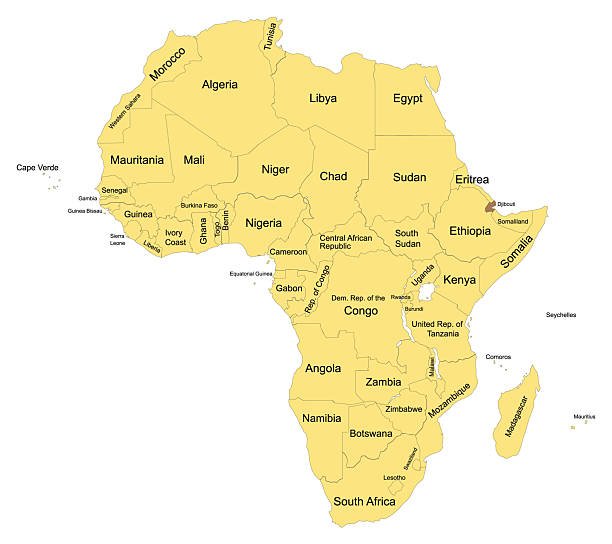
Did Africans Travel To South America Before Columbus? Unraveling the Evidence
The question, Did Africans travel to South America before Christopher Columbus's voyage in 1492, is a fascinating and complex subject that challenges conventional historical narratives. While mainstream history has largely credited European explorers with the first transatlantic crossings, a growing body of evidence and compelling theories suggests that pre-Columbian contact between Africa and the Americas may have indeed occurred. This article delves into the historical accounts, archaeological finds, and cultural similarities that fuel this intriguing debate, exploring the possibility of ancient African voyagers reaching the shores of South America.
For centuries, the prevailing historical view maintained that the Americas remained isolated from the rest of the world until Columbus's arrival. However, as archaeological and scientific research advances, our understanding of ancient maritime capabilities and global interactions is expanding. The concept of African presence in the Americas prior to the slave trade, if proven definitively, would profoundly reshape our perception of world history, demonstrating early global interconnectivity and the sophisticated seafaring skills of various ancient civilizations.
Challenging the Columbus Narrative: The Transatlantic Debate
The traditional narrative of Christopher Columbus's "discovery" of the Americas has long dominated historical discourse. This perspective often overlooks or dismisses any evidence of earlier, non-European contact. However, the notion of a singular "discovery" is increasingly being questioned by scholars who point to various lines of evidence suggesting numerous interactions across oceans long before 1492. The debate around whether Africans traveled to South America is part of this broader re-evaluation of history, prompting us to consider the maritime capabilities and exploratory ambitions of ancient African societies.
Early European Perspectives vs. Emerging Evidence
Historically, many European accounts of the Americas deliberately omitted or downplayed indigenous narratives and potential pre-Columbian interactions. This was often driven by colonial agendas and the desire to legitimize claims of ownership and superiority. However, researchers, including anthropologists, archaeologists, and independent historians, began to scrutinize existing records and new discoveries. They started to highlight anomalies that could not be easily explained by independent development, leading to a deeper investigation into theories of transatlantic pre-Columbian contact.
Archaeological and Cultural Clues of African Presence
One of the most compelling, albeit controversial, pieces of evidence often cited in discussions of pre-Columbian African contact with the Americas comes from Mesoamerica, particularly concerning the Olmec civilization. While the Olmecs were primarily located in present-day Mexico, the cultural diffusion from this foundational civilization could have influenced areas further south, including parts of South America.
The Olmec Civilization and Alleged African Features
The Olmec colossal heads, massive basalt sculptures found in regions like San Lorenzo and La Venta, are central to this discussion. These heads, weighing up to 50 tons and standing several meters tall, depict individuals with distinct facial features often described as having broad noses, thick lips, and sometimes helmet-like headgear. Proponents of African influence in ancient America argue that these features bear a striking resemblance to people of African descent, suggesting a possible presence or direct influence from Africa on the Olmec culture. Scholars like Ivan Van Sertima have extensively documented these supposed resemblances in his influential work, They Came Before Columbus.
Conversely, many mainstream archaeologists argue that these features are simply stylized representations common in Olmec art and can be found among indigenous populations of the Americas, who also exhibit a wide range of phenotypical diversity. They contend that the helmet-like headgear is typical of Mesoamerican ballgame players or warriors, and that the artistic style does not necessarily indicate a specific racial origin. Despite this academic debate, the visual impact of the Olmec heads African features continues to spark discussion and curiosity about ancient connections.
Material Culture and Other Artifacts
While direct archaeological evidence of distinctly African artifacts in pre-Columbian South America is scarce, some researchers point to other suggestive cultural parallels. These include certain forms of pottery, textile patterns, and even specific types of ancient tools that bear resemblances across both continents. For example, some early forms of panpipes found in both West Africa and South America have been noted to have similar construction and musical scales. While these similarities could be explained by independent invention or cultural diffusion across shorter distances, they add to the mosaic of suggestive evidence when viewed alongside other claims of contact. Furthermore, the absence of widespread African artifacts does not conclusively rule out contact, as transient visits or limited exchanges might leave minimal physical traces, particularly over millennia.
Botanical and Agricultural Evidence: Shared Flora
Perhaps some of the strongest scientific evidence for pre-Columbian transatlantic contact comes from the realm of botany. The presence of certain plant species on both continents, particularly those that are not easily explained by natural oceanic dispersal, has long puzzled scientists.
Shared Plant Species
One of the most frequently cited examples is the Lagenaria siceraria, or bottle gourd. This versatile plant, used for containers, tools, and musical instruments, was cultivated in both Africa and the Americas long before Columbus. Genetic studies have indicated that American gourds are more closely related to African varieties than to Asian ones, and their presence in the Americas predates European contact. While some argue for natural oceanic dispersal (gourds can float for extended periods), others contend that intentional human transport across the Atlantic is a more plausible explanation, especially given the plant's widespread cultivation and cultural significance in both regions. The widespread distribution of the bottle gourd is a key piece in the puzzle of pre-Columbian plant exchange.
Another plant, though often associated with trans-Pacific contact, is the sweet potato (Ipomoea batatas). While the dominant theory points to Polynesian voyages, some fringe theories explore potential transatlantic routes for other botanical species, highlighting the complexity of ancient agricultural diffusion. The mere existence of such debates underscores the fluidity of plant movement across continents and the potential for human agency in these transfers, suggesting that transatlantic botanical transfers were not impossible.
Linguistic and Genetic Clues
Beyond material culture and botany, researchers have also explored linguistic and genetic connections, though these areas are often more speculative and subject to intense academic scrutiny.
Linguistic Parallels
Some linguists have explored potential lexical or grammatical similarities between certain West African languages and indigenous languages of South America, particularly in regions like Brazil. These comparisons are highly controversial, as superficial similarities can often be coincidental, and rigorous methodologies are required to establish genuine genetic relationships between languages. However, proponents argue that certain specific word parallels for plants, animals, or cultural items, if numerous and systematic enough, could hint at ancient, limited contact. This remains an area requiring much more robust, verifiable research.
Genetic Markers and DNA Studies
Modern genetic studies offer another avenue for exploration. Researchers have analyzed ancient and contemporary DNA from indigenous American populations to look for markers that might indicate a pre-Columbian presence of African lineages. While the vast majority of indigenous American genetic profiles point to Siberian origins, some studies have identified genetic markers that are more commonly found in African populations. However, conclusively proving that these markers are from pre-Columbian rather than post-Columbian (e.g., slave trade) contact is extremely difficult. The science of identifying African DNA in indigenous Americans from ancient periods is still developing, and any findings require careful interpretation to distinguish ancient migrations from more recent admixtures. This is a critical area for future research into pre-Columbian genetic studies.
Maritime Capabilities and Historical Accounts of African Voyages
Perhaps the most direct evidence for African transatlantic voyages comes from historical accounts, particularly those from the medieval Islamic world, which documented impressive African maritime ambitions and capabilities.
Ancient African Seafaring and Navigation
It is important to recognize that ancient Africans, particularly those along the coasts of West Africa, North Africa, and the Nile, possessed advanced maritime knowledge and technology. Egyptian and Phoenician mariners, operating from North Africa, were known for extensive sea travel in the Mediterranean and potentially beyond. West African societies, though often more focused on riverine and coastal trade, also had robust shipbuilding traditions suitable for ocean travel, utilizing large canoes capable of carrying significant cargo and personnel. The idea of ancient African maritime history is often understated, but historical records indicate sophisticated navigational skills and vessel construction capable of undertaking long-distance voyages across the Atlantic, especially leveraging currents and prevailing winds.
For instance, the Canary Current and the North Equatorial Current flow directly from the coast of West Africa towards the Caribbean and the northern coast of South America, making a passive drift or intentional sailing voyage feasible, albeit challenging. The currents are a natural highway from Africa to the Americas, making accidental or intentional crossings a real possibility.
Accounts of Transatlantic Voyages from the Mali Empire
One of the most compelling historical narratives comes from the Malian king Kankou Musa (Mansa Musa), famously known for his immense wealth and pilgrimage to Mecca in the 14th century. During his time in Egypt, Mansa Musa recounted to the scholar Al-Umari that his predecessor, Mansa Abu Bakr II, had launched two massive expeditions across the Atlantic Ocean. According to Mansa Musa, Abu Bakr II was obsessed with discovering the limits of the Atlantic and organized a fleet of 200 ships, provisioned for a long journey. When only one ship returned, reporting a strong current in the open ocean, Abu Bakr II reportedly launched an even larger expedition of 2,000 ships, taking command himself, and was never seen again.
While this account lacks independent corroboration and the exact destination of the fleet is unknown, it strongly suggests a deliberate, large-scale attempt at African exploration of the Americas from the powerful Mali Empire. The narrative indicates both the maritime ambition and the resources available to West African empires to undertake such daring voyages. This account, found in early Islamic historiography, is often presented as strong circumstantial evidence supporting the hypothesis that Africans traveled to South America.
Theories and Interpretations: Diffusionism vs. Independent Development
The debate over pre-Columbian contact largely hinges on two opposing theoretical frameworks in archaeology and anthropology.
Diffusionism vs. Independent Development
Diffusionism posits that cultural traits, technologies, or ideas originated in one place and spread to other cultures through contact, migration, or trade. Proponents of pre-Columbian transatlantic contact often draw upon diffusionist arguments to explain similarities between African and American cultures. Conversely, the theory of independent development argues that similar cultural or technological innovations can arise independently in different societies without direct contact, driven by similar human needs and environmental factors. Many mainstream scholars favor independent development when direct evidence of contact is absent, viewing it as the more parsimonious explanation.
Implications of Pre-Columbian Contact
If definitively proven, the implications of pre-Columbian African contact with the Americas would be profound. It would challenge Eurocentric views of history, highlight the advanced capabilities of ancient African societies, and necessitate a re-evaluation of how cultures interacted globally centuries before the Age of Exploration. It would also contribute to a richer, more interconnected understanding of human history, recognizing that continents were not isolated but part of a dynamic, if sometimes sporadic, global network of exchange.
Challenges and Debates: The Quest for Definitive Proof
Despite the compelling nature of some of the evidence, the hypothesis that Africans traveled to South America before Columbus remains largely outside mainstream historical acceptance. This is primarily due to the stringent requirements for definitive archaeological proof.
The Scarcity of Definitive Evidence
The biggest challenge is the lack of undisputed, unequivocal archaeological evidence such as African-origin artifacts found in undisturbed pre-Columbian American contexts, or vice-versa. Ocean voyages leave minimal traces, and any settlements would have been small and perhaps quickly assimilated or destroyed. Furthermore, archaeological records are often incomplete, and many potential sites remain undiscovered or unexcavated. The vastness of the Atlantic Ocean and the difficulty of preserving organic materials over millennia also contribute to the scarcity of direct proof.
Academic Skepticism and Bias
There is also significant academic skepticism, partly rooted in a history of diffusionist theories being misused, sometimes for racist or pseudo-scientific agendas to deny the originality of indigenous American civilizations. As a result, rigorous academic standards demand exceptionally strong evidence to prove transatlantic contact, a standard that is often difficult to meet. However, contemporary scholarship aims to approach such questions with an open mind, driven by evidence rather than preconceptions, seeking to uncover the full tapestry of human history, including the possibility of ancient African exploration of the Americas.
Conclusion
The question, Did Africans travel to South America before Columbus, remains a subject of intense debate and ongoing research. While direct, incontrovertible archaeological proof of widespread, sustained contact remains elusive, a compelling body of circumstantial evidence, including suggestive cultural parallels, botanical anomalies like the bottle gourd, and the historical accounts of ambitious West African maritime expeditions, particularly those from the Mali Empire, indicates that such voyages were not only possible but perhaps even occurred. The historical narrative is not static; it evolves with new discoveries and re-interpretations of existing data. As we continue to uncover the complexities of ancient global interactions, the possibility that Africans traveled to South America stands as a powerful reminder of the sophisticated seafaring abilities and exploratory spirit of early non-European civilizations, inviting us to embrace a more inclusive and interconnected view of our shared human past.
Enjoyed this read?
Share it with your friends and colleagues.