How Did Arabs End Up In North Africa

BSC Insights Admin
September 30, 2026
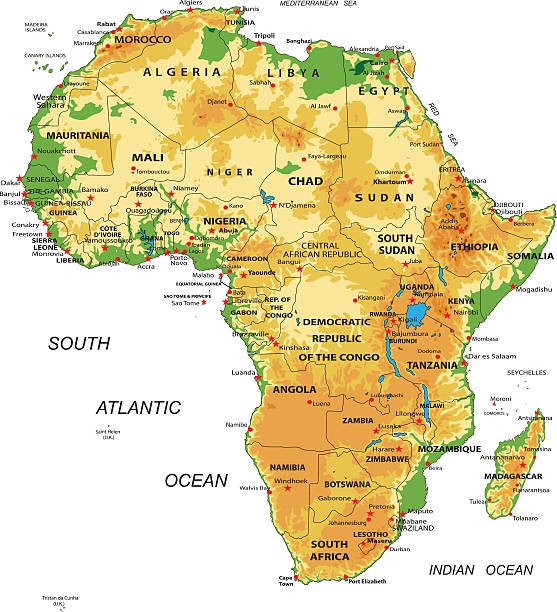
The significant presence of Arabs in North Africa is a result of a complex and multifaceted historical process, primarily initiated by the Islamic conquests beginning in the 7th century CE, followed by subsequent waves of migration, cultural exchange, and assimilation. This profound transformation reshaped the region's demography, language, religion, and culture, giving rise to the unique Arab-Berber identity that characterizes much of the Maghreb today.
Historical Tapestry: North Africa Before the Arabs
Before the arrival of the Arabs, North Africa, often referred to as the Maghreb (from the Arabic term meaning "the West"), was a region rich in diverse cultures and historical layers. Its indigenous inhabitants, the Berber people (also known as Amazigh), had a long and resilient history, having established sophisticated societies and kingdoms.
Over millennia, various external powers had influenced the region. The Phoenicians established trading posts, most notably Carthage, which became a powerful empire. Later, the Romans conquered Carthage and much of coastal North Africa, integrating it into their vast empire as a vital breadbasket. Following the decline of Rome, the Vandals briefly held sway, only to be supplanted by the Byzantine Empire, which controlled key coastal cities and areas in the 6th and 7th centuries. Despite these successive dominations, the Berber population largely maintained its distinct cultural identity and languages, particularly in the interior and mountainous regions. Christianity and Judaism also had established communities alongside indigenous religious practices.
The Dawn of Conquest: Early Islamic Expansion (7th Century)
The journey of Arabs into North Africa began with the rapid expansion of the Islamic Caliphate from the Arabian Peninsula in the 7th century. Driven by religious fervor, military prowess, and the desire for new territories, the Muslim armies swept across the Middle East, conquering vast swathes of land from the weakened Byzantine and Sasanian Empires.
The Umayyad Thrust: From Egypt Westward
Egypt served as the initial gateway for Islamic forces into North Africa. After its conquest in the 640s, the armies of the Umayyad Caliphate began their westward advance into what the Arabs called Ifriqiya (present-day Tunisia and eastern Algeria) and beyond. This expansion was not a single, continuous march but a series of campaigns, often met with fierce resistance from both Byzantine garrisons and powerful Berber tribes.
- Initial Raids: Early campaigns were primarily raids to secure resources and assess the region's defenses.
- Uqba ibn Nafi: A pivotal figure, Uqba ibn Nafi led significant expeditions, famously founding the city of Kairouan (Qayrawan) in 670 CE. Kairouan became a crucial military base and a center for Islamic learning, serving as the launchpad for further conquests.
- Resistance: Berber tribal confederations, such as the Zenata and Sanhaja, alongside Byzantine forces, mounted determined resistance, often pushing back the Arab invaders and reclaiming lost territories. Legendary figures like Dihya al-Kahina, a Berber queen, are remembered for their fierce opposition.
Despite setbacks, the relentless pressure of the Islamic armies eventually prevailed. By the early 8th century, most of coastal North Africa, from Egypt to the Atlantic Ocean, had fallen under Muslim control. This military success was a fundamental "how" in establishing the Arab presence.
Establishing a Foothold: Kairouan and Beyond
The establishment of permanent cities like Kairouan was crucial. These new urban centers not only served military purposes but also facilitated administration, trade, and the spread of Islam. They became magnets for Arab settlers, including soldiers, administrators, scholars, and merchants, laying the groundwork for a long-term Arab presence and the gradual processes of Islamization and Arabization.
Waves of Migration: Beyond Military Conquest
While the initial conquests brought a military and administrative elite, the demographic shift and widespread establishment of Arab culture in North Africa were also shaped by subsequent waves of migration, both voluntary and state-sponsored.
Early Settlers and Administrators
In the wake of the conquests, Arab soldiers and their families often settled in newly conquered lands, particularly in urban centers and agricultural areas. They were joined by administrators, judges, religious scholars (ulama), and merchants from the Arabian Peninsula and other parts of the growing Islamic empire. These early settlers played a critical role in establishing Islamic institutions, introducing Arabic as the language of administration and learning, and integrating North Africa into the broader Islamic world. Their numbers, while significant, were initially smaller compared to the indigenous Berber populations.
The Banu Hilal and Banu Sulaym Migrations (11th Century)
One of the most impactful "hows" of Arab demographic expansion in North Africa occurred in the 11th century with the mass migration of two large Arab tribal confederations, the Banu Hilal and the Banu Sulaym. These nomadic tribes, originally from the Arabian Peninsula, had settled in Upper Egypt. The Fatimid Caliphate, then based in Cairo, encouraged and directed their migration westward into Ifriqiya (modern-day Tunisia) to punish the Zirid dynasty for their defection from Fatimid suzerainty.
This migration was vastly different from the earlier military conquests. It involved entire tribes, with their families and livestock, numbering in the hundreds of thousands. The Banu Hilal and Sulaym migrations had several profound effects:
- Demographic Shift: They significantly increased the Arab population, particularly in rural and semi-arid regions.
- Linguistic Impact: Their nomadic lifestyle and widespread dispersal facilitated the rapid spread of Bedouin Arabic dialects, which gradually supplanted many Berber languages in the plains and coastal areas.
- Economic and Political Disruption: Their arrival often led to widespread destruction of existing agricultural systems, conflicts with settled communities, and the weakening of established urban centers, contributing to a period of instability.
- Cultural Fusion: Over time, they intermarried with Berber communities, leading to further cultural blending and the formation of new Arabized-Berber groups.
The impact of these migrations cannot be overstated; they are often cited as a critical factor in the widespread Arabization of North Africa, particularly outside of the mountain strongholds of Berber culture.
The Processes of Arabization and Islamization
The presence of Arabs in North Africa was not solely a result of military victory and migration, but also a complex interplay of cultural, religious, and linguistic transformations known as Arabization and Islamization.
Religious Conversion: The Appeal of Islam
The spread of Islam was a primary driver. While initial conversions might have been pragmatic for some, the new religion offered several appeals:
- Simplicity and Equality: Islam's monotheistic message, free from the complex hierarchies of some existing Christian doctrines, appealed to many. Its emphasis on equality among believers also resonated.
- Social and Political Advantage: Converting to Islam often brought social benefits, such as full integration into the ruling class and exemption from certain taxes (like the jizya paid by non-Muslims).
- Missionary Efforts: Sufi orders and Islamic scholars played a significant role in spreading the faith through preaching, education, and the establishment of zawiyas (religious centers), particularly in rural areas.
The process of Islamization was gradual, taking centuries to fully permeate the entire region. However, its success laid the foundation for a shared religious identity that transcended ethnic lines.
Linguistic Shift: The Rise of Arabic
Arabic language became the dominant lingua franca and, eventually, the mother tongue for many previously Berber-speaking communities. This occurred through several avenues:
- Administration and Commerce: Arabic was the language of the new governing elite, trade, and legal systems. To participate effectively in these spheres, learning Arabic became essential.
- Religion and Education: As the language of the Quran and Islamic scholarship, Arabic was central to religious life and education. Madrasas (Islamic schools) and mosques became important centers for its dissemination.
- Migration: As noted with the Banu Hilal, the physical presence of large Arab-speaking populations naturally led to linguistic shifts through interaction, intermarriage, and pressure to conform.
While many Berber languages persist, particularly in mountainous and remote areas, Arabic became the dominant language in most urban centers and plains, becoming a key marker of North African identity.
Cultural Exchange and Synthesis
The interaction between Arabs and Berbers was not a one-way street of imposition but a dynamic process of cultural exchange and synthesis. Arab culture, particularly its Islamic framework, architecture, art, literature, and legal systems, profoundly influenced the indigenous populations. Conversely, Berber traditions, military strategies, and local knowledge also left their mark on the newly arrived Arabs and the evolving Islamic societies. This fusion created a unique North African culture, distinct from both the Middle East and sub-Saharan Africa.
Lasting Impact and Legacy
The long-term presence of Arabs in North Africa has profoundly shaped every aspect of the region, creating a distinctive legacy that continues to define its identity today.
Demographic and Social Transformation
The arrival and settlement of Arabs led to a significant demographic restructuring. While Berbers remain the indigenous population, centuries of intermarriage, assimilation, and cultural adoption have created a blended society. The term "Arab" in North Africa often refers to linguistic and cultural identification more than purely genealogical descent, encompassing many who have Berber ancestry but speak Arabic and identify with Arab culture.
Political and Economic Restructuring
The Arab conquests introduced new political structures based on Islamic governance, with caliphates and later various independent Islamic dynasties (such as the Aghlabids, Fatimids, Zirids, and ultimately the Almoravids and Almohads, who themselves were Berber but ruled under an Islamic framework) ruling the region. This integrated North Africa into a global Islamic economy, enhancing trade routes across the Sahara and the Mediterranean, fostering urban development, and introducing new agricultural techniques.
A Blended Identity: Arab and Berber
Today, the identity of North Africa is a rich tapestry woven from Arab, Berber, and even Saharan and Mediterranean threads. While Arabic is the dominant language in most countries, Berber languages and cultural practices endure. The shared religion of Islam provides a unifying force, but local customs and historical experiences give each North African nation its distinct flavor. The ongoing dialogue between Arab and Berber cultural elements continues to define what it means to be North African in the modern era.
In conclusion, the presence of Arabs in North Africa is the culmination of centuries of historical events, beginning with the **Islamic expansion** of the 7th century, followed by significant demographic shifts such as the Banu Hilal migrations, and sustained by the powerful processes of **Islamization and Arabization**. This complex interplay of military conquest, religious conversion, linguistic adoption, and extensive cultural exchange fundamentally transformed the **Maghreb**, creating a vibrant, complex society with a deeply intertwined Arab-Berber heritage that continues to shape its identity to this day.
Enjoyed this read?
Share it with your friends and colleagues.