Did All Black People Come From Africa

BSC Insights Admin
October 01, 2026
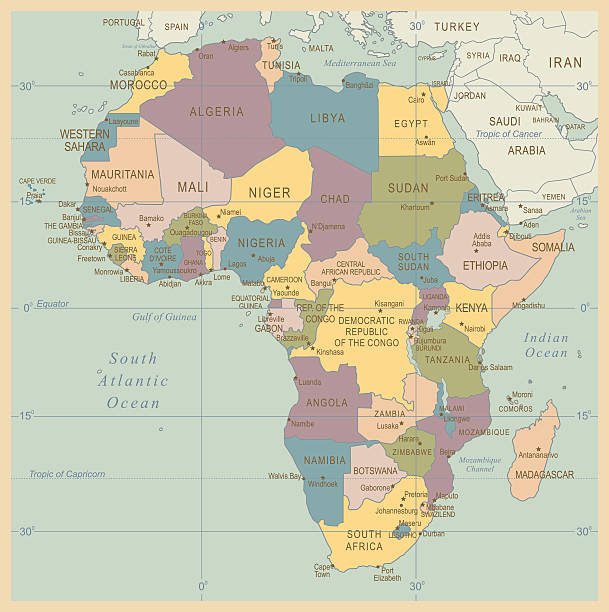
No, not all Black people directly originate from Africa in a recent historical sense, although all of humanity, including all people of African descent, ultimately traces its deep ancestral roots back to the African continent. The term 'Black people' encompasses an incredibly vast and diverse group of individuals whose ancestry, history, and identity have been shaped by millennia of migrations, cultural exchanges, intermarriage, and socio-political constructs across every continent.
Understanding the origins of 'Black people' requires distinguishing between humanity's shared ancient African genesis and the specific historical, genetic, and social factors that define Black identities today. This article will delve into the complexities of human migration, the African diaspora, and the diverse tapestry of Black communities around the world.
Unpacking the Question: "Did All Black People Come From Africa?"
The question "Did all Black people come from Africa?" is multifaceted, touching upon genetics, history, anthropology, and sociology. Its answer depends heavily on how one defines "come from" and "Black people." If "come from" refers to the ultimate genetic origin of Homo sapiens, then yes, all humans, including those identified as Black, trace their lineage back to Africa. However, if it implies a direct, recent migration from the continent or a singular point of origin for all phenotypically similar groups, the answer becomes more complex.
The common understanding of "Black people" often refers to individuals of recent sub-Saharan African descent, particularly those impacted by the African diaspora. Yet, even within this definition, there is immense diversity in ancestral lines, cultural practices, and national identities.
The "Out of Africa" Theory: Humanity's Shared Ancestry
The prevailing scientific consensus, supported by extensive genetic, archaeological, and paleontological evidence, is that modern humans (Homo sapiens) originated in Africa. This is known as the "Out of Africa" theory.
Early Human Migrations
Around 60,000 to 70,000 years ago, small groups of early humans began migrating out of Africa, spreading across the globe. These initial migrations eventually led to the colonization of Asia, Europe, Australia, and eventually the Americas. As these groups moved and adapted to different environments, distinct physical characteristics, including varying skin tones, hair textures, and facial features, evolved through natural selection.
Genetic Evidence and the African Cradle
Genetic studies, particularly those analyzing mitochondrial DNA (mtDNA) and Y-chromosome DNA, overwhelmingly point to Africa as the cradle of humanity. These studies show the greatest genetic diversity among populations within Africa, which is a strong indicator of a population's older age and longer period of evolution in a particular region. This vast diversity decreases as populations move further away from Africa, a phenomenon known as the serial founder effect.
Therefore, while all human beings share an African ancestry, subsequent migrations, environmental adaptations, and historical events have led to the rich tapestry of human diversity we see today.
Defining "Black People": Race, Identity, and Ancestry
The concept of "Black people" is not purely biological; it is also a social construct with deep historical and cultural roots. Understanding this distinction is crucial.
The Social Construct of Race
"Race" as a biological concept has largely been debunked by science. Genetic variations do not align neatly with traditional racial categories. Instead, race is a social and political construct used to categorize people, often based on perceived physical differences like skin color. Throughout history, these categories have been used to establish power hierarchies and justify discrimination.
The term "Black" often refers to individuals with a range of darker skin tones, typically associated with ancestral ties to sub-Saharan Africa. However, the definition can vary significantly across cultures and regions. For instance, a person considered "Black" in the United States due to the "one-drop rule" might be classified differently in Brazil or the Caribbean.
Phenotype vs. Genotype
- Phenotype: Refers to observable physical characteristics, such as skin color, hair texture, and facial features. These are influenced by genetics and environment.
- Genotype: Refers to an individual's complete set of genes. Genetic ancestry tests reveal a person's ancestral origins, which often extend beyond what is visible phenotypically.
It's important to recognize that having dark skin (a phenotype) does not automatically mean recent sub-Saharan African ancestry (a specific genotype or ancestral line). There are indigenous populations in other parts of the world with darker skin tones whose ancestral paths diverged from those who remained in Africa tens of thousands of years ago.
The African Diaspora: Beyond the Continent's Borders
When most people ask "Did all Black people come from Africa?" they are often implicitly referring to the African diaspora – the global scattering of people of African descent. This diaspora is primarily a result of historical migrations, both forced and voluntary.
The Transatlantic Slave Trade and Forced Migration
The most significant and traumatic event shaping the modern African diaspora was the Transatlantic Slave Trade, which forcibly removed millions of Africans from their homelands between the 16th and 19th centuries. These enslaved Africans were trafficked primarily to the Americas (North, Central, South, and the Caribbean) and Europe, where their descendants formed the basis of what are now considered Afro-descendant communities in those regions.
- North America: African Americans are primarily descendants of enslaved people brought from various regions of West and Central Africa.
- Caribbean: Nations like Jamaica, Haiti, Cuba, and Barbados have populations overwhelmingly descended from enslaved Africans, leading to rich, distinct Afro-Caribbean cultures.
- South America: Brazil, with the largest population of people of African descent outside of Africa, along with Colombia, Venezuela, and others, were major destinations for enslaved Africans.
These populations, though rooted in African ancestry, developed unique cultures, languages, and identities distinct from their ancestral homelands due to centuries of adaptation, creolization, and interaction with other ethnic groups.
Voluntary Migrations and Modern Diasporas
Beyond the forced migrations of slavery, there have been numerous waves of voluntary migration from Africa:
- Post-slavery migrations: Africans moved to other parts of the world seeking economic opportunities or fleeing conflict.
- 20th and 21st-century migrations: Many Africans have migrated to Europe, North America, and other parts of the world for education, work, or political asylum, forming new diaspora communities.
These diverse migrations demonstrate that the presence of Black people outside Africa is not monolithic but a complex story of both involuntary displacement and intentional movement.
Diverse Origins Within Africa Itself
It is crucial to remember that Africa is not a monolithic entity. It is the second-largest continent, home to over 1.4 billion people, thousands of distinct ethnic groups, and immense genetic and linguistic diversity.
Africa's Vast Genetic and Cultural Landscape
The genetic diversity within Africa is greater than that of all other continents combined. This means that two individuals from different parts of Africa (e.g., a person from Nigeria and a person from Somalia) can be more genetically distinct than an individual from China and an individual from Ireland. This internal diversity underscores that there isn't a single "African" ethnicity or origin point, but rather a continent teeming with distinct ancestral lines and cultural heritages.
Ancient Migrations Within Africa
Even before the "Out of Africa" migrations, there were significant movements of people within the continent. The Bantu expansion, for example, saw agriculturalist populations migrate from West-Central Africa across much of sub-Saharan Africa over several millennia, profoundly shaping the continent's linguistic and genetic landscape. Therefore, even within Africa, populations have diverse and complex migratory histories.
Indigenous Populations with Darker Skin Tones Outside Africa
The existence of populations with darker skin tones in regions like Australia, parts of Asia, and Melanesia sometimes leads to confusion. While they share the phenotype of darker skin, their ancestral histories are distinct from those of recent sub-Saharan African descent.
Aboriginal Australians and Melanesians: A Separate Migratory Wave
Aboriginal Australians and the indigenous peoples of Melanesia (e.g., Papua New Guinea, Solomon Islands) are descendants of the earliest waves of modern human migration out of Africa. These groups migrated tens of thousands of years ago, following coastal routes through Asia to Oceania. Their dark skin pigmentation is an adaptation to intense sun exposure in their tropical environments, similar to how dark skin evolved in various African populations. However, their genetic markers indicate a long period of separation from ancestral populations in Africa and a distinct evolutionary path.
Distinguishing Ancestral Lines
It is important not to conflate all dark-skinned people under a single "Black" umbrella if that term is meant to imply recent sub-Saharan African ancestry. While sharing a very distant "Out of Africa" origin, populations like Aboriginal Australians have been genetically distinct for over 50,000 years, developing unique cultures and genetic profiles that are specific to their regions.
Modern Complexity: Intermarriage and Multiracial Identities
In the modern era, globalization, increased migration, and intermarriage have further complicated simple notions of origin. Many individuals identify as Black but also have ancestry from Europe, Asia, or Indigenous American populations. Multiracial identities are increasingly common, reflecting the ongoing mixing of human populations across the globe.
For example, a person identified as Black in the United States might have significant European ancestry due to historical mixing. Similarly, individuals in Latin America often have a complex blend of African, Indigenous American, and European ancestry, demonstrating that ancestral lines are rarely singular or pure.
Conclusion: A Tapestry of Global Black Identity
To conclude, the answer to "Did all Black people come from Africa?" is a nuanced one. All human beings, including those identified as Black, share an ultimate ancestral origin in Africa. However, the vast majority of Black people alive today who reside outside of Africa are descendants of populations that left Africa many generations ago, either through forced migration (like the Transatlantic Slave Trade) or voluntary movements. These individuals and communities have forged distinct cultural and national identities over centuries, even as they maintain a connection to their African heritage.
Furthermore, Indigenous populations in other parts of the world with dark skin tones have separate ancient migratory histories, making them distinct from people of recent sub-Saharan African descent. The term "Black" itself is a complex social construct that encompasses immense genetic, cultural, and historical diversity, reflecting a rich tapestry of human experience that spans continents and millennia.
Enjoyed this read?
Share it with your friends and colleagues.