Bones Found In Africa

BSC Insights Admin
October 07, 2026
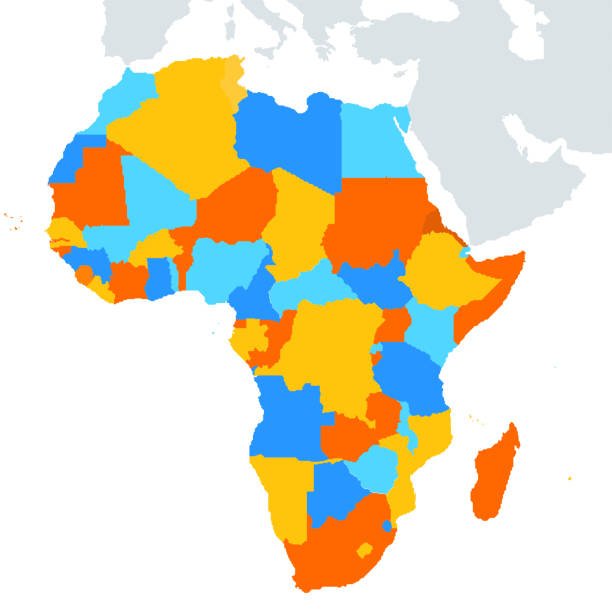
Identifying which countries bones were found in Africa is a fundamental aspect of paleoanthropology because these fossilized remains provide critical evidence of human evolution and early hominid behavior. Research teams have spent decades uncovering ancient skeletons in various regions of the continent, from the Great Rift Valley to the limestone caves of the south. These discoveries have solidified the continents status as the cradle of mankind, offering a timeline that stretches back millions of years and connecting the ancestry of every human alive today.
The significance of these fossils lies not just in their age but in the biological secrets they reveal about the transition from apelike ancestors to modern humans. By examining the skeletal structures found in diverse environments, scientists can reconstruct the daily lives, diets, and migrations of our earliest predecessors across the vast landscape.
These are the countries where bones were found in Africa
The geographical distribution of prehistoric remains is primarily concentrated in areas with specific geological features that allow for the preservation of organic material over millions of years. Scientists have identified several African countries that bones were found in as being particularly productive due to volcanic activity, sediment accumulation, or cave systems that protected skeletons from the elements and predators. In the sections below, we explore the most significant locations where these groundbreaking discoveries occurred and the impact they had on the global understanding of human origins.
1. Ethiopia and the Afar Triangle Discoveries
Ethiopia is perhaps the most famous nation in the world for hominid research, specifically due to the Afar Triangle region where the skeleton known as Lucy was discovered in 1974. This specimen, belonging to the species Australopithecus afarensis, dates back approximately 3.2 million years and provided the first clear evidence of bipedalism in early human ancestors. Lucy was a remarkably complete find, with about 40 percent of her skeletal structure recovered, allowing researchers to study her pelvic and limb proportions in detail. Beyond Lucy, Ethiopia has also yielded Ardi, an even older skeleton of Ardipithecus ramidus dating back 4.4 million years, which challenged previous theories about how our ancestors first began to walk. The country in Africa bones were found in such abundance is largely due to the tectonic activity of the East African Rift, which brings ancient sediment layers to the surface. These finds have made Ethiopia a global center for the study of deep human history and evolutionary biology.
2. South Africa and the Cradle of Humankind
South Africa is home to a dense collection of limestone caves known as the Cradle of Humankind, a UNESCO World Heritage site that has produced a vast array of hominid fossils. Sterkfontein Caves is one of the most productive sites in this region, where the skull of Mrs. Ples and the nearly complete skeleton of Little Foot were found, dating back over two million years. More recently, the Rising Star cave system gained international fame for the discovery of Homo naledi, a new species found by a team of specialist explorers in a difficult to reach subterranean chamber. These bones found in Africa have provided unique insights into the diversity of the Homo genus, showing that multiple human like species lived alongside one another in Southern Africa. The calcification process in these caves is excellent for preserving bone density, making the fossils here exceptionally clear for anatomical study. South African sites continue to yield new information about early social behaviors and potential burial practices among ancient hominids.
3. Kenya and the Turkana Boy
Kenya has a rich history of paleoanthropological success, particularly around the shores of Lake Turkana in the northern part of the country. One of the most significant finds is the Turkana Boy, a nearly complete skeleton of a young Homo erectus who lived approximately 1.6 million years ago. Discovered in 1984 by Kamoya Kimeu, this skeleton is the most complete early human remains ever found, consisting of 108 bones that allow scientists to estimate height, weight, and even the rate of physical growth in early humans. The shores of Lake Turkana have also produced some of the oldest known stone tools, which were found in close proximity to skeletal remains, suggesting a high level of cognitive development. Kenya is a primary African country which bones were found in layers of volcanic ash, which provides incredibly accurate dating for the fossils. The work of the Leakey family in this region has been instrumental in mapping the migration patterns of early humans as they moved through the Rift Valley.
4. Tanzania and the Olduvai Gorge
Tanzania is home to Olduvai Gorge, a steep sided ravine in the Great Rift Valley that has been called the Grand Canyon of human evolution. It was here that Mary and Louis Leakey discovered the skull of Paranthropus boisei, originally named Zinjanthropus, which showed a species with massive jaws and teeth adapted for a tough diet. The gorge contains a continuous sequence of geological layers that cover nearly two million years of history, providing a vertical timeline of species transition. Tanzania is also the site of the Laetoli footprints, where ancient hominid tracks were preserved in volcanic ash, showing that our ancestors were walking upright 3.6 million years ago. These African countries that bones were found in often provide a combination of skeletal and trace fossils that give a holistic view of prehistoric life. The preservation at Olduvai is so detailed that even the microscopic scratches on fossilized teeth can be analyzed to determine what these early creatures ate.
5. Chad and the Toumaï Skull
In 2001, a discovery in the Djurab Desert of Chad fundamentally changed the timeline of human evolution by pushing back the date of our earliest ancestors. A research team led by Michel Brunet found a nearly complete cranium of a species named Sahelanthropus tchadensis, popularly known as Toumaï, which dates back between 6 and 7 million years. This discovery was remarkable because it occurred in Central Africa, far to the west of the Rift Valley where most other major finds had been located. The Toumaï skull possesses a mix of primitive and derived features, suggesting it lived close to the time when the human and chimpanzee lineages first diverged. This African country which bones were found in such an ancient context proved that early hominid evolution was not limited to East or South Africa. The harsh, wind swept desert of Chad continues to be a frontier for researchers looking for the very beginning of the human story.
6. Morocco and the Jebel Irhoud Modern Humans
Morocco became a major focal point for evolutionary science in 2017 when researchers announced the dating of skeletal remains from Jebel Irhoud to approximately 300,000 years ago. These bones belong to early members of the Homo sapiens species, making them the oldest modern human remains ever found on the continent at that time. Before this discovery, it was generally believed that modern humans emerged in East Africa around 200,000 years ago, but the Moroccan finds pushed this date back by 100,000 years. The site yielded skulls, teeth, and long bones from at least five individuals, showing a combination of modern facial features and a more elongated braincase. Morocco is a key country in Africa bones were found in that suggests a pan African origin for our species rather than a single point of origin. This find has forced a major rethink of how modern humans evolved and spread across the diverse climates of the continent.
7. Malawi and the Malema Jawbone
Malawi sits in a strategic position between the famous fossil sites of East and South Africa, and its Karonga region has provided a crucial link in the hominid chain. In the early 1990s, a 2.4 million year old jawbone belonging to Homo rudolfensis was discovered in the Malema region of northern Malawi. This find is significant because it represents one of the earliest known occurrences of the Homo genus in the fossil record. The Malawi site helps researchers understand how early humans moved through the corridors of the Rift Valley and adapted to the changing vegetation of the time. While the number of skeletal finds in Malawi is smaller than in Ethiopia, the quality and age of the fossils are of immense scientific value. The country in Africa bones were found in this context provides evidence that the interior of the continent was a bustling hub of evolutionary activity during the Pliocene epoch.
8. Algeria and the Tighennif Hominids
Algeria has a long history of prehistoric research, particularly at the site of Tighennif, formerly known as Ternifine, located near the city of Mascara. In the 1950s, archaeologists discovered three mandibles and a parietal bone belonging to a species once called Atlanthropus mauritanicus, now recognized as a North African variety of Homo erectus. These bones date back to the Middle Pleistocene and are associated with a large quantity of stone tools and animal fossils, including extinct elephants and giraffes. The Algerian finds are important because they show that Homo erectus had successfully colonized the northern reaches of the continent over a million years ago. This African country which bones were found in such a northern location helps map the early dispersal of humans toward the Mediterranean and eventually into Europe. The site remains a vital reference point for North African paleoanthropology.
9. Sudan and the Singa Skull
Sudan is home to the Singa site on the Blue Nile, where a fossilized human skull was discovered in the 1920s that has intrigued scientists for decades. The Singa skull is characterized by a mix of features that suggest it belongs to an early form of Homo sapiens or a closely related ancestor from the Late Pleistocene. Modern dating techniques have placed the skull at approximately 133,000 years old, a period during which modern humans were becoming well established across the continent. The skull shows signs of a specific medical condition known as hyperostosis, providing one of the earliest examples of pathology in the human fossil record. Sudan's location along the Nile Valley makes it a critical area for studying how early humans moved between Sub Saharan Africa and the Mediterranean coast. The bones found in Africa within the Sudanese territory continue to offer clues about the physical diversity of our ancestors during the later stages of evolution.
10. Namibia and the Otavi Mountain Fossils
Namibia provides a unique look at the much older history of primates on the continent, particularly through the discovery of Otavipithecus namibiensis in the Otavi Mountains. These bones date back to the Miocene epoch, approximately 13 million years ago, representing an ancient ancestor of the African apes and humans. While not a hominid in the direct sense of Lucy or Turkana Boy, these fossils are essential for understanding the environmental conditions that led to the eventual emergence of the human lineage. The Otavi site is one of the few locations in Southern Africa where Miocene primate remains have been preserved in ancient karst deposits. Namibia is a country in Africa bones were found in that helps fill the gap between the early monkeys of the Eocene and the first upright walking ancestors of the Pliocene. This deep time perspective is vital for a complete evolutionary narrative.
11. Egypt and the Wadi El Hitan Whale Bones
While most discussions of African fossils focus on humans, Egypt hosts one of the most remarkable evolutionary sites in the world at Wadi El Hitan, or the Valley of the Whales. Here, the desert sands have preserved the skeletons of Basilosaurus and Dorudon, ancient whales that possessed hind limbs, proving that the ancestors of modern whales once walked on land. These bones found in Africa are about 40 million years old and provide a clear transitional record of how land mammals returned to the sea. The site was once the floor of the Tethys Ocean, and the preservation is so perfect that even the contents of the whales' stomachs have been fossilized. Egypt's contribution to evolutionary science through these bones is immense, as it provides a textbook example of macroevolution in a terrestrial desert setting. It remains a premier location for studying the history of life on earth before the arrival of primates.
12. Democratic Republic of the Congo and the Ishango Remains
The Democratic Republic of the Congo is famous in the archaeological world for the Ishango bone, a tool made from the fibula of a baboon that features a series of notches used for mathematical counting. Discovered near the shores of Lake Edward, these remains date back approximately 20,000 years to the Late Stone Age. While the focus is often on the artifact itself, the site also yielded human skeletal fragments that provide information about the people who lived in the lush forests of Central Africa. These bones suggest a population that was highly adapted to the aquatic resources of the lake and possessed advanced cognitive abilities for recording numerical data. The DRC is a significant African country which bones were found in a context that links physical evolution with the birth of mathematical thought. This area remains a key site for understanding the transition to complex social and intellectual behaviors in modern humans.
13. Zambia and the Broken Hill Skull
Zambia is the site of one of the most important hominid finds of the early 20th century, the Broken Hill skull, discovered in a lead and zinc mine at Kabwe in 1921. This skull, belonging to the species Homo heidelbergensis, is approximately 300,000 years old and features a massive brow ridge and a large braincase. It was the first early human fossil ever discovered in Africa, predating the work of the Leakeys and the discoveries in the Afar Triangle. The Kabwe skull is often seen as a transitional form between Homo erectus and modern Homo sapiens, showing the gradual increase in brain size over time. Zambia is a country in Africa bones were found in that played a role in convincing the scientific community that Africa was indeed the place where humanity began. The skull remains a cornerstone of museum collections and a vital piece of the evolutionary puzzle for Southern and Central Africa.
14. Eritrea and the Buia Skull
Eritrea has recently emerged as a significant player in paleoanthropology due to the discovery of a one million year old skull in the Danakil Depression near the village of Buia. This skull is remarkably complete and shows features that are intermediate between Homo erectus and later hominid species. The Buia site is located in a harsh, volcanic landscape that was once a lush lake shore during the Pleistocene. Eritrea is a country in Africa bones were found in that provides a crucial data point for the "Out of Africa" theory, as it sits along the coastal migration routes toward the Middle East. The discovery was accompanied by numerous stone tools and animal fossils, allowing researchers to reconstruct the environment in which these early humans lived. Eritrean research is continuing to uncover more remains that help map the movement of people along the Red Sea coast.
15. South Africa and the Blombos Cave Evidence
Blombos Cave on the southern coast of South Africa is famous for its evidence of early modern human behavior, including the discovery of human teeth and bone fragments dating to the Middle Stone Age. While the skeletal remains here are not as complete as Lucy, they are associated with some of the worlds earliest art and complex tool making, such as engraved ochre and bone awls. These African countries that bones were found in provide a record of how our ancestors began to think symbolically and create cultural identities approximately 75,000 to 100,000 years ago. The bone fragments found at Blombos show that these were modern humans who were successfully exploiting marine resources like fish and shellfish. The site is essential for understanding the cognitive leap that led to the development of the modern human mind. It remains one of the most carefully excavated and studied archaeological sites on the continent.
Reasons Why These Countries bones were found in Africa in Africa
The concentration of ancient remains in specific African nations is not a random occurrence but is the result of unique environmental and geological factors that favor fossilization. These reasons explain why some areas have become world famous for their fossils while others remain barren of prehistoric evidence.
1. Presence of the East African Rift System: The primary reason that Ethiopia, Kenya, and Tanzania are such productive African countries that bones were found in is the existence of the Great Rift Valley. This massive geological feature is where the continents tectonic plates are pulling apart, creating deep basins where sediments can accumulate and bury remains quickly. As the earth continues to shift, these ancient layers are pushed back to the surface, allowing researchers to find bones that would otherwise be buried miles underground. Without this active geology, most of the fossils of our early ancestors would remain hidden from view. The rift provides a natural excavation of the continents deep history.
2. Rapid Burial by Volcanic Ash: In regions with high volcanic activity, such as the areas surrounding Mount Kilimanjaro and the Kenyan Highlands, ancient bones were often covered by layers of volcanic ash shortly after the animal died. This rapid burial is essential for fossilization because it protects the skeleton from being scattered by scavengers or destroyed by the sun and rain. The ash also contains minerals that seep into the bone over time, turning it into stone while preserving its original shape. This is why African countries that bones were found in such as Kenya have such complete specimens like the Turkana Boy. The volcanic layers also act as a timestamp, allowing scientists to use radiometric dating to determine the exact age of the find.
3. Protection within Limestone Cave Systems: South Africa's status as a premier location for fossils is due to its extensive network of limestone caves, which acted as natural traps for early humans and animals. When an individual fell into a sinkhole or was dragged into a cave by a predator, their bones were protected from the erosive forces of the wind and water on the surface. Over thousands of years, water dripping through the limestone would cover the bones in a layer of calcium carbonate, creating a hard protective shell. This is a major reason why the bones found in Africa within the Cradle of Humankind are so well preserved and dense. These caves provide a stable environment that can keep fossils intact for millions of years.
4. Alkaline Environments of the Salt Lakes: Many of the fossil sites in the Rift Valley are located near alkaline lakes, which have a specific chemical balance that encourages the mineralization of bone. When a creature died near the shore of an ancient lake, the high concentration of minerals in the water would interact with the skeletal remains, replacing the organic matter with stone. This process is much more common in these specialized environments than in the acidic soils of tropical rainforests, where bones tend to dissolve quickly. Consequently, countries in Africa that bones were found in tend to be those with arid or semi arid climates where these salt lakes existed in the past. The chemistry of the water is a silent partner in the preservation of human history.
5. Low Erosion and Arid Climate: Deserts like the Djurab in Chad or the Sahara in Morocco have very low rates of chemical weathering, which allows fossils to remain on or near the surface for long periods without disintegrating. The lack of dense vegetation in these areas also makes it much easier for researchers to spot fragments of bone that have been exposed by the wind. This is why an African country which bones were found in a desert context can yield such ancient specimens like Sahelanthropus tchadensis. The dry air prevents the growth of plants whose roots can break apart delicate fossils, and the lack of rain means that the remains are not washed away. The desert is one of the best natural archives for the worlds oldest bones.
6. Historical Continuity of Human Occupation: Africa has been continuously inhabited by hominids for over seven million years, providing a vast and uninterrupted supply of biological material for the fossil record. Unlike other continents that were only colonized by humans in the last 100,000 years, Africa has a "deep stack" of history where every stage of our evolution is represented. This means that African countries that bones were found in are not just finding one species, but often a sequence of species that show how we changed over time. This cultural and biological continuity makes the continent a unique laboratory for the study of the human genus. Every discovery adds another page to a story that is exclusively and undeniably African.
Conclusion
The study of the various bones found in Africa has provided the world with an irreplaceable record of our origins, from the earliest primates to the emergence of modern Homo sapiens. Through the groundbreaking discoveries in countries like Ethiopia, South Africa, and Kenya, we have learned that our history is defined by resilience, adaptation, and a deep connection to the African landscape. These skeletal remains are more than just stones; they are the physical ancestors of every person on earth, proving that we all share a common African heritage. As new sites are discovered in nations like Morocco and Chad, our understanding of the human family tree continues to grow and become more complex. Ultimately, which countries bones were found in Africa is a question that leads to the heart of what it means to be human and the enduring legacy of the continents ancient past.
Enjoyed this read?
Share it with your friends and colleagues.