Is There Buffalo In Africa

BSC Insights Admin
September 30, 2026
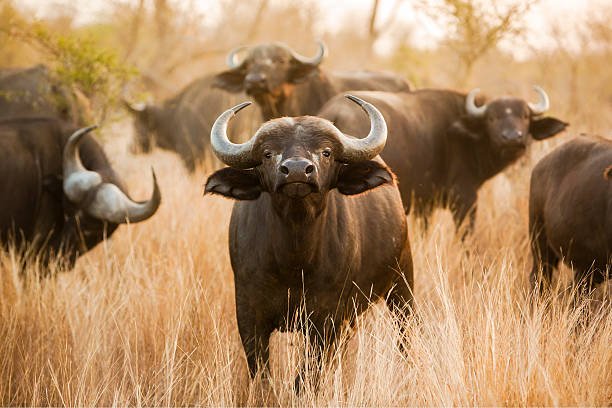
When pondering Africa's rich and diverse wildlife, many animals come to mind, but one question frequently asked is: Is there buffalo in Africa? The unequivocal answer is yes, Africa is home to a magnificent and formidable species known as the African buffalo, also widely referred to as the Cape buffalo. These powerful bovines are an integral part of the African ecosystem, renowned for their strength, unpredictable temperament, and vital role in shaping landscapes across various habitats on the continent.
The African buffalo is a true icon of the African wilderness, found in savannas, grasslands, and even forests. Unlike their Asian counterparts, the water buffalo, African buffalo are not domesticated. They are wild, formidable creatures that contribute significantly to the continent's biodiversity and are a key member of Africa's renowned 'Big Five' game animals.
The African Buffalo: An Overview
Scientifically classified as Syncerus caffer, the African buffalo is a large sub-Saharan African bovine. They are easily recognizable by their robust build, dark coloration (though some subspecies can be reddish-brown), and distinctive fused horns that form a continuous bone shield across the top of their head, known as a 'boss' in males. These animals are incredibly resilient and adapted to a wide range of environments, showcasing a remarkable ability to thrive in diverse ecological zones.
Their reputation precedes them; African buffalo are often considered one of the most dangerous animals in Africa, particularly when wounded or cornered. This combination of immense physical power and a cautious yet aggressive demeanor makes them a challenging and respected presence in the wild, earning them a place among Africa's most fascinating creatures.
Species and Subspecies of African Buffalo
While often collectively referred to as the African buffalo, there are generally four recognized subspecies, each adapted to specific habitats and displaying slight variations in appearance. The most well-known and widespread are the Cape buffalo and the Forest buffalo.
The Cape Buffalo (Syncerus caffer caffer)
The Cape buffalo, also known as the Southern savanna buffalo, is the largest and most populous subspecies. They are found predominantly in the savannas and grasslands of East and Southern Africa. These are the archetypal buffalo most people envision when thinking about buffalo in Africa. They are characterized by their large size, dark black coats, and massive, curving horns that sweep downwards and then up, with the males developing a hard, fused 'boss' across their forehead.
- Habitat: Open savannas, floodplains, and woodlands near water sources.
- Size: Males can weigh up to 900 kg (2,000 lbs) and stand 1.7 meters (5.6 feet) tall at the shoulder.
- Social Structure: Live in large herds, sometimes numbering in the hundreds or even thousands.
The Forest Buffalo (Syncerus caffer nanus)
Also known as the Dwarf buffalo or Red buffalo, this subspecies inhabits the dense rainforests of Central and West Africa. They are significantly smaller than their savanna relatives and possess a reddish-brown coat. Their horns are also smaller and hook-shaped, sweeping backward rather than forming the impressive boss of the Cape buffalo. The Forest buffalo is more elusive and less commonly observed due to its dense habitat.
- Habitat: Dense tropical rainforests.
- Size: Smaller, typically weighing 250-320 kg (550-700 lbs).
- Appearance: Reddish-brown coat, smaller, more slender build, and short, hooked horns.
Other Subspecies
Two other recognized subspecies exist, often considered intermediate forms between the Cape and Forest buffalo:
- Sudan Buffalo (Syncerus caffer brachyceros): Found in West and Central Africa, often having an appearance between the Cape and Forest buffalo.
- Nile Buffalo (Syncerus caffer aequinoctialis): Found in Central Africa, particularly around the Nile basin, resembling the Cape buffalo but often slightly smaller.
Habitat and Distribution: Where Do Buffalo Live in Africa?
The African buffalo boasts a wide geographical distribution across sub-Saharan Africa, stretching from the dense forests of West Africa to the vast savannas of the east and south. Their presence is a strong indicator of healthy ecosystems, as they require specific conditions to thrive.
African buffalo habitat is diverse, but common requirements include:
- Water: Buffalo are highly dependent on water, needing to drink almost daily. They are never found far from a reliable water source, making rivers, lakes, and swamps crucial to their survival.
- Grasslands: As grazers, abundant grasslands are essential for their diet.
- Cover: While they graze in open areas, buffalo also need dense thickets or woodlands for shade, rest, and protection from predators.
The largest populations of Cape buffalo are found in countries like Tanzania (Serengeti, Ngorongoro), Kenya (Masai Mara), Zambia (South Luangwa), and South Africa (Kruger National Park). The Forest buffalo, on the other hand, is primarily found in countries like Cameroon, Gabon, and the Democratic Republic of Congo, within the dense jungle environments.
Diet and Feeding Habits of the African Buffalo
The African buffalo are obligate herbivores and predominantly grazers, meaning their diet consists almost entirely of grass. They are non-ruminant foregut fermenters, equipped with specialized digestive systems to process tough, fibrous plant material. Their broad muzzles are perfectly adapted for grazing, allowing them to take in large quantities of grass efficiently.
What do African buffalo eat? Their diet primarily includes:
- Grasses: They prefer tall, coarse grasses, which are often avoided by other grazers. This allows them to effectively 'mow down' areas, opening them up for more selective feeders like zebras and wildebeest.
- Leaves and Shoots: During dry seasons when grass is scarce, they may supplement their diet with leaves and shoots, though this is less common.
Their role as bulk grazers is ecologically significant. By consuming large amounts of vegetation, they prevent overgrowth, reduce fire risk, and promote new grass growth, thus benefiting a wide range of other grazing animals and contributing to the overall health of the savanna ecosystem.
Social Structure and Behavior of African Buffalo
African buffalo social behavior is complex and highly organized. They are intensely social animals, typically living in large herds that can number from a few dozen to several hundred, and sometimes even thousands in areas with abundant resources.
Herd Dynamics
Herds are usually composed of related females and their offspring, forming a stable matriarchal core. Males, or 'bulls', often form separate bachelor herds, which can be further subdivided into smaller groups of older bulls or younger bulls. Older males sometimes become solitary, although they may rejoin larger herds for protection or during breeding season.
- Collective Defense: One of the most remarkable aspects of buffalo behavior is their collective defense mechanism. When threatened, the herd will often form a protective circle around calves and weaker members, facing outwards to present a formidable wall of horns to predators.
- Mud Wallowing: Buffalo frequently engage in mud wallowing, covering themselves in mud. This serves several purposes: it helps to cool them down, protects their skin from sun exposure, and acts as a deterrent against biting insects.
- Communication: They communicate through various vocalizations, including grunts, bellows, and rumbling sounds, as well as body language.
The bond within a buffalo herd is strong. They have been observed to come to the aid of a distressed member, even if it means confronting dangerous predators like lions. This strong social cohesion is a key factor in their survival in the harsh African wilderness.
The African Buffalo and its Predators
Despite their size and strength, African buffalo are not without natural predators. The primary predator of the adult African buffalo, particularly the powerful Cape buffalo, is the lion. A single lion rarely attempts to take down a healthy adult buffalo due to the immense risk involved. Instead, lions typically hunt buffalo in prides, using coordinated strategies to isolate and overpower individuals.
Buffalo vs. Lion
The interactions between buffalo and lions are some of the most dramatic and iconic scenes of the African savanna. A buffalo herd will often present a united front against a lion pride, and dramatic chases and standoffs are common. Calves and older, weaker, or injured buffalo are most vulnerable. Crocodiles can also prey on buffalo, especially calves, when they come to drink at waterholes.
The sheer power of a charging buffalo and the collective strength of a herd make them a formidable opponent, often leading to injuries or even fatalities among lions attempting to hunt them. This dynamic predator-prey relationship plays a crucial role in maintaining the balance of the ecosystem.
Conservation Status and Threats
The conservation status of the African buffalo varies by subspecies. The Cape buffalo (Syncerus caffer caffer) is currently listed as 'Least Concern' by the IUCN (International Union for Conservation of Nature), with stable or increasing populations in many areas. This is a testament to successful conservation efforts in national parks and protected areas.
However, other subspecies face greater challenges:
- Forest buffalo (Syncerus caffer nanus): This subspecies is considered 'Near Threatened' due to habitat loss and fragmentation caused by deforestation, as well as poaching for bushmeat.
- Sudan and Nile buffalo: Their populations are also under pressure from habitat degradation and civil unrest in their ranges.
Threats to buffalo in Africa include:
- Habitat Loss: Expanding human settlements, agriculture, and infrastructure development reduce their available living space.
- Poaching: Illegal hunting for meat and trophies remains a threat in some regions, particularly for the forest subspecies.
- Disease: Buffalo are susceptible to diseases like rinderpest and foot-and-mouth disease, which can be transmitted from domestic livestock and decimate wild populations.
- Climate Change: Changes in rainfall patterns can impact water availability and grass growth, affecting buffalo populations.
Conservation efforts focus on protecting national parks, establishing wildlife corridors, combating poaching, and implementing disease management strategies to ensure the continued survival of these magnificent animals.
African Buffalo vs. Other Buffalo/Bison: Clearing the Confusion
The term 'buffalo' can be confusing, as it's often used interchangeably for different bovines around the world. It's important to distinguish the African buffalo from other species.
| Feature | African Buffalo (Syncerus caffer) | Asian Water Buffalo (Bubalus bubalis) | American Bison (Bison bison) |
|---|---|---|---|
| Geographical Range | Sub-Saharan Africa | Asia (wild & domesticated), Australia, South America | North America |
| Temperament | Wild, unpredictable, highly aggressive | Domesticated (mostly), generally docile; wild forms can be dangerous | Wild, aggressive, unpredictable, can be dangerous |
| Appearance | Robust build, dark coat, large fused horns (boss in males) | Large, dark, long curved horns (no boss), often seen wallowing | Large hump on shoulders, shaggy fur, smaller, sharper horns |
| Habitat Preference | Grasslands, savannas, forests, near water | Wetlands, marshy areas, rivers (aquatic) | Plains, prairies |
| Relationship to Humans | Wild, never domesticated | Highly domesticated for milk, meat, labor | Wild, conservation efforts ongoing; historically hunted |
The difference between buffalo and bison is also a common point of confusion. While both are large bovines, they belong to different genera and have distinct characteristics. Bison have a prominent hump on their shoulders, a large head, and shaggy fur, whereas African buffalo lack a hump and have a smoother coat and a more uniformly muscular build.
Interesting Facts About African Buffalo
The African buffalo holds many intriguing aspects that highlight its unique place in the animal kingdom:
- The Big Five: Along with lions, leopards, rhinos, and elephants, the African buffalo is one of Africa's 'Big Five' game animals, a term originally coined by big-game hunters for the five most difficult and dangerous animals to hunt on foot.
- Unpredictable Nature: While they may appear docile when grazing, buffalo are known for their unpredictable and sometimes aggressive nature, especially when threatened or protecting their young. They are responsible for more hunter deaths in Africa than any other animal.
- 'Gang of Bulls': Old, solitary buffalo bulls are sometimes referred to as 'dagga boys' (from the Zulu word for mud, referring to their habit of wallowing) or 'boss boys'. These tough, often battle-scarred males can be particularly dangerous.
- Memory: There are anecdotal reports of buffalo remembering and targeting individuals who have previously harmed them, though scientific evidence for this is limited.
- Voter Behavior: Herds often 'vote' on the direction of travel by standing up, looking in a direction, and then lying down. The direction with the most 'votes' is chosen.
Conclusion
In conclusion, the answer to Is there buffalo in Africa? is a resounding yes. The continent is home to the magnificent African buffalo, a powerful and iconic species represented by various subspecies, most notably the widespread Cape buffalo and the elusive Forest buffalo. These wild bovines play a critical role in the African ecosystem, from their grazing habits that shape landscapes to their complex social structures and vital interactions with predators like lions.
Understanding where these buffalo species in Africa live, their dietary needs, and their behavior not only enriches our appreciation for African wildlife but also underscores the importance of ongoing conservation efforts. As a formidable member of the 'Big Five', the African buffalo remains a symbol of Africa's untamed wilderness, captivating observers with its strength, resilience, and vital contribution to the continent's natural heritage.
Enjoyed this read?
Share it with your friends and colleagues.