Did Christianity Exist In Africa Before Colonialism

BSC Insights Admin
September 30, 2026
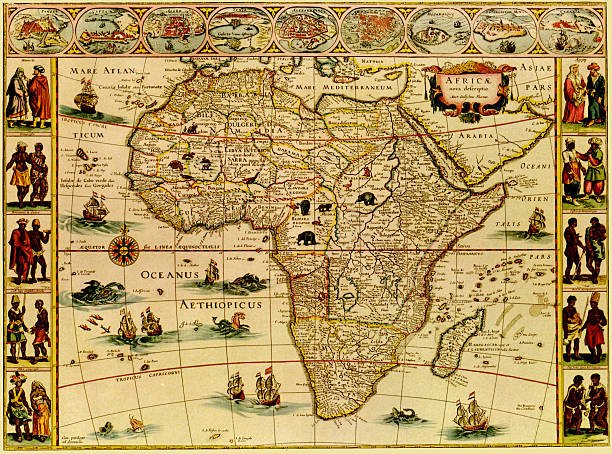
Yes, Christianity existed in Africa long before the era of European colonialism, with a rich and diverse history spanning many centuries. In fact, Africa was one of the earliest cradles of Christianity outside of the Middle East, with vibrant Christian communities flourishing in various parts of the continent from the 1st century AD onwards. These indigenous forms of Christianity developed independently of, and often predated, European colonial expansion, shaping unique cultural and religious traditions that endure to this day.
The Ancient Roots of Christianity in North Africa
The spread of Christianity across North Africa began remarkably early, often attributed to the apostolic age itself. This region, then part of the Roman Empire, was a significant hub of early Christian thought and community, predating the arrival of European colonial powers by over a millennium.
Egypt and the Coptic Orthodox Church
Egypt holds a particularly prominent place in the early history of Christianity in Africa. Tradition states that Saint Mark the Evangelist himself introduced Christianity to Egypt in the mid-1st century AD, establishing the Church in Alexandria. Alexandria quickly became one of the most important centers of Christian theology, scholarship, and monasticism in the world.
- Alexandrian Catechetical School: This renowned school produced influential theologians such as Clement of Alexandria and Origen, who profoundly shaped early Christian thought.
- Coptic Language: The Coptic language, a direct descendant of ancient Egyptian, became the liturgical language of the Coptic Church, preserving a direct link to Egypt's Pharaonic past within a Christian context.
- Desert Monasticism: Egypt was the birthplace of Christian monasticism, with figures like Saint Anthony the Great and Saint Pachomius establishing communities and practices that spread across the globe.
The Coptic Orthodox Church represents one of the oldest Christian denominations, maintaining its distinct traditions and an unbroken line of patriarchs. Its continued existence is a powerful testament to the deep, ancient African Christianity that thrived independently for centuries.
Christianity in Roman North Africa (Carthage)
Further west, in the Roman provinces of North Africa (modern-day Tunisia, Algeria, and Libya), Christianity also took firm root during the 2nd and 3rd centuries AD. This region, centered around the powerful city of Carthage, produced some of the most influential figures in early Western Christianity.
- Tertullian: Often considered the "father of Latin Christianity," Tertullian was a prolific writer and apologist from Carthage in the late 2nd and early 3rd centuries. His theological contributions significantly impacted the development of Christian doctrine.
- Cyprian of Carthage: A bishop and martyr in the mid-3rd century, Cyprian played a crucial role in debates concerning the unity of the Church and the treatment of lapsed Christians during persecutions.
- Augustine of Hippo: Perhaps the most famous North African Christian, Saint Augustine (354-430 AD) was born in what is now Algeria. His theological works, such as Confessions and City of God, remain foundational texts for Western Christianity.
This vibrant Christian presence in North Africa faced challenges from Roman persecution and later, in the 7th century, from the Arab-Islamic expansion. While the majority population eventually embraced Islam, the initial strength and influence of North African Christianity are undeniable, showcasing its profound impact long before European colonialism.
The Enduring Legacy of Christianity in Northeast Africa
Beyond the Roman sphere, Christianity in Africa established powerful and long-lasting kingdoms and churches in the northeastern part of the continent, developing unique expressions of faith that continue to flourish.
The Ethiopian Orthodox Tewahedo Church and the Aksumite Empire
Ethiopia, or the ancient Kingdom of Aksum, became one of the earliest Christian states in the world. The story of its conversion is often linked to Frumentius in the 4th century AD.
- Frumentius: According to tradition, Frumentius, a Syrian Christian, was instrumental in converting King Ezana of Aksum to Christianity around 330 AD. He was later consecrated as the first bishop of Ethiopia by Athanasius of Alexandria.
- Aksumite Kingdom: Under Christian rule, the Aksumite Empire reached its zenith, minting coins with the cross symbol and developing a rich Christian literary tradition using the Ge'ez language. This firmly establishes Ethiopian Christianity as an indigenous African Christianity.
- Unique Traditions: The Ethiopian Orthodox Tewahedo Church maintains distinct practices, including a different biblical canon, observance of the Sabbath alongside Sunday, and unique liturgical music and art. Iconic sites like the rock-hewn churches of Lalibela stand as magnificent testaments to this ancient faith, carved by Africans for African Christians.
The continuity of the Ethiopian Church for over 1,600 years, often in isolation, highlights its deep roots and resilience as a purely African institution, entirely separate from colonial influence.
Nubian Christianity: Kingdoms of the Nile
South of Egypt, in the region of ancient Nubia (modern-day Sudan), Christianity also flourished for nearly a thousand years. Three powerful kingdoms—Nobatia, Makuria, and Alodia—adopted Christianity in the 6th century AD.
- Royal Conversion: The rulers of these kingdoms converted through missionary efforts, primarily from the Byzantine Empire and Egypt, and Christianity became the state religion.
- Architectural Wonders: Archaeological excavations have revealed hundreds of churches, monasteries, and cathedrals across Nubia, many adorned with impressive murals depicting biblical scenes and saints, demonstrating a distinct style of Nubian Christianity. Sites like Faras and Old Dongola provide rich insights into this lost Christian heritage.
- Endurance and Decline: Nubian Christianity thrived for centuries, maintaining its independence despite the spread of Islam in neighboring Egypt. It wasn't until the 14th-16th centuries that the Christian kingdoms of Nubia gradually declined and were eventually replaced by Islamic sultanates.
The history of Christianity in Nubia is another powerful example of a thriving, independent pre-colonial African Christian heritage, complete with its own unique artistic and cultural expressions.
Distinguishing Pre-Colonial Christianity from Colonial-Era Missions
It is crucial to differentiate between the ancient, indigenous forms of Christianity that existed in Africa before colonialism and the missionary efforts that accompanied or directly followed European colonial expansion from the 15th century onwards, intensifying in the 19th and 20th centuries.
- Autonomous Development: The Coptic, Ethiopian, and Nubian churches developed organically within their respective African cultures. Their doctrines, liturgies, and leadership were African-led and shaped by local contexts.
- Colonial Link: European missionary societies often worked in conjunction with colonial administrations, and the spread of Christianity in many parts of sub-Saharan Africa during this period was closely intertwined with European political and cultural dominance. This often led to the suppression of indigenous cultures and a perception of Christianity as a "foreign" religion.
- Cultural Integration: Ancient African Christian communities integrated faith deeply into their existing cultural frameworks, influencing art, law, and social structures in a way that often differed from later colonial introductions.
Understanding this distinction helps to reclaim the narrative of African Christianity, highlighting its agency and deep historical roots, rather than solely viewing it through the lens of European influence.
Evidence and Resilience of Early Christianity in Africa
The existence of early Christianity in Africa is not merely a matter of historical tradition but is supported by extensive archaeological, textual, and linguistic evidence.
- Archaeological Discoveries: Numerous excavations across North Africa, Egypt, Ethiopia, and Sudan have unearthed ancient churches, monasteries, hermitages, Christian cemeteries, and artifacts like lamps, crosses, and liturgical objects. These physical remains unequivocally demonstrate the widespread presence and vibrancy of Christian communities.
- Ancient Manuscripts and Texts: Thousands of Coptic, Ge'ez, and Old Nubian manuscripts survive, including biblical texts, theological treatises, hagiographies (lives of saints), and liturgical books. These provide direct windows into the beliefs, practices, and intellectual life of ancient African Christians.
- Linguistic Traces: The continued use of Coptic as a liturgical language in Egypt and Ge'ez in Ethiopia, along with the decipherment of Old Nubian, testifies to the enduring linguistic heritage of these Christian traditions.
These pieces of evidence paint a vivid picture of a diverse and dynamic Christian landscape across parts of Africa centuries before European powers arrived with their own religious missions. The resilience of these churches, especially the Coptic and Ethiopian Orthodox, through periods of persecution, isolation, and external pressures, underscores the profound depth of their faith and their truly African identity.
The Importance of Recognizing Pre-Colonial African Christianity
Recognizing that Christianity existed in Africa before colonialism is vital for several reasons:
- It corrects a common misconception that often links Christianity exclusively with European colonial powers.
- It highlights the agency and significant contributions of Africans to the global history of Christianity.
- It enriches our understanding of the diverse forms Christianity has taken throughout history.
- It challenges Eurocentric narratives of religious history and celebrates Africa's role as a vital contributor to world religions.
The history of Christianity in Africa is not a monolithic story but a tapestry woven with threads of local adaptation, theological innovation, artistic expression, and enduring faith, all rooted deeply in African soil long before the colonial era.
Conclusion
In conclusion, the answer to the question, Did Christianity Exist In Africa Before Colonialism, is an emphatic yes. From the earliest centuries of its existence, Christianity found fertile ground in various parts of Africa, notably in Egypt, Ethiopia, and Nubia. These regions developed powerful, independent, and culturally rich Christian traditions that flourished for over a thousand years prior to the scramble for Africa by European colonial powers. The Coptic Church, the Ethiopian Orthodox Tewahedo Church, and the ancient Nubian Christian kingdoms stand as irrefutable proof of a vibrant, indigenous African Christian heritage, underscoring Africa's crucial and often overlooked role in the global history of Christianity.
Enjoyed this read?
Share it with your friends and colleagues.