Did Christianity Exist In Africa Before Europe

BSC Insights Admin
October 01, 2026
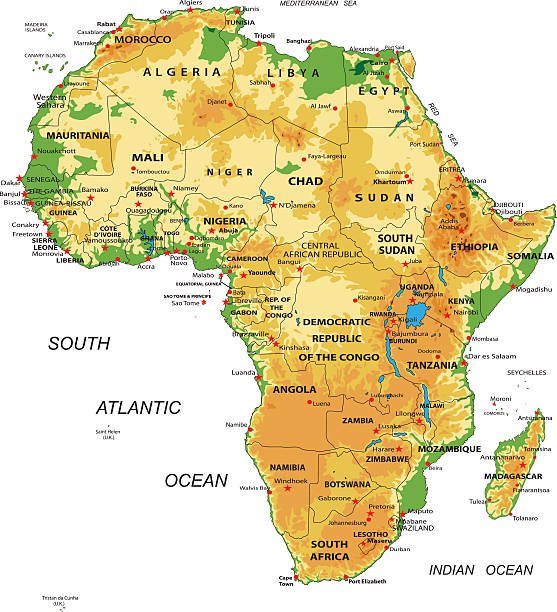
Did Christianity Exist In Africa Before Europe? Uncovering Ancient African Christianity
Yes, Christianity existed in Africa long before the significant arrival of Europeans and colonial missions. The continent of Africa boasts one of the oldest and most vibrant Christian histories in the world, with roots stretching back to the apostolic age in the first century CE. Far from being a faith solely introduced by European missionaries, Christianity developed indigenous forms and powerful centers of theological thought and practice across North Africa, Egypt, Ethiopia, and Nubia centuries before European powers began their widespread influence on the continent.
Understanding the deep historical presence of early Christianity in Africa requires looking beyond modern colonial narratives and delving into the rich tapestry of ancient civilizations and religious movements. This article will explore the evidence, key figures, and unique expressions of ancient African Christianity, demonstrating its profound and independent development.
The Apostolic Seeds: Christianity's Earliest Entry into Africa
The spread of Christianity was not confined to Europe and Asia Minor; it quickly crossed into Africa through various channels, establishing communities that would become pillars of the early Christian world.
The Markan Tradition and Alexandria: The Birthplace of Coptic Christianity
One of the earliest and most significant entries of Christianity into Africa occurred in Egypt. Tradition holds that Saint Mark the Evangelist, author of the Gospel of Mark, arrived in Alexandria, Egypt, in the mid-1st century CE, founding the Church of Alexandria. Alexandria was a bustling cosmopolitan city, a hub of learning and trade in the Roman Empire, making it fertile ground for the new faith.
- Rapid Growth: Within a few decades, Christianity spread rapidly among the native Egyptian (Coptic) population and the Greek-speaking inhabitants.
- The Catechetical School of Alexandria: By the late 2nd century, Alexandria became home to one of the most influential centers of Christian theology and scholarship, the Catechetical School. Luminaries like Pantaenus, Clement of Alexandria, and Origen shaped early Christian thought, producing groundbreaking theological works that influenced the entire Christian world.
- Martyrs and Monasticism: Egypt also became the birthplace of Christian monasticism, with figures like Saint Anthony the Great and Saint Pachomius establishing communities in the desert, which would inspire monastic movements globally. The Egyptian church endured severe persecutions under Roman rule, producing countless martyrs whose sacrifice solidified the faith.
The Coptic Orthodox Church of Alexandria, today one of the largest Christian denominations in Egypt, directly traces its origins to these early beginnings, long before European nations played any significant role in the region's Christian development.
The North African Church: Carthage and Beyond
Concurrently with its growth in Egypt, Christianity also flourished in other Roman provinces of North Africa, including modern-day Tunisia, Algeria, and Libya. Cities like Carthage, Hippo Regius, and Numidia became centers of vibrant Christian communities. This region saw the rise of influential Christian thinkers whose contributions were pivotal to the development of Western Christianity.
- Early Expansion: By the end of the 2nd century, archaeological evidence and early Christian writings confirm a substantial Christian presence across Roman North Africa.
- Key Figures: The North African church produced towering intellectual figures such as Tertullian (c. 155–220 CE), often called the “father of Latin Christianity” for his foundational theological writings in Latin. His contemporary, Saint Cyprian (c. 200–258 CE), Bishop of Carthage, was another influential leader and martyr.
- Augustine of Hippo: Perhaps the most famous African Christian, Saint Augustine of Hippo (354–430 CE), born in present-day Algeria, is considered one of the most important Church Fathers in Western Christianity. His theological works, such as Confessions and City of God, have profoundly shaped Christian thought for over a millennium.
These communities were firmly established and thriving centuries before any European powers considered colonizing the continent. They developed their own distinct theological perspectives, liturgical practices, and robust ecclesiastical structures.
Beyond Roman Influence: Uniquely African Expressions of Faith
While Roman North Africa and Egypt were under Roman political and cultural influence, other parts of Africa developed independent Christian kingdoms and traditions, showcasing the truly indigenous nature of pre-European Christianity in Africa.
The Ethiopian Church: A Beacon of Ancient Faith
Ethiopia holds a unique and particularly compelling claim to ancient Christianity in Africa. The biblical account in the Book of Acts (Chapter 8) describes Philip the Apostle encountering and baptizing an Ethiopian eunuch, a high official of Queen Candace, in the 1st century CE. This narrative is often cited as the earliest scriptural reference to an African conversion, suggesting the very early introduction of Christianity to the region.
However, the official establishment of Christianity in the Aksumite Kingdom (ancient Ethiopia) is traditionally attributed to Saint Frumentius and Aedesius in the 4th century CE. Frumentius, a Syrian Greek, became the first Bishop of Aksum around 330 CE, converting King Ezana. This event made the Aksumite Kingdom one of the first states in the world to officially adopt Christianity.
- Independence and Continuity: The Ethiopian Orthodox Tewahedo Church developed independently for centuries, largely isolated from European influence. It maintained unique liturgical practices, a distinct canon of scripture, and the ancient Ge'ez language for its services.
- Architectural Wonders: Ethiopia is famous for its rock-hewn churches, such as those in Lalibela, carved directly out of living rock starting in the 12th century, demonstrating a profound and enduring indigenous Christian artistic and architectural tradition.
- Deep Cultural Integration: Christianity became deeply interwoven with Ethiopian identity, culture, and state, evolving without external European impetus.
The vibrant history of the Ethiopian Orthodox Tewahedo Church stands as undeniable proof of ancient African Christianity that predates European colonial involvement by over a millennium.
Nubia: A Christian Kingdom on the Nile
South of Egypt, in the region of ancient Nubia (present-day southern Egypt and northern Sudan), Christianity took root in the 6th century CE, spreading from Egypt. The three main Nubian kingdoms—Nobatia, Makuria, and Alodia—adopted Christianity and flourished as powerful Christian states for nearly 900 years.
- Royal Conversion: Historical records indicate that Christianity was firmly established in these kingdoms through missionary efforts, primarily from the Byzantine Empire and Egypt, often linked to Empress Theodora's influence. By the mid-6th century, the Nubian monarchs had converted, leading to the construction of numerous churches and monasteries.
- Cultural Flourishing: Nubian Christianity fostered a rich cultural landscape characterized by unique church architecture, murals depicting biblical scenes and saints, and a distinct written language (Old Nubian) developed for liturgical and administrative purposes.
- Resilience: These Christian kingdoms maintained their independence and faith for centuries, even after the Islamic conquest of Egypt in the 7th century. The Kingdom of Makuria, in particular, maintained its Christian identity and political autonomy through treaties and military prowess until the 14th century.
The archaeological remains of dozens of churches, cathedrals, and monastic sites throughout Nubia provide robust evidence of a thriving, long-lasting Christian civilization in Africa that existed entirely independent of later European colonial activities.
Evidence and Impact: A Flourishing Pre-European Christian Presence
The existence of Christianity in Africa before Europe is not merely a matter of historical record but is strongly supported by a wealth of archaeological, literary, and oral traditions.
- Archaeological Discoveries: Extensive archaeological sites across North Africa, Egypt, Nubia, and Ethiopia reveal hundreds of ancient churches, monasteries, cathedrals, and Christian burial grounds. These include the ruins of vast basilicas in Roman North Africa, cave churches in Egypt, and the unique rock-hewn churches of Ethiopia, as well as the richly decorated churches of Nubia.
- Literary and Theological Heritage: The writings of early African Church Fathers (Tertullian, Cyprian, Augustine) and the vast corpus of Coptic and Ge'ez manuscripts (including biblical texts, hagiographies, and theological treatises) attest to a vibrant intellectual and spiritual life.
- Indigenous Leadership: From the beginning, African Christians developed their own ecclesiastical structures and leadership. African bishops, patriarchs, and monastic leaders guided their communities, often playing significant roles in ecumenical councils and theological debates that shaped global Christianity.
- Resilience Through Challenges: These Christian communities demonstrated remarkable resilience, surviving various political upheavals, including Roman persecutions, Vandal invasions, and, in many cases, the expansion of Islam. Their ability to adapt and persist for centuries underscores the deeply rooted and indigenous nature of their faith.
These powerful examples unequivocally demonstrate that African Christian history is a narrative of indigenous growth, theological innovation, and cultural integration, predating European colonial enterprises by hundreds, if not over a thousand, years.
Distinguishing Ancient African Christianity from European Colonial Missions
It is crucial to differentiate between the ancient, indigenous forms of Christianity in Africa and the later waves of Christian evangelism that accompanied European colonialism from the 16th century onwards. While both are forms of Christianity, their contexts, motivations, and impacts were vastly different.
- Timing and Origin: Ancient African Christianity emerged and developed organically from the 1st to 6th centuries CE, primarily spreading through trade routes, missionary zeal, and local conversions. Colonial missions, by contrast, largely began in the 15th-16th centuries and intensified in the 19th-20th centuries, often intrinsically linked with European political and economic ambitions.
- Cultural Integration: Early African Christianity integrated deeply with existing African cultures, languages, and social structures. For example, the Coptic Church preserved the Egyptian language, and the Ethiopian Church developed its own unique liturgical language (Ge'ez). Colonial missions, while sincere in their religious aims, often introduced Christianity alongside European cultural norms, languages, and educational systems, sometimes implicitly or explicitly disparaging indigenous practices.
- Autonomy and Governance: Ancient African churches, particularly the Coptic and Ethiopian Churches, maintained strong traditions of autocephaly (self-governance) and independent ecclesiastical hierarchies. They were not subservient to European church authorities. Later colonial missions often established churches that remained tied to European denominations and leadership for extended periods.
Therefore, while Europe did introduce new forms of Christianity to many parts of sub-Saharan Africa during the colonial era, it built upon a continent that already had a rich, diverse, and ancient Christian heritage.
Conclusion: A Rich Tapestry of Faith
To answer the question, Did Christianity Exist In Africa Before Europe?, the resounding answer is an emphatic yes. From the sands of Egypt to the highlands of Ethiopia and the kingdoms of Nubia, Christianity was firmly established and flourishing across vast swathes of Africa centuries before European colonialism. The early Christianity in Africa was not merely an imported religion; it was an indigenous faith, nurtured by African hands, minds, and spirits, producing its own unique theological traditions, martyrs, saints, and monumental architectural achievements. Recognizing this rich history is vital for a comprehensive understanding of both global Christianity and the multifaceted history of the African continent.
Enjoyed this read?
Share it with your friends and colleagues.