Are There 54 Or 55 Countries In Africa

BSC Insights Admin
October 01, 2026
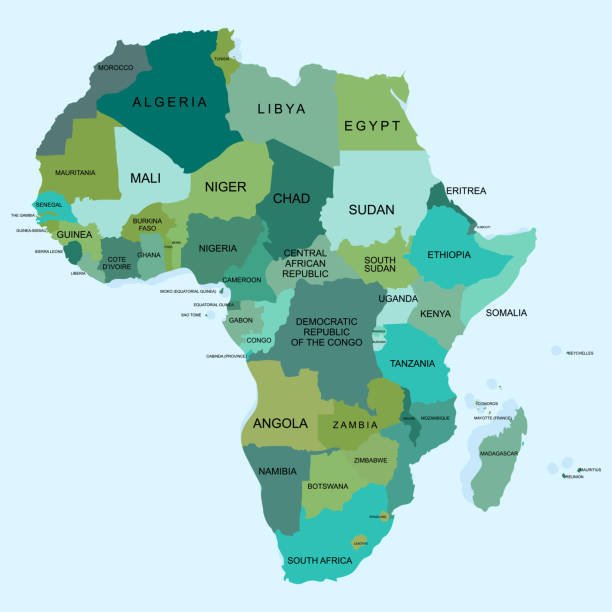
Determining whether are there 54 or 55 countries in Africa depends entirely on which international governing body or diplomatic framework is being referenced. The United Nations currently recognizes 54 sovereign states on the continent, while the African Union counts 55 members by including the Sahrawi Arab Democratic Republic. This numerical discrepancy is a central point of geopolitical discussion, reflecting the ongoing complexities of sovereignty and territorial recognition in North Africa.
The difference between these two figures is not a matter of simple arithmetic but rather a deeply rooted political and historical debate. To fully grasp the context of this count, one must examine the specific status of the territories involved and the diplomatic stances of the nations that comprise the continent.
These are the factors that determine are there 54 or 55 countries in Africa
The confusion surrounding the exact number of nations on the African continent is primarily linked to the status of Western Sahara and its recognition by regional and global organizations. While most people are accustomed to a fixed number of countries on a map, the reality in Africa involves shifting diplomatic alliances and contested borders. In the following sections, we will break down the fifteen key points that explain the differing counts and the historical reasons behind them, providing a clearer picture of the modern African political landscape.
1. United Nations Membership and Recognition
The United Nations serves as the primary global authority for the recognition of sovereign states, and it currently lists 54 African countries as full members. For a territory to be considered a country in this context, it must be recognized as having full sovereignty over its land and the ability to enter into relations with other states. When people ask which country that are there 54 or 55 countries in Africa, the answer of 54 is strictly according to the UN standards. This list includes nations ranging from Algeria to Zimbabwe, all of which have a seat in the General Assembly. The exclusion of the 55th member by the UN is due to the contested nature of the territory of Western Sahara, which the UN still classifies as a non self governing territory. This legal status prevents it from being counted as an independent nation in the eyes of the global community at large.
2. The African Union and its Inclusive Membership
The African Union, the successor to the Organization of African Unity, takes a more regional and inclusive approach by recognizing 55 member states. This organization was established to promote unity and cooperation across the continent, and it made the significant decision to include the Sahrawi Arab Democratic Republic as a founding member of its modern iteration. Because of this, when talking about African countries that are there 54 or 55 countries, the number 55 is the standard used within the continent's own primary political body. The African Union believes that all territories within the continent's geographic boundaries deserve a voice, regardless of their status at the United Nations. This inclusive policy has led to some friction with external powers but remains a cornerstone of African regional diplomacy. The AU provides a platform where the 55th member can participate in high level discussions alongside the 54 UN recognized states.
3. The Contested Territory of Western Sahara
At the heart of the debate over the number of countries is Western Sahara, a vast area on the Atlantic coast of North Africa. This territory was a Spanish colony until 1975, after which it became a point of contention between the Kingdom of Morocco and the Polisario Front. The Polisario Front declared the independence of the Sahrawi Arab Democratic Republic, claiming sovereignty over the entire region. However, Morocco also claims the territory as its own and currently controls about 80 percent of the land, including the major cities and resource rich areas. This division is the primary reason why countries in Africa that are there 54 or 55 countries debates continue to occur. Without a final resolution on the status of this land, the dual count will likely persist in international and regional documentation.
4. Morocco and its Stance on National Integrity
Morocco is a central figure in the discussion of whether there are 54 or 55 countries in Africa, as it maintains that Western Sahara is an inseparable part of its national territory. For many years, Morocco left the Organization of African Unity in protest over the admission of the Sahrawi Arab Democratic Republic. During this period, Morocco focused on building bilateral relationships and asserting its sovereignty through administrative and economic development in the contested region. In 2017, Morocco rejoined the African Union, a move that was seen as a strategic shift to influence the organization from within. Morocco's position is supported by several other nations that recognize its claim, further complicating the collective count. The Moroccan government continues to advocate for an autonomy plan under its sovereignty as the only viable solution to the conflict.
5. The Sahrawi Arab Democratic Republic (SADR)
The Sahrawi Arab Democratic Republic was proclaimed in 1976 and functions as a government in exile with its headquarters in refugee camps in Tindouf, Algeria. It maintains control over a narrow strip of land in Western Sahara known as the Liberated Zone, which is separated from the Moroccan controlled area by a massive sand berm. Despite its limited territorial control, the SADR is recognized by many nations and has established diplomatic missions around the world. In any African country which are there 54 or 55 countries discussion, the SADR represents the 55th slot on the list used by the African Union. The republic has its own constitution, flag, and national anthem, and it participates fully in all African Union summits. Its existence is a symbol of the decolonization struggle for its supporters, while its opponents view it as a non viable entity.
6. The Organization of African Unity (OAU) Legacy
The predecessor to the African Union, the OAU, played a critical role in setting the stage for the current 55 country count. In 1984, the OAU admitted the Sahrawi Arab Democratic Republic as its 51st member at the time, leading to a major diplomatic rift. This decision was based on the principle of self determination, which was a core value for many newly independent African nations that had recently escaped colonial rule. The admission of the SADR was a statement against what many members saw as a new form of territorial expansionism within the continent. This historical legacy carried over into the formation of the African Union in 2002, which ensured that the 55th member remained a part of the continental body. The OAU’s decision fundamentally altered the geopolitical map of Africa by institutionalizing the 55 country framework.
7. Varying International Recognition Patterns
The recognition of the 55th country is not uniform even among the 54 UN recognized nations in Africa. Some African countries provide full diplomatic recognition to the SADR, while others have either withdrawn their recognition or shifted their support to Morocco’s autonomy plan. For example, countries like Algeria, South Africa, and Nigeria have historically been strong supporters of the Sahrawi cause. On the other hand, many West and North African nations have increasingly backed Morocco's territorial claims in recent years. This internal split means that if you ask a country in Africa are there 54 or 55 countries, the answer might vary depending on which capital you are in. This lack of a unified continental stance reflects the diverse interests and alliances that shape African politics today.
8. Territorial Control vs. Diplomatic Recognition
One of the most complex aspects of this debate is the difference between who controls the land and who is recognized as the legal owner. In the case of Western Sahara, Morocco exercises de facto control over the majority of the territory, providing infrastructure, security, and social services. However, de jure recognition for this control is limited on the global stage, with many international bodies still viewing the SADR as the representative of the Sahrawi people. This creates a situation where the 55th country exists more in a diplomatic and legal sense than in a physical one for much of the disputed area. This disconnect between reality on the ground and international law is a primary reason for the enduring are there 54 or 55 countries in Africa question. It highlights how the definition of a country can vary depending on whether one prioritizes physical presence or legal standing.
9. The Role of Algeria in the Conflict
Algeria is perhaps the most significant external supporter of the Sahrawi Arab Democratic Republic and plays a vital role in the 55 country count. By hosting the SADR government and hundreds of thousands of Sahrawi refugees, Algeria provides the physical and political space for the 55th country to exist. Algeria’s support is rooted in its own history of anti colonial struggle and its commitment to the principle of self determination for all African peoples. This stance has often put Algeria at odds with Morocco, leading to closed borders and strained diplomatic ties between the two neighbors. Without Algeria's support, the SADR's claim to be a country in Africa would be significantly weakened. The rivalry between these two regional powers is a major factor in why the status of the 55th country remains unresolved.
10. The United Nations Referendum Process
The UN has attempted to resolve the dispute through a planned referendum that would allow the people of Western Sahara to choose between independence or integration with Morocco. The Mission for the Referendum in Western Sahara (MINURSO) was established in 1991 to oversee a ceasefire and prepare for the vote. However, the referendum has never taken place due to disagreements over who is eligible to vote and the administrative control of the process. Because the UN is still waiting for this final act of self determination, it cannot recognize the territory as a sovereign state, keeping its official count of African nations at 54. The stalemate in the UN process ensures that the 54 versus 55 debate remains active in the international community. For many observers, the referendum is the only path to a definitive answer to the country count question.
11. Recent Diplomatic Shifts and the US Proclamation
In late 2020, the United States made a significant diplomatic move by officially recognizing Moroccan sovereignty over Western Sahara. This was done in exchange for Morocco normalizing relations with Israel, and it marked a major departure from previous US policy. This move encouraged several other nations to open consulates in the disputed territory, effectively endorsing the 54 country count from a Moroccan perspective. However, this shift has not changed the official position of the United Nations or the African Union, leaving the dual count in place. These recent developments show that the status of the 55th country is still a live and volatile issue in global politics. It also demonstrates how external global powers can influence the internal geopolitics of the African continent.
12. The Concept of Continental Unity
For many leaders within the African Union, the 55 country count is a symbol of continental unity and a refusal to allow internal disputes to divide the region's collective voice. By including all territories, the AU aims to present a united front in international negotiations and trade agreements. This collective identity is often more important to African diplomats than the specific legal definitions used by the UN in New York. When the AU speaks as a block of 55 nations, it represents a unified vision of an Africa that has moved beyond its colonial past. This sense of unity is a powerful driver for maintaining the 55 country framework despite the challenges. It reflects a desire for Africans to define their own borders and their own membership on their own terms.
13. Regional Economic Communities and the Count
The various Regional Economic Communities (RECs) in Africa, such as ECOWAS or SADC, also interact with the 54 or 55 country count in different ways. Most of these regional bodies align with the African Union's inclusive membership, though their daily operations are focused on the 54 universally recognized states. The integration of Western Sahara into regional trade and infrastructure is virtually non existent due to the conflict, making its inclusion in the count more of a political statement than an economic reality. However, the RECs remain important platforms where the 54 versus 55 debate is occasionally discussed and where regional stances are formed. These organizations are the building blocks of the 55 member African Union, and their support is essential for any final resolution. Their involvement shows that the debate reaches into every level of continental administration.
14. The Legal Definition of a State in Africa
The debate over the number of countries also touches on the legal definition of what constitutes a state under the Montevideo Convention. This convention requires a permanent population, a defined territory, a government, and the capacity to enter into relations with other states. The Sahrawi Arab Democratic Republic meets some of these criteria, such as having a government and diplomatic relations, but its lack of control over a majority of its territory is its primary legal hurdle. Morocco, conversely, has the population and the territory but lacks the universal recognition that would finalize its claim. This legal ambiguity is what keeps the count in a state of flux between 54 and 55. It is a classic case study in international law where the rules are clear but the application is contested by powerful interests.
15. The Impact on Education and Cartography
The uncertainty over the count has a practical impact on how Africa is taught in schools and how it appears on maps around the world. Many educational systems use the UN count of 54, while others may show Western Sahara as a separate entity or as part of Morocco. This leads to confusion among students and the general public about the actual political map of the continent. Cartographers often use dashed lines or different colors to indicate that the status of the 55th country is in dispute. This visual representation of the conflict is a constant reminder that the count is not yet settled. It shows that the are there 54 or 55 countries in Africa debate is not just for diplomats but for everyone who looks at a map of the world.
Reasons Why These Countries Differ on the Number of Nations in Africa
The disagreement over the number of countries in Africa is not merely a technicality but is driven by fundamental differences in political philosophy, historical experience, and strategic interests. These reasons explain why some nations are adamant about the 55 count while others strictly adhere to 54.
1. Differing Interpretations of Self Determination: Many nations that support the 55 country count do so because they view the Sahrawi struggle as the final step in the decolonization of Africa. For these countries, recognizing the SADR is a moral imperative that outweighs the practicalities of territorial control. They believe that a people's right to their own nation is sacred and should be recognized even if they are currently displaced. This philosophical stance is particularly strong in nations that had long and difficult paths to their own independence. For them, the count of 55 is a matter of principle that defines their own political identity.
2. Strategic and Economic Alliances with Morocco: On the other side of the debate, many countries favor the 54 country count because of their strong economic and security ties with the Kingdom of Morocco. Morocco is a major investor in West and Central Africa, providing banking, telecommunications, and agricultural expertise to many of its neighbors. For these nations, supporting Morocco's territorial integrity is a way to ensure continued cooperation and investment. They see the Moroccan autonomy plan as a realistic and stable solution to a conflict that has lasted for nearly half a century. In this context, the count of 54 is a pragmatic choice based on regional interests and prosperity.
3. The Influence of Colonial History: The way different African nations were colonized and decolonized influences their view on the Western Sahara issue. Countries that were colonized by Spain or France may have a different perspective on the legal precedents involved than those colonized by the British. The borders of modern Africa were largely drawn by European powers during the Berlin Conference, and the struggle to redefine those borders is an ongoing process. Some nations fear that recognizing the SADR could set a precedent for other secessionist movements within their own borders. This fear of balkanization leads some to favor the stability of the 54 country count over the revolutionary potential of the 55th member.
4. Global Geopolitical Pressures: The count is also affected by the stances of major global powers like the United States, France, and Russia. When these powerful nations take a side, it often pressures smaller African countries to align their own recognition policies accordingly. The UN’s reliance on consensus among its major members means that the official count of 54 is unlikely to change without a significant shift in the Security Council. Meanwhile, the AU’s desire for independence from Western influence encourages it to maintain its 55 member count as a show of regional autonomy. This tug of war between global and regional bodies keeps the dual count in place for the foreseeable future.
5. The Stalemate in the Peace Process: The simple fact that the conflict in Western Sahara has not been resolved is perhaps the most direct reason for the differing counts. Without a final diplomatic or military conclusion, both the 54 and 55 country frameworks can claim some level of legitimacy. The status quo has persisted for so long that many international organizations have simply adapted to the ambiguity. As long as there is no final vote or definitive treaty, the world will continue to see Africa as either 54 or 55 countries depending on who is doing the counting. This administrative stalemate is a reflection of the difficulty in finding a compromise that satisfies all parties.
6. Divergent Views on the Role of the AU: Finally, the debate reflects different opinions on what the African Union should be. Those who favor the 55 count see the AU as a progressive body that champions the rights of all Africans, even those without a settled state. Those who prefer the 54 count often believe the AU should be a more traditional organization made up of universally recognized sovereign states. This internal debate about the purpose of the organization is played out through the count of its members. It shows that the 55 country count is as much about the future of the African Union as it is about the status of Western Sahara itself.
Conclusion
Ultimately, the answer to whether are there 54 or 55 countries in Africa remains a matter of perspective and institutional recognition. The United Nations and its 54 recognized states represent the global standard for sovereignty, while the African Union and its 55 members reflect a regional commitment to self determination and unity. This duality is a testament to the complex history of decolonization and the ongoing diplomatic struggles that define the continent today. As long as the status of Western Sahara remains in dispute, both numbers will continue to be used in various international and regional contexts. Understanding this distinction is essential for anyone wishing to navigate the political and geographic realities of modern Africa. The count will only be finalized when a lasting peace and a clear legal resolution are achieved for all the people of the continent.
Enjoyed this read?
Share it with your friends and colleagues.