Which Countries In Africa Remained Independent

BSC Insights Admin
September 30, 2026
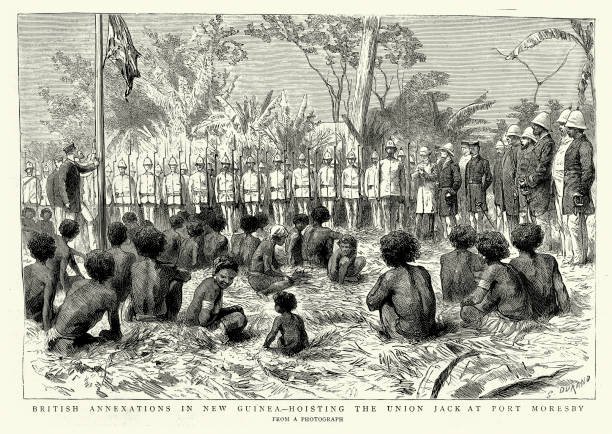
Understanding which countries in Africa remained independent requires looking back at the period known as the Scramble for Africa, when European powers partitioned almost the entire continent. While the vast majority of African land was placed under colonial rule following the Berlin Conference of 1884, two specific nations managed to maintain their sovereignty throughout the nineteenth and early twentieth centuries. These territories, Ethiopia and Liberia, represent the unique exceptions in a continent otherwise dominated by foreign imperial administrations during the peak of global colonialism.
The survival of these states was not a matter of chance but the result of strategic military power and complex diplomatic relations that successfully repelled European encroachment. Examining their histories reveals the resilience and political cunning required to withstand the immense pressure of European expansion and maintain their status as sovereign nations.
These are the Countries In Africa that Remained Independent
To identify the nations that stood their ground during the late nineteenth century, we must look at the specific political and military climates that allowed them to navigate a world where larger empires were actively seeking to expand their borders. Ethiopia and Liberia are the only two countries on the continent that were never formally colonized, although both faced various threats to their autonomy. While many other kingdoms and territories fought bravely against the incoming European armies, these two were the only ones to emerge with their flags and governments intact at the height of the partition. The following points provide a detailed history of the specific events and leadership that ensured these nations remained the only independent African sovereignty in a colonized landscape.
1. Ethiopia
Ethiopia is perhaps the most famous example of a nation that defended its independence through direct military victory against a European power. During the late nineteenth century, the Kingdom of Italy attempted to expand its influence into the Horn of Africa, eventually leading to the First Italo-Ethiopian War. Under the leadership of Emperor Menelik II and Empress Taytu Betul, the Ethiopian forces were modernized and equipped with thousands of advanced rifles and artillery pieces purchased from Russia and France. The struggle reached its climax at the Battle of Adwa in 1896, where a unified Ethiopian army of approximately 100,000 soldiers decisively defeated the Italian invasion force. This victory was so comprehensive that Italy was forced to sign the Treaty of Addis Ababa, which formally recognized Ethiopia as an independent state in the eyes of the international community. Consequently, Ethiopia remained a sovereign empire while its neighbors were carved up into British, French, and Italian colonies. The nation's ability to maintain its ancient traditions and central government served as a massive beacon of hope for the Pan-African movement throughout the twentieth century.
2. The Reign of Menelik II
The role of Emperor Menelik II in ensuring Ethiopia remained independent cannot be overstated, as his diplomatic and administrative skills were just as important as his military leadership. He recognized early on that to survive the Scramble for Africa, Ethiopia needed to adopt the tools and technology of the West while maintaining its internal cultural unity. He oversaw the construction of a modern railway from Addis Ababa to Djibouti and established the nation's first modern postal system and national bank. By creating a functioning and modernized state, he removed the primary justification used by European powers for colonization, which was the supposed need to bring civilization to the continent. Menelik II also skillfully played European powers against one another, signing trade agreements and treaties that gave different nations a stake in Ethiopia's independence. His strategic vision allowed Ethiopia to expand its own borders and consolidate power at the exact same time that other African kingdoms were falling to European explorers and soldiers. This period of rapid modernization proved that African states were fully capable of governing themselves and competing on a global stage without foreign supervision.
3. The Battle of Adwa
The Battle of Adwa stands as a pivotal moment in global history, marking the first time in the modern era that an African army successfully defeated a European colonial power in a full-scale war. On March 1, 1896, the Ethiopian forces utilized their knowledge of the rugged mountainous terrain to outmaneuver the Italian brigades, who were hampered by outdated maps and poor communication. The victory was not just a military win but a total political triumph that shattered the myth of European invincibility in Africa. Following the battle, major world powers began to send diplomatic missions to the court of Menelik II, effectively treating Ethiopia as a peer on the international stage. This recognition was vital because it provided a legal and diplomatic layer of protection that other African territories lacked. The legacy of Adwa is still celebrated every year in Ethiopia as a national holiday, reminding the world that the country’s independence was earned through blood and strategic brilliance. It remains a core part of the Ethiopian national identity, fostering a sense of pride that the nation was never a subject of a foreign crown.
4. Ethiopia and the League of Nations
Another factor in how Ethiopia remained independent was its proactive engagement with international law and global organizations. In 1923, Ethiopia became a member of the League of Nations, being the first sovereign African state to do so, which theoretically provided it with collective security against future aggression. This move was a calculated attempt by Emperor Haile Selassie to further legitimize the nation's independence and gain protection through international treaties. When Fascist Italy under Benito Mussolini invaded again in 1935, Haile Selassie took the unprecedented step of appearing before the League of Nations in Geneva to appeal for justice. Although the League failed to prevent the subsequent five-year occupation, the fact that Ethiopia was a recognized member meant that the international community never legally recognized the Italian claim to the territory. This distinction is crucial for historians, as the period between 1936 and 1941 is viewed as a temporary military occupation of a sovereign state rather than a colonial administration. Once the Italian forces were expelled with the help of the British during World War II, Ethiopia’s pre-existing sovereignty was immediately restored, maintaining its status as one of the few nations that never truly lost its independence.
5. Liberia
Liberia represents a very different path to independence, as it was founded as a settlement for freed black people from the United States rather than being a pre-existing indigenous kingdom like Ethiopia. Established in 1822 by the American Colonization Society, the territory was intended to be a place where formerly enslaved people could return to the continent and exercise their self-determination. In 1847, the settlers declared their independence and formed the Republic of Liberia, creating a constitution and a government modeled after the American system. Because of its unique historical and cultural ties to the United States, European powers were often hesitant to formally colonize the area. Great Britain and France, who were the dominant colonial powers in West Africa, were wary of annexing Liberian land for fear of sparking a diplomatic crisis with Washington. This unofficial American protection served as a powerful shield that allowed the young republic to survive the peak of the Scramble for Africa. Despite losing some peripheral territory to British and French colonial claims, the core of the Liberian state remained independent throughout the entire colonial era.
6. The American Colonization Society
The American Colonization Society (ACS) played a fundamental role in the early history of Liberia, providing the initial funding and logistics for the thousands of settlers who migrated across the Atlantic. While the motives of the ACS were complex and often controversial, the resulting settlement created a permanent footprint of a Western-style republic on the African coast. The early settlers brought with them American legal traditions, Christianity, and a commitment to building a modern state that would be recognized by the world. By the time the Scramble for Africa began in the 1880s, Liberia had already been an independent republic for over thirty years, with a recognized president and legislature. This longevity was a key factor in its survival, as it had already established its place in the international order before the partition of the continent reached its peak. The settlers, known as Americo-Liberians, utilized their understanding of Western diplomacy to protect the nation's borders and navigate the dangerous waters of nineteenth-century imperialism. This early establishment of a modern state structure provided a level of institutional stability that was rare in the region at the time.
7. Liberia's Declaration of Independence
In July 1847, the Republic of Liberia officially declared its independence, becoming the first democratic republic on the African continent. This declaration was a bold move that aimed to secure the nation’s future by establishing its own laws and international standing. Joseph Jenkins Roberts, who was born in Virginia, became the first president and worked tirelessly to gain recognition from the major powers of Europe. Great Britain was the first to recognize Liberia as a sovereign state, followed by France, which helped provide the legal framework for the nation to participate in international trade and diplomacy. While the United States did not formally recognize Liberia until 1862 during the American Civil War, the informal connection remained strong enough to deter outright colonial takeover. The declaration of independence was not just a symbolic act but a necessary legal maneuver to prevent the territory from being swallowed up by the expanding British and French empires. This early focus on legal sovereignty ensured that Liberia could argue for its autonomy based on the same principles of international law that the Europeans claimed to follow.
8. Border Disputes and Diplomatic Resilience
Remaining independent was not easy for Liberia, as it faced constant pressure from the neighboring British colony of Sierra Leone and the French territory of Ivory Coast. Throughout the late 1800s, these colonial neighbors frequently encroached on Liberian land, leading to numerous border disputes and diplomatic standoffs. However, the Liberian government demonstrated remarkable resilience, often using international arbitration to resolve these conflicts rather than resorting to military force that they could not win. By engaging in these legal battles, Liberia reinforced its image as a civilized and sovereign nation that respected international norms. The survival of the republic during this time was a delicate balancing act, as the government had to maintain its independence while dealing with internal tensions between the settlers and the indigenous populations. Despite these immense challenges, the flag of Liberia was never lowered to make way for a European governor, cementing its place in history as a land that was never colonized. The ability to maintain their borders, even if they were reduced, allowed the nation to keep its seat at the table of international politics.
9. The Symbolic Importance of Independence
The fact that Ethiopia and Liberia remained independent provided a powerful psychological and political boost to the later independence movements that swept across the continent in the 1960s. These two nations were the living proof that a black-led state could exist and govern itself in the modern world without being under a European crown. Ethiopia, with its ancient history and military strength, became a symbol of ancestral pride and resistance for many Africans and the global diaspora. Liberia, with its republican government and focus on Western-style development, showed that democracy was a viable path for the continent. Both nations played leading roles in the formation of the Organization of African Unity, now known as the African Union, with Haile Selassie of Ethiopia being a driving force behind its creation. Their survival ensured that the dream of a free and sovereign Africa was never completely extinguished, even during the darkest days of the colonial era. They stood as the guardians of African independence, maintaining a flicker of hope that eventually ignited the fire of decolonization across the entire continent.
10. International Recognition at the Dawn of the 20th Century
As the twentieth century dawned, the status of Ethiopia and Liberia as sovereign states was a firmly established fact in international affairs. At a time when the rest of the world viewed Africa as a series of European-controlled territories, these two nations were inviting foreign diplomats to their capitals and signing treaties as equals. For example, during the First World War, Liberia declared its support for the Allied powers, and Ethiopia remained a neutral territory that was courted by both sides for its strategic influence. This international recognition provided a form of security that was just as effective as any army, as any attempt to colonize them would have been a violation of the established international order. The presence of these two independent nations at global gatherings, such as the signing of the Treaty of Versailles, highlighted the fact that the colonial system was not universal. Their continued existence challenged the racist ideologies of the time, proving that sovereignty was a right that African people were capable of defending and maintaining. This period of early twentieth-century history solidified their unique role as the exceptions to the colonial rule.
Reasons Why These Countries Remained Independent in Africa
1. Military Superiority at the Battle of Adwa: The most immediate reason why Ethiopia remained independent was its ability to defeat the Italian army in a major conventional war. In 1896, the Ethiopian military utilized thousands of modern rifles to overwhelm the invaders, proving that which countries in Africa remained independent was often a matter of armed resistance. This victory discouraged other European powers from attempting a similar conquest for several decades.
2. Informal American Protection for Liberia: Liberia’s origin as a settlement for freed American slaves created a unique diplomatic shield that European powers were hesitant to pierce. Britain and France feared that annexing Liberia would lead to a major confrontation with the United States, which viewed the republic as a protégé state. This diplomatic ambiguity was essential in keeping colonial governors out of Monrovia.
3. Modernization and Institutional Development: Both nations took early steps to modernize their government structures and prove to the world that they were "civilized" states capable of self-governance. Ethiopia built railways and banks, while Liberia established a constitution and a democratic legal system, removing the common European excuse for colonization. By adopting the external markers of a modern state, they gained a level of respect and legal recognition that was not afforded to traditional African kingdoms.
4. Strategic Geographic Barriers: Ethiopia’s rugged and mountainous terrain provided a natural fortress that made it incredibly difficult for foreign armies to invade and maintain control. The high plateaus and deep gorges of the highlands were a logistical nightmare for nineteenth-century soldiers, as seen during the Italian invasions. This geographic advantage allowed the local defenders to pick their battles and exhaust the resources of any potential colonizer.
5. Mastery of International Diplomacy: The leadership in both nations consisted of skilled diplomats who were experts at playing European powers against each other through treaties and trade deals. Menelik II of Ethiopia and the early presidents of Liberia signed numerous international agreements that locked in their status as sovereign entities. By becoming members of international organizations like the League of Nations, they forced the world to acknowledge their independence on a legal level.
6. Strong Cultural and National Unity: A deep sense of national identity and shared heritage allowed these nations to unify their populations against external threats. In Ethiopia, the long-standing history of the Orthodox Church and the monarchy provided a central pillar for national pride during times of war. In Liberia, the shared mission of the settlers to build a free republic in Africa created a strong social glue that persisted despite internal challenges and external pressures.
Conclusion
In summary, determining which countries in Africa remained independent highlights the unique historical paths of Ethiopia and Liberia during the peak of European imperialism. These two nations proved that through a combination of military strength, diplomatic cunning, and institutional modernization, it was possible to maintain sovereignty in a colonized world. Their survival served as a vital symbol of resilience for the entire continent and laid the groundwork for the later Pan-African and decolonization movements. As the only two nations to never be formally colonized, Ethiopia and Liberia continue to hold a place of special honor in the history of the continent. Ultimately, their stories are a powerful testament to the enduring spirit of self-determination and the quest for freedom across the African landmass.
Enjoyed this read?
Share it with your friends and colleagues.