How Many Countries Did France Colonize In Africa

BSC Insights Admin
September 30, 2026
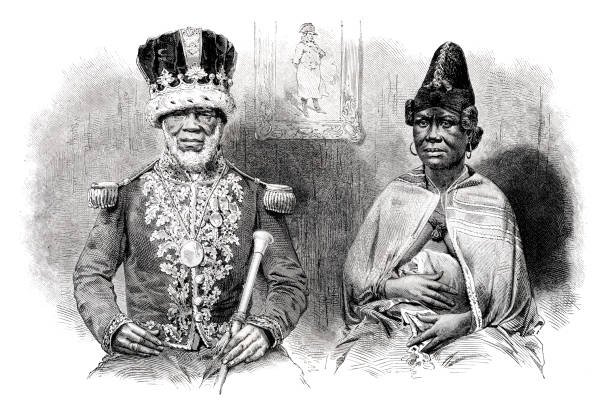
France colonized a significant number of African territories, effectively establishing direct or indirect control over approximately 20 distinct countries that are recognized today. This extensive colonial presence, primarily consolidated during the late 19th and early 20th centuries, left an indelible mark on the political, economic, and cultural landscape of a substantial portion of the African continent, shaping its trajectory long after independence.
Understanding the full extent of France's colonial enterprise in Africa requires delving into the historical context of the Scramble for Africa, the various administrative policies implemented, and the enduring legacy that continues to influence these nations today. From vast swathes of West and Equatorial Africa to strategic points in North Africa and the Indian Ocean, the French colonial empire in Africa was one of the largest and most influential.
The Genesis of French Colonialism in Africa
France's interest in Africa dates back centuries, but its most aggressive phase of colonization began in the 19th century, particularly after the Berlin Conference of 1884-1885. This period, known as the Scramble for Africa, saw European powers carve up the continent, driven by industrial needs for raw materials, new markets, and geopolitical rivalries. France, alongside Britain, emerged as a dominant colonial power.
The motivations behind French expansion were multifaceted. Economically, Africa offered abundant natural resources such as rubber, cotton, minerals, and agricultural products. Geopolitically, acquiring colonies was seen as a measure of national prestige and a way to counter British influence. Ideologically, France, like other European powers, often justified its conquests with a 'civilizing mission', believing it was bringing progress, education, and modern governance to indigenous populations, often overlooking or actively suppressing existing complex societies.
Identifying the African Countries Colonized by France
To pinpoint exactly how many African countries France colonized, it's essential to categorize them by the main administrative federations established by Paris. These federations were vast entities, often encompassing numerous modern-day states.
French West Africa (Afrique Occidentale Française - AOF)
One of the largest and most significant federations, French West Africa, was established in 1895 and included the following modern nations:
- Mauritania
- Senegal
- Mali (formerly French Sudan)
- Guinea
- Côte d'Ivoire (Ivory Coast)
- Burkina Faso (formerly Upper Volta)
- Benin (formerly Dahomey)
- Niger
These eight countries were administered from Dakar, Senegal, and formed a contiguous block of territory that became a cornerstone of the French colonial empire in Africa.
French Equatorial Africa (Afrique Équatoriale Française - AEF)
Further to the east, French Equatorial Africa was another major federation, formed in 1910 and administered from Brazzaville, Congo. This federation comprised four modern-day countries:
- Gabon
- Republic of the Congo (Congo-Brazzaville)
- Central African Republic (formerly Oubangui-Chari)
- Chad
These territories were strategically important for France, providing access to the interior of the continent and valuable resources.
North Africa
France also held significant sway in North Africa, a region with deep historical ties to Europe:
- Algeria: Uniquely considered an integral part of France (départements d'outre-mer) rather than a colony, leading to a much more intense and violent struggle for independence.
- Tunisia: A French protectorate from 1881.
- Morocco: Largely a French protectorate from 1912, though parts were Spanish.
The colonization of North Africa, particularly Algeria, was driven by settler colonialism and strategic interests in the Mediterranean.
Other French Territories in Africa
Beyond these large federations and North African holdings, France also controlled other scattered but strategically important territories:
- Djibouti: (formerly French Somaliland) A key port in the Horn of Africa.
- Comoros: An archipelago in the Indian Ocean.
- Madagascar: A large island nation off the southeast coast of Africa.
- Togo: Part of the German colony of Togoland, it became a French mandate after World War I.
- Cameroon: The larger portion of the German colony of Kamerun also became a French mandate after WWI.
Including these, the total number of distinct modern countries that experienced significant French colonial rule rises to approximately 20. It's important to note that the boundaries and administrative statuses evolved over time, but these are the primary nations where France established its colonial presence.
Administrative Policies: Assimilation vs. Association
Throughout its colonial rule, France employed different administrative philosophies that deeply impacted the societies it governed. The two main policies were assimilation and association.
Assimilation
Predominantly applied in earlier periods and theorized for regions like the Four Communes of Senegal (Dakar, Gorée, Rufisque, Saint-Louis) and to some extent Algeria, assimilation aimed to transform colonial subjects into French citizens. This involved imparting French language, culture, laws, and values, with the ultimate goal of integrating them into the French nation. While theoretically egalitarian, in practice, it was rarely fully implemented, and full citizenship rights were extended to only a tiny elite, creating a system of privilege and division.
Association
As the French Empire grew, the practicalities and costs of widespread assimilation became apparent. The policy shifted towards association, which recognized and maintained existing local structures and customs to a certain extent, while still asserting French dominance. This approach was more pragmatic, allowing for indirect rule through traditional leaders who were expected to enforce French directives. However, it still meant the systematic exploitation of resources and labor, with African economies reoriented to serve French interests.
The Enduring Legacy of French Rule in Africa
The period of French colonization in Africa, though formally ended for most nations by the early 1960s, left a profound and complex legacy that continues to shape these countries today. This legacy manifests in various forms, from linguistic dominance to economic ties and political structures.
Linguistic and Cultural Impact
Perhaps the most visible legacy is the widespread use of the French language. These former colonies now form the core of Francophone Africa, with French often serving as the official language of government, education, and business. This linguistic bond fosters cultural connections but also raises questions about national identity and the suppression of indigenous languages.
Economic Structures and Influence
French colonial rule established economic systems primarily geared towards extracting raw materials and agricultural products for export to France. Post-independence, many of these patterns persisted. The CFA franc (Communauté Financière Africaine), a currency used by 14 West and Central African nations, linked to the Euro and guaranteed by the French Treasury, is a significant economic link. While providing stability, it is often criticized for limiting monetary sovereignty and perpetuating a form of economic dependency.
Political and Geopolitical Influence
France has maintained strong political and military ties with many of its former colonies, a relationship often termed Françafrique. This complex web of diplomatic, military, and economic influence has seen France play a significant role in the internal affairs of these nations, sometimes through military intervention. While proponents argue it provides stability and security, critics contend it hinders genuine sovereignty and supports authoritarian regimes that serve French interests.
Infrastructure and Borders
The infrastructure developed during the colonial era (railways, roads, ports) was largely designed to facilitate resource extraction rather than internal connectivity within African nations. Furthermore, the arbitrary borders drawn by European powers, including France, often disregarded ethnic and cultural lines, leading to long-standing internal conflicts and regional instabilities.
The Decolonization Process and Independence
The wave of decolonization swept across Africa primarily in the 1950s and 1960s. For many French colonies, independence came relatively swiftly in 1960, often through negotiations rather than protracted armed struggles (with Algeria being the most notable exception). However, this swift transition sometimes meant that deep-seated colonial structures, particularly economic ones, remained largely intact, leading to the concept of neo-colonialism.
The legacy of French rule is thus a tapestry of intertwined benefits and disadvantages, a complex narrative of shared history, enduring ties, and ongoing debates about sovereignty, development, and identity in these nations today.
Table of African Countries Colonized by France
Here is a consolidated list of the African countries that were under significant French colonial rule:
| Country | Colonial Status / Period | Year of Independence (Most Recent) |
|---|---|---|
| Algeria | Integral part of France | 1962 |
| Benin | French Dahomey (AOF) | 1960 |
| Burkina Faso | French Upper Volta (AOF) | 1960 |
| Cameroon | French Mandate/Trusteeship | 1960 |
| Central African Republic | French Oubangui-Chari (AEF) | 1960 |
| Chad | French Chad (AEF) | 1960 |
| Comoros | French Colony | 1975 |
| Republic of the Congo | French Congo (AEF) | 1960 |
| Côte d'Ivoire | French Ivory Coast (AOF) | 1960 |
| Djibouti | French Somaliland | 1977 |
| Gabon | French Gabon (AEF) | 1960 |
| Guinea | French Guinea (AOF) | 1958 |
| Madagascar | French Colony | 1960 |
| Mali | French Sudan (AOF) | 1960 |
| Mauritania | French Mauritania (AOF) | 1960 |
| Morocco | French Protectorate | 1956 |
| Niger | French Niger (AOF) | 1960 |
| Senegal | French Senegal (AOF) | 1960 |
| Togo | French Mandate/Trusteeship | 1960 |
| Tunisia | French Protectorate | 1956 |
Conclusion
In conclusion, France colonized approximately 20 African countries, encompassing a vast geographical area and diverse populations. From the Atlantic coast to the Indian Ocean, the French colonial project in Africa was a monumental undertaking that profoundly reconfigured the continent's political map and socio-economic fabric. The legacy of this period is multifaceted, marked by the enduring influence of the French language and culture, complex economic relationships, and persistent geopolitical ties. While formal independence brought an end to direct rule, the historical relationship between France and its former African colonies remains a dynamic and often debated aspect of contemporary global affairs, highlighting the long-lasting impact of colonialism.
Enjoyed this read?
Share it with your friends and colleagues.