Which Countries Held Colonies In Africa 1914

BSC Insights Admin
October 02, 2026
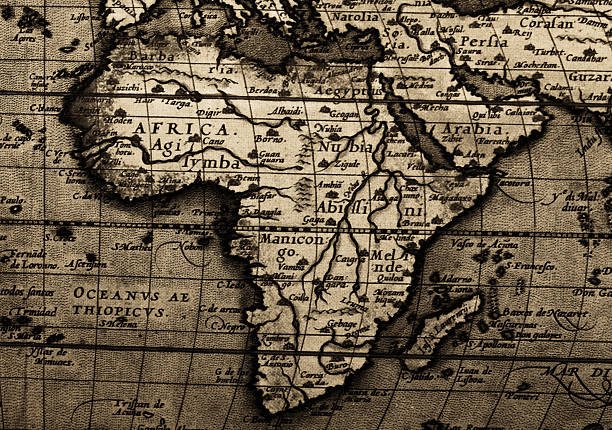
Identifying which countries held colonies in Africa 1914 reveals the peak of European imperialism just before the outbreak of the First World War. During this era, nearly 90 percent of the African continent was under the control of seven European powers after the systematic division formalized during the nineteenth century. Only Ethiopia and Liberia maintained their sovereignty, while the rest of the land was partitioned into various protectorates and colonies that served European economic and political interests.
The mapping of these territories fundamentally altered the political and social trajectory of millions of African people for decades to come. Exploring the specific empires involved helps us understand the modern geopolitical boundaries that define the continent in the present day.
These are the Countries that Held Colonies In Africa 1914
By the year 1914, the map of Africa was a colorful mosaic representing the various European empires that had claimed land during the previous thirty years. This period, often called the Scramble for Africa, saw traditional African kingdoms and ethnic territories replaced by artificial borders designed in European capitals. The colonial administrations varied significantly in their approach, with some focusing on direct rule and assimilation while others utilized indirect rule through local traditional leaders. Below are the primary nations that held significant colonial possessions across the African landscape at the start of the twentieth century.
1. Great Britain
Great Britain held the most strategic and economically diverse set of colonies across the continent by 1914, stretching from the Mediterranean in the north to the Cape of Good Hope in the south. The British vision of a continuous "Cape to Cairo" railway influenced much of their territorial acquisition, leading to the control of Egypt, Sudan, British East Africa (modern Kenya), and Uganda. In Southern Africa, they consolidated power over the Union of South Africa, Northern Rhodesia (Zambia), Southern Rhodesia (Zimbabwe), and Bechuanaland (Botswana). West Africa also saw significant British presence in Nigeria, the Gold Coast (Ghana), Sierra Leone, and the Gambia. Their administration often favored indirect rule, where local chiefs were allowed to manage day to day affairs under the supervision of British officials. This period was also notable for the 1914 amalgamation of Northern and Southern Nigeria, creating one of the most populous colonial entities on the continent.
2. France
France controlled the largest land area in Africa by 1914, with a massive empire primarily concentrated in the western and northern regions. Their territories were organized into two large federations known as French West Africa and French Equatorial Africa, covering millions of square kilometers of desert, savanna, and rainforest. The French colonies included modern day Senegal, Mali, Niger, Burkina Faso, Ivory Coast, Guinea, Mauritania, and Benin in the west, while Equatorial Africa comprised Gabon, the Republic of the Congo, the Central African Republic, and Chad. In North Africa, France held Algeria as a settler colony and maintained protectorates over Tunisia and Morocco. Unlike the British, the French often pursued a policy of assimilation, aiming to turn colonial subjects into French citizens who shared their language and culture. This massive imperial expansion required a complex administrative network based in Dakar and Brazzaville to manage the diverse populations under their control.
3. Germany
Germany was a relatively late entry into the colonial race, but by 1914, it had established several significant colonies that were strategically placed to challenge British and French dominance. Under the leadership of Chancellor Otto von Bismarck, the German Empire acquired Togoland (modern Togo and part of Ghana) and Kamerun (Cameroon) in West Africa. In the southern region, they held German South West Africa (Namibia), and in the east, they controlled German East Africa, which today comprises Tanzania, Rwanda, and Burundi. German rule was characterized by intensive infrastructure development, such as railways and ports, but it was also marked by brutal military campaigns against local resistance. For example, the suppression of the Herero and Namaqua people in South West Africa remains a dark chapter of this era. Germany would lose all of these territories just a few years later following its defeat in the First World War, with the land being redistributed among the victorious Allied powers.
4. Portugal
Portugal held some of the oldest colonial claims in Africa, dating back to the 15th century, and by 1914, they had solidified their control over several large and resource rich territories. Their primary possessions were the massive colonies of Angola in the west and Mozambique in the east, which served as vital centers for trade and agriculture. They also held Portuguese Guinea (Guinea Bissau) on the West African coast, along with the island chains of Cape Verde and Sao Tome and Principe. For much of the 19th century, Portuguese influence was limited to the coastal regions, but the pressure of the 1914 era forced them to expand inland to protect their claims from British and German encroachment. Their colonial policy focused on the exploitation of labor for plantations and mining, and they maintained a strict administrative grip that lasted much longer than most other European powers. The Portuguese presence was deeply rooted in the coastal architecture and the widespread use of the Portuguese language in their administrative centers.
5. Belgium
Belgium’s presence in Africa was unique because its primary colony, the Belgian Congo, was initially the personal property of King Leopold II rather than the Belgian state. By 1914, however, the Belgian government had taken over administration of this massive territory in the heart of the continent following international outcry over the treatment of local workers. The Belgian Congo was nearly 80 times larger than Belgium itself and was incredibly rich in rubber, copper, and ivory. The administration focused almost entirely on resource extraction, building an extensive network of river transport and railways to move goods to the Atlantic coast. The city of Leopoldville (modern Kinshasa) grew into a major colonial hub during this period. While the government attempted some reforms after taking over from the King, the economic focus remained paramount, making the Congo one of the most profitable yet exploited colonies in history. The sheer size and central location of the Belgian Congo made it a critical buffer between the British, French, and Portuguese empires.
6. Italy
Italy was another latecomer to the colonial scene, driven by a desire to match the prestige of other European nations and provide space for its growing population. By 1914, Italy had established control over Libya in North Africa and Eritrea and Italian Somaliland in the Horn of Africa. The acquisition of Libya occurred just two years before 1914 following a war with the Ottoman Empire, marking a significant shift in North African politics. In East Africa, Italy used Eritrea as a base for its attempted expansion into Ethiopia, though they were famously defeated at the Battle of Adwa in 1896, leaving Ethiopia independent. This defeat made Italy the only European power to be decisively repelled by an African army during the colonial era. Despite this setback, the Italians invested heavily in the urban development of Asmara and Mogadishu, leaving a lasting architectural legacy in those cities. Their presence in the Horn of Africa was strategically important for controlling access to the Red Sea and the Indian Ocean.
7. Spain
Spain held the smallest share of African territory among the major European powers by 1914, but its possessions were strategically located along important maritime routes. Their colonies included Spanish Guinea (modern day Equatorial Guinea), which consisted of the mainland territory of Rio Muni and the island of Fernando Po. In North Africa, Spain maintained a protectorate over the northern strip of Morocco and held the territory of Spanish Sahara (Western Sahara) along the Atlantic coast. Spain also controlled several small enclaves like Ceuta and Melilla, which they had held for centuries. Compared to the British or French, Spanish colonial administration was less intensive and focused largely on small scale agriculture and maintaining a military presence. However, their control over parts of Morocco led to frequent conflicts with local tribes, requiring a significant military commitment from Madrid. Despite the limited size of their empire, Spain’s presence ensured they remained a stakeholder in Mediterranean and West African affairs.
Reasons Why These Countries Held Colonies in 1914 in Africa
1. Access to Raw Materials and Natural Resources: The Industrial Revolution in Europe created an insatiable demand for raw materials that were abundant on the African continent. European powers sought to secure exclusive access to rubber, minerals, oil, cocoa, and cotton to fuel their domestic factories and economic growth. This resource extraction became the primary economic pillar of colonial administration during the early 1900s.
2. Strategic Maritime Routes and Global Trade: Controlling African territories allowed European nations to secure vital sea lanes, particularly the route to India and the Far East. The Suez Canal in Egypt, which was under British influence, was the most important strategic point, but coastal outposts in South Africa and the Horn of Africa were also critical for naval dominance. These locations served as essential coaling stations and military bases for global fleets.
3. National Prestige and Imperial Competition: In the late 19th and early 20th centuries, the possession of overseas colonies was seen as a symbol of a nation's greatness and power. European leaders believed that a country without colonies was a second rate power, leading to a competitive race to claim as much land as possible. This nationalistic rivalry often took precedence over the actual economic value of the territory being acquired.
4. The Berlin Conference and Diplomatic Agreements: The legal framework for holding colonies was established at the Berlin Conference of 1884 to 1885, where European powers agreed on the rules of effective occupation. This meant that a country had to actually occupy and manage a territory to claim it, preventing haphazard claims and leading to the formalization of colonial borders. By 1914, these agreements had matured into the established state boundaries seen on the maps of the time.
5. Missionary Work and the Civilizing Mission: Many European nations justified their colonial presence through the rhetoric of the "Civilizing Mission," claiming they were bringing Christianity and modern education to Africa. Missionaries often preceded military and administrative officials, establishing schools and hospitals that helped integrate local populations into the colonial system. This moral justification was widely used to gain public support for expensive colonial ventures in European capitals.
6. Surplus Population and Settler Opportunities: Some European countries, particularly Italy and France, viewed their African colonies as an outlet for their growing populations. Settler colonies in Algeria, South Africa, and the highlands of Kenya and Zimbabwe allowed Europeans to move abroad while remaining under the protection of their home governments. These settlers often took the best agricultural land, leading to significant long term social and economic changes in those regions.
7. Discovery of Diamonds and Gold: The late 19th century saw massive mineral discoveries in regions like South Africa and the Congo, which acted as a magnet for European investment. The prospect of immense wealth from mining led to rapid territorial expansion and the construction of railways into the interior. These discoveries transformed the economic outlook of the continent, moving it away from simple trade and toward large scale industrial mining operations.
8. Buffer Zones and Security Concerns: European powers often claimed new territories simply to prevent their rivals from getting them or to protect the borders of their existing colonies. For example, the British expanded into Sudan partly to protect their interests in Egypt and the Nile River. This defensive expansion created a domino effect where one acquisition necessitated several others to ensure regional stability for the colonial power.
9. Technological Advancements in Medicine and Weapons: Advances in quinine to treat malaria and the development of superior weaponry like the Maxim gun made it possible for Europeans to survive and conquer the African interior. Before these inventions, the "White Man's Grave" of West Africa had limited European presence to the coast. By 1914, these technologies had allowed European administrations to penetrate the deepest parts of the continent with relative ease.
Conclusion
In summary, which countries held colonies in Africa 1914 is a question that defines the modern political landscape of the entire continent. The seven European powers including Britain, France, Germany, Portugal, Italy, Belgium, and Spain carved up the land to serve their own industrial, strategic, and nationalistic goals. This period of intense colonization ended the independence of most African nations and introduced European languages, legal systems, and economic structures that persist today. While the colonial era is long over, the borders and social systems established by 1914 continue to influence the development and international relations of modern African states. Understanding this history is essential for anyone seeking to grasp the complexities of the African continent in the 21st century.
Enjoyed this read?
Share it with your friends and colleagues.