Which Country Is 100% Muslim In Africa

BSC Insights Admin
October 01, 2026
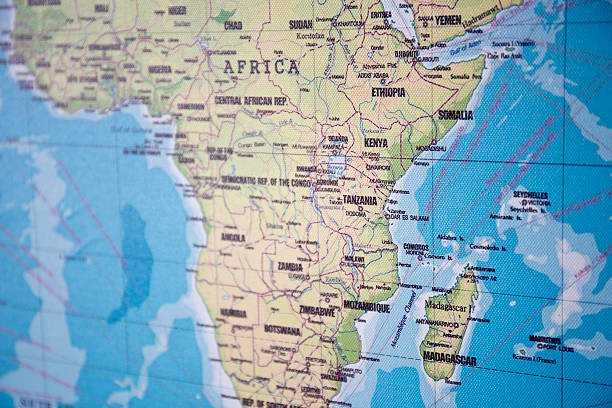
While no country in Africa, or indeed the world, is officially recognized as 100% Muslim due to the inherent diversity of human populations and the presence of small minorities, several African nations boast populations where Islam is the religion of an overwhelming majority, often exceeding 98% or 99%. The countries frequently cited as having the highest proportions of Muslim inhabitants in Africa include Mauritania, Somalia, and the Comoros, where adherence to Islam is deeply ingrained in national identity and daily life, shaping their cultures, laws, and social structures.
Understanding "100% Muslim" in a National Context
The concept of a country being "100% Muslim" is a complex one, especially when considering the intricate tapestry of religious demographics globally. In practice, achieving an absolute 100% religious homogeneity in any nation is exceedingly rare, if not impossible. Even in countries with extremely high adherence to a single faith, there are almost always small communities of other religions, irreligious individuals, or those who do not strictly identify with the dominant faith.
The Reality of Religious Demographics
Religious statistics are often based on self-identification during censuses or surveys, which can sometimes be influenced by cultural identity rather than strict religious observance. Furthermore, migratory patterns, interfaith marriages, and the natural evolution of belief systems mean that populations are rarely static in their religious composition. Therefore, when discussing nations that are "100% Muslim," it's generally understood to mean countries where the Muslim population is so dominant that other religious groups constitute only a tiny fraction, often less than 1%.
Defining "Muslim Majority" vs. "100% Muslim"
It is crucial to differentiate between a Muslim majority country and a country that is purportedly "100% Muslim." A Muslim majority country is one where more than half of its population identifies as Muslim. This category includes a vast number of nations across Africa, the Middle East, and Asia. However, the threshold for being considered "100% Muslim" implies a level of uniformity that almost never exists in reality. Instead, phrases like "overwhelmingly Muslim" or "predominantly Muslim" more accurately describe nations where Islam is the near-universal faith.
African Countries with Overwhelming Muslim Majorities
Despite the impossibility of a true 100% figure, several African nations stand out for their exceptionally high Muslim populations. These countries showcase a profound historical and cultural connection to Islam, influencing every aspect of their societies.
Mauritania: Often Cited as Highly Muslim
The Islamic Republic of Mauritania is frequently highlighted as one of the African countries with the highest percentage of Muslims. Estimates consistently place its Muslim population at around 99% to 99.9%. Islam is not just the dominant religion but also the state religion, deeply embedded in the legal system (based on Sharia law), education, and cultural identity. The vast majority of Mauritanians adhere to the Maliki school of Sunni Islam. This near-total religious homogeneity is a defining characteristic of Mauritanian society, contributing to a strong sense of national unity and shared values rooted in Islamic traditions.
- Population (approx.): 4.7 million
- Dominant Sect: Sunni (Maliki school)
- Official Status: Islam is the state religion.
Somalia: A Predominantly Sunni Muslim Nation
Located in the Horn of Africa, Somalia is another nation with an extraordinarily high Muslim population, estimated to be between 99% and 99.8%. The vast majority of Somalis are Sunni Muslims, predominantly following the Shafi'i school of thought. Islam arrived in Somalia very early in its history, influencing its language, customs, and governance for centuries. The country's constitution designates Islam as the state religion, and Sharia law serves as the basis for its legal framework. The religious uniformity in Somalia contributes significantly to its cultural cohesion, despite the nation's historical political challenges.
- Population (approx.): 17 million
- Dominant Sect: Sunni (Shafi'i school)
- Official Status: Islam is the state religion, Sharia is foundation of law.
Comoros: Strong Islamic Identity
The Union of the Comoros, an archipelago nation situated in the Indian Ocean off the coast of East Africa, also boasts an exceptionally high Muslim population, typically estimated at around 98% to 99%. The majority of Comorans are Sunni Muslims. Islam has been present in the Comoros for centuries, brought by Arab traders and settlers, and it has profoundly shaped the islands' culture, architecture, and social norms. Mosques are ubiquitous, and Islamic festivals are central to the social calendar. The country's constitution states that Islam is the state religion, reinforcing its significant role in national life.
- Population (approx.): 850,000
- Dominant Sect: Sunni
- Official Status: Islam is the state religion.
Other African Countries with Very High Muslim Populations
While Mauritania, Somalia, and Comoros are often at the top of lists for highest Muslim percentages, numerous other African nations also have Muslim populations exceeding 90% or even 95%, making them overwhelmingly Muslim. These countries contribute significantly to Africa's identity as a continent with a large and vibrant Muslim presence.
Here’s a look at some notable examples:
| Country | Estimated Muslim Population Percentage | Dominant Islamic Sect (where applicable) |
|---|---|---|
| Algeria | ~99% | Sunni (Maliki school) |
| Tunisia | ~99% | Sunni (Maliki school) |
| Morocco | ~99% | Sunni (Maliki school) |
| Libya | ~97-98% | Sunni (Maliki school) |
| Egypt | ~90% | Sunni (Shafi'i school) |
| Djibouti | ~94% | Sunni (Shafi'i school) |
| Niger | ~98% | Sunni (Maliki school) |
| Mali | ~95% | Sunni (Maliki school) |
| Senegal | ~95% | Sunni (Maliki school, Sufi brotherhoods prominent) |
| Gambia | ~95% | Sunni (Maliki school) |
These statistics underscore the profound impact of Islam across North Africa, the Sahel, and parts of East and West Africa. In many of these nations, Islamic traditions are intertwined with national identity, governance, and daily life, creating societies where the influence of Islam is pervasive.
Factors Contributing to High Muslim Populations in Africa
The extensive spread and deep entrenchment of Islam in many African countries are the result of centuries of historical, social, and economic dynamics.
Historical Spread of Islam
The advent of Islam in Africa dates back to the 7th century, shortly after its inception in the Arabian Peninsula. The religion first arrived in Northeast Africa through the hijra (migration) of early Muslims to Abyssinia (modern-day Ethiopia) to escape persecution. Subsequently, it spread across North Africa through military conquests and, more significantly, through trade routes.
- North Africa: The Arab-Islamic conquests of the 7th and 8th centuries swiftly established Islam as the dominant religion across the Maghreb region (modern-day Egypt, Libya, Tunisia, Algeria, Morocco, and Western Sahara). This was facilitated by both military might and the appeal of the new faith.
- Trans-Saharan Trade Routes: From the 8th century onwards, Muslim traders and scholars played a pivotal role in introducing Islam to West Africa and the Sahel region. Empires like Ghana, Mali, and Songhai embraced Islam, leading to the establishment of renowned Islamic learning centers such as Timbuktu. This spread was largely peaceful, driven by commercial and intellectual exchange.
- East African Coast: Along the East African coast, Islam arrived through maritime trade networks with Arab and Persian merchants. Swahili city-states became vibrant centers of Islamic culture, blending indigenous African traditions with Arab-Islamic influences. Countries like Somalia, Comoros, and Djibouti have strong historical ties to this oceanic spread.
Cultural and Social Integration
Islam's success in Africa was not solely due to conquest or trade; it was also significantly enhanced by its ability to integrate with existing African cultures and social structures. The flexibility of Islamic practices, the emphasis on community, and the respect for local customs (as long as they didn't contradict core Islamic tenets) allowed for a harmonious adoption by many African societies. Sufi brotherhoods, for instance, played a crucial role in spreading Islam in West Africa by adapting their teachings to local contexts and establishing strong community ties.
- Adaptation of Local Customs: Many pre-Islamic traditions were absorbed or reinterpreted within an Islamic framework, making the transition less disruptive.
- Role of Scholars and Marabouts: Islamic scholars (Ulama) and religious leaders (Marabouts) became influential figures, providing spiritual guidance, education, and even political leadership in many communities.
Demographics and Birth Rates
Contemporary demographic trends also contribute to the high Muslim populations in these countries. Many African nations, including those with large Muslim majorities, have relatively high birth rates. While not exclusive to Muslim communities, strong family values and societal norms often encourage larger families within these populations, contributing to sustained growth in the number of adherents over generations. The absence of significant out-migration of Muslims or in-migration of large non-Muslim populations also helps maintain these high percentages.
The Role of Islam in African Societies
In countries with overwhelming Muslim majorities, Islam is far more than just a religion; it is an intrinsic part of national identity, governance, and daily societal functioning.
Governance and Law
In many of these African nations, Islamic principles significantly influence the legal and political systems. Countries like Mauritania and Somalia explicitly state in their constitutions that Islam is the state religion and that Sharia (Islamic law) is the main source of legislation. This means that laws concerning family matters, inheritance, criminal justice, and commercial dealings are often derived from or heavily influenced by Islamic jurisprudence. While the application of Sharia can vary in interpretation and strictness, its foundational role is undeniable.
- Constitutional Status: Islam often holds a privileged position in national constitutions.
- Legal Framework: Sharia law informs civil and criminal codes, particularly in personal status laws.
Education and Social Services
Islamic institutions have historically played a vital role in education across Muslim Africa. Traditional Quranic schools (madrasas) remain central to religious education, teaching Arabic, the Quran, and Islamic sciences. Beyond religious instruction, these institutions often foster literacy and community cohesion. Mosques also serve as community centers, providing social services, charity, and spaces for collective prayer and discussion. Islamic charities and NGOs contribute to healthcare, poverty alleviation, and humanitarian aid efforts in many regions.
- Madrasas: Key centers for religious and often secular education.
- Community Role of Mosques: Beyond prayer, they are hubs for social welfare and community building.
Cultural Practices and Traditions
The cultural fabric of these overwhelmingly Muslim African countries is profoundly shaped by Islamic traditions. From daily greetings and social etiquette to art, architecture, and dietary customs, Islamic influences are ubiquitous. Festivals such as Eid al-Fitr and Eid al-Adha are national holidays, celebrated with great fervor and communal gatherings. The call to prayer (adhan) punctuates the day, creating a distinct auditory landscape. The Arabic language, the language of the Quran, also holds significant cultural and religious importance, even in countries where it is not the primary spoken language.
- Festivals and Celebrations: Islamic holidays are central to national cultural life.
- Art and Architecture: Reflect traditional Islamic aesthetics.
- Daily Life: Customs, dress, and dietary laws (halal) are widely observed.
Religious Diversity and Tolerance in Africa
While this article focuses on countries with extremely high Muslim populations, it is vital to acknowledge Africa's immense religious diversity. The continent is home to significant Christian populations, adherents of various traditional African religions, and smaller communities of other faiths. Even within predominantly Muslim countries, there often exist small pockets of religious minorities, and the degree of religious tolerance varies.
Coexistence with Other Faiths
In many parts of Africa, despite differing religious affiliations, communities have historically coexisted peacefully. Interfaith dialogue and mutual respect are important aspects of social harmony in religiously diverse nations. However, it's also true that in some regions, particularly where religious identity is strongly linked to ethnic or political divisions, tensions can arise. In the most overwhelmingly Muslim nations discussed, the small non-Muslim populations generally exist without significant conflict, often concentrated in urban centers or specific regions.
Challenges and Opportunities
For countries striving for national unity and stability, managing religious diversity, or in the case of near-monolithic societies, ensuring continued social cohesion, presents both challenges and opportunities. Promoting inclusive governance, respecting the rights of minorities (however small), and fostering dialogue are key to maintaining peace and progress. The strength of shared Islamic identity in countries like Mauritania and Somalia can be a powerful unifying force, but it also necessitates careful consideration of the very few who might not share that identity.
Conclusion
In conclusion, while the notion of a country being 100% Muslim in Africa is an idealistic concept that does not strictly exist in demographic reality, several African nations come exceptionally close, with Muslim populations frequently exceeding 98% or 99%. Mauritania, Somalia, and the Comoros are prime examples where Islam is not merely the dominant religion but the very bedrock of their national identity, legal systems, and cultural expressions. Countries like Algeria, Tunisia, Morocco, Libya, and many in the Sahel also exhibit overwhelmingly high Muslim majorities. The enduring legacy of historical spread, cultural integration, and ongoing demographic trends has cemented Islam as a pervasive force across significant parts of the African continent, shaping unique and vibrant societies deeply rooted in Islamic traditions, even as they navigate the complexities of modern nationhood and, in some cases, religious diversity.
Enjoyed this read?
Share it with your friends and colleagues.