Which Country In Africa Was Colonized By Spain

BSC Insights Admin
October 01, 2026
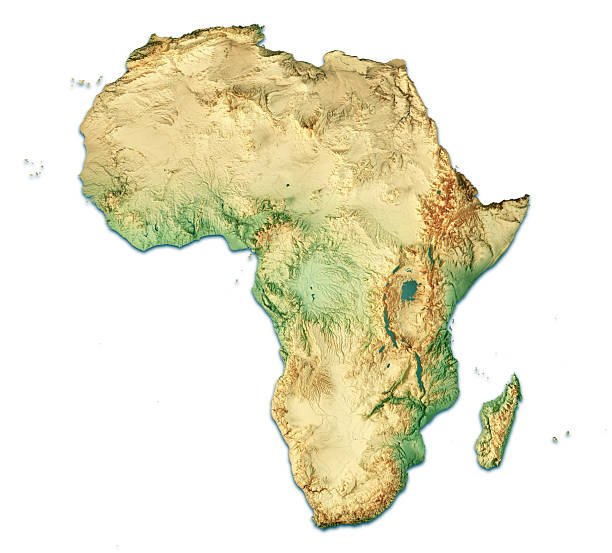
While many European powers left indelible marks across the African continent, the question of which country in Africa was colonized by Spain primarily points to one nation: Equatorial Guinea. Situated on the west coast of Central Africa, Equatorial Guinea stands as Spain's only former colony in Sub-Saharan Africa. However, Spain's colonial reach and influence in Africa extended beyond this single territory, encompassing vast swathes of what is now Western Sahara, as well as significant protectorates in Morocco and enduring sovereign cities like Ceuta and Melilla in North Africa.
The history of Spanish colonization in Africa is multifaceted, distinct from that of other major colonial powers like Britain or France in its scope and geographical distribution. While Spain had a long historical presence on the continent, particularly in the Canary Islands, its formal colonial expansion in mainland Africa occurred relatively late compared to its New World conquests. This article delves into the various territories that came under Spanish control, exploring their histories, the impact of Spanish rule, and their eventual paths to independence or their current status.
Equatorial Guinea: Spain's Sole Sub-Saharan African Colony
Equatorial Guinea holds the unique distinction of being the only African nation colonized by Spain south of the Sahara Desert. Its complex history of European contact began in 1472 when Portuguese explorer Fernão do Pó discovered the island now known as Bioko (formerly Fernando Po). For centuries, the territory remained under Portuguese dominion until 1778 when, through the Treaty of El Pardo, Portugal ceded Bioko, Annobón, and commercial rights on the mainland between the Niger Delta and the Ogoue River to Spain. This transfer was largely in exchange for territory in South America.
From Plantation Economy to Independence
Initially, Spain showed limited interest in developing its new African possessions, largely due to internal conflicts and a focus on its American colonies. The mainland territory, known as Río Muni, was only effectively occupied and administered by Spain in the late 19th and early 20th centuries, primarily to prevent encroachment by other European powers like Germany and France. The islands of Bioko and Annobón, however, became significant for their agricultural potential, particularly cocoa and coffee plantations, which relied heavily on indentured labor, often from Nigeria.
Spanish colonial policy in Equatorial Guinea, like many other colonial powers, was geared towards economic exploitation and resource extraction. Infrastructure development was minimal outside of plantation areas and administrative centers like Santa Isabel (now Malabo) on Bioko. Education and healthcare services were limited, though Spanish missionaries played a significant role in providing these to some degree. The official language, Spanish, became firmly established, making Equatorial Guinea the only independent African country with Spanish as its official language.
The road to independence for Equatorial Guinea was relatively swift compared to some other African nations. Following growing nationalist sentiments and international pressure for decolonization, Spain granted the territory autonomy in 1963 and full independence on October 12, 1968. Francisco Macías Nguema became the country's first president. The legacy of Spanish rule continues to influence Equatorial Guinea's culture, legal system, and, most notably, its language.
Spanish Sahara: A Disputed Legacy in North Africa
Another significant, albeit contentious, Spanish colonial enterprise was Spanish Sahara, located on the Atlantic coast of Northwest Africa. This vast, largely desert territory, home to the indigenous Sahrawi people, became a Spanish protectorate in the late 19th century and was later designated an overseas province of Spain in 1958. Its strategic location and later the discovery of rich phosphate deposits made it economically attractive.
The Complexities of Decolonization
Unlike Equatorial Guinea, the decolonization of Spanish Sahara was fraught with complications that continue to reverberate today. As Spain prepared to withdraw in the mid-1970s, Morocco and Mauritania asserted historical claims over the territory. This led to the Green March in 1975, when approximately 350,000 unarmed Moroccan civilians marched into Spanish Sahara, demanding its integration into Morocco.
Under intense international and regional pressure, Spain withdrew, ceding administrative control of the northern two-thirds to Morocco and the southern third to Mauritania via the Madrid Accords in 1975. This agreement was never fully recognized by the United Nations and was vehemently opposed by the Polisario Front, a Sahrawi nationalist movement that had been fighting for independence since 1973. Mauritania later relinquished its claim, but Morocco maintained its control, leading to a protracted conflict and the current unresolved status of the territory, now often referred to as Western Sahara.
The legacy of Spanish rule in Western Sahara includes administrative structures and some infrastructure, but primarily a complex geopolitical problem rooted in its incomplete decolonization, leaving the Sahrawi people without a fully recognized independent state.
Spanish Protectorates and Enduring Cities in North Africa
Beyond its formal colonies, Spain also maintained a significant presence in North Africa through protectorates and sovereign territories with deep historical roots.
The Spanish Protectorate in Northern Morocco
From 1912 to 1956, a large portion of northern Morocco was administered as the Spanish Protectorate of Morocco, distinct from the larger French Protectorate. This area included key cities like Tetouan (the capital of the protectorate) and Larache. Spain's interest in Morocco was partly driven by historical claims dating back to the Reconquista and a desire to secure its southern flank across the Strait of Gibraltar.
The protectorate was a challenging endeavor for Spain, marked by significant resistance, most notably the Rif War (1921-1926) led by Abd el-Krim. Despite the conflict, Spanish cultural and linguistic influences became established in the region, particularly in urban centers. When Morocco gained independence in 1956, the Spanish Protectorate was integrated into the new Kingdom of Morocco, marking the end of a direct Spanish colonial administration there.
Ifni and Tarfaya: Atlantic Enclaves
Spain also held several coastal enclaves along Morocco's Atlantic coast. Ifni, a small enclave, was officially ceded to Spain by Morocco in 1860 but was not effectively occupied until 1934. It remained a Spanish province until 1969 when it was returned to Morocco. Similarly, the Tarfaya Strip, also known as the Cape Juby Strip, was another Spanish protectorate territory that was ceded to Morocco in 1958 following the Ifni War.
Ceuta and Melilla: Spain's Enduring African Presence
Perhaps the most historically profound and continuous Spanish presence in Africa exists in the autonomous cities of Ceuta and Melilla. Located on the northern coast of Africa, bordering Morocco, these cities have been under Spanish rule for centuries. Ceuta was captured by Portugal in 1415 and passed to Spain in 1668, while Melilla has been Spanish since 1497. They are integral parts of Spain, similar to any other Spanish province, and are not considered colonies in the modern sense but rather territories with deep historical ties to Spain and Europe.
These cities serve as the European Union's only land borders with an African country (Morocco). They represent a unique geopolitical situation, with their populations comprising a mix of Christian, Muslim, and Jewish communities. Their status is a frequent point of diplomatic discussion with Morocco, which claims sovereignty over them, though Spain maintains they are inalienable parts of its national territory.
The Canary Islands: Geographically African, Politically European
While not a colonial territory in the same vein as Equatorial Guinea or Spanish Sahara, it is worth mentioning the Canary Islands. Geographically located off the coast of Northwest Africa, these islands have been an integral part of Spain since their conquest in the 15th century. They are an autonomous community of Spain and an outermost region of the European Union. Their historical and ongoing connection to Africa, while being politically European, highlights the diverse and complex relationships between Spain and the African continent.
The Enduring Legacy of Spanish Colonialism
The impact of Spanish rule in Africa, though geographically dispersed and varied in intensity, has left a lasting legacy. In Equatorial Guinea, the most prominent legacy is the Spanish language, which remains a unifying force and a cultural bridge. Spanish architecture, legal systems, and educational models also show a continued influence. In areas like the former Spanish Protectorate of Morocco, while French often overshadows it, Spanish is still spoken and understood by older generations, and cultural nuances persist.
The geopolitical impact is perhaps most visible in Western Sahara, where the unresolved issue of decolonization has led to decades of conflict and humanitarian challenges. The existence of Ceuta and Melilla as sovereign Spanish territories on the African mainland continues to shape relations between Spain, Morocco, and the wider European Union, reflecting a history of imperial expansion and shifting borders.
Understanding these historical connections is crucial for comprehending the contemporary political, social, and cultural landscapes of these regions. From the vibrant Spanish-speaking culture of Equatorial Guinea to the intricate diplomatic dance around Ceuta and Melilla, Spain's African past continues to shape its present and future relations with the continent.
Conclusion
In summary, while the question of which country in Africa was colonized by Spain most directly points to Equatorial Guinea as its sole former colony in Sub-Saharan Africa, Spain's colonial and territorial presence on the continent was far more extensive and nuanced. This included the vast and now disputed territory of Western Sahara (formerly Spanish Sahara), the significant Spanish Protectorate in Northern Morocco, and the enduring sovereign cities of Ceuta and Melilla. Each of these regions experienced Spanish influence differently, leaving distinct legacies ranging from linguistic and cultural imprints to complex geopolitical challenges that persist to this day. The story of Spanish Africa is a testament to a multifaceted history that continues to shape identities and international relations on the continent.
Enjoyed this read?
Share it with your friends and colleagues.