Which Country In Africa Was Formerly Known As Rhodesia

BSC Insights Admin
September 30, 2026
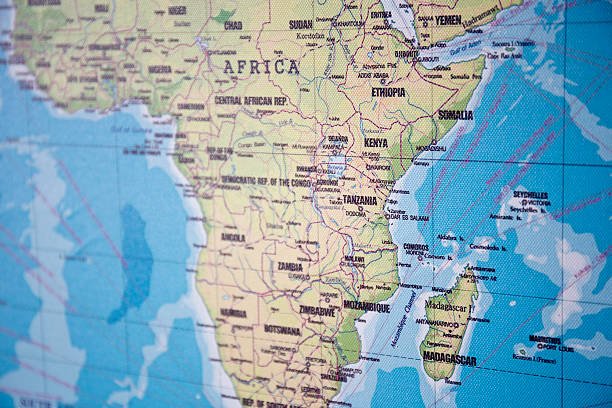
The African country formerly known as Rhodesia is today officially known as Zimbabwe. Located in Southern Africa, Zimbabwe's journey from its colonial designation as Rhodesia to its current name is a captivating tale of European settlement, indigenous resistance, and the hard-won struggle for self-determination and majority rule.
Understanding the transition from Rhodesia to Zimbabwe requires delving into a rich historical tapestry that spans over a century, encompassing the scramble for Africa, the establishment of settler governments, a protracted liberation war, and the eventual birth of a new nation. This article explores the origins of Rhodesia, the key events that shaped its destiny, and the significant shift to its modern identity as Zimbabwe.
The Genesis of Rhodesia: A Land Named After a Man
The name Rhodesia itself is a direct tribute to Cecil John Rhodes, a British mining magnate and politician who played a pivotal role in expanding the British Empire in Southern Africa during the late 19th century. Rhodes's ambition was to create a continuous strip of British territory from 'Cape to Cairo' and to exploit the region's vast mineral wealth, particularly gold and diamonds. His British South Africa Company (BSAC) was granted a royal charter in 1889, empowering it to colonize and administer territories in south-central Africa.
The BSAC's activities led to the colonization of lands inhabited by various indigenous groups, most notably the Ndebele and Shona peoples. Through a combination of treaties (often controversially obtained, such as the Moffat Treaty and the Rudd Concession) and military force, the BSAC established its control. The territory north of the Limpopo River was officially named Rhodesia in 1895, consolidating the administrative areas previously referred to as Mashonaland and Matabeleland.
Initially, Rhodesia was divided into two main administrative regions:
- Southern Rhodesia: Roughly corresponding to present-day Zimbabwe.
- Northern Rhodesia: Corresponding to present-day Zambia.
These two territories, though sharing the name Rhodesia, developed distinct political and economic trajectories. Southern Rhodesia, with its more temperate climate and perceived agricultural potential, attracted a larger influx of European settlers, leading to a more entrenched settler-minority government system.
Southern Rhodesia: A Self-Governing Colony
By 1923, the European settlers in Southern Rhodesia voted to become a self-governing colony within the British Empire, rejecting the option to join the Union of South Africa. This decision granted them significant autonomy over internal affairs, while Britain retained control over external relations and certain aspects of native policy. The British Crown officially annexed Southern Rhodesia, ending the direct administrative role of the BSAC.
Under settler rule, land was systematically expropriated from indigenous Africans, leading to highly unequal land distribution. Segregationist policies, similar to those in apartheid South Africa, were implemented, denying Africans political rights, economic opportunities, and access to quality education and healthcare. This period laid the groundwork for deep-seated racial tensions and grievances that would fuel future conflicts.
The Federation of Rhodesia and Nyasaland
In 1953, the British government, hoping to create a strong economic bloc in Central Africa, established the Federation of Rhodesia and Nyasaland. This federation comprised:
- Southern Rhodesia (present-day Zimbabwe)
- Northern Rhodesia (present-day Zambia)
- Nyasaland (present-day Malawi)
The Federation was promoted as a partnership, but African nationalists largely viewed it as a continuation of white minority rule, with Southern Rhodesia dominating the federal structure. The promise of racial partnership proved illusory for the African majority, who continued to face discrimination and limited political representation.
Growing African nationalism and demands for independence across the continent ultimately led to the dissolution of the Federation in 1963. Northern Rhodesia and Nyasaland gained independence in 1964, becoming Zambia and Malawi, respectively. Southern Rhodesia, however, remained under the control of its white minority government, leading to an escalating crisis.
Unilateral Declaration of Independence (UDI) and the Bush War
With the dismantling of the Federation, Southern Rhodesia's white minority government, led by Prime Minister Ian Smith of the Rhodesian Front party, sought full independence from Britain but insisted on retaining minority rule. Britain, under pressure from the international community and adhering to its principle of 'No Independence Before Majority Rule' (NIBMAR), refused to grant independence on these terms.
Defying Britain and the world, Ian Smith's government issued a Unilateral Declaration of Independence (UDI) on November 11, 1965. This act plunged Rhodesia into international isolation. The United Nations imposed economic sanctions, and Britain declared the UDI illegal. Despite the sanctions, Rhodesia managed to sustain its economy, largely through trade with apartheid South Africa and Portuguese Mozambique.
The UDI triggered a prolonged and brutal conflict known as the Rhodesian Bush War or the Second Chimurenga (a Shona term meaning 'struggle for liberation'). African nationalist movements, most notably:
- The Zimbabwe African People's Union (ZAPU), led by Joshua Nkomo, with its military wing ZIPRA.
- The Zimbabwe African National Union (ZANU), led by Robert Mugabe, with its military wing ZANLA.
These groups launched guerrilla warfare campaigns from bases in neighboring Zambia and Mozambique. The war escalated throughout the 1970s, causing widespread death and displacement, and severely straining Rhodesia's resources.
By the late 1970s, facing increasing international pressure, a faltering economy due to sanctions and war costs, and an unwinnable military struggle against well-supported guerrilla forces, the Rhodesian government was forced to negotiate. Efforts by South Africa and the United States to mediate a settlement ultimately led to the Lancaster House Agreement.
The Lancaster House Agreement and the Birth of Zimbabwe
The historic Lancaster House Agreement, signed in London in December 1979, brought an end to the Rhodesian Bush War. The agreement laid out a framework for a ceasefire, a new constitution guaranteeing majority rule, and internationally supervised elections. It also included provisions for land reform, which would prove to be a contentious issue in the future.
Under the terms of the agreement, Rhodesia reverted to temporary British colonial rule, overseen by Lord Soames, to prepare for the elections. In February 1980, the first democratic, one-person-one-vote elections were held. Robert Mugabe's ZANU-PF party secured a decisive victory, leading to the establishment of the independent nation of Zimbabwe.
On April 18, 1980, the independent Republic of Zimbabwe was officially born, with Robert Mugabe as its first Prime Minister. The Union Jack was lowered, and the new flag of Zimbabwe was raised, symbolizing the end of colonial rule and the dawn of a new era for the country's majority African population. The capital city, Salisbury, was renamed Harare, and many other colonial place names were changed to reflect the new national identity.
The name Zimbabwe itself has deep historical roots. It is derived from the Shona term Dzimbadzamabwe, meaning 'houses of stone' or 'venerated houses,' referring to the impressive stone ruins of Great Zimbabwe, an ancient city that was once the capital of a powerful medieval Shona kingdom. This choice of name served as a powerful symbol of reclaiming indigenous heritage and asserting a pre-colonial identity, rejecting the imposed colonial name of Rhodesia.
Post-Independence Zimbabwe: Challenges and Transformations
The newly independent Zimbabwe inherited a country with significant potential but also deep divisions and challenges. The initial years saw efforts towards national reconciliation, economic development, and social equality, particularly in education and healthcare. However, the path was fraught with difficulties, including:
- Economic Disparities: Addressing the vast economic imbalances inherited from the colonial era, particularly regarding land ownership.
- Political Tensions: The early post-independence period was marked by political rivalry, notably between ZANU-PF and ZAPU, which sometimes erupted into violence.
- Land Reform: The issue of land redistribution, which was delayed for decades due to the 'willing seller, willing buyer' clause in the Lancaster House Agreement, eventually led to controversial and often violent land seizures in the early 2000s.
- Governance and Human Rights: Over time, concerns grew regarding governance, human rights, and democratic processes under President Robert Mugabe's long rule.
Despite these challenges, the transformation from Rhodesia to Zimbabwe represents a monumental shift from a minority-ruled state based on racial segregation to a sovereign nation founded on the principles of majority rule and self-determination. It marked a crucial chapter in the broader narrative of African decolonization.
Key Facts About Zimbabwe's Name Change
| Aspect | Details |
|---|---|
| Colonial Name | Rhodesia (specifically Southern Rhodesia) |
| Named After | Cecil John Rhodes (British imperialist) |
| Date of UDI | November 11, 1965 |
| Liberation War | Rhodesian Bush War / Second Chimurenga (1964-1979) |
| Peace Agreement | Lancaster House Agreement (December 1979) |
| Independence Day | April 18, 1980 |
| New Name | Zimbabwe |
| Origin of New Name | Shona term 'Dzimbadzamabwe' (Great Zimbabwe ruins) |
The Enduring Legacy of Rhodesia and the Spirit of Zimbabwe
The historical period of Rhodesia continues to be a subject of intense debate and differing interpretations. For many, it represents a painful era of colonial oppression, racial injustice, and violent conflict. For others, particularly some descendants of the white settlers, it evokes nostalgia for a period of perceived stability and prosperity, albeit one built on systemic inequality.
The renaming to Zimbabwe was far more than a simple nomenclature change; it was a profound act of national self-definition. It symbolized the rejection of a colonial past and the embrace of an indigenous identity and history that predated European arrival. The name carries the weight of a hard-fought liberation and the aspirations for a future shaped by its own people.
Today, Zimbabwe faces contemporary challenges, but its identity is firmly rooted in the struggle for independence and the rich cultural heritage symbolized by its name. The country's journey from Rhodesia is a powerful reminder of the complex forces of colonialism, nationalism, and the enduring human desire for freedom and self-determination on the African continent.
In conclusion, the country in Africa formerly known as Rhodesia is now known as Zimbabwe. This transformation reflects a pivotal moment in African history, marking the end of colonial minority rule and the triumph of indigenous liberation movements. The shift from a name celebrating a British imperialist to one honoring an ancient African kingdom encapsulates the profound and lasting changes that swept across the continent in the post-colonial era.
Enjoyed this read?
Share it with your friends and colleagues.