Which Country In Africa Has The Highest Money Value

BSC Insights Admin
September 30, 2026
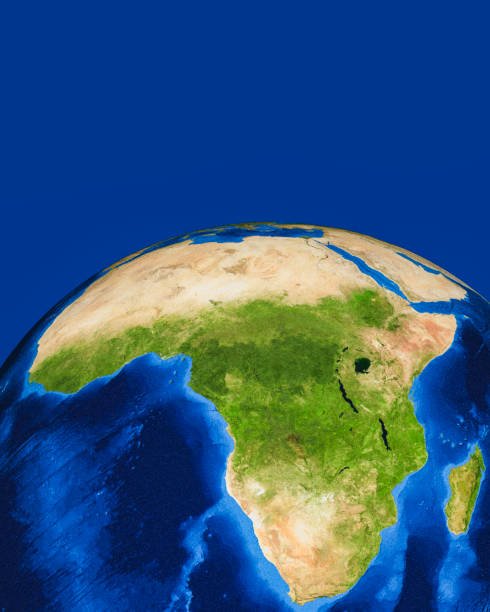
Identifying which country in Africa has the highest money value involves looking at the strength of local currencies relative to global benchmarks like the United States Dollar. Currently, Tunisia holds the record for the strongest currency on the continent, with the Tunisian Dinar maintaining a high value due to the country's focused export policies and controlled monetary environment. Understanding these valuations helps investors and travelers recognize the purchasing power and economic stability present across different African regions.
The landscape of African finance is diverse, ranging from nations with highly volatile currencies to those that have maintained impressive stability for decades. This article explores the specific economic drivers that allow certain nations to maintain such high currency values in the face of global market fluctuations.
These are the Countries and the African Country Which Has the Highest Money Value
When we examine the financial strength of various nations, we find that the African country which has the highest money value is often determined by its central bank policies and the commodity markets it serves. Currency strength is not always a direct reflection of total national wealth or GDP, but rather an indicator of the supply and demand for that specific legal tender in the international market. Below, we provide a detailed analysis of the top ten nations where the money value remains exceptionally high compared to the US Dollar and other major global currencies.
1. Tunisia
Tunisia currently tops the list as the nation with the most valuable currency on the continent with the Tunisian Dinar. The strength of the Dinar is largely a result of the government's strict monetary policy which prohibits the export or import of the currency, making it a sovereign and restricted legal tender. Tunisia has a well diversified economy that relies on agriculture, mining, and a robust manufacturing sector that produces electronics and textiles for the European market. By maintaining a low inflation rate compared to its neighbors and keeping a healthy reserve of foreign exchange, the Tunisian Central Bank ensures the Dinar remains stable. For instance, while many other currencies fluctuated wildly during global downturns, the Dinar has stayed consistently strong at a rate often hovering around three Dinars to one US Dollar. This stability makes Tunisia a unique case of fiscal discipline in North Africa.
2. Libya
The Libyan Dinar has historically been one of the strongest currencies in the world, not just in Africa, thanks to the country's massive oil reserves. Even during periods of intense internal conflict, the Central Bank of Libya has managed to maintain a high valuation for the Dinar by utilizing its vast foreign currency reserves. Libya possesses the largest proven oil reserves in Africa, and the sale of this "black gold" in dollars allows the state to support the value of its local currency significantly. While the exchange rate in the parallel or black market might differ, the official rate remains remarkably high, often trading at about 4.8 Libyan Dinars per US Dollar. This high value allows the country to import necessary goods and services more cheaply than its neighbors. The resilience of the Libyan Dinar serves as a testament to how natural resource wealth can anchor a national currency even under political pressure.
3. Morocco
Morocco uses the Dirham, which is a stable and high-value currency that benefits from the country's proximity to Europe and its diverse economic base. The Moroccan Dirham is pegged to a basket of currencies, specifically the Euro and the US Dollar, which helps to minimize volatility and maintain investor confidence. Morocco has successfully positioned itself as a hub for automotive manufacturing and aerospace components, which brings in a steady stream of foreign investment. Additionally, the tourism sector provides a constant influx of foreign currency, further stabilizing the Dirham’s value. It usually takes about ten Moroccan Dirhams to equal one US Dollar, a rate that has shown incredible consistency over the last decade. This stability has made Morocco an attractive destination for foreign direct investment from multinational corporations looking for a reliable entry point into the African market.
4. Botswana
The Botswana Pula is often cited as one of the most stable and valuable currencies in Sub-Saharan Africa due to the country's prudent economic management. Botswana is the world's leading producer of diamonds by value, and the revenue from this industry has been carefully managed through a sovereign wealth fund. The Pula is pegged to a basket of currencies that includes the South African Rand and the Special Drawing Rights from the International Monetary Fund. This pegging strategy protects the Pula from the high volatility often seen in the Rand while keeping it competitive for exports. Currently, one US Dollar is roughly equivalent to 13 Botswana Pula, reflecting a strong purchasing power in the region. The country's commitment to democracy and the rule of law also adds a layer of "trust" that keeps the currency value high among international traders.
5. Seychelles
As an island nation with a small population and a high-income economy, the Seychelles Rupee holds significant value. The economy is heavily reliant on high-end tourism and tuna fishing, both of which generate significant foreign exchange earnings in Euros and Dollars. Because the population is small, the demand for imports is manageable, allowing the Central Bank to maintain a strong reserve position. The Seychelles Rupee has remained resilient because the government has implemented successful economic reforms that have reduced public debt and encouraged private sector growth. One US Dollar typically exchanges for approximately 13 to 14 Seychelles Rupees, making it a very strong currency compared to many mainland African nations. The country’s high GDP per capita is reflected in the strength of its money, which allows its citizens to enjoy a high standard of living compared to regional averages.
6. Eritrea
The Eritrean Nakfa is a currency that maintains a high value largely due to the government's fixed exchange rate policy. Unlike many other nations that allow their currency to float based on market demand, Eritrea keeps the Nakfa at a steady rate of about 15 Nakfa to one US Dollar. This fixed rate is intended to keep the cost of essential imports stable for the population, although it does create a disparity with the unofficial market rates. The economy is driven by subsistence agriculture and a growing mining sector that produces gold, copper, and zinc. By strictly controlling the flow of foreign currency and limiting the amount of Nakfa in circulation, the state ensures the nominal value of the money remains high. While this approach has its critics among economists, it has resulted in the Nakfa being one of the higher-valued units of currency on the African map.
7. South Africa
The South African Rand is perhaps the most famous currency on the continent and serves as a benchmark for many other southern African economies. While the Rand has experienced volatility in recent years, it remains a highly valued currency due to South Africa's status as the most industrialized economy in Africa. The Rand is used widely in international trade and is often a component of emerging market investment portfolios. South Africa's wealth in gold, platinum, and coal provides a solid foundation for the currency, as these commodities are priced in US Dollars globally. Usually, the exchange rate fluctuates between 18 and 19 Rand per US Dollar, which is much stronger than the hundreds or thousands of units seen in other African nations. The sophistication of the Johannesburg Stock Exchange and the country's banking system provide the liquidity necessary to keep the Rand's value significant.
8. Namibia
The Namibian Dollar is another high-value currency that is pegged one-to-one with the South African Rand. This means that as long as the South African economy remains a powerhouse, the Namibian Dollar maintains a high level of purchasing power. Namibia is rich in minerals, particularly diamonds and uranium, which provides the government with the foreign reserves needed to maintain the currency peg. Because of this arrangement, the Namibian Dollar can be used interchangeably with the Rand in Namibia, giving it a unique level of stability. The country benefits from low inflation and a stable political environment, which prevents the currency from devaluing rapidly. Having a currency that is valued at the same rate as the Rand allows Namibia to facilitate easy trade with its largest neighbor while keeping its money value among the highest in Africa.
9. Gambia
The Gambian Dalasi has shown remarkable resilience and maintains a relatively high value compared to many of its West African counterparts. The economy of The Gambia is heavily reliant on agriculture, particularly groundnut exports, and a thriving tourism sector that attracts visitors from Europe. The Central Bank of The Gambia has been proactive in managing inflation and ensuring that the money supply does not outstrip economic growth. One US Dollar currently exchanges for about 65 to 70 Dalasi, which is a strong position when compared to the thousands of units required in countries like Guinea or Sierra Leone. The government's efforts to improve fiscal transparency have also boosted confidence in the Dalasi among regional traders. This stability allows the Gambian people to maintain a consistent level of domestic purchasing power over time.
10. Sudan
Although the Sudanese Pound has faced immense challenges due to political instability and inflation, it historically maintained a very high nominal value. At certain points in its history, the Sudanese Pound was among the most expensive currencies in the world due to the country's massive oil exports before the secession of South Sudan. Today, the official rate is managed by the government to prevent a total collapse, though the market reality is often much different. The high money value in Sudan was originally built on a foundation of oil and gold, and the government continues to try and leverage these resources to stabilize the Pound. Even with current economic hurdles, the nominal exchange rate remains mathematically higher than dozens of other African currencies that trade in the thousands. It serves as a reminder of how quickly currency value can change based on the geopolitical climate of a nation.
Reasons Why These Countries Have a High Money Value in Africa
1. Strict Monetary Policy: Many of the countries in Africa that have the highest money value employ very strict controls on how much of their currency can be traded or taken out of the country. By limiting the supply of the currency on the global market, central banks can artificially or naturally keep the value higher than it would be in a completely free-market environment.
2. Natural Resource Wealth: The presence of valuable commodities like oil, diamonds, and gold is a primary factor for which country that has the highest money value in Africa. When a country exports these goods, they receive payments in US Dollars, which they then use to buy back their own currency, thereby increasing its value through high demand.
3. Political Stability and Governance: Investors are more likely to hold and trade currencies from nations that show long-term political stability and a commitment to the rule of law. Botswana and Mauritius are excellent examples of how good governance leads to a "trust premium" on the national currency, making it more valuable in the eyes of the world.
4. Pegging to Stronger Currencies: Several African countries choose to peg their local money to the Euro or the US Dollar to ensure stability and high value. This central bank intervention prevents the local currency from falling victim to the hyperinflation that often plagues nations with floating exchange rates that lack diverse industrial bases.
5. Diversified Export Bases: Countries like Morocco and Tunisia do not rely solely on one product, but instead have developed manufacturing, tourism, and agricultural sectors. This diversity means that even if one sector fails, the other sectors continue to bring in foreign exchange, which supports the overall value of the money.
6. Low National Debt Levels: Nations that manage to keep their external debt low do not have to sell large amounts of their local currency to buy foreign exchange for debt repayment. By maintaining a healthy balance sheet, these countries ensure that their money does not lose value through the excessive printing of new notes to cover fiscal deficits.
Conclusion
Determining which country in Africa has the highest money value requires a deep look into the economic policies and natural resources of each individual nation. From the restricted Tunisian Dinar to the diamond-backed Botswana Pula, these currencies demonstrate that stability and value are often the result of disciplined fiscal management. While exchange rates are constantly shifting, the country in Africa with the highest money value typically maintains its position through strong exports and strategic central bank interventions. As the continent continues to grow and integrate its markets, these high-value currencies will play a pivotal role in regional trade and international investment. Ultimately, a strong currency is a tool that allows these African nations to participate more effectively in the global economy while providing better purchasing power for their citizens.
Enjoyed this read?
Share it with your friends and colleagues.