Which Country In Africa Is Landlocked

BSC Insights Admin
October 01, 2026
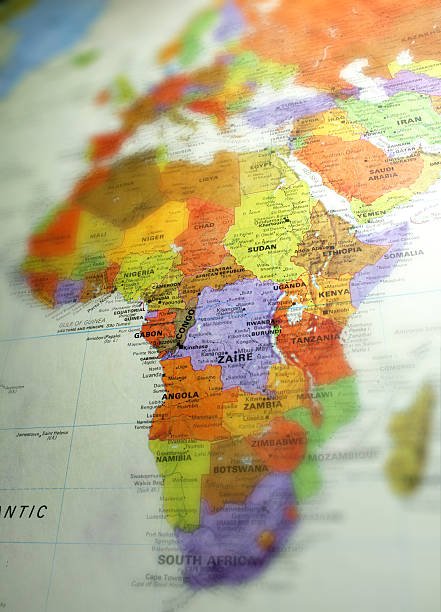
There are several nations that fit the description of a **country in Africa landlocked** from any direct access to the sea. These sixteen nations must navigate the unique economic and political challenges associated with relying on their coastal neighbors for transit and trade. This geographical reality has fostered deep regional cooperation and the development of extensive transport corridors across the continent to ensure these interior states remain connected to the global market.
The lack of a coastline significantly influences the national security and infrastructure priorities of these various interior nations. This article provides a comprehensive overview of the sixteen sovereign states that currently operate within the heart of the continent without a direct maritime border.
These are the Countries and Every African Country Which Is Landlocked
When examining the map of the continent, it becomes evident that a significant portion of the African landmass is comprised of nations that do not touch the Atlantic or Indian Oceans. The **African country which is landlocked** usually faces higher costs for imported goods, which has led many of these states to become pioneers in regional trade agreements and cross-border infrastructure projects. Below is a detailed analysis of the most prominent landlocked nations, exploring how they manage their logistics and maintain their economic vitality despite being surrounded by land.
1. Ethiopia
Ethiopia is currently the most populous **African country which is landlocked**, a status it has held since Eritrea gained independence in 1993 and took control of the entire coastline along the Red Sea. This geographic shift forced the Ethiopian government to rethink its entire trade strategy, eventually leading to a heavy reliance on the Port of Djibouti. Currently, over 95 percent of Ethiopia's international trade flows through the Djibouti corridor, which is supported by a 750-kilometer modern electric railway that connects Addis Ababa to the sea. To mitigate the risks of depending on a single neighbor, Ethiopia has recently sought to diversify its transit options by investing in the Port of Berbera in Somaliland and exploring the LAPSSET corridor through Kenya. The nation’s fast-growing economy, driven by agriculture and manufacturing, requires a massive volume of imports, making maritime access a matter of top-tier national security. Despite these hurdles, Ethiopia has managed to maintain a significant presence in regional diplomacy and remains the seat of the African Union, proving that landlocked status does not prevent a nation from becoming a continental powerhouse.
2. Chad
Chad is often referred to as the "dead heart of Africa" due to its position as a massive **country in Africa landlocked** by six different nations in the central part of the continent. The country spans a diverse range of environments, from the harsh Saharan sands in the north to the more fertile Sudanian savanna in the south. Because it is thousands of kilometers away from the nearest ocean, Chad faces some of the highest transport costs in the world, which can increase the price of essential goods by as much as 30 percent. To export its primary resource, crude oil, Chad relies on a 1,070-kilometer pipeline that traverses Cameroon to reach the Atlantic port of Kribi. This critical infrastructure is the lifeblood of the Chadian economy, providing the foreign exchange needed to support the national budget and public services. In addition to oil, Chad is a major producer of livestock and gum arabic, which are transported via long road convoys through Nigeria and Cameroon. The nation's central position makes it a strategic crossroad for regional security efforts in the Sahel, despite the logistical difficulties posed by its interior location.
3. Niger
Niger is a vast nation in West Africa where over 80 percent of the territory is covered by the Sahara Desert, making it a prominent **African country which is landlocked** in an arid landscape. The country relies heavily on its southern neighbor, Benin, for access to the Port of Cotonou, which serves as the primary gateway for Niger’s uranium and oil exports. The Niamey-Cotonou corridor is a busy trade route that facilitates the movement of thousands of trucks every month, though it is often subject to delays at border crossings. Niger has also been working on the Trans-Saharan Road project, which aims to improve connectivity between Algiers in the north and Lagos in the south, potentially giving Niger multiple maritime exits. Recently, the completion of a nearly 2,000-kilometer pipeline to the Atlantic coast has opened a new chapter for Niger’s oil industry, promising to significantly boost the national GDP. The landlocked nature of the country is also a factor in its role as a transit hub for regional migration and trade between the Maghreb and Sub-Saharan Africa. Life in Niger is a constant negotiation with the environment and the neighbors that hold the keys to its sea access.
4. Mali
Mali is a historically significant **African country which is landlocked** in the western part of the continent, once serving as the center of great empires that controlled the trans-Saharan gold and salt trade. In the modern era, Mali’s geography requires it to maintain excellent diplomatic relations with its coastal neighbors, particularly Senegal and the Ivory Coast. The Port of Dakar in Senegal is the most traditional exit for Malian goods, connected by a historic rail line and a heavily used highway system. However, the Port of Abidjan has become an increasingly important alternative, especially for the export of Malian cotton and gold. The Niger River provides a seasonal internal waterway for the transport of agricultural products, but it is not sufficient for large-scale international commerce. Mali’s interior location means that its economy is highly sensitive to the political stability of the West African region, as border closures can lead to immediate inflation. Despite these challenges, Mali continues to be one of the continent's largest gold producers, proving that mineral wealth can overcome many of the disadvantages of being landlocked. The nation's cultural heritage, centered in cities like Timbuktu, remains a global icon of the historic interior trade routes.
5. South Sudan
South Sudan is the world's youngest nation and is a significant **African country which is landlocked** in the heart of East-Central Africa after its 2011 separation from Sudan. The nation’s economy is almost entirely dependent on its vast oil reserves, which must be exported through a long pipeline that runs north through Sudan to reach the Red Sea port of Port Sudan. This arrangement has often been a source of tension, as disagreements over transit fees and political issues have occasionally led to the shut-off of oil flows. To secure its economic future, South Sudan has looked toward the south, joining the East African Community and exploring the possibility of a new pipeline through Kenya or Ethiopia. The lack of infrastructure, particularly a paved road network, makes internal transport incredibly difficult during the long rainy season when many roads become impassable. The Nile River provides some logistical relief for moving goods between Juba and the northern regions, but it does not provide an exit to the ocean. South Sudan’s landlocked status is a central theme in its ongoing efforts to build a stable and self-sufficient state in a complex geopolitical environment.
6. Zambia
Zambia is a copper-rich nation in Southern Africa that is a prime example of an **African country which is landlocked**, as it is bordered by eight different countries. This central position has earned Zambia the nickname of a "land-linked" country, as it serves as a critical transit hub for the entire region. To export its massive copper production, Zambia utilizes several different corridors, including the TAZARA railway which connects to Dar es Salaam in Tanzania and the rail links to the Port of Durban in South Africa. The Beira Corridor through Mozambique is another vital route for Zambian trade, offering a shorter distance to the Indian Ocean for many of its eastern provinces. Zambia’s government has invested heavily in bridge projects, such as the Kazungula Bridge over the Zambezi River, to improve the efficiency of truck movements toward the south. The logistical cost of being landlocked is a major factor in the competitiveness of the Zambian mining sector, as transporting heavy copper ore over thousands of kilometers is expensive. However, Zambia’s peaceful political history and strategic location have allowed it to become a leader in regional integration efforts within the Southern African Development Community.
7. Botswana
Botswana is often highlighted as a nation that has successfully overcome the "landlocked penalty" through visionary leadership and the careful management of its diamond resources. As a **country in Africa landlocked** by South Africa, Namibia, and Zimbabwe, Botswana has built one of the most stable and prosperous economies on the continent. It relies extensively on South African ports for its international trade, benefiting from its membership in the Southern African Customs Union which allows for relatively smooth border transitions. Botswana has also diversified its exit routes by utilizing the Trans-Kalahari Highway, which provides a direct link to the Port of Walvis Bay in Namibia on the Atlantic coast. This strategic move was intended to reduce its total dependence on the South African logistics system and provide more competitive options for its beef and diamond exports. The country’s flat, arid landscape dominated by the Kalahari Desert has made the maintenance of a high-quality road network a national priority. Botswana’s success demonstrates that landlocked status can be managed effectively when combined with low levels of corruption and a focus on high-value exports.
8. Zimbabwe
Zimbabwe is a centrally located Southern African nation that is a notable **African country which is landlocked** between the Zambezi and Limpopo rivers. Its location makes it a vital gateway for trade moving between South Africa and the central-northern states like Zambia and the DR Congo. Zimbabwe’s primary maritime access is through the Mozambican ports of Beira and Maputo, which are connected by road and rail corridors that have been in use for over a century. The Port of Durban also remains a critical, albeit more distant, exit for Zimbabwean minerals and agricultural products. The Beitbridge border post between South Africa and Zimbabwe is one of the busiest inland ports in Africa, handling a massive volume of cargo every day. Zimbabwe’s landlocked position has required it to be a key player in regional power-sharing and transport agreements, such as the Kariba Dam project which it shares with Zambia. The nation's economic challenges over the last two decades have been exacerbated by the high cost of imports, yet its resilient agricultural and mining sectors continue to find ways to reach global markets.
9. Rwanda
Rwanda is a small, mountainous nation in the Great Lakes region that is an **African country which is landlocked** by much larger neighbors. Often called the "land of a thousand hills," Rwanda faces extreme logistical challenges due to its rugged terrain and its distance from the coast. To manage this, the government has focused on high-value, low-weight exports like specialty coffee, tea, and minerals that can be shipped by air or through efficient road corridors. Rwanda uses two main routes: the Northern Corridor which runs through Uganda to the Port of Mombasa in Kenya, and the Central Corridor which goes through Tanzania to Dar es Salaam. The Rwandan government has been a vocal advocate for the "Single Customs Territory" in East Africa, which allows goods to be cleared at the first point of entry, significantly reducing wait times at inland borders. Rwanda has also invested heavily in its national airline, RwandAir, to develop Kigali as a regional cargo hub and bypass traditional land barriers. This forward-thinking approach has allowed Rwanda to maintain high levels of economic growth despite its lack of a sea border.
10. Uganda
Uganda is a fertile and resource-rich **African country which is landlocked** in East Africa, positioned on the shores of Lake Victoria. It is almost entirely dependent on the Port of Mombasa in Kenya for its imports and exports, which travel along the busy Northern Corridor. This reliance makes the Ugandan economy vulnerable to any political or social disruptions in Kenya, which has historically led to fuel shortages and price spikes in Kampala. To create more options, Uganda has been working with Tanzania to develop the Central Corridor and is currently building a major oil pipeline to the Port of Tanga. Uganda’s internal water transport on Lake Victoria provides a unique way to move goods between its neighbors, but it still requires a land link to reach the open ocean. The nation’s agricultural sector, particularly its coffee and banana exports, remains the backbone of the economy and is highly dependent on efficient transit through its neighbors. As Uganda begins to develop its own oil reserves, the importance of secure and cost-effective pipelines to the coast has become a primary focus of its national development plan.
Reasons Why These Countries Are Landlocked in Africa
1. The Legacy of the Berlin Conference: The primary reason for why so many nations are landlocked is the way the continent was partitioned by European powers in 1884. During this era, borders were often drawn with little regard for the local geography or the ethnic groups living on the land. Colonial administrators focused on administrative convenience and resource extraction rather than creating ecologically or economically balanced states. This resulted in the creation of several interior colonies that were designed to feed into coastal administrative hubs. When these colonies achieved independence in the mid-twentieth century, they inherited these arbitrary borders, leaving them as **countries in Africa that are landlocked** by their neighbors. The modern political map of Africa is essentially a lasting record of colonial decision-making that prioritized European interests over African connectivity.
2. Post-Colonial Secessions and Independence: Some nations became landlocked due to the political breakup of larger states after the colonial era ended. Ethiopia is the most famous example, as it previously had a long coastline on the Red Sea until Eritrea successfully fought for independence in 1993. Similarly, South Sudan became a landlocked nation in 2011 after voting to separate from the Republic of Sudan. In these cases, the new borders were determined by historical claims and the desire for self-determination, which occasionally resulted in the interior region losing its only exit to the sea. These geopolitical shifts have created new sets of diplomatic challenges for the resulting states, who must now pay transit fees to the nations they were once part of. These secessions highlight how the political evolution of the continent continues to reshape its geographic realities.
3. Tectonic Movements and Continental Rifting: The deep geological history of Africa has also played a role in why certain regions are surrounded by land rather than sea. The East African Rift is a massive tectonic feature that is slowly pulling the continent apart, creating deep valleys and high mountains that define the interior landscape. Over millions of years, these movements have created a high-altitude central plateau that is far removed from the low-lying coastal plains. Nations like Rwanda, Burundi, and Uganda are situated in this Rift Valley environment, where the geography is dominated by lakes and mountains rather than ocean access. This geological positioning ensures that these nations are naturally isolated from the coastal weather patterns and maritime trade routes. The physical shape of the continent's crust is the ultimate architect of its landlocked regions.
4. Strategic Colonial Administrative Zoning: In some instances, colonial powers created landlocked territories as specific zones for agriculture or labor that were intended to support the more developed coastal regions. For example, Burkina Faso and Niger were originally part of French West Africa, and their borders were adjusted several times for the convenience of the French administrators in Dakar. These interior zones were often seen as "hinterlands" that provided raw materials like cotton or labor for the plantations and ports on the coast. When the French West African federation broke apart into individual sovereign nations, these administrative zones became permanent national borders. This left the interior states with a legacy of being structurally dependent on the coastal infrastructure that was built to serve them. The historical role of these nations as resource suppliers for coastal hubs has influenced their modern economic struggles.
5. Formation of Natural Geographic Barriers: Africa is home to some of the world's most formidable natural barriers, such as the Sahara Desert and the dense rainforests of the Congo Basin, which isolate many regions from the sea. Countries like Chad and the Central African Republic are positioned in areas where the sheer distance and the difficulty of the terrain make reaching the coast an epic undertaking. Even if these nations had a small strip of coast, the interior parts would still be functionally landlocked because of the lack of navigable rivers or easy transport routes through the desert or forest. These natural barriers have historically limited the expansion of coastal influences into the interior, allowing for the development of distinct cultures and political systems. The natural isolation provided by these environments is a defining feature of the central African experience. This geography necessitates the construction of extremely long and expensive transport links to connect with the outside world.
6. Focus on Interior Regional Integration: In the modern era, some landlocked nations have embraced their status by focusing on becoming regional bridges rather than just interior endpoints. Nations like Zambia and Zimbabwe have leveraged their landlocked geography to become hubs for north-south and east-west trade within the Southern African Development Community. By investing in regional transport corridors, they can collect transit fees and stimulate local businesses that serve the thousands of trucks passing through their territory. This shift in perspective transforms the "landlocked" disadvantage into a "land-linked" advantage, where the nation becomes a vital part of the regional economic fabric. While they still lack a sea, their role as a connector makes them indispensable to the coastal nations that want to reach the interior markets. This strategic focus is a key part of the modern African developmental narrative.
Conclusion
In conclusion, the presence of sixteen landlocked nations in Africa is a complex result of colonial history, tectonic forces, and modern political evolution. While being an **African country which is landlocked** presents significant logistical and economic hurdles, many of these states have shown remarkable resilience by developing sophisticated regional trade networks. The ongoing construction of new railways, pipelines, and highways ensures that these interior nations continue to play a vital role in the continent's growth. As the **African countries that are landlocked** continue to integrate their economies with their coastal neighbors, the distinction between the coast and the interior will become less of a barrier to prosperity. Ultimately, the success of these nations depends on the strength of their diplomatic ties and the efficiency of the corridors that connect them to the world's great oceans.
Enjoyed this read?
Share it with your friends and colleagues.