Which Country In Africa Is Still Under Absolute Monarchy

BSC Insights Admin
September 30, 2026
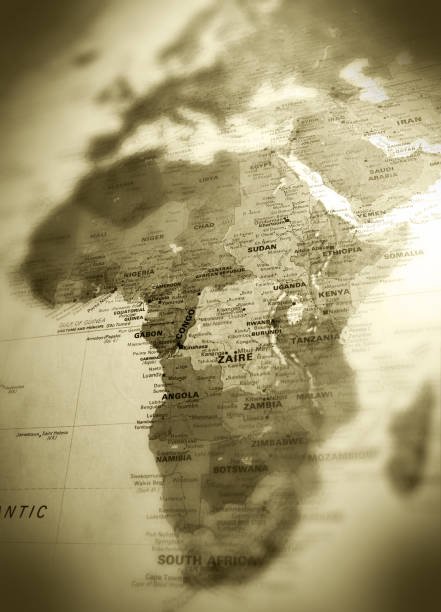
Eswatini is the country in Africa with an absolute monarch where the King possesses supreme authority over the executive, legislative, and judicial branches of government. While most nations on the continent have transitioned to representative democracies or constitutional systems, Eswatini remains a unique example of traditional governance maintaining total control in the modern era. This political structure ensures that King Mswati III holds the ultimate power to appoint the Prime Minister and dissolve parliament at his discretion.
The persistence of such a system in the 21st century draws significant attention from political scientists and human rights organizations worldwide. Understanding the nuances of how these traditional structures operate alongside modern administrative needs is essential for grasping the current political landscape of Southern Africa.
These are the Countries In Africa That Are Still Under Absolute Monarchy
When investigating which country that is under absolute monarchy in Africa, it is vital to distinguish between a head of state with purely ceremonial duties and one with absolute executive powers. In Africa, the definition of monarchy varies significantly from one border to another, with some nations integrating royal lineages into democratic frameworks and others maintaining the ancient tradition of royal supremacy. The following details provide a comprehensive look at the nations and traditional entities that continue to uphold monarchical rule as a primary form of governance.
1. Eswatini (The Kingdom of Eswatini)
Eswatini, formerly known as Swaziland, is the most prominent African country which is an absolute monarchy and the last of its kind on the continent. King Mswati III has ruled since 1986, following the long reign of his father, King Sobhuza II. Under the 2005 Constitution, the King remains the supreme authority, and although there is a parliament, its powers are severely limited compared to the royal prerogative. Political parties are essentially banned from participating in elections, as candidates must run as individuals within the Tinkhundla system, a traditional decentralization model. This system ensures that the monarch retains control over the selection of the government and the judiciary, making it the most direct example of an absolute system in Africa today. The King also serves as the traditional leader, or Ngwenyama, embodying the spiritual and cultural identity of the Swazi people through rituals like the Incwala ceremony.
2. The Kingdom of Morocco (Executive Monarchy)
While often classified as a constitutional monarchy, Morocco is frequently discussed as an African country which is still under a form of absolute or executive monarchy due to the extensive powers held by King Mohammed VI. Unlike the purely ceremonial monarchs of Europe, the Moroccan King is the Commander of the Faithful and holds significant influence over the military, foreign policy, and religious affairs. The 2011 constitutional reforms, which were sparked by the Arab Spring, aimed to transfer some powers to the Prime Minister, yet the King still retains the final say on the most critical national issues. He has the authority to appoint the head of government and can chair the Council of Ministers, which oversees the nation's strategic direction. This hybrid system places Morocco in a unique position where democratic institutions exist, but the royal palace remains the center of gravity for all major political decisions.
3. Lesotho (Constitutional Contrast)
In the discussion of countries in Africa that have absolute monarchs, Lesotho serves as an important point of contrast because it is a constitutional monarchy where the King's power is strictly limited. King Letsie III is the head of state, but he does not possess the absolute executive authority found in neighboring Eswatini. The governance of Lesotho is handled by an elected parliament and a Prime Minister, with the King performing duties that are largely ceremonial and symbolic. His role is to serve as a symbol of national unity and a guardian of the Sotho culture rather than a political decision-maker. Understanding Lesotho helps clarify why Eswatini is so unique, as it shows that a monarchy can exist within a democratic framework without the King exercising total control over the lives of the citizens.
4. The Zulu Kingdom (Sub-national Monarchy)
Although South Africa is a constitutional republic, the Zulu Kingdom exists within its borders as a powerful sub-national monarchy with absolute cultural authority over millions of people. The King of the Zulus, currently King Misuzulu kaZwelithini, does not govern the country at a federal level, but his influence over Zulu tradition, land administration through the Ingonyama Trust, and social customs is absolute within his community. The South African constitution recognizes traditional leaders, providing them with a formal role in advising the government on matters affecting rural communities and customary law. For many Zulu people, the King is the ultimate authority on identity and cultural heritage, demonstrating how monarchical structures can persist even when the overarching national government is a democracy. This dual system allows for the preservation of ancient royal lineages within a modern, industrialized nation-state.
5. The Buganda Kingdom in Uganda
The Buganda Kingdom is another significant example of a traditional monarchy that maintains absolute cultural influence within the Republic of Uganda. Led by the Kabaka, currently Ronald Muwenda Mutebi II, the kingdom has a long history of centralized power that predates the colonial era. While the Kabaka does not have the political power to pass national laws or command the Ugandan army, his authority over the Baganda people regarding land, language, and cultural rituals is undisputed. The relationship between the Ugandan central government and the Buganda Kingdom has historically been complex, leading to periods of tension and the temporary abolition of monarchies in the 1960s. Today, the kingdom operates as a semi-autonomous cultural entity, proving that African countries that are ruled by kings in a traditional sense can coexist with modern republican structures.
6. The Asante Empire in Ghana
In West Africa, the Asantehene of the Ashanti Empire continues to hold a position of immense traditional power and respect that mirrors aspects of an absolute monarchy. Based in Kumasi, the current Asantehene, Otumfuo Nana Osei Tutu II, is regarded as the custodian of the Golden Stool, which symbolizes the spirit of the Asante nation. While Ghana is a stable democracy, the Asantehene’s influence is so great that he often mediates political disputes and spearheads major development projects in his region. He maintains a traditional court and a hierarchy of chiefs who owe him absolute loyalty in matters of customary law and ethnic identity. The Ghanaian government frequently consults with the Asantehene on national issues, recognizing that his cultural mandate is as influential as many political offices.
7. The Sultanate of Sokoto in Nigeria
The Sultan of Sokoto, Muhammad Sa'ad Abubakar III, is the spiritual and traditional leader of millions of Muslims in Nigeria and the head of the Sokoto Caliphate. While Nigeria is a federal republic, the Sultan’s authority on religious and traditional matters is absolute for his followers, and he plays a critical role in the country's social fabric. He is the President-General of the Nigerian National Supreme Council for Islamic Affairs, giving him a platform that transcends mere cultural symbolism. In the northern regions of Nigeria, the Sultan and other traditional emirs exercise significant control over local disputes and the moral guidance of their communities. This structure highlights how monarchical authority can be deeply embedded in religious and regional identities, even when the national political system is based on a different model.
8. The Kingdom of Toro in Uganda
Toro is another of the traditional kingdoms in Uganda that has seen a revival of its monarchical traditions in the modern era. King Oyo Nyimba Kabamba Iguru Rukidi IV ascended to the throne at a very young age and has since become a symbol of youth leadership and cultural preservation. Like the Buganda Kingdom, the Kingdom of Toro does not have sovereign political power over the Ugandan state, but it maintains an absolute hierarchy within its own cultural sphere. The Omukama of Toro oversees the cultural welfare of his people and serves as a bridge between the ancient customs of the region and the aspirations of the modern generation. The existence of these kingdoms shows that countries in Africa that have absolute monarchs at a local or cultural level are more common than those with absolute monarchs at a national level.
9. The Mossi Kingdoms of Burkina Faso
The Mossi people of Burkina Faso maintain a traditional monarchical system led by the Mogho Naba, whose court is located in the capital, Ouagadougou. The Mogho Naba is viewed as a descendant of the sun and holds absolute authority over the traditional rites and social hierarchy of the Mossi ethnic group, which is the largest in the country. Even during periods of political instability or military coups in Burkina Faso, the Mogho Naba remains a constant and stabilizing figure whose advice is sought by both politicians and ordinary citizens. Every Friday, a traditional ceremony is held at the palace to commemorate the history of the kingdom, reinforcing the enduring nature of this royal institution. His role demonstrates that traditional monarchy can provide a sense of continuity and security in the face of modern political change.
10. The Emirate of Kano in Nigeria
The Emir of Kano is one of the most prestigious traditional positions in West Africa, representing a lineage that has governed the city and surrounding areas for centuries. Although the Emir’s formal political powers were largely stripped during the colonial and post-colonial periods, his social and religious authority remains absolute in the eyes of many inhabitants of Kano. The Emirate manages vast traditional estates and plays a key role in the administration of Islamic law and social justice at the local level. Recent years have seen political drama regarding the appointment and deposition of Emirs, which only highlights how important this monarchical office remains to the political and social stability of northern Nigeria. It is a prime example of how an African country which is an absolute monarchy in its traditional enclaves continues to influence modern statecraft.
Reasons Why These Countries Still Maintain Monarchy in Africa
1. Preservation of National and Cultural Identity: For many nations, the monarchy is the primary link to their pre-colonial history and serves as the bedrock of their national identity. In a country in Africa with an absolute monarch like Eswatini, the king is viewed as the living embodiment of the Swazi people's traditions, ensuring that their unique customs are not lost to globalization. This cultural connection provides a sense of pride and continuity that many feel is missing from modern political systems.
2. Perceived Stability and Unity: Proponents of monarchical systems often argue that a king or queen provides a stable center of power that is immune to the divisiveness of party politics. In countries like Morocco, the King is seen as a unifying figure who can mediate between different political factions and maintain national harmony. By having a permanent head of state with absolute or significant power, these nations believe they can avoid the frequent upheavals and electoral violence seen in some neighboring republics.
3. Religious and Spiritual Legitimacy: Many African monarchs derive their authority not just from law, but from their roles as spiritual or religious leaders. The Sultan of Sokoto and the King of Morocco both hold significant religious titles that command absolute loyalty from their followers. This spiritual mandate makes the monarch's position almost beyond reproach in the eyes of the devout, blending the sacred with the secular in a way that modern democracies often struggle to replicate.
4. Resistance to Western Governance Models: Some regions maintain absolute or traditional monarchies as a form of resistance against the imposition of Western-style democracy, which they may view as culturally inappropriate. The countries in Africa that have absolute monarchs often emphasize that their systems are "indigenous" and better suited to the social structures of their people. This perspective argues that traditional leadership is more accessible and understandable to the average citizen than complex bureaucratic systems.
5. Control Over Land and Resources: Monarchy in Africa is often tied to the control of communal land, which is a vital resource for rural populations. Traditional leaders and absolute monarchs frequently serve as the custodians of the land, distributing it according to custom rather than market forces. This gives the monarchy immense leverage over the livelihoods of the people, ensuring that their authority is respected at the most fundamental level of daily survival.
6. Historical Resilience of Royal Lineages: Many of the existing monarchies have survived for centuries by adapting to colonial rule and post-independence politics without losing their core influence. The African countries that are ruled by kings at a sub-national level, such as the Zulu or Ashanti, have managed to negotiate their place within modern states. Their ability to remain relevant through periods of intense change is a testament to the deep-seated respect for royal bloodlines in many African societies.
Conclusion
The existence of an African country which is an absolute monarchy like Eswatini serves as a fascinating reminder of the diversity of governance styles across the continent. While the global trend has moved toward democratic systems, the unique blend of cultural, religious, and political authority found in African monarchies continues to hold sway over millions. Whether acting as the sole executive head of a nation or as a powerful traditional leader within a republic, these monarchs remain central to the identity and stability of their people. As Africa continues to evolve, the dialogue between ancient royal traditions and modern political aspirations will undoubtedly shape the future of the continent's leadership. Understanding these structures is crucial for anyone looking to engage with the complex political reality of modern Africa.
Enjoyed this read?
Share it with your friends and colleagues.