Which Country In Africa Uses Euro

BSC Insights Admin
September 30, 2026
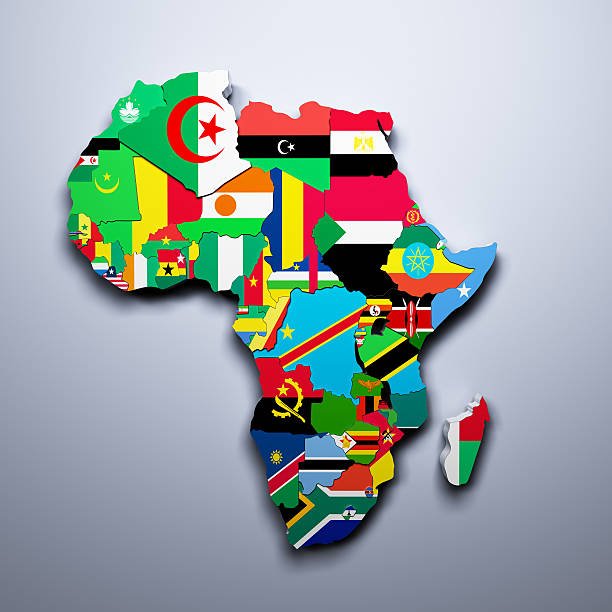
While no independent African country uses the Euro as its sole national currency in the same way as Eurozone members, the situation is nuanced. The Euro is indeed the official currency in several African territories that are politically integral parts of European countries, such as France's overseas departments and regions like Mayotte and Réunion, and Spain's Canary Islands, Ceuta, and Melilla. Additionally, a significant number of West and Central African nations use the CFA Franc, a currency that maintains a fixed exchange rate with the Euro, impacting their economies profoundly. Understanding the complex relationship between the Euro and the African continent requires a look beyond simple currency adoption, delving into colonial legacies, monetary policy, and regional economic integration efforts.
Do Any Independent African Countries Officially Use the Euro?
The direct answer to whether any independent African countries use the Euro as their official national currency is no. Unlike countries within the European Union that have adopted the Euro, independent African nations maintain their own distinct currencies. This allows them to implement independent monetary policies tailored to their specific economic conditions, such as managing inflation, interest rates, and exchange rates to foster economic growth and stability.
Many African countries have a strong sense of monetary sovereignty, viewing their national currency as a symbol of their economic and political independence. The adoption of a foreign currency like the Euro would entail surrendering control over crucial economic levers, which most independent nations are unwilling to do.
African Regions Where the Euro IS the Official Currency
Although no independent African nation uses the Euro, there are several territories geographically located in or near Africa where the Euro is the official and sole legal tender. These regions are not independent African countries but are politically integrated parts of European nations.
French Overseas Departments and Regions (DROMs)
France maintains several overseas departments and regions (DROMs) that are integral parts of the French Republic and, by extension, the European Union. As such, these territories are part of the Eurozone and use the Euro as their official currency. These include:
- Mayotte: An island department in the Indian Ocean, between Madagascar and the coast of Mozambique. It became an overseas department in 2011 and uses the Euro.
- Réunion: Another island department in the Indian Ocean, east of Madagascar. Réunion has been a French department since 1946 and uses the Euro.
These regions function economically and politically much like metropolitan France, with their financial systems fully integrated into the Eurozone framework. Residents use the Euro for all transactions, and their economies are subject to European Central Bank policies.
Spanish Overseas Territories and Autonomous Cities
Spain also has territories that are geographically located in Africa or its vicinity and officially use the Euro:
- Canary Islands: An archipelago in the Atlantic Ocean, off the coast of northwestern Africa. The Canary Islands are one of Spain's 17 autonomous communities and are fully integrated into the Eurozone, using the Euro.
- Ceuta and Melilla: Two autonomous cities of Spain located on the north African coast, bordering Morocco. As integral parts of Spain, they use the Euro as their official currency.
Similar to the French DROMs, these Spanish territories operate under the same monetary policies as mainland Spain and the broader Eurozone, making the Euro their everyday currency.
Portuguese Autonomous Regions
While not on the African mainland, the Portuguese autonomous region of Madeira is an archipelago in the North Atlantic Ocean, geologically and geographically closer to the African continent than Europe. As an integral part of Portugal, Madeira also uses the Euro as its official currency.
The CFA Franc: A Euro-Pegged African Currency
Beyond the direct use of the Euro in European overseas territories, a significant and economically impactful relationship exists through the CFA Franc. The CFA Franc is a common currency used by fourteen countries in West and Central Africa. This currency system has historical ties to France and currently maintains a fixed exchange rate with the Euro.
Origins and Structure of the CFA Franc
The CFA Franc (originally Franc of the French Colonies in Africa, now more commonly known as Franc of the Financial Community of Africa for West Africa and Financial Cooperation in Central Africa for Central Africa) was created in 1945. It was initially pegged to the French Franc. With the introduction of the Euro in 1999, the CFA Franc's peg shifted directly to the Euro.
There are two distinct CFA Franc zones, each with its own central bank:
West African Economic and Monetary Union (WAEMU or UEMOA)
- Benin
- Burkina Faso
- Côte d'Ivoire
- Guinea-Bissau
- Mali
- Niger
- Senegal
- Togo
These eight countries use the West African CFA Franc (XOF), managed by the Central Bank of West African States (BCEAO).
Central African Economic and Monetary Community (CEMAC)
- Cameroon
- Central African Republic
- Chad
- Republic of the Congo
- Equatorial Guinea
- Gabon
These six countries use the Central African CFA Franc (XAF), managed by the Bank of Central African States (BEAC).
Both CFA Francs are convertible with the Euro at a fixed rate: 1 Euro = 655.957 CFA Francs. This convertibility is guaranteed by the French Treasury, which requires the CFA Franc zone countries to deposit a portion of their foreign exchange reserves (historically 50%, though this has been subject to change and debate) with the French Treasury. This arrangement provides stability to the CFA Franc but also raises questions about monetary sovereignty and economic independence.
Economic Implications of the Euro Peg
The fixed peg to the Euro offers several benefits and drawbacks for the CFA Franc zone countries:
Benefits:
- Currency Stability: The fixed exchange rate protects against large fluctuations, reducing uncertainty for businesses and investors.
- Low Inflation: The peg to the strong Euro often helps these countries maintain lower and more stable inflation rates compared to countries with floating currencies.
- Facilitated Trade: Trade with Eurozone countries is simplified, as exchange rate risks are eliminated.
- Credibility: The French Treasury's guarantee provides a degree of international credibility and confidence in the CFA Franc.
Drawbacks:
- Loss of Monetary Autonomy: Countries cannot devalue their currency to boost exports or stimulate their economy during downturns. Their monetary policy is effectively dictated by the European Central Bank.
- Inflexibility: The fixed rate can make their exports more expensive and imports cheaper, potentially hindering domestic industrialization and leading to balance of payment issues.
- Controversy over Reserves: The requirement to deposit reserves with the French Treasury is a point of contention, seen by some as a remnant of colonial financial control.
- Limited Response to Shocks: Countries cannot use exchange rate adjustments to cushion the impact of external economic shocks, such as falling commodity prices.
The debate around the CFA Franc system is ongoing, with proponents highlighting its stability and critics arguing for greater monetary independence and flexibility for these African nations.
Why Don't More Independent African Countries Adopt the Euro?
The decision for an independent country to adopt a foreign currency like the Euro is complex, involving significant economic, political, and social considerations. Several key reasons explain why the vast majority of independent African countries have not adopted the Euro.
Sovereignty and Monetary Policy Control
One of the primary reasons is the desire to maintain monetary sovereignty. Adopting the Euro means relinquishing control over essential monetary policy tools, such as setting interest rates, managing the money supply, and intervening in foreign exchange markets. These tools are crucial for a central bank to respond to domestic economic conditions, stimulate growth, control inflation, and manage unemployment.
African nations, having largely achieved political independence in the mid-20th century, generally prioritize their ability to chart their own economic course. Handing over monetary authority to an external body, even one as reputable as the European Central Bank, is seen as a significant concession of national sovereignty.
Economic Divergence and Asymmetry
The economies of African countries are incredibly diverse, with varying levels of development, economic structures (e.g., resource-dependent, agricultural, service-based), and exposure to different external shocks. Integrating into a monetary union like the Eurozone would require a high degree of economic convergence and synchronization, which is challenging even for European member states.
African economies often experience different economic cycles, inflationary pressures, and fiscal situations compared to the Eurozone. A 'one-size-fits-all' monetary policy set by the European Central Bank would likely not be appropriate or beneficial for the specific needs of an African economy, potentially leading to adverse outcomes such for instance loss of competitiveness.
Lack of Institutional Alignment and Entry Criteria
Adopting the Euro is not merely a matter of desire; it involves meeting stringent economic criteria, famously known as the Maastricht Treaty criteria for EU members. These include limits on government debt and deficits, stable inflation rates, and long-term interest rates. Most African countries would find it extremely difficult to consistently meet these criteria due to structural economic challenges, development needs, and varying fiscal capacities.
Furthermore, the institutional framework required to support a Euro adoption, including robust legal systems, financial regulations, and economic governance structures, would be a monumental undertaking for many African nations.
Historical Context and Anti-Colonial Sentiment
The historical context of colonialism also plays a significant role. Many African countries gained independence from European colonial powers and are wary of any arrangements that could be perceived as a continuation of economic or monetary dependence. While the CFA Franc system is a legacy of French colonial ties, the current debates within these zones reflect a growing desire for greater monetary independence and reforms that address concerns about sovereignty.
The Impact of Euro-Pegged Currencies in Africa
The presence of Euro-pegged currencies, particularly the CFA Franc, has a multifaceted impact on the economies and societies of the fourteen African nations that use it.
Stability and Inflation Control
One of the most frequently cited benefits is the stability that the fixed exchange rate brings. In regions often susceptible to economic volatility, a stable currency can foster a more predictable environment for trade and investment. The peg to the Euro also typically helps these countries maintain lower inflation rates compared to their neighbors with independent, often depreciating, currencies. This stability can protect the purchasing power of citizens and provide a more secure economic foundation.
Trade Facilitation and Investment
For countries within the CFA Franc zones, the Euro peg simplifies trade with the Eurozone, which is a major trading partner. The elimination of exchange rate risk for transactions with Europe can reduce costs and uncertainties for businesses, potentially encouraging greater trade flows and foreign direct investment from European countries. This can be particularly beneficial for economies reliant on commodity exports to Europe.
Loss of Monetary Autonomy and Flexibility
The most significant drawback is the complete surrender of monetary policy autonomy. The central banks of the CFA Franc zones cannot independently adjust interest rates, conduct quantitative easing, or devalue their currency to address specific national economic challenges. For example, if a country faces a severe economic downturn or needs to boost its export competitiveness, it cannot devalue its currency to make exports cheaper. This inflexibility can make it harder to respond to external shocks or implement counter-cyclical policies.
Impact on Reserves and French Treasury Relationship
The requirement for CFA Franc countries to deposit a significant portion of their foreign exchange reserves (initially 100%, then 65%, and more recently 50% for WAEMU countries, with ongoing reforms) with the French Treasury remains a highly contentious issue. While the French Treasury guarantees the convertibility of the CFA Franc, critics argue that this arrangement provides France with undue influence over African monetary policy and limits the African nations' ability to manage their own financial resources. The discussions around the proposed ECO currency for West Africa include plans to sever these ties with the French Treasury.
Future of Currency in Africa: Towards Regional Integration?
The debates surrounding the CFA Franc highlight a broader trend in Africa: the push for greater regional economic integration and, potentially, the creation of new regional currencies. African leaders and policymakers recognize the benefits of economic blocs for fostering trade, development, and collective bargaining power.
The ECOWAS Single Currency Project (ECO)
One of the most prominent initiatives is the aspiration of the Economic Community of West African States (ECOWAS) to establish a single currency, known as the ECO. This project aims to integrate the economies of its fifteen member states, including the eight WAEMU countries, into a unified monetary zone. The goal is to promote trade, reduce transaction costs, and enhance macroeconomic stability across West Africa.
However, the implementation of the ECO has faced numerous delays due to difficulties in meeting convergence criteria (e.g., inflation targets, fiscal deficits, reserve adequacy) and achieving political consensus among diverse economies. The proposed timeline has been pushed back multiple times, but the commitment to a regional currency remains strong, as evidenced by ongoing reforms within the WAEMU bloc.
Challenges and Opportunities for African Monetary Integration
Creating a successful monetary union in Africa presents significant challenges:
- Economic Heterogeneity: The vast differences in economic structures, levels of development, and fiscal discipline among potential member states.
- Political Will and Governance: Sustaining the political commitment and establishing robust governance structures to ensure adherence to common rules.
- External Shocks: Managing the impact of external shocks (e.g., commodity price volatility, climate change) on a diverse set of economies with a single monetary policy.
Despite these challenges, the opportunities are substantial. A successful regional currency could lead to:
- Increased Intra-African Trade: Removing currency barriers and exchange rate risks can significantly boost trade within the continent.
- Enhanced Macroeconomic Stability: Greater discipline and coordination could lead to more stable economic environments.
- Reduced Transaction Costs: Eliminating the need for multiple currency conversions saves businesses and individuals money.
- Stronger Global Voice: A unified economic bloc could have greater influence in global financial and trade negotiations.
Conclusion
In conclusion, while no independent country in Africa uses the Euro as its national currency, the relationship between the Euro and the African continent is intricate. The Euro is indeed the official currency in specific African territories that are politically integrated parts of France, Spain, and Portugal. Furthermore, the CFA Franc, used by fourteen West and Central African nations, maintains a fixed and guaranteed peg to the Euro, providing stability but also raising questions about monetary sovereignty. The ongoing debates surrounding the CFA Franc and the ambitious plans for regional currencies like the ECO underscore Africa's complex journey towards greater economic independence and robust regional integration. These efforts reflect a continent striving to define its own monetary future while navigating the legacies of its past and the realities of global finance.
Enjoyed this read?
Share it with your friends and colleagues.