Which Country In Africa Has Volcano

BSC Insights Admin
September 30, 2026
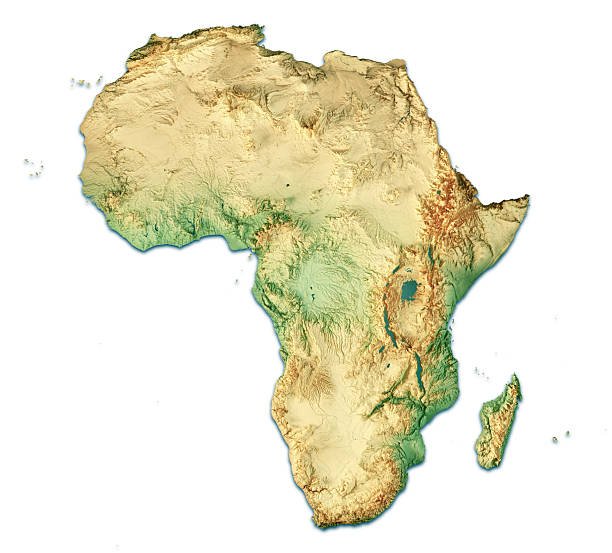
Identifying which country in Africa has volcano activity requires a look at the tectonic forces currently shaping the continent, particularly along the East African Rift. From the fiery lava lakes of the Democratic Republic of the Congo to the salt-encrusted peaks of Ethiopia, several nations host active, dormant, and extinct volcanic systems. Understanding these geographic features is essential for comprehending the geological evolution of the African plate and the unique ecosystems that thrive in these volcanic soils.
The presence of these giants influences everything from local agriculture to international tourism and disaster management protocols. This article provides a comprehensive guide to the nations across the continent where volcanic activity remains a defining feature of the landscape.
These are the Countries and the Details on Which Country In Africa Has Volcano
When tourists and geologists ask about the African country which has volcano sites that are currently active, the answer involves several regions spanning from the Atlantic islands to the Horn of Africa. The continent is home to some of the most unique volcanic structures in the world, including the only volcano that erupts "cold" carbonatite lava and the most active lava lakes on the planet. These geological wonders are not just scattered randomly but follow specific fault lines and hotspots where the Earth's crust is thin or actively pulling apart. Below, we explore the top twelve nations that are home to these powerful geological features, providing insight into their history, current status, and impact on the surrounding environment.
1. Democratic Republic of the Congo
The Democratic Republic of the Congo is home to some of the most dangerous and active volcanoes in the world, primarily located within the Virunga National Park. Mount Nyiragongo is the most famous, known globally for hosting the largest persistent lava lake in its crater, which can be seen glowing from miles away. In May 2021, Nyiragongo erupted, forcing thousands of people to flee the nearby city of Goma as lava flowed toward residential areas. Its neighbor, Mount Nyamuragira, is considered Africa’s most active volcano, having erupted over forty times since the late nineteenth century. The lava from these volcanoes is unusually fluid, moving at speeds that can outrun humans, which presents a constant challenge for local authorities and humanitarian organizations. These volcanoes are part of the Albertine Rift, and their fertile slopes provide rich soil for diverse flora and fauna, including the endangered mountain gorillas that call this region home.
2. Ethiopia
Ethiopia is a primary example of a country in Africa with volcano activity that defines its northern landscape, specifically in the Danakil Depression. Erta Ale, which means "Smoking Mountain" in the local Afar language, is a basaltic shield volcano that has maintained a continuous lava lake for decades, making it one of the few such sites in the world. The Erta Ale range is part of the Afar Triple Junction, where three tectonic plates are pulling away from each other, creating a unique geological environment. Visitors to this region can witness bubbling mud pots, colorful salt flats, and sulfur springs at Dallol, which sits atop a buried volcano. The heat in this region is some of the highest recorded on Earth, and the volcanic activity provides a stark, alien-like beauty that attracts researchers and extreme travelers. The volcanic history of Ethiopia is also linked to its ancient civilizations, as obsidian from volcanic eruptions was used to create tools and weapons thousands of years ago.
3. Tanzania
Tanzania is home to the most famous peak on the continent, Mount Kilimanjaro, which is a dormant stratovolcano composed of three distinct cones: Kibo, Mawenzi, and Shira. While Kilimanjaro has not erupted in modern history, it remains a dormant giant that still experiences fumarolic activity in its crater. Further to the north sits Ol Doinyo Lengai, which translates to "Mountain of God" in the Maasai language. This is the only active volcano in the world that erupts natrocarbonatite lava, which is much cooler and more liquid than the silicate lava found elsewhere. This unique lava appears black in the sun and turns white when it comes into contact with moisture or rain, creating a ghostly landscape on its slopes. The volcanic ash from these systems has historically enriched the soil of the Serengeti plains, facilitating the massive migrations of wildebeest and zebras that depend on nutrient-rich grasses.
4. Cameroon
Mount Cameroon, locally known as Mango ma Ndebomi or "The Chariot of the Gods," is the most active volcano in West and Central Africa. It is a massive stratovolcano that rises directly from the coast of the Atlantic Ocean to an altitude of over four thousand meters. The volcano has a long history of frequent eruptions, with significant events recorded in 1999 and 2000 that sent lava flows toward the sea and disrupted local infrastructure. Mount Cameroon is unique because it features over one hundred small cinder cones along its flanks, indicating a complex and widespread magma system. Every year, the "Race of Hope" takes place on its steep slopes, where athletes from around the world test their endurance against the volcanic terrain. The volcanic soil here is incredibly fertile, supporting vast plantations of tea, rubber, and bananas that form the backbone of the local economy.
5. Cape Verde
Cape Verde is an Atlantic archipelago where the island of Fogo is dominated by a single, massive active volcano known as Pico do Fogo. The volcano rises nearly three thousand meters above sea level and is located within a large caldera known as Chã das Caldeiras. The most recent eruption occurred in late 2014 and lasted until early 2015, destroying two villages and displacing over a thousand residents who lived inside the caldera. Despite the risks, the local population continues to return to the volcanic slopes because the ash provides excellent soil for growing grapes used in the famous Fogo wine. The volcano is a shield volcano that has transitioned into a stratovolcano over time, showing the long-term evolution of hotspot activity in the Atlantic. Pico do Fogo remains a major tourist attraction, with hiking trails leading to the summit where visitors can look down into the smoking vents.
6. Kenya
Kenya features several spectacular volcanic landmarks along the Great Rift Valley, including Mount Longonot, Mount Suswa, and the massive Mount Kenya. Mount Longonot is a dormant stratovolcano known for its nearly perfect circular crater, which contains a dense forest that has developed in its sheltered interior. Mount Suswa is particularly interesting to geologists because it features a unique "crater within a crater" and a complex system of lava tubes that can be explored by adventurers. While these volcanoes have not erupted recently, the presence of geothermal energy at places like Olkaria proves that the underlying magma is still very much active. Kenya has successfully harnessed this volcanic heat to become a global leader in geothermal power production, providing a clean energy source for its growing economy. Mount Kenya, while extinct, was once a massive volcano that rivaled Kilimanjaro in height before millions of years of erosion carved its jagged peaks.
7. Rwanda
Rwanda’s northern border is defined by the Virunga Mountains, a chain of eight volcanoes that it shares with the DR Congo and Uganda. Mount Karisimbi is the highest of these, often covered in a dusting of snow despite its proximity to the equator. Mount Bisoke is another prominent peak in Rwanda, featuring a stunning crater lake at its summit that is a popular destination for hikers. These volcanoes are currently dormant, but their geological presence has created the high-altitude environment necessary for the survival of the mountain gorillas. The volcanic soil in Rwanda is intensely cultivated, with terraced farms clinging to the steep hillsides, producing some of the finest coffee and tea on the continent. The proximity to the active Nyiragongo across the border means that Rwanda remains vigilant about seismic activity and the potential for trans-border volcanic hazards.
8. Comoros
The Comoros islands in the Indian Ocean are home to Mount Karthala, which is one of the largest and most active volcanoes in the world. Karthala is a shield volcano that forms most of the landmass of Grande Comore, the largest island in the archipelago. It has a massive caldera measuring three by four kilometers and has erupted frequently over the last two centuries, with significant events in 2005 and 2006. These eruptions often release clouds of ash that can contaminate the island's limited fresh water supplies, posing a major risk to the local population. However, the volcanic activity also ensures the islands remain fertile and provides the basalt rock used in traditional Comorian construction. The volcano’s slopes are covered in thick tropical forest, which houses several endemic bird species that have evolved in isolation on this volcanic island.
9. Uganda
Uganda shares several volcanic peaks with its neighbors, but Mount Elgon on the border with Kenya is its most significant volcanic feature. While Mount Elgon is extinct, it is estimated to be one of the oldest volcanoes in Africa and possesses the largest intact caldera in the world. The mountain’s base covers a massive area, and its fertile slopes are famous for producing high-quality Arabica coffee. On the western side of the country, the Queen Elizabeth National Park contains numerous volcanic explosion craters, which have formed beautiful lakes like Lake Katwe. These craters are a result of violent gaseous eruptions in the distant past that left circular scars on the landscape. Uganda also shares the slopes of Mount Muhabura and Mount Gahinga with Rwanda, which are part of the volcanic chain that shelters the region's famous primates.
10. Chad
Deep in the Sahara Desert, the Tibesti Mountains of Chad host some of the most remote and mysterious volcanoes on the continent. Emi Koussi is the highest point in the Sahara, a massive shield volcano that rises over three thousand meters and features two large, nested calderas. Because of its extreme isolation, very few people have visited Emi Koussi, but satellite imagery reveals a landscape of frozen lava flows and salt-crusted craters. Another notable peak is Toussidé, which is believed to be one of the youngest volcanoes in the range and still shows signs of fumarolic activity. These volcanoes are significant because they indicate that volcanic activity can occur far from tectonic plate boundaries, likely driven by a mantle plume beneath the Saharan crust. The existence of these peaks in such an arid environment creates unique microclimates where small amounts of vegetation can survive.
11. Djibouti
Djibouti is located at the center of the Afar Depression, a region where the Earth's crust is literally tearing apart to form a new ocean basin. The Ardoukôba volcano is the most recent to erupt in this area, having formed during a brief but intense event in 1978. This eruption was significant because it allowed scientists to observe the process of seafloor spreading occurring on dry land. The landscape around Ardoukôba is dominated by fresh, black basaltic lava and deep fissures that run parallel to the rift. Nearby, Lake Assal sits in a volcanic crater and is the lowest point in Africa, surrounded by dormant volcanic cones and vast salt pans. The intense geothermal activity in Djibouti is being explored for power generation, as the country sits atop one of the most thermally active zones on the planet.
12. Equatorial Guinea
Equatorial Guinea's island of Bioko is entirely volcanic in origin, consisting of three massive shield volcanoes that have merged over time. Pico Basile is the highest of these, rising over three thousand meters and providing a dramatic backdrop for the capital city of Malabo. The volcanoes on Bioko are considered dormant, but their steep, forested slopes are vital for the island's ecology and water catchment systems. The volcanic soil supports unique biodiversity, including several species of rare primates that are found only on this island. The rugged volcanic coastline of Bioko features dramatic cliffs and black sand beaches, which are typical of islands formed by oceanic hotspots. While the mainland part of Equatorial Guinea is not volcanic, Bioko remains a classic example of the volcanic island chains that run along the West African coast.
Reasons Why These Countries Feature Volcano Sites in Africa
1. The East African Rift System: The most dominant reason for why so many African countries that have volcano activity are located in the east is the ongoing divergence of the African plate. This massive geological feature is essentially a crack in the Earth's crust that is pulling the continent apart into two new plates, the Somalian and Nubian plates. As the crust thins and stretches, magma from the mantle rises to fill the gaps, leading to the creation of massive stratovolcanoes and shield volcanoes. This process has been active for millions of years and is responsible for the formation of the Virunga Mountains, the Ethiopian Highlands, and the Kenyan Rift. Without this tectonic activity, the iconic volcanic landscape of East Africa would not exist.
2. Hotspot Activity Beneath the Plate: Several African countries that have volcano features, such as Cape Verde, Comoros, and Chad, are located far away from plate boundaries. These volcanoes are formed by "hotspots," which are stationary plumes of intense heat in the Earth's mantle that melt the overriding tectonic plate. As the African plate moves slowly over these hotspots, a chain of volcanoes is formed, much like the Hawaiian Islands in the Pacific. In the case of the Tibesti Mountains in Chad, a hotspot beneath the Sahara has pushed up the crust to create massive peaks like Emi Koussi. Hotspot volcanoes tend to be shield volcanoes with broad, gentle slopes and can remain active for millions of years.
3. Tectonic Plate Triple Junctions: Ethiopia is a unique case because it sits atop a "Triple Junction," where the Red Sea, the Gulf of Aden, and the East African Rift all meet. This African country which has volcano sites like Erta Ale is at the epicenter of a massive geological breakup where the Earth's crust is extremely thin. This thinning allows for a constant supply of magma to reach the surface, creating permanent lava lakes and frequent fissure eruptions. The intense heat generated at this junction also creates hydrothermal systems and unique mineral deposits that are found nowhere else on the continent. The Triple Junction is one of the most geologically active spots on Earth, drawing scientists from every corner of the globe.
4. Continental Breakup and Magma Upwelling: The process of a continent breaking apart creates significant pressure and heat that forces magma toward the surface in various regions. This country in Africa with volcano sites often experiences seismic activity before an eruption, as the ground literally cracks open to allow magma to escape. This is particularly evident in nations like Djibouti, where the rift is so advanced that the land is dropping below sea level. The upwelling of magma is not always confined to the center of the rift but can occur along flanking faults, creating smaller cinder cones and volcanic fields. This widespread volcanic activity is a direct result of the enormous energy required to tear a continent asunder.
5. Formation of Oceanic-Continental Boundaries: Along the West African coast, the Cameroon Line represents a chain of volcanoes that stretches from the interior of the continent out into the Atlantic Ocean. African countries that have volcano peaks like Mount Cameroon are part of this line, which was formed by a unique fault system that allows magma to rise through both continental and oceanic crust. This has resulted in a variety of volcanic types, from the massive Mount Cameroon on land to the volcanic islands of Bioko, Sao Tome, and Principe in the sea. This intersection of different crustal types makes the Cameroon Line a fascinating study in how volcanic chains can transition across different environments. The activity along this line is driven by deep-seated mantle processes that have been active for over sixty million years.
6. Geothermal Reservoir Development: In many African countries that have volcano systems, the underlying heat is not just a hazard but a massive resource in the form of geothermal energy. As rainwater seeps into the ground near volcanic centers, it is heated by the magma below, creating high-pressure steam and hot water reservoirs. Countries like Kenya and Ethiopia are aggressively tapping into these reservoirs to provide sustainable electricity for their populations. This economic incentive has led to increased geological mapping and monitoring of volcanic regions, helping nations better understand their subterranean wealth. The development of geothermal energy shows that volcanoes are an integral part of the continent's future energy security and industrial growth.
Conclusion
In summary, identifying which country in Africa has volcano activity reveals a continent that is geologically alive and constantly changing. From the active lava lakes of the African country which has volcano sites in the DRC to the dormant giants of Tanzania and Kenya, these mountains are powerful symbols of nature's creative and destructive forces. While they pose significant risks to the communities living in their shadows, they also provide fertile soils, geothermal energy, and world-class tourism opportunities. The country in Africa with volcano features is often at the forefront of geological research, helping the world understand how tectonic plates move and interact. As the East African Rift continues to evolve, these volcanoes will remain central to the continent's geographic identity for millions of years to come. Ultimately, Africa's volcanoes are not just mountains of fire, but the very engines that continue to shape the African landscape.
Enjoyed this read?
Share it with your friends and colleagues.