Which Country Has The Most Debt In Africa

BSC Insights Admin
October 01, 2026
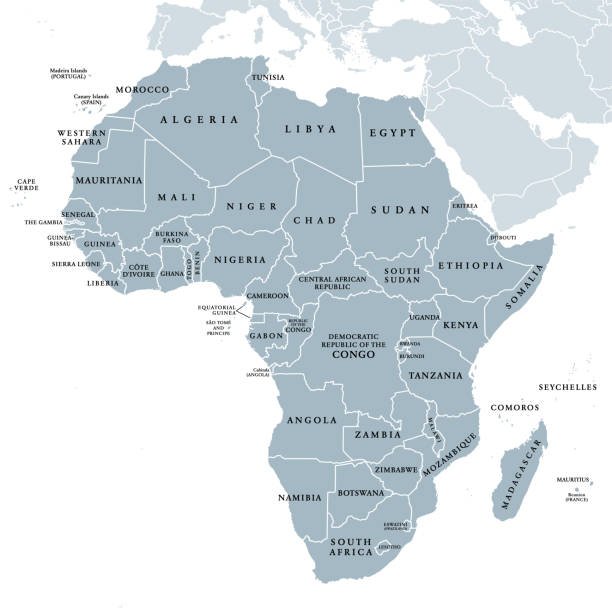
Understanding which country that has the most debt in Africa requires a careful distinction between the total monetary value of external borrowing and the debt-to-GDP ratio used by economists to measure fiscal sustainability. Currently, Egypt holds the largest absolute external debt on the continent, with figures surpassing 160 billion dollars, while nations like Sudan and Eritrea grapple with the highest ratios relative to their economic size. This financial landscape is critical for assessing the continent's long-term stability and its ability to fund future infrastructure projects in the face of rising global interest rates.
The accumulation of these liabilities often stems from a mix of ambitious developmental goals and global economic shocks that impact domestic currencies. By analyzing the data from the International Monetary Fund and the World Bank, we can identify which nations are currently carrying the heaviest financial burdens and why their situations vary so significantly across different regions.
These are the Countries that have the most debt in Africa
The issue of national debt is one of the most pressing challenges for the African continent in the 21st century. While borrowing is a standard tool for growth, the cost of servicing these loans has skyrocketed due to the depreciation of local currencies against the US dollar. Many nations now find themselves in a position where they must choose between paying back international creditors and providing basic services like healthcare and education to their citizens. The following list identifies the nations with the highest levels of debt, exploring both the absolute numbers and the economic contexts that led to their current fiscal positions. These examples highlight the diversity of the "debt trap" across the northern, southern, eastern, and western parts of the continent.
1. Egypt
Egypt is currently the African country which has the most debt in absolute terms, with its external debt reaching approximately 165 billion dollars in recent fiscal reports. This massive accumulation of credit was largely driven by the government's aggressive pursuit of mega-infrastructure projects, such as the construction of the New Administrative Capital and the expansion of the Suez Canal. While these projects aim to modernize the nation and create jobs, they have placed an enormous strain on the national treasury, especially as the Egyptian Pound has faced significant devaluation. The country has had to enter into several agreements with the IMF to secure bailouts and stabilize its economy, which often comes with strict austerity requirements. Egypt's strategic importance in the Middle East and Africa allows it to continue accessing credit markets, but the sheer volume of its repayment schedule remains a major concern for global analysts. For many Egyptians, the weight of this debt is felt through rising inflation and the high cost of imported goods, as the government prioritizes debt service over domestic subsidies.
2. South Africa
South Africa possesses the largest total public debt on the continent, which currently stands at over 250 billion dollars, although a significant portion of this is held domestically. The nation's fiscal challenges are deeply linked to the struggles of its state-owned enterprises, particularly the power utility Eskom, which has required massive government bailouts to remain operational. Unlike many other nations, South Africa has a very deep and sophisticated internal bond market, which allows it to borrow in its own currency, the Rand, reducing some of the risks associated with foreign exchange. However, the slow rate of economic growth over the last decade has caused the debt-to-GDP ratio to climb toward 75 percent, prompting concerns from international rating agencies. The government is currently working on a "fiscal consolidation" plan to narrow the budget deficit, but high levels of unemployment and social inequality make cutting spending politically difficult. South Africa remains a primary example of how an industrialized economy can still fall into a cycle of high borrowing to maintain failing infrastructure and social safety nets.
3. Nigeria
Nigeria is a primary country in Africa that has the most debt concerns in the West African sub-region, with its total public debt recently crossing the 100 billion dollar mark. Although its debt-to-GDP ratio is relatively low compared to its peers, the real problem for Nigeria is its debt-service-to-revenue ratio, which has at times exceeded 90 percent. This means that for every naira the government earns through taxes and oil, almost all of it goes toward paying the interest on existing loans. Nigeria has borrowed heavily from both the domestic market and international lenders like China to fund railways and power plants that have yet to show significant economic returns. The recent removal of fuel subsidies and the floating of the naira were attempts to free up revenue, but these moves have also increased the cost of living for the population of over 200 million. As the largest economy on the continent, Nigeria's ability to manage its debt is vital for the stability of the entire ECOWAS region, making its fiscal policies a subject of intense international scrutiny.
4. Sudan
Sudan is frequently cited as the country in Africa having the most debt relative to its economic output, with a debt-to-GDP ratio that has hovered above 180 percent. For decades, Sudan was excluded from international debt relief programs due to political sanctions and internal conflicts, causing interest and arrears to accumulate to unmanageable levels. While the country was on the verge of receiving massive debt forgiveness under the Heavily Indebted Poor Countries initiative, the recent outbreak of civil war has derailed those efforts and plunged the nation into a humanitarian and financial abyss. Most of Sudan's debt is owed to bilateral creditors and multilateral institutions that cannot currently engage with the nation due to the lack of a stable government. The destruction of infrastructure and the collapse of the oil and agricultural sectors mean that Sudan has almost no means of generating the revenue needed to even begin addressing its liabilities. Sudan remains a tragic example of how prolonged conflict and political isolation can turn manageable debt into a permanent obstacle to national recovery.
5. Eritrea
Eritrea maintains one of the highest debt-to-GDP ratios in the world, often estimated at over 175 percent, although official data is difficult to verify due to the nation's isolated nature. The country's economy is largely closed, and the government relies on a command structure that prioritizes military spending and self-reliance over international trade. Much of Eritrea's debt is domestic, owed to its own central bank and state-controlled institutions, but it also carries significant obligations to foreign partners who have funded its mining and port developments. The lack of a vibrant private sector means that the government has few ways to grow the economy out of its debt, leading to a state of permanent fiscal stagnation. International human rights organizations have also pointed out that the nation's "national service" program is often used as a form of cheap labor to support state-led projects that are funded by this debt. Eritrea's debt situation is unique because it exists outside the traditional global financial system, making it resistant to standard IMF or World Bank intervention strategies.
6. Zambia
Zambia gained international notoriety in 2020 when it became the first African countries that have the most debt to default on its sovereign bonds during the global pandemic. The nation had borrowed billions of dollars, particularly from Chinese lenders, to fund a massive expansion of its road and energy infrastructure during a period of high copper prices. When the price of copper fell and the pandemic hit, the government found itself unable to meet its interest payments, leading to a long and painful restructuring process that only recently reached a resolution. Zambia's case became a "test case" for the G20 Common Framework, as it required the coordination of Western bondholders and Chinese state banks, who often have different priorities. The restructuring has involved significant "haircuts" for lenders and a commitment from the Zambian government to implement deep economic reforms to prevent a future crisis. Zambia's experience serves as a warning to other resource-dependent nations about the dangers of over-borrowing during commodity booms without adequate fiscal buffers.
7. Ghana
Ghana, once considered the "poster child" for African economic success, shocked the world in 2022 by suspending payments on most of its external debt following a severe currency crisis. The nation's debt-to-GDP ratio had climbed to nearly 90 percent, fueled by high spending, a large public sector wage bill, and a sudden loss of access to international capital markets. To secure a 3 billion dollar bailout from the IMF, Ghana had to launch a domestic debt exchange program that forced local banks and individual pensioners to take losses on their investments. This move caused significant social unrest and a temporary collapse in the value of the Ghanaian Cedi, which is now slowly recovering. Ghana is currently in the process of negotiating with its external creditors to reduce its total debt burden and restore its reputation as a safe place for investment. The situation in Ghana illustrates how even relatively stable democracies can quickly fall into debt distress if they become too reliant on high-interest commercial borrowing to fund recurring expenses.
8. Kenya
Kenya is often included in discussions about African countries that have the most debt because of its high-profile borrowing for the Standard Gauge Railway and other major infrastructure projects. The nation's debt has grown to over 70 billion dollars, with a significant portion owed to the Export-Import Bank of China and private Eurobond holders. While Kenya's economy is one of the most dynamic in East Africa, the cost of servicing this debt has forced the government to introduce a series of controversial new taxes that have led to widespread public protests. There is a growing national debate in Kenya regarding the "debt trap" narrative, as many citizens feel that the benefits of the new infrastructure have not yet trickled down to the average taxpayer. In early 2024, Kenya successfully issued a new Eurobond to pay off an older one, avoiding a potential default but at a much higher interest rate. Kenya remains a critical hub for regional trade, but its fiscal future depends on its ability to balance infrastructure needs with the growing demands for social spending from its young population.
9. Angola
Angola possesses a massive debt burden that is uniquely tied to its oil production, with many of its loans being "oil-backed" agreements primarily with Chinese creditors. For years, Angola used its future oil revenues as collateral to secure the billions of dollars needed to rebuild the country after its long civil war. However, as oil prices fluctuated and production levels declined, the nation found itself sending a huge percentage of its daily oil output just to pay off the interest on these loans. This strong dependence on a single commodity made Angola's debt levels extremely volatile, leading to a debt-to-GDP ratio that reached over 100 percent in 2020. Since then, the government has worked to diversify the economy and renegotiate its loan terms to move away from oil-backed borrowing. While the ratio has improved recently due to higher oil prices and currency reforms, the total volume of debt remains one of the highest in Southern Africa. Angola is a primary example of the "resource curse" where natural wealth is used to secure debt that can become a burden when market conditions change.
10. Tunisia
Tunisia is facing an increasingly precarious financial situation, with its debt-to-GDP ratio rising toward 80 percent amidst a period of political transition and social unrest. The country's economy has stagnated for over a decade, and the government has relied on external loans to pay the salaries of its massive public sector and to maintain expensive food and energy subsidies. Negotiations for a new IMF loan have been stalled for months because the leadership is reluctant to implement the "painful" reforms required, such as cutting subsidies for the poor. This delay has led to a shortage of foreign currency, making it difficult for Tunisia to import essential goods and pay back its existing debts. International rating agencies have downgraded Tunisia's credit rating to "junk" status, reflecting the high risk of a potential sovereign default in the near future. Tunisia's debt crisis is deeply intertwined with its struggle to build a stable democracy, as the economic pain of debt repayment threatens to undermine social cohesion. For many in the Mediterranean region, Tunisia's fiscal health is a barometer for the stability of the North African coast.
11. Ethiopia
Ethiopia recently made headlines as the latest African country which has the most debt challenges after defaulting on a 33 million dollar coupon payment for its only Eurobond in late 2023. The country's debt-to-GDP ratio is around 40 percent, which is low by global standards, but its lack of foreign exchange reserves has made it impossible to service its 28 billion dollars in external debt. Ethiopia's financial troubles were exacerbated by the two-year civil war in the Tigray region, which diverted billions from development to the military and caused many international donors to suspend aid. The government is currently seeking a massive debt restructuring under the G20 Common Framework, similar to the process undergone by Zambia. Ethiopia has used its debt to build world-class industrial parks and the Grand Ethiopian Renaissance Dam, hoping to become a manufacturing hub for the world. However, the disconnect between its long-term industrial vision and its short-term liquidity crisis has left the nation in a state of financial limbo. The success of Ethiopia's future depends on whether it can convince its diverse set of creditors, including China and Western nations, to agree on a shared relief plan.
12. Cabo Verde
Cabo Verde, a small island nation in the Atlantic, has one of the highest debt-to-GDP ratios on the continent, often exceeding 125 percent. As a country that is almost entirely dependent on tourism, Cabo Verde was uniquely devastated by the global travel shutdowns during the COVID-19 pandemic, which saw its revenue disappear overnight. To keep the state functioning and protect its high standard of human development, the government had to increase its borrowing significantly from multilateral partners. Much of Cabo Verde's debt is "concessional," meaning it has very low interest rates and long repayment periods, which makes it more manageable than the commercial debt of its larger neighbors. However, the sheer size of the debt relative to the country's limited natural resources means that any future economic shock could lead to a crisis. The government is currently focusing on "blue economy" projects and renewable energy to create new revenue streams to service its obligations. Cabo Verde remains a model for human development in Africa, but its mountain of debt is a constant shadow over its future prosperity.
13. Mozambique
Mozambique is still dealing with the aftermath of the "hidden debt" scandal, where over 2 billion dollars in illicit loans were taken out by state-owned companies without the knowledge of parliament or the IMF. This discovery in 2016 led to a total collapse of the country's currency and the suspension of international aid, plunging Mozambique into a years-long economic crisis. While the nation has since restructured much of this debt, the total burden remains high at over 14 billion dollars, and the legal battles over the fraudulent loans continue in international courts. Mozambique's hope for debt relief lies in its massive offshore natural gas reserves, which are expected to bring in billions of dollars in revenue in the coming decade. However, the ongoing insurgency in the northern Cabo Delgado province has delayed several major gas projects, prolonging the nation's financial misery. Mozambique serves as a cautionary tale about the importance of transparency and the devastating impact that corruption can have on a nation's fiscal health. The country's debt-to-GDP ratio remains among the highest in the region, requiring constant monitoring by international financial institutions.
14. Republic of the Congo
The Republic of the Congo, often called Congo-Brazzaville, has a debt-to-GDP ratio that has frequently topped 100 percent, primarily due to its over-reliance on oil exports and poor fiscal management. The nation has a history of taking out opaque loans from commodity traders, where future oil production is used to pay for current spending. This practice led to a situation where the government had little control over its own revenue, as the majority of its oil was already spoken for by creditors. In recent years, Congo-Brazzaville has worked with the IMF to restructure its debt, including significant deals with Chinese banks and private trading houses like Glencore. Despite these efforts, the nation remains at high risk of debt distress, as its economy has struggled to diversify beyond the petroleum sector. The government's ability to maintain social stability while adhering to IMF-mandated spending cuts is a major challenge for the current administration. For the people of Congo, the high national debt is a reminder of the need for better governance and more transparent management of the country's vast natural wealth.
15. Senegal
Senegal has seen its debt levels rise steadily over the last decade as the government implemented the "Plan Sénégal Émergent," a massive developmental strategy aimed at making the country a regional hub by 2035. The nation has borrowed heavily to build a new international airport, a high-speed regional train, and a new city on the outskirts of Dakar called Diamniadio. While these projects have helped Senegal maintain one of the highest growth rates in West Africa, they have also pushed the debt-to-GDP ratio toward 75 percent. Senegal has been successful in accessing the Eurobond market, but the rising cost of the dollar has increased the burden of these commercial loans. The recent discovery of offshore oil and gas is expected to provide the revenue needed to pay off these debts, but the government must manage these new resources carefully to avoid the mistakes of its neighbors. Senegal remains one of the most stable and democratic nations in Africa, and its ability to use debt for productive investment is a key reason for its continued regional influence. However, the new leadership in Dakar is currently reviewing all state contracts and debt obligations to ensure they are in the best interest of the Senegalese people.
| Nation | Estimated Total External Debt (USD) | Debt-to-GDP Ratio (Est.) | Primary Creditor Category |
|---|---|---|---|
| Egypt | $165 Billion | 92% | Multilateral & Bilateral |
| South Africa | $170 Billion (External Only) | 74% | Private Bondholders |
| Nigeria | $105 Billion | 41% | Domestic & China |
| Sudan | $60 Billion | 185% | Arrears & Bilateral |
| Zambia | $18 Billion | 115% | China & Eurobonds |
| Kenya | $72 Billion | 70% | China & Multilateral |
Reasons Why These Countries Have Highest Debt In Africa
1. Massive Investment in Infrastructure Mega-Projects: One of the primary reasons African countries that have the most debt find themselves in this position is the rush to modernize through large-scale construction. Nations like Ethiopia, Kenya, and Egypt have borrowed billions to build railways, dams, and new cities, believing that these assets would eventually pay for themselves through increased trade and industrialization. However, the time it takes for these projects to become profitable is often much longer than the repayment period of the loans, leading to a liquidity crisis. When the expected economic boom is delayed, governments are left with massive bills and limited revenue to cover them.
2. Devastating Impact of Global Economic Shocks: The COVID-19 pandemic and the subsequent war in Ukraine acted as a "perfect storm" for many African economies, pushing them toward debt distress. Many countries in Africa that have the most debt saw their primary sources of income, such as tourism and commodity exports, vanish overnight during the lockdowns. At the same time, the cost of importing fuel and grain skyrocketed, forcing governments to borrow emergency funds to prevent social collapse. This unexpected surge in borrowing occurred at a time when interest rates were beginning to rise globally, making the new debt much more expensive than previous loans.
3. Sustained Currency Depreciation Against the Dollar: Because a significant portion of the debt in African countries that have the most debt is denominated in US dollars, any drop in the value of the local currency makes the debt more expensive to repay. In countries like Nigeria, Ghana, and Kenya, the local currencies have lost substantial value over the last two years, effectively increasing the size of their debt without any new borrowing. This means that even if a government is fiscally responsible, they can still fall into a debt crisis simply because of global exchange rate movements. This "original sin" of borrowing in foreign currency remains the single biggest driver of financial instability across the continent.
4. High Interest Rates on Commercial Borrowing: In the past decade, many African nations shifted away from low-interest loans from the World Bank toward high-interest Eurobonds and private bank loans. While this provided quick cash with no "policy strings" attached, it also meant that the country in Africa has the most debt was paying 8 to 12 percent interest instead of 1 or 2 percent. As global interest rates rose in response to inflation in the US and Europe, the cost of "rolling over" or refinancing this debt became unsustainable. Many nations are now stuck in a trap where they are borrowing new money just to pay the interest on their old commercial loans.
5. Lack of Diversified Export Bases: Many of the nations with the highest debt levels rely on a single commodity, such as oil in Angola or copper in Zambia, for their foreign exchange earnings. When the global price of these commodities drops, the African country which has the most debt suddenly finds itself unable to earn the dollars needed to pay its creditors. This over-reliance on a few raw materials makes these economies extremely fragile and prone to sudden debt crises. Without a strong manufacturing or service sector to provide a stable income, these nations remain at the mercy of global market fluctuations that they cannot control.
6. Challenges with Governance and Fiscal Transparency: In some cases, the accumulation of debt is a result of poor management or a lack of oversight in the borrowing process. The "hidden debt" scandal in Mozambique and the opaque loan terms in several other nations have shown that when debt is not properly tracked, it can quickly spiral out of control. Many African countries that have the most debt have struggled with corruption and inefficient tax systems, meaning that even when they do borrow for good projects, much of the money is lost to waste or stolen. Improving financial transparency is the most critical step for these nations to regain the trust of international investors and stabilize their economies.
Conclusion
In summary, identifying which country that has the most debt in Africa involves looking at both the staggering ratios in Sudan and Eritrea and the massive absolute borrowing of Egypt and South Africa. This debt crisis is the result of a complex interplay between ambitious developmental goals, global economic shocks, and the inherent risks of borrowing in foreign currencies. While the situation is challenging, the ongoing restructuring efforts in Zambia and Ghana provide a potential roadmap for how other nations might eventually achieve fiscal stability. The future of the continent depends on whether these African countries that have the most debt can successfully transition toward more sustainable revenue models and diversified economies. Ultimately, the country in Africa has the most debt today is the one that most urgently needs international cooperation and systemic reform to ensure its citizens can enjoy the benefits of a debt-free future.
Enjoyed this read?
Share it with your friends and colleagues.