Which Country Has The Most Pyramids In Africa

BSC Insights Admin
September 30, 2026
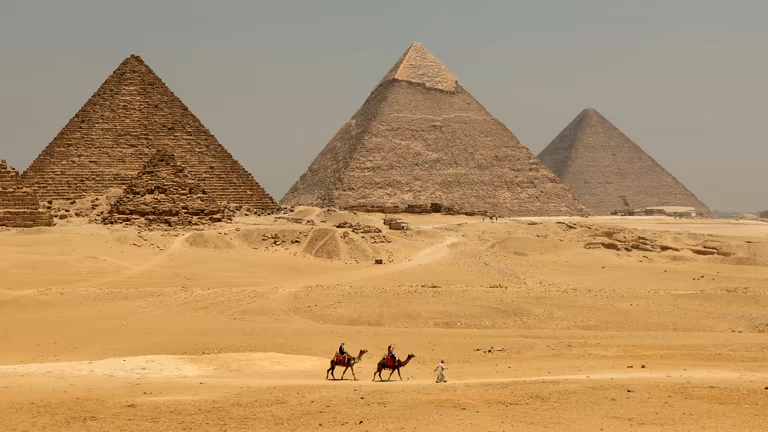
Sudan is currently the which country that has the most pyramids in Africa, surprising many people who traditionally associate these iconic ancient structures only with its neighbor to the north. While Egypt is famous for the immense scale and architectural precision of its monuments, the Kingdom of Kush in modern day Sudan constructed more than two hundred and fifty pyramids across several royal cemeteries. This archaeological density makes the Sudanese landscape a primary site for researchers studying the long history of Nile Valley civilizations and their spiritual beliefs.
The distribution of these ancient tombs across the continent reveals a fascinating history of cultural exchange and independent innovation among various African empires. Understanding the locations and origins of these structures helps to paint a more complete picture of the architectural heritage that spans from the Mediterranean coast down to the heart of West Africa.
These are the Countries that have the most pyramids in Africa
When discussing African countries that have the most pyramids, we often look at the history of the Nile civilizations, but other regions also possess unique pyramidal structures made from diverse materials like clay and stone. These structures served as tombs for royalty, monuments to gods, or symbolic markers of powerful dynasties that once ruled vast territories. Today, these sites are protected as historical treasures, offering tourists and historians a glimpse into the sophisticated engineering and organized societies of ancient Africa. Below are the nations that host these remarkable ancient constructions, ranked by their historical significance and the number of verified pyramidal sites found within their borders.
1. Sudan
Sudan is the African country which has the most pyramids by a significant margin, boasting between 200 and 255 verified ancient structures. These pyramids were built by the rulers of the Kingdom of Kush, an ancient power that flourished for centuries and even ruled over Egypt as the 25th Dynasty. The most famous concentration of these tombs is located at Meroe, where rows of steep sandstone structures rise from the desert sands to mark the resting places of kings and queens. Unlike the larger and more famous Egyptian versions, Sudanese pyramids are generally smaller with much steeper angles and often feature attached funerary chapels. The sites of Nuri and Jebel Barkal also contain numerous royal burials, showcasing the long term commitment of the Kushite people to this architectural form. Many of these pyramids suffered damage in the 19th century from treasure hunters, yet they remain one of the most striking and numerous archaeological features in the entire Saharan region.
2. Egypt
Egypt is undoubtedly the most famous location for pyramids in the world, containing approximately 118 to 138 identified structures across its ancient landscape. The most iconic of these are found on the Giza Plateau, where the Great Pyramid of Khufu stands as the last remaining wonder of the ancient world. Egyptian pyramids evolved from the early mastaba tombs to the Step Pyramid of Djoser at Saqqara and eventually to the smooth sided giants seen at Dahshur and Giza. These monuments were built primarily during the Old and Middle Kingdoms to serve as eternal homes for the Pharaohs, who were viewed as living gods on earth. The scale of Egyptian pyramid construction required a level of social organization and mathematical knowledge that still baffles modern engineers today. While Egypt has fewer individual pyramids than Sudan, the sheer volume of stone used in the Giza complex alone exceeds almost any other ancient construction project in human history.
3. Nigeria
Nigeria hosts a unique set of structures known as the Nsude Pyramids, which are located in the northern part of Igboland and represent a very different style of African architecture. These pyramids were made of clay and earth rather than stone, consisting of ten circular stepped structures that reached heights of up to ten meters. They were built as monuments to the god Ala and the forest spirits, serving as sacred sites for the local Igbo people before they eventually eroded over time. While most of these clay pyramids have succumbed to the elements and tropical rains, historical photographs and oral traditions confirm their existence and their importance in pre colonial West African society. The Nsude pyramids demonstrate that the desire to build monumental stepped structures was not limited to the Nile Valley but was a widespread human impulse across the continent. Modern efforts by cultural historians aim to document and preserve the memory of these earthen monuments as a vital part of Nigeria’s diverse architectural heritage.
4. Mali
Mali is home to the spectacular Tomb of Askia, a 17 meter tall pyramidal structure located in the city of Gao that was built in the late 15th century. This pyramid is a masterpiece of the Songhai Empire and was constructed by Askia Mohammed after his return from a pilgrimage to Mecca using traditional mud brick and timber techniques. The structure is characterized by the wooden scaffolding that permanently protrudes from its sides, allowing for easy re plastering of the mud exterior after the rainy season. It stands as a testament to the power and wealth of the Songhai Empire and the fusion of Islamic and traditional African architectural styles. The Tomb of Askia is recognized as a UNESCO World Heritage site and continues to be an active part of the community’s religious and social life. While it is a single monument rather than a cemetery of hundreds, its pyramidal form and cultural significance make Mali an essential part of the continent's pyramid history.
5. Algeria
Algeria contains several ancient pyramidal tombs known as Jedars and the Medracen, which are located in the northern mountainous regions and date back to the Berber and Numidian periods. The Medracen is a massive circular structure with a conical, pyramid like top that serves as the royal tomb for Numidian kings from the 3rd century BCE. Further west, the Jedars consist of thirteen square based pyramidal monuments built on hilltops near the city of Tiaret, likely dating between the 4th and 7th centuries CE. These structures blend indigenous North African traditions with Mediterranean influences, showcasing the complex history of the Berbers before the arrival of Arab dynasties. The interiors of the Jedars contain complex galleries and funerary chambers that were once decorated with elaborate carvings and inscriptions. These monuments are among the largest ancient stone structures in the Maghreb and highlight the sophisticated burial practices of the ancient inhabitants of countries in Africa that have the most pyramids in their northern reaches.
6. Libya
Libya is another North African nation that possesses pyramidal tombs, primarily those constructed by the Garamantes civilization in the southern desert regions. The Garamantes were a powerful desert dwelling culture that controlled trans Saharan trade routes and built small, steep sided pyramids at sites like Garama and the Wadi al Ajal. These structures were used as royal tombs and were often built close together in necropolises that resemble the smaller pyramid fields found in Sudan. While many of these tombs have been weathered by centuries of desert winds, their pyramidal form is still clearly visible to archaeologists and visitors. The use of pyramids in Libya suggests a shared funerary culture that spanned the entire Saharan desert, connecting the different peoples of the interior. These sites offer invaluable information about how ancient desert civilizations managed to build lasting monuments in some of the harshest environments on the planet.
7. Spain (Canary Islands, Africa)
The Canary Islands, which are geographically part of Africa although politically part of Spain, are home to the Pyramids of Güímar on the island of Tenerife. These structures consist of six rectangular, step shaped pyramids built from volcanic stone without the use of mortar. For many years, local residents believed these were simply piles of stones cleared from agricultural fields, but researchers like Thor Heyerdahl argued they were intentionally built monuments with astronomical alignments. The pyramids are strikingly similar in form to the step pyramids found in Sicily and parts of Central America, leading to various theories about ancient maritime travel. Today, the site is a well maintained ethnographic park that allows visitors to explore the origins of the original inhabitants, the Guanches. While the exact age and purpose of the Güímar pyramids remain a subject of academic debate, they represent another fascinating instance of pyramidal construction on the African continental shelf.
8. Mauritius
Mauritius, an island nation off the coast of East Africa, possesses a group of seven small stone pyramids located on the Plain Magnien. These pyramids are constructed from dark volcanic rock and feature tiered levels similar to the step pyramids found in other parts of the world. Much like the pyramids in the Canary Islands, there has been significant debate over whether these are modern agricultural clearings or ancient ceremonial monuments. Some independent researchers point to their precise construction and orientation as evidence of a lost maritime civilization that navigated the Indian Ocean. Regardless of their origin, the presence of these stone structures adds a layer of mystery to the history of the island. They serve as a reminder that the search for country in Africa has the most pyramids can lead to unexpected discoveries in the most remote island territories.
Comparison of Major Pyramid Sites in Africa
| Country | Estimated Number | Primary Material | Famous Site |
|---|---|---|---|
| Sudan | 250+ | Sandstone | Meroe |
| Egypt | 118-138 | Limestone/Granite | Giza |
| Algeria | 13+ | Stone | Tiaret |
| Nigeria | 10 | Clay/Earth | Nsude |
| Mali | 1 | Mud Brick | Tomb of Askia |
Reasons Why These Countries Built Pyramids in Africa
1. Religious Beliefs in Afterlife and Resurrection: The most common reason why civilizations in Sudan and Egypt built pyramids was the deep seated belief in the afterlife and the preservation of the royal soul. The pyramid was viewed as a "stairway to heaven" or a symbolic mound of creation that allowed the deceased ruler to ascend to the gods. By building a permanent and imposing structure, these empires hoped to protect the mummified remains and the funerary goods necessary for the journey to the next world. This religious dedication drove these nations to invest immense amounts of labor and resources into funerary architecture for thousands of years. The persistence of this tradition explains why we see hundreds of these tombs in the countries in Africa that have the most pyramids along the Nile.
2. Political Status and Imperial Legitimacy: Building a pyramid was the ultimate display of a ruler's power, wealth, and ability to command a large workforce. In the Kingdom of Kush, the construction of pyramids was a way for the kings to assert their independence and their right to rule, often imitating but also modifying the traditions of their Egyptian predecessors. A pyramid served as a permanent landmark that solidified a dynasty's legacy and projected an image of stability and divine favor to the subjects. For empires like the Songhai in Mali, the pyramidal form of the Tomb of Askia was a statement of Islamic piety combined with imperial grandeur. This architectural form became a universal symbol of authority across many different African cultures and historical periods.
3. Cultural Exchange and the Diffusion of Ideas: The high number of pyramids in Sudan compared to Egypt is a direct result of the cultural exchange that occurred between the two regions over several millennia. While Egypt stopped building large pyramids after the Middle Kingdom, the Kushites adopted and preserved the tradition, eventually building even more individual structures than their northern teachers. This transfer of knowledge was not a simple imitation but a process of adaptation where the Kushites developed their own unique aesthetic and engineering standards. This cross pollination of ideas can also be seen in North Africa, where Berber tribes adapted the pyramidal form for their own royal mausoleums. The history of the pyramid in Africa is a history of interconnected civilizations sharing and evolving a common architectural vocabulary.
4. Availability of Geological Resources: The specific locations of these pyramids were often dictated by the proximity to high quality building materials like limestone, sandstone, and volcanic rock. In Egypt, the abundance of limestone along the Nile cliffs made it possible to build the massive smooth sided pyramids of Giza. In Sudan, the reddish sandstone of the region provided the primary material for the steep pyramids of Meroe, which were carved directly from nearby quarries. In West Africa, where stone was less available, the Igbo and Songhai used clay and mud brick to achieve similar monumental forms. The environment provided the raw materials, and the local builders adapted their techniques to create the best possible version of a pyramid using what the land offered.
5. Observational and Astronomical Alignments: Many pyramids in Africa, including those in Egypt and the Canary Islands, show evidence of being aligned with specific celestial bodies or solar events. These structures often served as solar markers, with their points reflecting the rays of the sun god or their sides aligning with the cardinal directions. This astronomical precision indicates that the builders were not just concerned with burial but were also creating a link between the earth and the cosmos. The knowledge of mathematics and astronomy required to achieve these alignments was highly advanced in ancient African societies. By building these structures, ancient scientists and priests could track the seasons and maintain a sacred calendar for their people.
6. Protection Against Grave Robbers: While pyramids were grand displays of power, they were also intended to be secure fortresses to protect the royal treasures buried with the kings. The massive stone blocks and hidden internal chambers were designed to deter thieves and preserve the sanctity of the burial site. In later periods, such as the Meroitic era in Sudan, the burial chambers were often moved deep underground beneath the pyramid to provide an extra layer of security. Even the earthen pyramids of Nigeria were designed to be imposing structures that commanded respect and discouraged desecration. Although many pyramids were eventually looted, their design remains a testament to the ancient struggle between the desire for monumental display and the need for secure preservation.
Conclusion
In conclusion, when asking which country that has the most pyramids in Africa, the answer is Sudan, which preserves a vast and unique collection of over two hundred and fifty ancient Nubian structures. While Egypt remains the most iconic location for its massive Giza monuments, the sheer number of pyramids in Sudan showcases the endurance of this architectural tradition in the Kingdom of Kush. From the stone towers of the Nile to the clay steps of West Africa, these monuments remain a powerful symbol of the continent's historical complexity and spiritual depth. As modern archaeology continues to explore remote desert regions and forest sites, we may yet find even more evidence of pyramidal construction in the country in Africa has the most pyramids hidden beneath the earth. Ultimately, these structures are a shared human heritage that continues to inspire awe and curiosity in people across the globe.
Enjoyed this read?
Share it with your friends and colleagues.