Which Country Has Never Been Colonized In Africa

BSC Insights Admin
September 30, 2026
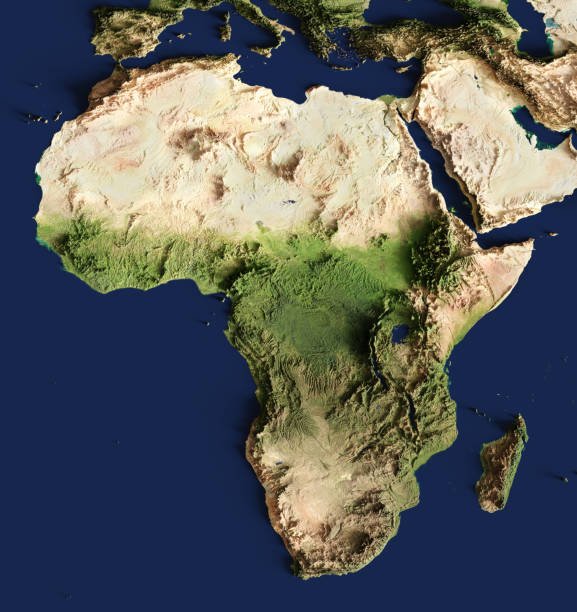
Identifying which country that has never been colonized in Africa involves looking at the unique historical trajectories of Ethiopia and Liberia during the period known as the Scramble for Africa. While Ethiopia successfully repelled European aggression through military might and strategic diplomacy, Liberia maintained its independence through its specific relationship with the United States and a preemptive declaration of sovereignty. These two nations stand as symbols of resilience and independent identity in a continent that was otherwise almost entirely partitioned by European powers during the nineteenth century.
The story of these nations is not merely about the absence of foreign rule but about the active preservation of culture and governance. Understanding their history provides a deeper perspective on the resistance movements that eventually led to the liberation of the rest of the continent.
These are the Countries that have never been colonized in Africa
The historical narrative of the continent is often dominated by the colonial era, yet the existence of African countries that have never been colonized offers a different perspective on African agency and survival. While nearly every other territory was falling under British, French, German, or Portuguese rule, these specific regions managed to navigate the turbulent waters of the late 1800s without losing their core sovereignty. This was achieved through a combination of military readiness, geographical barriers, and clever diplomatic maneuvering on the global stage. Here is a detailed examination of the histories and the specific circumstances that allowed these nations to remain independent throughout the colonial period.
1. Ethiopia
Ethiopia is the most prominent African country which has never been colonized, having famously defeated the Italian army at the Battle of Adwa in 1896. Under the leadership of Emperor Menelik II, Ethiopia mobilized a massive force of over 100,000 soldiers to defend its highlands against a modern European invader. This victory was a landmark event in world history, as it forced Italy to sign the Treaty of Addis Ababa and recognize Ethiopia as a fully sovereign state. Menelik II was a visionary leader who modernized his army with advanced weaponry purchased from various European powers, effectively turning their own technology against them. The rugged terrain of the Ethiopian Highlands also played a crucial role, making it extremely difficult for foreign troops to navigate and maintain supply lines. Ethiopia’s status as an ancient empire with a long history of centralized governance provided a unified front that was rare during the colonial era. Even the later Italian occupation from 1936 to 1941 is classified by historians as a military occupation rather than colonization because the Ethiopian government never surrendered and continued to fight until liberation.
2. Liberia
Liberia is often cited as the second country in Africa that has never been colonized, though its history is significantly different from that of Ethiopia. Founded in 1822 by the American Colonization Society, it served as a settlement for freed African Americans who wished to return to the continent of their ancestors. In 1847, the settlers declared Liberia an independent republic, making it the first democratic republic in Africa’s history. Because of its close ties to the United States, European powers like Great Britain and France were hesitant to claim the territory for fear of provoking American intervention. Liberia’s sovereignty was a strategic move to prevent it from being absorbed into the neighboring British or French colonies. While the settlers often had a complex and sometimes exclusionary relationship with the indigenous populations, the national entity itself remained free from European administrative control. The international community, including many European nations, eventually recognized Liberia’s independence, which allowed it to maintain a seat at the table of sovereign nations during the peak of the colonial period.
3. The Battle of Adwa and Military Resistance
The Battle of Adwa remains the definitive proof of Ethiopia’s status as a nation that could not be easily conquered by external forces. In the late nineteenth century, Italy attempted to expand its influence from Eritrea into the Ethiopian interior, relying on superior European military technology and tactical assumptions. However, they underestimated the strategic brilliance of Emperor Menelik II and the fierce loyalty of his diverse provincial armies. The battle resulted in a crushing defeat for the Italians, with thousands of their soldiers killed or captured, which sent shockwaves through the capitals of Europe. This military success ensured that Ethiopia was the only sub-Saharan country in Africa that has never been colonized during the initial Scramble for Africa. It also provided a blueprint for other African nations, showing that European armies were not invincible if met with a unified and well-equipped resistance. The psychological impact of this victory lasted for decades, serving as a beacon of hope for the Pan-African movement and the eventual decolonization of the rest of the continent.
4. The Distinction Between Occupation and Colonization
There is a frequent historical debate regarding Ethiopia’s status due to the five-year period of Italian rule under Benito Mussolini starting in 1936. However, international law and historical consensus maintain that this was a temporary military occupation rather than a colonial administration. During this time, Emperor Haile Selassie went into exile and famously addressed the League of Nations, appealing for justice and asserting Ethiopia’s continued sovereign rights. The Ethiopian Patriots, a resistance movement within the country, never ceased their guerrilla warfare against the Italian occupiers, making the territory ungovernable. By 1941, with the help of British and Commonwealth forces during World War II, the Italians were expelled and the Emperor returned to his throne. Unlike colonized territories, Ethiopia never had a settled colonial administration that replaced its indigenous government for a sustained period. This distinction is vital in confirming Ethiopia as an African country which has never been colonized in the formal sense of the word.
5. The Role of the American Colonization Society (ACS)
Liberia’s unique origins are tied to the American Colonization Society, a private organization in the United States that believed freed slaves should be repatriated to Africa. This group established the colony of Liberia with the support of the U.S. government, providing a level of informal protection that deterred European colonial ambitions. While the ACS initially managed the colony, the move toward independence in 1847 was driven by the settlers' desire for full self-governance and international recognition. By declaring themselves a republic, the Liberians pre-empted the Berlin Conference by several decades, establishing a legal precedent of sovereignty. European powers were forced to deal with Liberia through diplomatic treaties rather than colonial decrees, which was a significant deviation from the norm in West Africa. This relationship with the United States, while not a formal protectorate, acted as a powerful shield during the era when neighboring regions like Sierra Leone and Ivory Coast were being absorbed by Britain and France. Liberia thus remains a key example of countries in Africa that have never been colonized through proactive political declaration.
6. Strategic Diplomacy of Menelik II
Emperor Menelik II was not only a military leader but also a master of international diplomacy who played European powers against each other to protect his empire. He understood the rivalries between Italy, France, and Britain and used these tensions to secure arms deals and diplomatic recognition for Ethiopia. For example, he signed the Treaty of Wuchale with Italy, though he later famously rejected it when he discovered a translation discrepancy that attempted to turn Ethiopia into an Italian protectorate. His ability to navigate the complex web of European interests allowed him to maintain sovereign territorial integrity while his neighbors were being partitioned. Menelik also invested in modern infrastructure, such as the railway from Djibouti to Addis Ababa, which integrated Ethiopia into the global economy on its own terms. This combination of internal modernization and external diplomatic savvy ensured that Ethiopia remained a recognized player in the international arena. His legacy is that of a ruler who understood that survival in the nineteenth century required both a strong sword and a sharp pen.
7. Geography as a Natural Defense
The geography of the Horn of Africa provided a natural fortress that heavily favored the Ethiopian defense against colonial encroachment. The Ethiopian Highlands are characterized by steep escarpments, deep gorges, and high plateaus that make large-scale military movements incredibly difficult for those unfamiliar with the terrain. During the late nineteenth century, European armies relied heavily on heavy artillery and supply wagons, which were nearly impossible to move through the narrow mountain passes. The climate also presented a challenge, with high altitudes causing respiratory issues for foreign soldiers and the rugged landscape providing perfect cover for local guerrilla fighters. These topographical features allowed Ethiopian forces to employ hit-and-run tactics that exhausted and confused the Italian invaders. In many ways, the land itself was an ally in the fight to remain one of the African countries that have never been colonized. This geographic isolation also helped preserve Ethiopia’s unique Orthodox Christian culture and the Ge'ez language, which served as powerful unifying forces for the population.
8. The 1847 Declaration and International Law
Liberia’s declaration of independence in 1847 was a sophisticated legal maneuver that utilized Western concepts of international law to protect African land. By adopting a constitution modeled after that of the United States and declaring themselves a sovereign republic, the Liberian leaders forced European powers to acknowledge them as a peer. Britain was the first to recognize Liberia’s independence in 1848, followed by France and other major European nations, which effectively took Liberia off the table for colonial seizure. This legal status was crucial during the Berlin Conference of 1884, where Africa was divided among European powers; Liberia’s pre-existing treaties and recognized sovereignty meant it could not be legally partitioned. While the country faced significant pressure from British and French colonial administrations regarding its borders, its fundamental independence was never lost. This tactical use of sovereignty is why Liberia is remembered as a country in Africa that has never been colonized despite the immense pressure from surrounding colonial empires. It proved that political recognition could be just as effective as military force in the struggle for independence.
9. Cultural Unity and National Identity
One of the internal reasons why Ethiopia remained independent was its deep-seated sense of national identity and cultural unity that stretched back thousands of years. As one of the oldest continuous civilizations in the world, the Ethiopian people had a shared history, religion, and administrative structure that transcended local tribal divisions. The Solomonic dynasty, which claimed descent from King Solomon and the Queen of Sheba, provided a central authority that the people were willing to fight and die for. This sense of being part of an ancient and holy empire created a level of social cohesion that was often missing in other parts of Africa where colonial powers exploited ethnic divisions. During times of national crisis, even rival regional lords would set aside their differences to follow the Emperor in defense of the motherland. This internal strength made Ethiopia a difficult target for any colonial power looking for easy conquest through a "divide and rule" strategy. It remains a primary example of which country that has never been colonized in Africa due to its enduring and powerful national spirit.
10. The Significance for Pan-Africanism
The status of Ethiopia and Liberia as independent nations had a profound impact on the development of Pan-Africanism and the global struggle for black dignity. For millions of Africans living under colonial rule, and for the African diaspora in the Americas, these two countries were symbols of what was possible. Ethiopia, in particular, became a spiritual home for many, leading to the development of movements like Rastafarianism, which holds the Ethiopian Emperor in divine regard. The green, yellow, and red colors of the Ethiopian flag were adopted by many newly independent African nations in the 1960s as a tribute to its history of resistance. Liberia also served as a laboratory for black self-governance, showing that Africans and their descendants could manage a modern state without European supervision. These nations provided the intellectual and symbolic foundation for the eventual liberation of the entire continent, proving that African countries that have never been colonized were not just historical anomalies but beacons of a future free Africa. Their existence challenged the colonial narrative of African inferiority and provided a constant reminder of the continent’s long history of sovereignty.
Reasons Why These Countries Have Never Been Colonized in Africa
1. Decisive Military Victory at Adwa: Ethiopia’s victory over Italy in 1896 is the most significant reason it remained independent during the Scramble for Africa. The defeat of a European power by an African army forced the world to recognize Ethiopia’s sovereignty through formal treaties. This military strength acted as a permanent deterrent against future colonial ambitions by other European nations during that era. It remains a unique moment where an African country which has never been colonized successfully used modern warfare to protect its borders.
2. Informal Protection from the United States: Liberia benefited from a unique relationship with the U.S. government and the American Colonization Society, which acted as a diplomatic shield. While the U.S. did not have formal colonies in Africa, it maintained a "sphere of influence" over Liberia that discouraged European powers like Britain and France from attempting a full-scale takeover. This indirect association provided Liberia with the necessary breathing room to establish its own sovereign administration and international standing.
3. Advanced Strategic Leadership: Both nations were led by visionary figures who understood the global political landscape of the nineteenth century. Emperor Menelik II of Ethiopia and the early presidents of Liberia, such as Joseph Jenkins Roberts, were adept at using diplomacy and international law to their advantage. They successfully navigated treaties and established diplomatic missions in Europe, ensuring that their nations were seen as sovereign peers rather than territories to be claimed. This high-level leadership was essential for the survival of countries in Africa that have never been colonized.
4. Difficult Topography and Climate: The mountainous terrain of Ethiopia served as a formidable natural barrier that made foreign invasion a logistical nightmare. European armies, which were used to more open battlefields, found the Ethiopian highlands to be an impenetrable maze that favored local defenders. In Liberia, the dense coastal forests and the prevalence of tropical diseases like malaria also acted as a natural deterrent to early European settlers and military planners. Geography thus played a silent but vital role in the preservation of independence for these regions.
5. Early Adoption of Sovereign Legal Frameworks: Liberia’s 1847 constitution and declaration of independence were proactive steps that established the nation as a legal entity under international law before the peak of colonial expansion. By the time the Berlin Conference took place, Liberia was already a recognized republic with established diplomatic ties to major powers. Ethiopia similarly used formal treaties and a centralized imperial administration to present a unified and recognized state to the outside world. This legal foresight made it much harder for colonial powers to justify an "occupation of vacant land," a common excuse used elsewhere on the continent.
6. Ancient Cultural and Religious Institutions: Ethiopia’s long history as a centralized state with a unified religious identity provided a social foundation that was resistant to colonial subversion. The Ethiopian Orthodox Church acted as a unifying force that bolstered the authority of the Emperor and provided a shared sense of purpose among the diverse ethnic groups. In Liberia, the settlers brought with them Western-style education and governance structures that allowed them to interact with European powers on equal terms. These strong internal institutions ensured that both nations could maintain social order and administrative control without the need for foreign intervention, solidifying their status as African countries that have never been colonized throughout the centuries.
Conclusion
In summary, Ethiopia and Liberia remain the only two nations that successfully navigated the era of European expansion without losing their independence, making them the answer to which country that has never been colonized in Africa. Ethiopia’s path was one of military triumph and imperial diplomacy, while Liberia utilized a unique relationship with the United States and early legal declarations of sovereignty. Both nations served as vital symbols of hope and inspiration for the rest of the continent during the long struggle for decolonization. Their history reminds us that African agency and strategic leadership were always present, even during the most challenging periods of the nineteenth century. Today, the legacy of these African countries that have never been colonized continues to influence the cultural and political identity of the entire continent.
Enjoyed this read?
Share it with your friends and colleagues.