Which Country Has The Most Private Jets In Africa

BSC Insights Admin
September 30, 2026
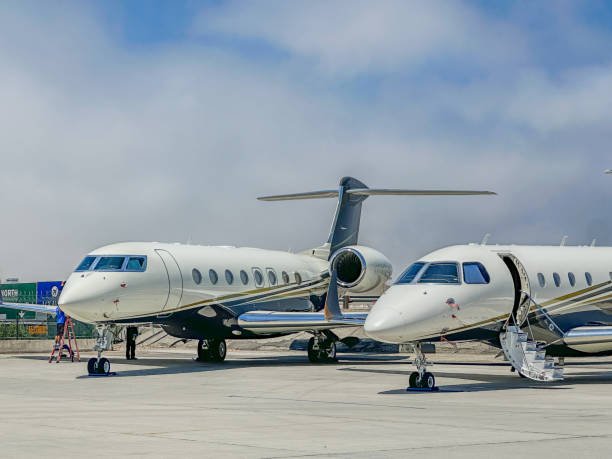
South Africa is currently the country in Africa with the most private jets, maintaining a fleet that serves its mature corporate sector and a large number of high-net-worth individuals. This dominance is supported by a robust aviation infrastructure and a long history of business travel within the Southern African Development Community which requires high levels of mobility. Nigeria and Egypt follow closely, reflecting the continent's growing demand for flexible and secure aerial transportation among the business elite who need to bypass traditional commercial travel limitations.
The rise of business aviation across the continent is a clear indicator of economic growth and the necessity for efficient travel between major commercial hubs that are often poorly connected by commercial airlines. This article will explore the specific nations where private aviation is most prevalent and the unique factors driving the expansion of this luxury market.
These are the Countries that have the most private jets in Africa
The distribution of private aircraft across the African continent is closely tied to the concentration of wealth, industrial activity, and the quality of existing transportation networks. While the majority of the population relies on commercial flights or road travel, the business elite and government officials in several nations have increasingly turned to private jets to facilitate rapid movement. These African countries that have the most private jets have developed dedicated terminals and maintenance hubs to cater to the growing number of Bombardier, Gulfstream, and Dassault aircraft. By examining the fleet sizes and ownership patterns in these regions, we can gain insight into the broader economic landscape of the continent.
1. South Africa
South Africa stands as the clear leader in the African business aviation sector, with a fleet of private jets estimated to be between 140 and 150 aircraft. The country’s sophisticated financial services industry and its extensive mining operations require frequent travel to remote areas and international markets, making private jets a business necessity rather than just a luxury. Lanseria International Airport in Johannesburg serves as the primary hub for business aviation, hosting several fixed-base operators and maintenance facilities. Many of the country's wealthiest individuals and largest corporations own or lease aircraft such as the Bombardier Global series and the Gulfstream G650 to maintain their global competitiveness. Furthermore, South Africa has a well-established market for pre-owned aircraft and charter services, allowing smaller companies to access private travel without the full cost of ownership. The presence of world-class maintenance, repair, and overhaul centers in Cape Town and Johannesburg further solidifies its position as the top destination for private aviation on the continent.
2. Nigeria
Nigeria follows as the second largest market for private aviation, with a fleet that typically ranges between 70 and 90 private jets. The country’s oil and gas sector, along with a booming entertainment industry and several high-profile religious organizations, drives the demand for private travel in West Africa. In Lagos and Abuja, owning a private jet is seen as a ultimate symbol of success and a practical tool for navigating the country's busy airspace and congested commercial terminals. High-net-worth individuals like Aliko Dangote and various top-tier entrepreneurs are known to operate some of the most advanced long-range jets in the world. The Nigerian government also maintains a significant presidential air fleet, which adds to the total number of private-category aircraft in the country. Despite fluctuations in the local currency, the demand for charter services remains high, especially during election cycles and major corporate events. Nigeria's business aviation landscape continues to grow as new sectors like fintech and telecommunications produce a new generation of wealthy executives who value time and privacy.
3. Egypt
Egypt is a major hub for private aviation in North Africa, boasting a fleet of approximately 40 to 50 private jets that primarily serve the business and political elite. The country’s geographic position as a gateway between Africa, the Middle East, and Europe makes it an ideal location for corporate flight operations. Cairo International Airport has dedicated facilities for private aircraft, and the government has recently invested in improving regional airports to accommodate luxury travel for its thriving tourism and real estate sectors. Egyptian billionaires and large conglomerates often use their aircraft to travel to the Gulf States and European capitals for investment meetings. The charter market in Egypt is also quite robust, catering to high-end tourists who wish to visit ancient sites in Luxor or Aswan with maximum comfort. As the Egyptian economy undergoes modernization and attracts more foreign direct investment, the number of registered private aircraft is expected to increase. The proximity to Mediterranean luxury hubs also encourages a steady flow of private jet traffic throughout the year.
4. Kenya
Kenya has emerged as a significant player in East African aviation, with a private jet fleet that is increasingly used for both business and high-end tourism. With around 30 to 40 private jets, Kenya serves as the regional headquarters for many multinational corporations operating in the Great Lakes region. Wilson Airport in Nairobi is one of the busiest airports for light aircraft and private jets in Africa, providing a hub for charter flights to safari parks and coastal resorts. The growth of the horticulture and tea industries has created a class of wealthy exporters who use private aircraft to monitor their operations across the country. Additionally, Kenya’s role as a diplomatic center for the United Nations and other international NGOs results in frequent private flight movements. The country has also seen a rise in fractional ownership and jet card programs, making it easier for local businesses to utilize private aviation services. Kenya’s aviation sector is well-regulated, which has helped build confidence among international aircraft owners and leasing companies.
5. Morocco
Morocco possesses a growing fleet of private jets, largely influenced by its strong ties to the European economy and its position as a luxury tourism destination. With an estimated 25 to 30 private jets, the country caters to a mix of wealthy Moroccan families and international investors who frequent cities like Casablanca and Marrakech. The Moroccan government has been proactive in developing the aerospace industry, which has fostered a supportive environment for private jet maintenance and operations. High-profile events such as international film festivals and economic forums in Marrakech bring in a massive volume of private jet traffic annually. The country's elite often favor mid-size and long-range jets for travel to Paris, Madrid, and London. Morocco’s excellent airport infrastructure and high safety standards make it a preferred base for private aircraft owners in the Maghreb region. The ongoing development of the Casablanca Finance City is also expected to drive more corporate jet activity in the coming years.
6. Angola
Angola’s private jet market is primarily driven by its vast oil and diamond wealth, with a fleet of approximately 20 to 25 aircraft. Luanda, the capital, is one of the most expensive cities for business travel in Africa, and the local elite often prefer private jets to avoid the limitations of the domestic commercial airline industry. The country’s petroleum industry requires frequent travel between Luanda and offshore sites or international energy hubs in Houston and London. Angolan billionaires and senior government officials are known for their preference for large-cabin jets that can handle long-haul flights without refueling. While the sector is highly concentrated among a small number of ultra-wealthy individuals, the demand for specialized charter services remains consistent. The Angolan government has invested in upgrading the New Luanda International Airport, which will feature dedicated facilities for business aviation. As the country looks to diversify its economy away from oil, the mining and agricultural sectors are expected to contribute to future growth in private jet usage.
7. Ghana
Ghana has seen a notable increase in private jet activity over the last decade, coinciding with its emergence as one of West Africa’s most stable and fastest-growing economies. With a fleet of around 15 to 20 jets, the country is becoming a secondary hub for business aviation in the region. Kotoka International Airport in Accra has a dedicated VIP terminal that handles a growing number of corporate and private flights. The discovery of offshore oil and the expansion of the gold mining sector have brought in a new wave of international executives who rely on private travel for efficiency. Ghana is also a popular destination for the African diaspora, especially from the United States, which has led to an increase in private charter flights during festive seasons. The government’s business-friendly policies have encouraged local entrepreneurs to invest in their own aircraft to facilitate regional trade. Ghana’s reputation for safety and hospitality makes it an attractive stopover for private jets traveling across the continent.
8. Algeria
Algeria maintains a respectable number of private jets, with a fleet of about 10 to 15 aircraft that are mostly tied to the state-owned energy sector and government operations. The country’s massive size makes aerial travel essential for reaching remote oil and gas fields in the Sahara Desert. Most private aviation activity is centered around Algiers, where the government and large state enterprises maintain their flight departments. Unlike some other African nations, Algeria’s private jet market is less about individual luxury and more about corporate and state utility. However, there is a small group of private business owners who operate their own aircraft for international trade and investment. The Algerian government has strict regulations on aircraft ownership, which has historically limited the growth of the purely private sector. Nevertheless, the need for rapid response and secure travel for the country's leadership ensures a consistent presence of high-end business jets in the national fleet.
9. Ethiopia
Ethiopia’s private jet sector is unique because it is heavily influenced by the presence of Ethiopian Airlines, one of the most successful carriers on the continent. While individual ownership is less common than in Nigeria or South Africa, the country has a growing number of charter and corporate jets, estimated at around 10 to 12. Addis Ababa serves as the headquarters for the African Union, leading to a high volume of private jet traffic from visiting heads of state and diplomatic delegations. Ethiopian Airlines itself operates a business jet wing, providing luxury charter services to clients across the continent. This state-supported model has allowed Ethiopia to develop a high level of technical expertise in jet maintenance and ground handling. As the Ethiopian economy continues to industrialize and attract foreign investment, the demand for private business travel is expected to grow among the local business elite. The country’s strategic location in the Horn of Africa makes it a vital transit point for private flights moving between Africa and Asia.
10. Democratic Republic of Congo
The Democratic Republic of Congo (DRC) has a private jet fleet of approximately 10 to 15 aircraft, which are vital for navigating a country with very poor road infrastructure. The DRC is roughly the size of Western Europe, and for the mining magnates operating in the Katanga region, private jets are the only reliable way to travel between Lubumbashi and Kinshasa. The country’s immense mineral wealth, including cobalt and copper, attracts global investors who often arrive in their own long-range aircraft. Several local politicians and business leaders also maintain their own fleets to ensure they can move quickly across the vast territory. While the aviation environment in the DRC can be challenging due to regulatory and safety concerns, the high value of the mining sector ensures that private aviation remains a thriving industry. Many of the aircraft used in the DRC are rugged models capable of operating out of less-developed airstrips in the interior. This "utility-first" approach to private aviation is a defining characteristic of the Congolese market.
Reasons Why These Countries Have The Most Private Jets In Africa
1. Inadequate Commercial Aviation Connectivity: One of the primary reasons why an African country which has the most private jets sees such high demand is the lack of direct commercial flights between major cities. Traveling from one African capital to another often requires a long layover in Europe or the Middle East, which is highly inefficient for busy executives. Private jets allow business leaders to fly directly to their destination, saving dozens of hours in travel time and increasing overall productivity. For a continent as large as Africa, point-to-point travel is a significant competitive advantage that only private aviation can currently provide on a large scale.
2. Growing Number of High-Net-Worth Individuals: Africa has seen a rapid increase in the number of billionaires and multi-millionaires, particularly in South Africa, Nigeria, and Egypt. As personal wealth grows, the desire for privacy, security, and the prestige associated with private jet ownership also increases. For many of the continent's elite, a private jet is not just a mode of transport but an office in the sky where sensitive business deals can be discussed without interruption. This demographic shift has created a sustainable market for luxury aircraft manufacturers who now view Africa as a key growth region. The lifestyle requirements of the ultra-wealthy continue to drive the acquisition of long-range jets like the Gulfstream G550 and Bombardier Global 6000.
3. The Necessity for Corporate Efficiency and Rapid Response: Multinational corporations operating in sectors like mining, telecommunications, and banking use private jets to move technical teams and executives to project sites quickly. In industries where an hour of downtime can cost millions of dollars, the ability to have a team on the ground within hours is invaluable. This is especially true for countries in Africa that have the most private jets, where corporate fleets are integrated into the daily operational strategy. Private aviation allows these companies to bypass the delays and cancellations that often plague regional commercial carriers. It also facilitates "shuttle" services for staff between different regional offices, ensuring that the best talent can be utilized wherever it is needed most.
4. Security and Privacy Concerns for High-Profile Individuals: For many political leaders and high-profile business figures, commercial airports pose significant security risks and privacy challenges. Private jets offer a controlled environment where passengers can board through private terminals (FBOs) without having to navigate public crowds. This level of security is a major selling point in regions where personal safety is a top priority for the elite. Additionally, the ability to fly under the radar without public manifestos being easily accessible is highly valued by those involved in sensitive government or corporate work. Security is often the deciding factor that pushes an individual or corporation to move from commercial first class to private aviation.
5. Large Geographic Landmasses with Poor Infrastructure: In nations like the Democratic Republic of Congo and Algeria, the vast distances between resource-rich areas and administrative centers make road or rail travel impossible or dangerous. Private jets provide the only viable way to manage large-scale operations across these massive territories. The country in Africa has the most private jets often correlates with a geography that is difficult to traverse by any other means. For mining and oil companies, the ability to transport equipment and personnel across thousands of kilometers in a few hours is essential for their bottom line. Aviation becomes the physical bridge that connects the remote interior of the continent to the global economy.
6. Access to Flexible Leasing and Financing Options: The growth of the African private jet market has been supported by the arrival of international aircraft leasing companies and specialized financing firms. In the past, the high upfront cost of a jet was a barrier, but today, fractional ownership and "pay-as-you-go" charter models have made it more accessible. Local banks in Nigeria and South Africa have also become more comfortable with financing aircraft as they see the stable value and business utility of these assets. This financial innovation has allowed mid-size companies to enter the private aviation space, further increasing the total number of jets on the continent. The development of a secondary market for well-maintained used jets has also lowered the entry barrier for many African entrepreneurs.
Conclusion
In conclusion, when looking at which country that has the most private jets in Africa, South Africa remains the clear leader due to its advanced infrastructure and concentrated corporate wealth. However, the rapid growth in Nigeria and Egypt shows that the demand for business aviation is a continent-wide phenomenon driven by the need for efficiency and security. As the African Continental Free Trade Area (AfCFTA) continues to integrate regional economies, the reliance on private aircraft to facilitate cross-border trade is likely to increase. While the high costs of ownership remain a challenge, the development of more flexible charter and leasing models is making private aviation a standard tool for the modern African business leader. Ultimately, the presence of these jets is a testament to the continent's rising economic ambitions and the creative ways its leaders overcome infrastructure challenges. The African country which has the most private jets will continue to be a focal point for global aviation manufacturers and service providers in the coming years.
Enjoyed this read?
Share it with your friends and colleagues.