Did Africa Invent Anything

BSC Insights Admin
October 01, 2026
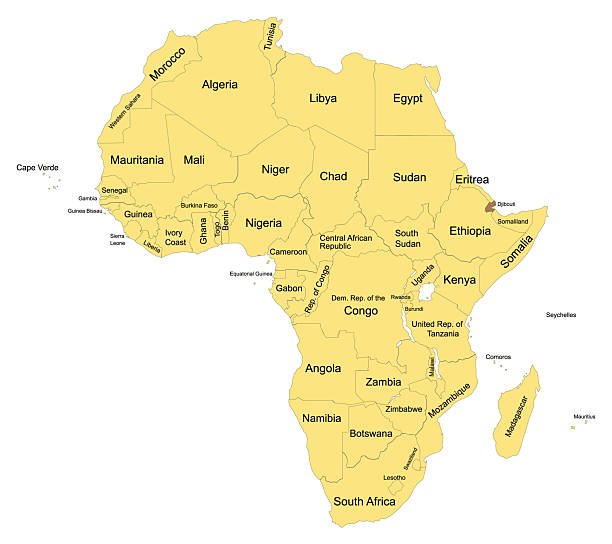
Absolutely, Africa has a rich, profound history of innovation and invention that has significantly shaped human civilization, often predating discoveries in other parts of the world. Far from being a continent that received all its knowledge from elsewhere, Africa was a primary incubator of critical advancements in fields such as mathematics, metallurgy, medicine, agriculture, and engineering, contributing foundational elements to global progress.
Cradle of Civilization: Early Innovations
The narrative that Africa contributed little to the world's inventions is a persistent myth that historical and archaeological evidence consistently refutes. From its earliest days, the African continent has been a dynamic hub of human ingenuity, birthing technologies and concepts that underpin modern society. Understanding these contributions helps to appreciate the full spectrum of global human achievement and answer the question: did Africa invent anything?
Mathematics and Astronomy
Long before formalized mathematics emerged in Europe, Africans were making sophisticated numerical and astronomical observations. One of the most compelling pieces of evidence is the Lebombo Bone, discovered in the Lebombo Mountains of Eswatini, dating back approximately 43,000 years. This notched baboon fibula is considered the oldest known mathematical artifact, suggesting early forms of counting or calendar tracking, highlighting ancient African inventions in computation.
Another crucial artifact is the Ishango Bone, found near the Semliki River in the Democratic Republic of Congo, roughly 20,000 years old. This bone features a series of carefully arranged notches, believed by many scholars to represent a prime number sequence, multiplication, or even a lunar calendar, demonstrating an advanced understanding of arithmetic and observational astronomy among early African civilizations.
- Ancient Egyptian mathematics provided the basis for geometry, essential for the construction of monumental architecture like the pyramids and for land surveying along the Nile. Their sophisticated understanding of fractions and decimal systems influenced later mathematical developments, showcasing African mathematical achievements.
- Astronomical observations were integral to Egyptian religious practices and agricultural cycles, leading to the development of one of the earliest 365-day calendars.
Metallurgy and Engineering
Africa was at the forefront of metallurgical innovation. The mastery of iron smelting, for instance, occurred in various parts of Africa independently and often earlier than in Europe. Evidence from regions like the Great Lakes area (modern-day Tanzania, Rwanda, Burundi) and the Nok culture in Nigeria indicates sophisticated iron production as early as 1500 BCE, challenging the long-held belief that iron technology diffused solely from the Near East. These African innovations in metallurgy were game-changers for human societies.
This early command of iron allowed for the creation of superior tools for agriculture, improved weaponry, and more durable implements for daily life, significantly advancing societal development. The ability to work with metals was a cornerstone for subsequent technological progress and a clear example of technology from Africa.
Engineering prowess is perhaps most famously exemplified by ancient Egyptian architecture, particularly the pyramids. These structures required an unparalleled understanding of surveying, stone cutting, transportation, and construction techniques, which remain awe-inspiring feats even today. Beyond Egypt, advanced architectural and engineering skills are evident in structures like the monolithic rock-hewn churches of Lalibela in Ethiopia and the impressive stonework of Great Zimbabwe, demonstrating diverse African engineering feats.
Agriculture and Food Systems
Many staple crops consumed globally today originated in Africa. Early African farmers domesticated a wide array of plants, adapting them to diverse climates and terrains. This agricultural revolution laid the groundwork for settled societies and population growth, proving significant contributions of Africa to the world's food systems.
- Sorghum and Millet: These drought-resistant grains were first cultivated in the Sahel region of Africa thousands of years ago and became vital food sources across the continent and beyond.
- Teff: A highly nutritious grain, teff was first domesticated in Ethiopia and remains a foundational food there.
- Coffee: The stimulant beverage enjoyed worldwide has its origins in the Kaffa region of Ethiopia, where it was first discovered and cultivated.
- Yams and Okra: Other significant crops with African origins that have spread globally.
Beyond crop domestication, Africans developed sophisticated irrigation systems, particularly along river valleys like the Nile, allowing for multiple harvests and supporting large populations, further solidifying Africa's role in global progress through agricultural innovation.
Advancements in Medicine and Health
The practice of medicine in ancient Africa was remarkably advanced, demonstrating a deep understanding of anatomy, pharmacology, and surgical procedures. The continent was a crucible for medical innovation long before many other parts of the world, highlighting numerous African medical discoveries.
Surgical Techniques and Pharmaceuticals
Ancient Egypt, in particular, left behind a wealth of medical texts, such as the Ebers Papyrus (dating to c. 1550 BCE) and the Edwin Smith Papyrus (c. 1600 BCE). These documents detail intricate surgical procedures, including the setting of broken bones, the treatment of wounds, and even early neurosurgery. They describe various pharmaceutical remedies using plants and minerals for ailments ranging from infections to chronic diseases, showcasing a sophisticated knowledge of herbal medicine and early pharmacology.
Evidence also suggests that surgical practices, including Caesarean sections and inoculation-like procedures for diseases such as smallpox, were performed in certain African societies (e.g., East Africa, Sudan) hundreds of years before their documented appearance in Europe. Traditional African healers possessed extensive knowledge of the medicinal properties of plants, many of which are still used in modern pharmacology today, confirming that Africa invented various medical treatments.
- Bone Setting: Highly skilled bone setters were common, using splints and wraps.
- Dental Work: Evidence of early dental procedures, including extractions and potentially rudimentary fillings, has been found.
- Antiseptic Practices: Ancient Egyptians used honey and moldy bread (early penicillin) for wound care due to their antiseptic properties, demonstrating early understanding of germ theory.
Enduring Legacy: Art, Culture, and Communication
Africa's contributions extend beyond the scientific and technological, encompassing profound innovations in art, culture, and communication that have enriched human expression globally, confirming who invented what in Africa in creative fields.
Writing Systems and Oral Traditions
The invention of hieroglyphic writing in ancient Egypt (c. 3200 BCE) represents one of the world's earliest complex writing systems. This pictorial script evolved into hieratic and demotic forms, influencing subsequent alphabets. Ethiopia's Ge'ez script, still in use today, is another testament to early African literacy and a significant African invention.
Beyond formal writing, Africa developed intricate systems of oral tradition, where history, law, and knowledge were meticulously passed down through generations via storytelling, proverbs, and epic poems. This method of knowledge preservation is an invention in itself, emphasizing memory, performance, and community engagement as vital components of education and governance, representing a unique African approach to knowledge management.
Artistic Expression and Architecture
African art is globally renowned for its diversity, symbolism, and aesthetic power. These are clear examples of African art and culture inventions:
- Sculpture: From the ancient Nok terracotta figures (Nigeria, c. 500 BCE) to the intricate bronze castings of Ife and Benin, African sculpture demonstrates exceptional skill and artistic vision.
- Music and Dance: The continent is the birthplace of numerous musical forms and instruments, influencing genres like jazz, blues, and rock and roll. Complex polyrhythms and call-and-response patterns are distinct African innovations that have had a global impact of African inventions on music.
- Architecture: Beyond the pyramids, the mud mosques of Djenné (Mali), the fortified complexes of Great Zimbabwe, and the rock-hewn churches of Lalibela (Ethiopia) showcase unique architectural styles and engineering ingenuity adapted to local environments and materials.
These artistic and architectural achievements not only reflect aesthetic values but also served social, religious, and political functions, embodying collective identity and belief systems. They are profound reminders of African inventiveness.
Modern African Innovation
The spirit of innovation in Africa continues vibrantly into the modern era, addressing contemporary challenges and contributing to global technological advancements. This demonstrates that the question "Did Africa invent anything?" is not just about history but also about ongoing ingenuity.
Contemporary Contributions
Africa is currently a hotbed for innovation in sectors like FinTech, renewable energy, and health technology.
- Mobile Money (M-Pesa): Launched in Kenya in 2007, M-Pesa revolutionized financial services by enabling millions of unbanked individuals to access money transfers, payments, and savings via mobile phones. This innovation has been replicated worldwide, becoming a leading example of technology from Africa.
- Drone Technology for Healthcare: Companies like Zipline, operating in Rwanda and Ghana, utilize drones to deliver essential medical supplies, including blood and vaccines, to remote areas, overcoming logistical challenges and saving lives. This represents cutting-edge African science and technology at work.
- Renewable Energy Solutions: With abundant solar and wind resources, African innovators are developing off-grid energy solutions, making clean power accessible to rural communities and reducing carbon footprints, showcasing Africa's role in global sustainable development.
- Agricultural Technology (AgriTech): Innovations in smart farming, drought-resistant crops, and localized irrigation are transforming food security across the continent, building on ancient agricultural foundations.
These modern inventions underscore Africa's ongoing capacity to generate creative solutions that have local impact and global relevance, clearly answering the query about Africa's inventiveness today.
Debunking Myths and Recognizing Contributions
The question "Did Africa invent anything?" is often rooted in historical biases that have systematically downplayed or ignored the continent's profound contributions. By highlighting these numerous advancements across diverse fields and millennia, we challenge a Eurocentric narrative that has historically dominated the discourse on invention and civilization.
Recognizing Africa's inventive genius is not just about correcting the historical record; it is about fostering a more inclusive understanding of human history and acknowledging the interconnectedness of global progress. Every major continent has played a pivotal role in the human story, and Africa's role as a birthplace of crucial innovations is undeniable and foundational, impacting how we understand Africa's role in global progress.
In conclusion, the resounding answer to "Did Africa invent anything?" is an unequivocal yes—an emphatic affirmation of a continent that has been a continuous wellspring of human ingenuity. From the earliest mathematical notations and the groundbreaking mastery of iron to sophisticated medical practices, complex agricultural systems, and pioneering modern digital solutions, Africa’s contributions to the world are vast, fundamental, and ongoing. These African innovations have not only shaped the trajectory of human civilization but continue to inspire progress and problem-solving globally, underscoring the continent's undeniable and rich legacy of invention and discovery.
Enjoyed this read?
Share it with your friends and colleagues.