Did Africa Used To Be A Country

BSC Insights Admin
September 30, 2026
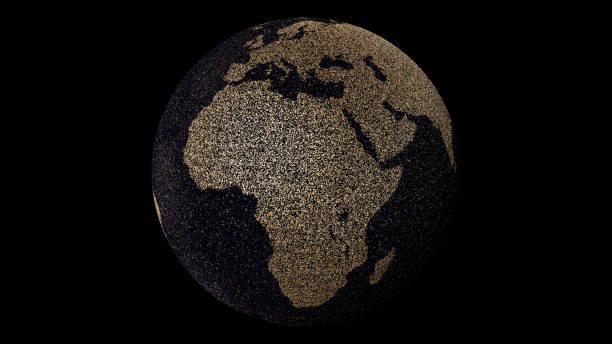
The question, "Did Africa used to be a country?" is a common one, and the straightforward answer is: No, Africa has never been a single country. It is, and always has been, a vast and incredibly diverse continent, home to a multitude of distinct societies, cultures, languages, and, in modern times, independent nations. Understanding this fundamental truth is key to appreciating Africa's rich and complex history, geography, and political landscape.
Africa: A Continent of Immense Diversity, Not a Single Nation
To truly grasp why Africa has never been a unified country, it's essential to distinguish between a continent and a country. A continent is one of several large landmasses on Earth, typically defined by convention rather than strict criteria, but generally encompassing a vast geographic region. A country, or nation-state, is a distinct political entity with a defined territory, a permanent population, a government, and the capacity to enter into relations with other states.
Africa is the world's second-largest continent, covering approximately 30.3 million square kilometers (11.7 million square miles), accounting for about 6% of the Earth's total surface area and 20% of its land area. Its immense size alone makes the idea of it being a single political entity historically improbable, especially before modern communication and transportation.
Today, the continent of Africa is comprised of 54 recognized sovereign countries, each with its own government, laws, distinct national identity, and cultural heritage. From Egypt in the north to South Africa at its southern tip, and from Senegal in the west to Somalia in the east, these nations represent a breathtaking mosaic of human experience. This political fragmentation into multiple independent states is not a recent phenomenon but has roots stretching back millennia, long before the modern concept of nation-states emerged.
The Deep Roots of African Identity: Pre-Colonial Eras
Before the arrival of European colonial powers, Africa was not an empty land, nor was it a unified empire. Instead, it was a dynamic continent flourishing with thousands of distinct ethnic groups, languages, and a myriad of diverse political structures ranging from small, decentralized communities to vast, complex empires. This pre-colonial history strongly refutes the notion of a single African country.
Ancient Civilizations and Empires Across the Continent
Throughout history, numerous powerful and influential civilizations and empires rose and fell across Africa, each governing its own distinct territory and population. These entities interacted through trade, diplomacy, and conflict, but none ever encompassed the entire continent. Some prominent examples include:
- Ancient Egypt: Flourishing along the Nile River for thousands of years, known for its pharaohs, pyramids, and hieroglyphs.
- The Kingdom of Kush: Located south of Egypt in modern-day Sudan, a significant power with its own unique culture and writing system.
- The Aksumite Empire: Situated in what is now Ethiopia and Eritrea, a major trading power that embraced Christianity.
- The Ghana Empire: One of the earliest and wealthiest West African empires, known for its gold and salt trade.
- The Mali Empire: Succeeded Ghana, famous for its legendary ruler Mansa Musa and the city of Timbuktu, a center of learning.
- The Songhai Empire: Emerged after Mali, becoming the largest empire in West African history.
- Great Zimbabwe: A powerful kingdom in Southern Africa, renowned for its impressive stone architecture.
- The Zulu Kingdom: A dominant force in Southern Africa during the 19th century, known for its military prowess.
These examples illustrate a history of independent, powerful states and kingdoms, each with its own sovereignty and distinct identity, reinforcing the fact that ancient Africa was never a singular nation. They engaged in complex political, economic, and cultural exchanges, but always as separate entities.
Complex Societies and Trade Networks
Beyond the large empires, countless smaller kingdoms, city-states, and stateless societies existed across the continent. These communities developed sophisticated systems of governance, agriculture, art, and religion. Extensive trade networks, such as the trans-Saharan trade routes and the Indian Ocean trade, connected different regions of Africa to each other and to the wider world. These interactions fostered cultural exchange but did not lead to political unification under one flag. The notion of a unified African identity was more a shared continental experience rather than a singular national allegiance.
The Scramble for Africa: Colonialism and Artificial Borders
The late 19th century witnessed a period known as the Scramble for Africa, where European colonial powers rapidly partitioned almost the entire continent among themselves. This era fundamentally reshaped Africa's political map, but crucially, it did not create a single African country. Instead, it carved the continent into numerous colonies, each controlled by a different European power.
The Berlin Conference of 1884-1885 formalized this division, with European nations drawing arbitrary borders that often ignored existing ethnic, linguistic, and geographical realities. These colonial territories were extensions of European empires, not independent African nations. While under colonial rule, these regions were administered separately, reinforcing their distinct (albeit imposed) identities rather than merging them into one grand African state. The colonial project was one of division and control, not unification.
The legacy of these artificially imposed borders continues to impact the political map of Africa today, often contributing to regional conflicts and challenges in nation-building for modern African nations.
Post-Colonial Africa: The Rise of Independent Nations
The mid-20th century brought a wave of decolonization, as African peoples fought for and gained their independence from European rule. Starting with Ghana in 1957, country after country achieved sovereignty. This process resulted in the formation of the 54 independent African nations we recognize today. Each of these new states established its own government, constitution, and national symbols.
While movements like Pan-Africanism emerged, advocating for greater unity and solidarity among African peoples and nations, this was an ideological and political movement promoting cooperation and a shared identity, not a push for a single, unified African state. Leaders like Kwame Nkrumah, who championed the idea of a United States of Africa, envisioned a federation of independent states, not a monolithic country. However, this vision of full political integration ultimately did not materialize, largely due to the immense challenges of uniting such diverse populations, economies, and political systems under a single government.
The emphasis during the independence era was on self-determination for individual nations, building distinct national identities within the continent's established (albeit colonial-drawn) borders. This period further solidified Africa's status as a continent of many countries.
Debunking the Myth: Why the Confusion?
The misconception that Africa used to be a country or that it is a country today often stems from several factors:
- Geographical Simplification: For those unfamiliar with its vastness, it's easy to view Africa as a single, undifferentiated landmass rather than a continent teeming with diverse regions.
- Historical Ignorance: A lack of comprehensive education about Africa's rich pre-colonial history and the complexity of its societies can lead to an oversimplified view.
- Media Portrayals: Sometimes, global media can inadvertently treat Africa as a monolith, discussing "African problems" or "African cultures" without acknowledging the immense diversity of the continent.
- Eurocentric Perspectives: Historically, Western perspectives often overlooked the intricate political and cultural landscapes of Africa, sometimes reducing its history to colonial encounters.
Understanding the distinction is crucial for engaging respectfully and accurately with African history, politics, and culture.
The Geographical and Geological Perspective of Africa
From a geological standpoint, Africa's identity as a continent is also clear. It sits predominantly on the African Plate, a major tectonic plate. This geological unity contributes to its designation as a continent. However, geological unity does not translate to political unity. The continent's diverse topography, including the Sahara Desert, the Congo Basin rainforest, the Great Rift Valley, and numerous mountain ranges, has historically facilitated the development of distinct cultures and limited large-scale political unification across vast distances.
The continent's diverse ecosystems, from arid deserts to lush rainforests and savannas, have shaped human settlement patterns, resource availability, and the evolution of different societies. These geographical realities further underscore the impracticality of Africa ever having been a single, unified country. The continent's internal geography naturally fostered regional identities rather than a singular national one.
Key Takeaways on Africa's Political Evolution
To summarize the complex journey of Africa's political landscape:
- Africa is a Continent, Not a Country: This is the fundamental truth, supported by geography, history, and modern political reality.
- Rich Pre-Colonial History: Thousands of distinct societies, kingdoms, and empires thrived independently for millennia across the continent.
- Colonial Scramble Divided, Not United: European powers partitioned Africa into numerous colonies, never unifying it into a single state.
- Emergence of Independent Nations: Post-colonial Africa saw the rise of 54 sovereign nations, each with its own government and national identity.
- Pan-Africanism as Unity, Not Unification: While a powerful movement for solidarity, Pan-Africanism did not result in a single country, but rather fostered cooperation among independent states.
- Immense Diversity: The continent's staggering cultural, linguistic, and ethnic diversity would make a single national identity incredibly challenging, if not impossible, to impose.
In conclusion, the assertion that Africa used to be a country is a misconception. From ancient civilizations to its modern configuration of 54 vibrant nations, Africa has always been a diverse continent. Its history is a testament to the resilience, ingenuity, and unique trajectories of countless independent peoples and political entities. Recognizing Africa for the continent it truly is, with its extraordinary mosaic of cultures, histories, and geographies, is vital for a nuanced and accurate understanding of our world.
Enjoyed this read?
Share it with your friends and colleagues.