Did Africans Explore The World

BSC Insights Admin
October 07, 2026
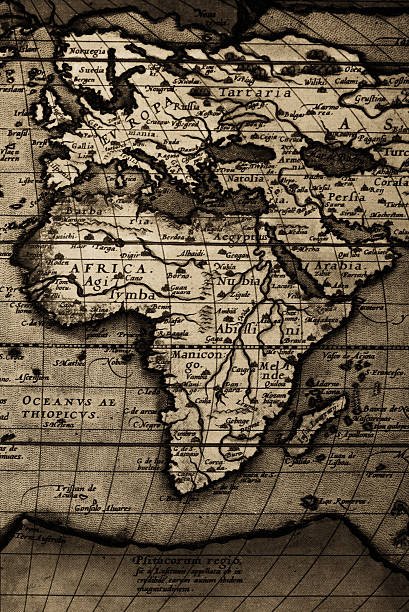
Yes, historical accounts, oral traditions, and archaeological findings strongly suggest that Africans undertook significant voyages and explorations, both within their continent and potentially across oceans, long before the documented expeditions of European explorers. This rich history challenges conventional Eurocentric narratives of global discovery, highlighting Africa's profound contributions to humanity's understanding of the world.
West African Maritime Traditions and Pre-Columbian Transatlantic Ventures
The notion of pre-Columbian contact between Africa and the Americas is a subject of ongoing historical and archaeological debate, yet compelling evidence and traditional accounts suggest such voyages were plausible and perhaps even occurred. West African societies possessed advanced seafaring capabilities and a deep understanding of ocean currents.
The Mandinka and Mansa Musa's Predecessor
One of the most intriguing accounts comes from the Mali Empire, a powerful West African state. According to 14th-century Syrian historian Al-Umari, the great Malian emperor Mansa Musa recounted that his predecessor, Mansa Abu Bakr II, embarked on two massive expeditions across the Atlantic Ocean. The first voyage, around 1311 AD, involved 200 ships setting out to explore the 'limit of the Atlantic Ocean'. When only one boat returned, its captain reported seeing a 'river in the mid-ocean' with a strong current. Undeterred, Mansa Abu Bakr II personally led a second, much larger expedition of 2,000 ships, provisioned for a long journey, stating he would not return until he had found the end of the ocean or ran out of provisions.
While definitive archaeological proof of these specific voyages reaching the Americas remains elusive and actively sought, the historical accounts from a contemporary source like Al-Umari lend considerable weight to the possibility. This narrative underscores the ambition and maritime capabilities present in West Africa during this period, indicating a strong desire for African exploration beyond known shores. The sheer scale of the expeditions described suggests a level of organization and navigational confidence that could indeed facilitate transatlantic crossings.
African Navigation Techniques and Seaworthiness
Ancient and medieval African societies were not strangers to advanced maritime technologies and navigational knowledge. West African peoples, particularly those along the coast, were skilled fishermen and traders. They constructed a variety of vessels, from large dugout canoes, sometimes over 80 feet long, to more sophisticated plank-built boats. These vessels were capable of navigating coastal waters, rivers, and even undertaking longer offshore journeys.
- Understanding Currents and Winds: African mariners had an intimate knowledge of prevailing currents and seasonal wind patterns, particularly the North Equatorial Current which flows westward from Africa to the Americas, and the trade winds that could propel sailing vessels.
- Celestial Navigation: While specific historical texts detailing African celestial navigation are rare, it is reasonable to infer that star-gazing for direction, a common practice among seafarers globally, was also employed. The clear African skies would have provided ample opportunity for such observations.
- Coastal Piloting: Along the West African coast, extensive knowledge of landmarks, depths, and safe harbors would have been passed down through generations, forming a robust tradition of West African seafaring.
The technological capacity and the intent to explore, as evidenced by Mansa Abu Bakr II's alleged voyages, highlight a sophisticated maritime culture that could certainly have engaged in pre-Columbian African voyages.
East African Maritime Dominance and Indian Ocean Trade
While the transatlantic discussion often captures significant attention, East Africa's maritime history is unequivocally one of global exploration and trade dominance. For millennia, the Swahili coast served as a vibrant nexus of commerce and cultural exchange, connecting Africa to the broader Indian Ocean world.
The Swahili Coast: Hub of Global Exchange
From Somalia in the north to Mozambique in the south, the string of independent city-states along the Swahili coast—including prominent centers like Kilwa, Mombasa, Zanzibar, and Mogadishu—flourished through extensive maritime trade. These cities were not merely ports; they were sophisticated urban centers built on a foundation of sophisticated East African trade routes that reached across the Indian Ocean.
Swahili mariners, primarily using advanced sailing vessels known as dhows, mastered the predictable monsoon winds. These winds allowed them to undertake seasonal voyages to Arabia, Persia, India, and even as far as China. They exported African goods such as gold, ivory, timber, rhino horn, frankincense, and enslaved people, and imported luxury items like Chinese porcelain, Indian textiles, and Persian ceramics. This dynamic exchange fostered a unique Swahili culture, blending African, Arab, and Indian influences.
Evidence of Far-Reaching Journeys
The archaeological record provides abundant proof of the extensive reach of Swahili coast exploration and trade:
- Chinese Ceramics: Fragments of Chinese porcelain, dating back to the Tang, Song, and Ming dynasties, are routinely unearthed in Swahili ruins, testifying to direct or indirect trade links with China for over a millennium.
- Indian Beads and Textiles: Evidence of trade with India is equally pervasive, with specialized beads, cotton fabrics, and spices found across various Swahili sites.
- Historical Accounts: Arab geographers like Ibn Battuta visited Swahili cities in the 14th century, documenting their wealth, sophistication, and extensive trade networks. Chinese admiral Zheng He's treasure fleet also reached the East African coast in the early 15th century, directly interacting with local rulers and merchants. This interaction further solidified the long-standing maritime connections between East Africa and Asia.
These historical and archaeological findings paint a clear picture of East African people as proactive and powerful participants in a truly globalized pre-modern economy, demonstrating significant African contributions to global discovery and connectivity.
African Exploration Within the Continent
Beyond ocean-going voyages, Africans were prolific explorers of their own vast and diverse continent. For millennia, various groups undertook extensive journeys, charting rivers, crossing deserts, navigating dense forests, and scaling mountains, driven by trade, migration, conquest, and the search for resources.
Trans-Saharan Trade Routes and Cultural Exchange
Perhaps one of the most remarkable feats of ancient and medieval African exploration was the establishment and maintenance of the Trans-Saharan trade routes. These routes, often traversing thousands of miles of harsh desert, connected the bustling markets of North Africa with the rich kingdoms of West and Central Africa. Caravans, consisting of thousands of camels, carried gold, salt, kola nuts, textiles, and other commodities across the Sahara, transforming it from a barrier into a highway of commerce.
These expeditions were not merely economic endeavors; they were profound acts of exploration. African traders, guides, and scholars systematically mapped the desert, identified oases, and developed intricate knowledge of navigation across the seemingly featureless landscape. They facilitated immense cultural exchange, spreading Islam, writing systems, architectural styles, and scientific knowledge throughout the continent. This ancient African trade network was a testament to human resilience and exploratory spirit.
Inland Riverine and Lake Exploration
Africa is home to some of the world's longest rivers and largest lakes, which served as vital arteries for exploration and settlement. The Nile River, for instance, was explored and utilized by ancient Egyptians and Nubians for millennia, leading to the establishment of one of the earliest complex civilizations. Its various tributaries were systematically charted and settled.
Further south, the Congo River system, with its vast network of waterways, facilitated internal exploration and migration for numerous Central African groups. Similarly, the Great Lakes region (e.g., Lake Victoria, Lake Tanganyika, Lake Malawi) saw indigenous populations developing advanced fishing techniques, creating sophisticated canoes, and navigating these massive inland seas for trade, warfare, and discovery. These African inland voyages allowed for the dissemination of agricultural practices, technologies, and languages across vast areas, shaping the demographic and cultural landscape of the continent.
The continuous movement of peoples, such as the Bantu migrations which spread across much of sub-Saharan Africa over thousands of years, represents one of the largest and most sustained acts of exploration and settlement in human history. These migrations involved charting new territories, adapting to diverse environments, and establishing new communities.
Challenging Eurocentric Narratives of Global Discovery
For centuries, the history of global exploration has largely been presented through a Eurocentric lens, often beginning with figures like Columbus, Magellan, and Cook. This perspective frequently omits or diminishes the extensive exploratory endeavors undertaken by non-European civilizations, including those in Africa. The narrative of European 'discovery' of lands already inhabited and known to others serves to reinforce colonial ideologies.
Acknowledging and celebrating the history of African exploration is crucial for a more accurate and inclusive understanding of global history. It highlights that the impulse to explore, to cross boundaries, to discover new lands and peoples, is a universal human trait, not exclusive to any single culture or continent. By embracing the rich tapestry of global discovery insights, we move towards a more balanced and truthful historical account.
Re-evaluating historical records, applying modern archaeological techniques, and giving credence to oral traditions are all vital steps in decolonizing history and revealing the full scope of human achievement. The stories of Mansa Abu Bakr II, the Swahili mariners, and the Trans-Saharan traders are not footnotes but central chapters in the grand narrative of humanity's journey across the planet.
Summary: The Undeniable Legacy of African Exploration
In conclusion, the question Did Africans explore the world? can be answered with a resounding yes. From the ambitious, though debated, transatlantic voyages of West African emperors to the undeniable millennia-long dominance of East African dhows in the Indian Ocean trade, and the monumental overland expeditions across the Sahara and along mighty rivers, Africans were pioneers in charting the known and unknown world. Their exploits demonstrate remarkable ingenuity, advanced navigational skills, and an enduring spirit of adventure that profoundly shaped global trade, cultural exchange, and human settlement. Recognizing this legacy is essential to understanding the true, multifaceted history of exploration and acknowledging the diverse contributions of all peoples to our shared human story.
Enjoyed this read?
Share it with your friends and colleagues.