Did Human Life Start In Africa

BSC Insights Admin
October 01, 2026
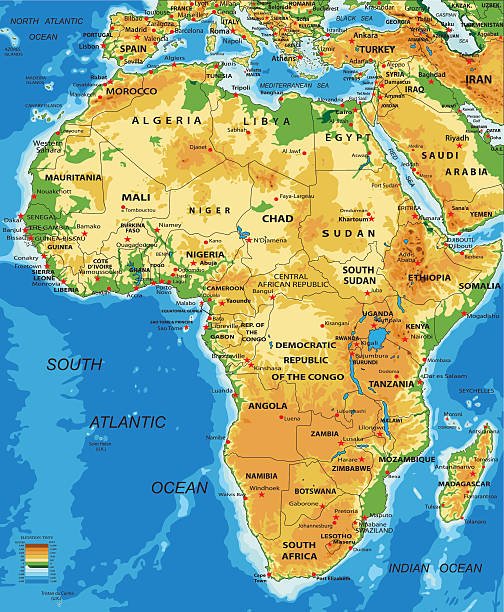
Did Human Life Start In Africa? The Definitive Scientific Perspective
Yes, based on overwhelming scientific evidence from paleoanthropology, archaeology, and genetics, human life definitively started in Africa. Africa is widely recognized as the cradle of humanity, where our earliest ancestors evolved and from where anatomically modern humans eventually migrated to populate the rest of the world. This consensus is supported by a rich fossil record, distinctive genetic patterns, and archaeological discoveries that trace our lineage back millions of years on the African continent.
The "Out of Africa" Theory: Our Shared Ancestry
The prevailing scientific model explaining human origins and dispersion is the Out of Africa theory, also known as the recent African origin model. This theory posits that a single population of anatomically modern humans (Homo sapiens) evolved in Africa roughly 300,000 to 200,000 years ago. These early humans then migrated out of Africa in one or more waves, replacing earlier hominin populations like Neanderthals in Eurasia, with limited interbreeding.
Key Aspects of the Out of Africa Theory:
- Single Origin: All modern humans trace their lineage back to a common ancestral population in Africa.
- Recent Dispersal: The significant migrations out of Africa occurred relatively recently, starting approximately 60,000 to 70,000 years ago.
- Replacement, Not Parallel Evolution: While some interbreeding occurred (evidenced by Neanderthal and Denisovan DNA in non-African populations), the primary mechanism was the replacement of existing archaic human species by modern humans from Africa.
Fossil Evidence: Africa's Unmatched Paleoanthropological Record
Africa boasts an unparalleled fossil record that provides direct insights into the evolutionary journey of early human ancestors. Major discoveries across East and South Africa have painted a detailed picture of hominin evolution.
Significant African Fossil Discoveries:
- Olduvai Gorge, Tanzania: Often called the "grand canyon of human evolution," Olduvai Gorge has yielded fossils of various hominin species, including Homo habilis (dubbed "handy man" for its tool-making abilities) and Homo erectus, dating back millions of years. The Leakey family's extensive work here has been foundational.
- Hadar, Ethiopia: This site is home to "Lucy" (AL 288-1), a remarkably complete skeleton of Australopithecus afarensis, dating back about 3.2 million years. Lucy provided crucial evidence for bipedalism (walking upright) as a very early adaptation in our lineage.
- Laetoli, Tanzania: Famous for its 3.6-million-year-old fossilized footprints, also attributed to Australopithecus afarensis. These footprints are irrefutable evidence of early hominins walking upright.
- Turkana Basin, Kenya: Rich in hominin fossils, including the "Turkana Boy," a nearly complete skeleton of a Homo erectus adolescent. This site, along with others in the Rift Valley, provides a continuous narrative of human evolution.
- Jebel Irhoud, Morocco: Recent discoveries here pushed back the origin of Homo sapiens, revealing fossils with modern facial features combined with more archaic braincases, dated to approximately 300,000 years ago. This discovery suggests a pan-African origin for our species, rather than a single confined region.
These discoveries collectively demonstrate a clear evolutionary progression, showing physical and behavioral changes over millions of years, largely confined to Africa before the major dispersal events.
Genetic Evidence: Tracing Our DNA Roots to Africa
Genetic studies provide another powerful line of evidence supporting the African origin of humanity. By analyzing DNA from living populations worldwide, scientists can reconstruct the genetic history of our species, revealing a clear African deep root.
Key Genetic Insights:
- Mitochondrial Eve and Y-chromosomal Adam: Geneticists have identified the most recent common ancestor through the maternal line (Mitochondrial Eve) and the paternal line (Y-chromosomal Adam). While not a single pair of individuals living at the same time, their lineages trace back to Africa, dating approximately 150,000 to 200,000 years ago for Eve and 200,000 to 300,000 years ago for Adam. This means all living humans descend from populations that lived in Africa during this period.
- Highest Genetic Diversity in Africa: Populations in Africa exhibit the greatest genetic diversity compared to any other continent. This is a tell-tale sign of a population's age and its long history in a region. As populations migrate, they experience genetic bottlenecks, losing some of their original diversity. The further a population is from Africa, the less genetic diversity it typically possesses.
- Human Migration Patterns: Genetic markers unique to specific populations allow scientists to track migration routes and timings. These studies consistently point to an initial expansion from Africa, with subsequent dispersals across the globe.
- Neanderthal and Denisovan DNA: The presence of small amounts of Neanderthal and Denisovan DNA in non-African populations (typically 1-4%) further supports the Out of Africa model, indicating that modern humans interbred with these archaic hominins *after* leaving Africa, but that the core modern human lineage originated in Africa.
Early Human Innovation and Culture in Africa
Archaeological findings further solidify Africa's role as the birthplace of human innovation. The earliest stone tools, symbolic thought, and early forms of art have all been discovered on the continent.
Pioneering African Archaeological Sites:
- Oldowan Tools (Gona, Ethiopia): The earliest widely accepted stone tools, known as Oldowan choppers, were found at Gona, Ethiopia, dating back approximately 2.6 million years. These simple tools demonstrate early hominins' cognitive abilities to modify natural objects for specific tasks.
- Acheulean Handaxes: Subsequent to Oldowan technology, the more sophisticated Acheulean handaxes appeared around 1.7 million years ago, also originating in Africa. These bifacial tools required greater planning and skill to produce and were used by Homo erectus and early Homo sapiens.
- Blombos Cave, South Africa: This remarkable site has yielded evidence of advanced cognitive behavior, including engraved ochre plaques (some dating to 77,000 years ago), shell beads used as personal adornment, and sophisticated bone tools, indicating early symbolic thought and cultural practices long before their widespread appearance elsewhere.
- Pinnacle Point, South Africa: Evidence here suggests early Homo sapiens were exploiting marine resources and using heat treatment on silcrete to make stone tools more effective, dating back to 164,000 years ago, pushing back the timeline for such complex behaviors.
The Journey Out of Africa: Populating the World
While human life started in Africa, the journey of our ancestors beyond the continent is a compelling chapter in human history. Several waves of migration are theorized, with the most significant one around 60,000 to 70,000 years ago.
Routes and Evidence:
- Southern Coastal Route: Many believe early humans followed a coastal route along the Arabian Peninsula and into Asia, taking advantage of marine resources.
- Levant Corridor: There is also evidence of earlier, less successful excursions into the Near East via the Levant, with fossil finds like those in Skhul and Qafzeh caves (Israel) dating over 100,000 years ago, but these populations seem to have died out or retreated.
- Adaptation and Spread: As humans migrated, they adapted to diverse climates and environments, developing new technologies and cultural practices suited to their surroundings, ultimately spreading across Asia, Europe, Australia, and eventually the Americas.
Why Africa? Environmental Drivers of Evolution
The question of why human life started in Africa is often linked to the continent's unique environmental conditions and dynamic climate history.
Factors Contributing to African Hominin Evolution:
- Diverse Landscapes: Africa's varied geography, from dense forests to expansive savannas and rift valleys, provided a diverse range of ecological niches that could have spurred evolutionary adaptations.
- Climate Variability: Significant climate shifts over millions of years, including periods of increased aridity and expansion of grasslands, are thought to have put selective pressure on early hominins, favoring traits like bipedalism, larger brains, and tool-making abilities for survival.
- Resource Availability: The rich biodiversity and availability of varied food sources in different ecological zones could have supported the dietary needs of evolving hominins.
Conclusion: Africa as the Cradle of Humanity
In conclusion, the scientific consensus is overwhelmingly clear: human life started in Africa. The evidence from a vast array of disciplines – including paleontology, archaeology, genetics, and anthropology – paints a consistent and compelling picture of our origins on the African continent. From the earliest bipedal hominins like Lucy to the first stone tool makers and the emergence of anatomically modern humans, Africa served as the crucible of our evolution. Understanding this shared African heritage underscores the fundamental interconnectedness of all people and provides profound insights into what it means to be human.
Enjoyed this read?
Share it with your friends and colleagues.